Iceland has always been on my travel bucket list, and finally spending three days exploring this incredible country in winter was everything I hoped it would be and more. With glaciers, waterfalls, black sand beaches, geothermal areas, quirky Reykjavik streets and, of course, the Northern Lights, there’s so much to see even in a short trip.
Last year whilst in Tallinn with my travel buddy, we saw an incredible offer for flights to Iceland and we booked them on a whim, for this upcoming January.
Planning a 3 days in Iceland itinerary can feel overwhelming at first. There’s a lot to fit in, the weather can be unpredictable, and the landscape is so vast that driving everywhere yourself can be exhausting, especially in winter. That’s why I wanted to create a guide that balances iconic sights with unique experiences, practical tips and a realistic pace so you can enjoy Iceland without feeling rushed. Just like we did in the end. We had an amazing first trip to Iceland and I’m here to tell you all about it! We also did it somehow on a budget, because, you know, Iceland is VERY expensive. We did bring some food from home (items such as tuna, porridge, cup noodles) and ate out only once a day. Iceland is not the place to splurge as your budget will disappear very quickly, and you want to spend your money on meaningful experiences rather than on £25 hotel breakfasts.
Where to Stay in Reykjavik
Reykjavík Natura

We stayed at Reykjavík Natura, and honestly, it turned out to be a great choice especially if you’re trying to balance comfort with keeping costs under control in an already expensive country.
The hotel is about a 20-minute walk from Hallgrímskirkja and roughly 30 minutes from Reykjavik city centre, so it’s not right in the middle of everything, but still very walkable. One big plus for us was the location in relation to transport: it’s within walking distance of the bus station where the Flybus drops you off. That meant we didn’t need to pay extra for a door-to-door minibus connection as it was only a 5–10 minute walk with our carry-on luggage.
Reykjavík Natura is located next to the domestic airport, in a relatively dark and quiet area. While that might not sound exciting at first, it actually came with an unexpected highlight: we saw the Northern Lights right above the hotel one evening. Being away from the brighter city lights definitely worked in our favour.
I travelled with a friend, so we booked a twin room, and when we arrived we were pleasantly surprised to be upgraded for free to a superior twin room. The room was very spacious, with two beds, a desk area, a small sitting area and large wardrobes, more than enough space to unpack and feel comfortable after long days out exploring Iceland. There was also a fridge in the room which we found very useful as we bought most of our breakfasts and some dinners from the nearby supermarket.
The bathroom was great, with very hot water, which felt absolutely amazing after spending hours outside in freezing temperatures. Those showers alone felt like a luxury.

We didn’t book breakfast, mainly because it was quite expensive (around £25 per person per day). The hotel does offer breakfast, as well as a restaurant and a spa, but we skipped all of these to keep costs down. Iceland is pricey enough as it is, and we were trying to be mindful of our budget. That said, if you book a premium room, spa access is included, which might make it better value depending on your travel style.
One of the biggest advantages of staying here was that the hotel is on the route for the tours. Every tour we booked picked us up directly from the hotel entrance. We were always the first stop, before heading into central Reykjavik where lots of people were waiting outside in the cold at 7am. That alone made the early mornings much more bearable.
We paid £280 for the room for 3 nights. You can check the latest rates on Booking by clicking here, and you can click here to see the hotel’s reviews on TripAdvisor.
Day 1:
Arrive in Iceland and Explore Reykjavik
After arriving in Iceland and dropping our bags at the hotel, we headed straight into Reykjavik to start exploring the city at a relaxed pace. The first stop of the day, and a very important one, was for coffee.
Breakfast at Sandholt

We had breakfast at Sandholt, a very cute café and bakery located in the historic centre of Reykjavik.
Everything looked amazing, so choosing was not easy. I went for a Danish with fruit and almonds, which was absolutely deliciously flaky, not overly sweet, and clearly freshly made. My friend chose a chocolate and nuts cookie, which was just as good and very generous, packed with chocolate and nuts. Coffee and pastry were approximately £12/person
Visit the Hallgrímskirkja

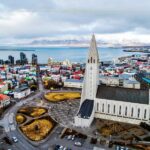
After breakfast, we walked over to Hallgrímskirkja, one of Reykjavik’s most recognisable landmarks. The architecture of the church is quite peculiar and very different from what you might expect if you’re used to traditional European churches. Its design was inspired by Iceland’s dramatic landscapes, particularly basalt lava flows, which gives the building its sharp, stepped appearance.
The interior of the church is surprisingly simple and minimalist, especially compared to the striking exterior. It feels calm and almost austere, with clean lines, lots of light and very little decoration. This contrast makes the space feel peaceful rather than cold, and it’s worth stepping inside even if churches aren’t usually high on your list.

You can also climb the tower, which I’d definitely recommend. From the top, you get a full panorama of Reykjavik, with colourful rooftops stretching out in every direction, the harbour in the distance and, on a clear day, mountains framing the city. It’s one of the best viewpoints in Reykjavik and a great way to get your bearings on your first day.
See the Sun Voyager

From Hallgrímskirkja, we continued walking towards the waterfront to see the Sun Voyager. This striking sculpture sits right by the sea and often gets mistaken for a Viking ship, but it’s actually meant to represent a dream boat or an ode to the sun.
The Sun Voyager symbolises hope, freedom and the promise of undiscovered territory, which feels very fitting for Iceland. With the ocean behind it and Mount Esja visible across the bay on a clear day, it’s a lovely spot for a short walk and a few photos, especially if the light is good.
Go (Window) Shopping for Unique Icelandic Gifts

One thing I really enjoyed in Reykjavik was browsing the many independent shops scattered around the city centre. There are lots of small stores selling cute and creative art made in Iceland, which makes souvenir shopping feel much more personal.
One shop I absolutely loved was entirely dedicated to cats. Everything inside was cat-themed, from prints to small gifts, and there was even a real cat sleeping on a chair behind the display window, completely unbothered by people stopping to stare.
You’ll also find plenty of art, Viking-themed items and even souvenirs made from lava, which feels about as Icelandic as it gets. It’s easy to spend longer than planned wandering in and out of these shops, especially if you enjoy unique, locally made pieces rather than standard tourist souvenirs.
Stroll Around the Old Part of Reykjavik

After window shopping, we spent some time wandering around the older part of Reykjavik, which is perfect for a slow, aimless stroll. This area is made up of low-rise buildings, narrow streets and a mix of residential homes and small cafés, giving it a much more intimate feel compared to bigger European capitals.
What really stood out to me were the colourful houses. Painted in bright reds, blues and yellows, they genuinely reminded me of parts of Canada, especially the coastal towns in Nova Scotia, and they add so much character to the city, particularly on grey days when the colour really pops.
While walking around, we couldn’t skip one of Iceland’s most famous street foods: the Icelandic hot dog. Simple but surprisingly good, it’s usually served with crispy onions, raw onions, sweet mustard and remoulade. It’s cheap by Icelandic standards, quick, and perfect for eating while exploring.
As you walk around, keep an eye out for street art too. Reykjavik has plenty of murals and smaller pieces tucked away on side streets and building walls, which makes wandering around even more interesting and gives the city a creative, slightly quirky vibe.
Visit Perlan Museum
Later in the day, we visited Perlan, which sits on a hill overlooking Reykjavik and is easy to spot thanks to its distinctive glass dome. Perlan is a museum focused on Iceland’s natural wonders, and it’s a great place to learn more about the country beyond what you see outside.
Inside, you can explore exhibitions about glaciers, volcanoes, earthquakes and the forces that shaped Iceland’s landscape. One of the highlights is the man-made ice cave, where you can walk through and get a real sense of what Icelandic glaciers are like. There’s also an immersive Northern Lights exhibition, which is especially nice if you don’t manage to see them outside during your trip.
Perlan is worth visiting not just for the exhibitions, but also for the views. From the observation deck, you get panoramic views over Reykjavik and the surrounding area, making it a great spot to visit towards the end of the day. It’s informative without being dry, and works really well as part of a first-time visit to Iceland.
Other Museums Worth Visiting

If the weather is bad, windy or just not cooperating, which can easily happen in Iceland, Reykjavik has plenty of museums that are worth adding to your itinerary.
The National Gallery of Iceland is a good choice if you enjoy art, with a collection focused mainly on Icelandic artists and works inspired by the country’s landscapes and identity.
The National Museum of Iceland is ideal if you want a deeper understanding of Iceland’s history, from early settlement through to modern times. It’s well laid out and gives useful context to everything you’ll see across the country.
For something completely different, there’s the Icelandic Phallological Museum. Yes, it’s exactly what it sounds like. Dedicated entirely to phallic specimens from various mammals, it’s weird, oddly fascinating and surprisingly informative. Even if museums aren’t usually your thing, this one will almost certainly make you laugh.
The Lava Show is another interesting option, where you can see real molten lava being poured in a controlled environment while learning about volcanic activity in Iceland. It’s short, dramatic and very memorable.
Finally, the Saga Museum focuses on Iceland’s Viking history, using life-sized figures and scenes to bring the sagas to life. It’s a bit theatrical, but that’s part of its charm, and it helps make Iceland’s early history more accessible and engaging.
Extra: See the Icelandic Cow

This is probably the funniest “attraction” we came across in Reykjavik. I’m fairly certain that at some point someone had the brilliant idea to add this spot to Google Maps as a tourist attraction, and from there it just took on a life of its own, with people actually leaving reviews for it.
It’s literally just a cow statue in a small park. Nothing more, nothing less. We only stopped there because it happened to be on our walk from the hotel to the city centre, and we were curious to see what all the fuss was about.
There is absolutely nothing special about the cow except the fact that it’s funny. And somehow, that’s enough. It was the very first thing we “visited” in Reykjavik, and ever since then, every time we passed by it, whether on foot or on the bus back to our hotel, we would giggle and point it out like it was an old friend.
Definitely not a must-see, but if you walk past it anyway, you might as well say hello.
Day 2:
Golden Circle Day

The second day of my three days in Iceland itinerary was dedicated entirely to the Golden Circle, one of the most popular sightseeing routes in Iceland. The Golden Circle is a loop that takes you through some of the country’s most famous natural attractions, all within a manageable distance from Reykjavik. The main attractions usually include Þingvellir National Park, Gullfoss waterfall and the Geysir geothermal area, often with a few additional stops along the way.
There are a few ways to explore the Golden Circle. You can drive yourself by hiring a car, which gives you the most flexibility and allows you to move at your own pace. However, this also means navigating unfamiliar roads, changing weather conditions and, in winter, potentially icy or snow-covered surfaces.
Another option is joining a guided tour, which is ideal if it’s your first time in Iceland or if you’re visiting in winter. You don’t have to worry about driving, parking or road conditions, and you benefit from having a guide who can explain what you’re seeing along the way. The downside is having a fixed schedule and spending less time at each stop.
You can also mix things up by hiring a car and using audio guides or planning your own route, which sits somewhere in between the two options.
I personally opted for a tour. It was my first time in Iceland, it was January, and I didn’t feel confident driving without knowing the condition of the roads. I booked the tour on GetYourGuide, and it turned out to be a great decision. Our guide, Monika, was fantastic: informative, friendly and genuinely passionate about Iceland. We were also first to be picked up from the hotel, exactly at the time we were told, which made the early start much easier.
Þingvellir National Park

The first major stop of the day was Þingvellir National Park, one of the most important places in Iceland both historically and geographically.
Historically, Þingvellir is where the world’s first parliament, the Alþingi, was established in the year 930. For centuries, Icelanders gathered here to make laws and resolve disputes, making it a deeply significant site in the country’s history.
From a natural perspective, Þingvellir is equally impressive. This is one of the few places in the world where you can actually see the boundary between the North American and Eurasian tectonic plates. As the plates slowly pull apart, they’ve created dramatic cracks, valleys and fissures in the landscape. Walking through the park, you’re literally standing between Europe and North America, which feels pretty surreal. You can even snorkel between the two tectonic places, which is even more surreal!
In winter, the scenery felt especially stark and beautiful, with snow highlighting the dramatic shapes of the land.
Gullfoss Waterfall

Next up was Gullfoss, one of Iceland’s most powerful and iconic waterfalls. The name means “Golden Falls”, and it’s easy to see why when the light hits the water just right.
Gullfoss is made up of two main drops: an upper section and a lower section, where the river plunges dramatically into a deep canyon. There are several viewing points, allowing you to see the waterfall from different angles, each one more impressive than the last.
I visited Gullfoss in winter, and about half of the waterfall was frozen. Seeing the contrast between the roaring water and the thick ice surrounding it was absolutely incredible. It felt raw and untamed, and the sheer power of the water is something you really feel when you’re standing there, even in the cold.
Iceland Horses Stop

One of the quieter but really memorable stops of the day was a visit to see Icelandic horses. These horses are a unique breed, known for their small size, thick coats and friendly personalities.
Most Icelandic horses are used for tourism, particularly for riding tours, and they’re well adapted to Iceland’s harsh climate. Some are also used once a year to help bring sheep to and from the mountains, which is still an important part of rural life in Iceland.
Interestingly, Icelandic horses are also exported and sold abroad, but strict rules mean that once a horse leaves Iceland, it can never return, in order to protect the purity of the breed. Stopping to see them up close, especially against the snowy landscape, was a lovely and unexpected break from waterfalls and geysers.
Geysir Geothermal Area

We stopped at the Geysir geothermal area for lunch. This is where we tried lamb soup, one of the most traditional Icelandic dishes, along with bread that’s baked using the natural steam from the geothermal ground. It was warm, filling and exactly what we needed on a cold day.
A geysir is a hot spring that periodically erupts, shooting boiling water and steam into the air due to pressure building up underground. The area is free to visit, and you can walk around on marked paths to see various geothermal features bubbling and steaming away.
Some of the geysers are more active than others, but one in particular erupts very frequently, every five to seven minutes, and sometimes even two or three times in a row. Watching it build up and then suddenly explode into the air never gets old, and there’s always a sense of anticipation as everyone waits for the next eruption.
Kerid Crater

The final stop of the day was Kerid Crater, a volcanic crater lake formed thousands of years ago. The crater is made up of striking red volcanic rock, which contrasts beautifully with the surrounding landscape.
When I visited, the lake inside the crater was completely frozen. People were walking over the ice, taking photos, but our guide strongly recommended not doing that, as the ice can be unpredictable and may break.
Instead, I hiked the path around the top of the crater, which is very easy and only takes about 10 to 15 minutes to complete. What makes it special is that the views keep changing as you walk. From different points, you can see the crater itself, the frozen lake below, and the wider landscape around it, dotted with mountains, hills and snow.
We arrived close to sunset, and the light was incredibly warm, casting an orange glow over the landscape. It was a calm, beautiful way to end a long but unforgettable day on the Golden Circle.
Evening: Northern Lights Tour

If seeing the Northern Lights is high on your Iceland bucket list, it’s worth keeping an eye on the aurora forecast and booking your tour on the day when the chances are highest. Flexibility really helps here, especially if you’re only spending a few days in the country.
We were incredibly lucky and managed to see the Northern Lights on two of our three days in Iceland. The first time was completely unexpected. We were returning to our hotel and walking past Hallgrímskirkja when they suddenly appeared above the city. Watching them dance over the church and then follow us all the way back towards the hotel, where they put on another little show, felt surreal.
That said, for better chances of seeing the aurora, it’s definitely best to book a dedicated Northern Lights tour. The guides closely monitor the forecasts and will drive you out to a more remote, secret location with minimal light pollution, where the chances of seeing the lights are much higher. Of course, as this is a natural phenomenon, nothing is guaranteed.
One nice thing about these tours is that if you don’t manage to see the Northern Lights, your ticket is usually valid for another year, which is a pretty good excuse to return to Iceland. You’re also offered hot chocolate during the tour, which is very welcome when you’re standing outside in freezing temperatures, waiting for the sky to light up.
Day 3:
Glaciers and Waterfalls
The last day of my 3 days in Iceland itinerary was all about some of Iceland’s most dramatic landscapes: glaciers, black sand beaches and powerful waterfalls. It was a long day with a lot of driving, but absolutely worth it, and it ended up being one of the highlights of the trip.
Hiking Sólheimajökull

Sólheimajökull is a glacier tongue that extends from the larger Mýrdalsjökull ice cap, and it’s located about a two-hour drive from Reykjavik. If you want to hike a glacier in Iceland, you must go with a specialised tour. This isn’t something you should ever attempt on your own.
Glaciers are constantly moving, and hiking them requires special equipment, such as crampons, hard helmet and safety harness, as well as a local guide who knows the terrain and is trained in first aid. Crevasses can open up without warning, and if you fall into one while hiking alone, nobody is going to find you. Going with professionals is non-negotiable here.

We spent around an hour on the glacier, navigating across the ice and even entering crevasses that were safe to access, which allowed us to see the stunning blue ice up close. The shapes, textures and colours of the ice were unlike anything I had seen before.
We were incredibly lucky with the weather. The day before our tour, conditions didn’t allow glacier hiking at all, and our guide told us that the day after, tours would most likely be cancelled as well due to an incoming storm. Being able to hike the glacier felt like a small window of opportunity.
Hiking a glacier was such a unique experience, and it was my first time doing anything like this. At the beginning, I was quite scared and didn’t feel very confident, especially walking on ice with crampons. But it really is all about trusting the equipment. Once I got used to how the crampons grip the ice and learned how to walk more naturally with them, the fear faded and I started to genuinely enjoy the experience.
If you want to book the same tour I went on, click here.
The Black Beach – Reynisfjara Beach

After the glacier hike, we continued along the south coast to Reynisfjara, Iceland’s famous black sand beach near the village of Vík. The beach is known for its dramatic black volcanic sand, powerful Atlantic waves and striking basalt columns lining the cliffs.
Reynisfjara is also considered one of the most dangerous beaches in the world. The waves here, often referred to as “sneaker waves”, can suddenly surge much further up the shore than expected and pull people into the sea. There are no second chances here, so it’s extremely important to keep a safe distance from the water and pay attention to warning signs at all times.
One of the highlights of the beach is Hálsanefshellir Cave, a basalt cave formed by hexagonal columns. It’s a beautiful spot and makes for great photos, but again, it’s important to stay aware of the sea conditions while exploring the area.

This is also where we stopped for lunch, at the café near the beach. I opted for the local burger, which was very good and came with fries, all included in a very steep price. But by Icelandic standards, it felt like a reasonable stop for a warm meal on a cold day.
Skógafoss

Next, we visited Skógafoss, one of Iceland’s most famous waterfalls. It’s an impressive, wide waterfall that drops dramatically over a cliff, creating a constant curtain of water.
There’s a walkway that allows you to climb up and see Skógafoss from above, offering a completely different perspective compared to viewing it from the base. Unfortunately, we only had time to choose one, so we stayed at the bottom.
I personally found crossing closer to the front of the waterfall quite dangerous. The ground was slippery, and many people attempting it ended up stepping into the ice-cold water. I didn’t try to get too close, and I’m glad I didn’t as I actually saw a woman fall and break her leg. While these waterfalls are absolutely stunning, it’s really important to be mindful and not attempt anything you’re not confident with, especially in winter conditions.
Seljalandsfoss

Seljalandsfoss was our final major stop of the day. This waterfall is famous because, in warmer months, you can walk all the way around it and stand behind the curtain of water for a completely different experience.
However, because it was winter when we visited, the walkway behind the waterfall was completely frozen and impossible to approach safely. Even so, Seljalandsfoss is still incredibly impressive from the front, especially with snow and ice framing the scene.
Just a few minutes’ walk from Seljalandsfoss is another waterfall that’s well worth visiting: Gljúfrabúi. This one is partially hidden inside a narrow canyon, which makes it feel a bit like a secret spot. To reach it, you usually have to walk through shallow water and rocks, but in winter, conditions can make this tricky. Even if you don’t go all the way inside, it’s worth getting close enough to see the waterfall spilling into the gorge as it’s a beautiful and slightly mysterious end to a very full day.
Final Words

Three days in Iceland might not seem like a lot of time, but if you plan carefully, it’s enough to experience the highlights and even discover a few hidden gems along the way. It’s a good taster for what Iceland has to offer. We love our trip so much that we are already planning our return one.
From exploring Reykjavik’s colourful streets to hiking across a glacier, watching geysers erupt, and chasing waterfalls along the south coast, every day was filled with memorable sights and moments. We were lucky to have mild weather every day, with temperatures around 0 degrees Celsius but clean, blue skies. I’m sure though we were just exceptionally lucky.
This itinerary I’ve put together gives you a mix of iconic landmarks, cultural stops, and unique experiences, and I hope it inspires you to get out there and create your own Icelandic adventure. Three days may only scratch the surface, but in Iceland, every moment feels epic.
Fore more articles about Iceland, check out my recommendations below:
Like it? Pin it!
Disclaimer: Some of the links on this website are “affiliate links.” This means that if you click on the link and do a purchase, I will receive an affiliate commission at no extra cost for you. This helps me keep my website running and continue to share my travelling knowledge with you. I thank you for booking your flights or hotels using the links on my website. Regardless, I only recommend products or services I use personally and believe will add value to my readers.