
Travel experts reveal why that convenient airport cash machine could be costing you a fortune.
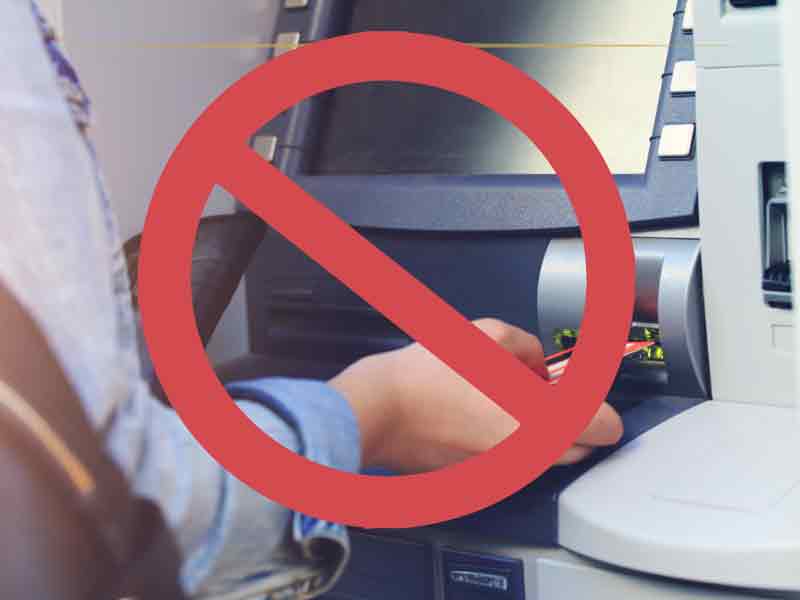
Americans heading overseas this year are being urged to take one simple action before withdrawing cash abroad, a move that takes just seconds but could prevent them from losing substantial amounts of money to hidden fees and unfavorable exchange rates. With international travel from the United States reaching new heights and more Americans exploring destinations across Europe, Asia, and Latin America, the way travelers access cash in foreign countries has become a critical financial concern that many people overlook until it is too late.
The advice comes as financial experts and travel industry professionals have observed countless tourists making the same costly mistake repeatedly. The problem centers on where Americans choose to withdraw money when they need local currency during their trips. Most travelers give little thought to which ATM they use, simply heading to the most convenient machine they can find. However, this convenience often comes with a price tag that can significantly inflate the cost of a trip without travelers even realizing what they are paying.
The Hidden Cost of Convenience
When Americans arrive in a foreign country and need local currency, the instinct is to find an ATM as quickly as possible. After a long flight, navigating a new airport, and dealing with the stress of international travel, people want to get cash and move on with their plans. This urgency leads most travelers straight to the first cash machine they encounter, which is typically located in highly visible, high-traffic areas like airport terminals, train stations, and tourist-heavy city centers.
These conveniently located ATMs are exactly where travelers should avoid withdrawing money, according to industry experts who have studied the fees and exchange rates these machines charge. The reason has to do with who actually operates these cash machines and how they make their profit.
Many of the ATMs that Americans encounter in airports, tourist districts, and other convenient locations are not operated by legitimate banks. Instead, they are run by third-party companies that specialize in placing cash machines in high-traffic areas where desperate travelers will use them despite unfavorable terms. These operators know they have a captive audience of people who need cash immediately and are unlikely to shop around for better options.
The business model of these third-party ATM operators depends on charging fees that are significantly higher than what actual banks charge their customers. They also frequently offer exchange rates that are far worse than the standard interbank rates that financial institutions use when converting between currencies. The combination of high fees and poor exchange rates means that Americans using these machines can lose a substantial percentage of the money they withdraw.
Understanding Dynamic Currency Conversion
Beyond the basic fees and exchange rates, there is another trap that catches many American travelers off guard. When using ATMs abroad, users are often presented with a choice about how they want their transaction processed. The machine will ask whether the traveler wants to be charged in local currency or have the amount converted to U.S. dollars on the spot.
This option is called Dynamic Currency Conversion, and it sounds like it might be helpful. The appeal is that Americans can see exactly how much they are spending in dollars, which seems more transparent than accepting a charge in an unfamiliar foreign currency. The problem is that Dynamic Currency Conversion almost always uses exchange rates that are significantly worse than what travelers would get by simply letting their bank handle the conversion.
When Americans choose to have the ATM convert the transaction to dollars, the third-party operator running the machine gets to set the exchange rate. These rates are intentionally designed to be unfavorable, allowing the operator to profit from the conversion. Additionally, there are often hidden fees built into the Dynamic Currency Conversion process that are not clearly disclosed to users before they complete their transaction.
The financially savvy choice is always to decline Dynamic Currency Conversion and accept the charge in local currency. This allows the traveler’s home bank to handle the conversion at a rate that, while not perfect, is almost always better than what the ATM operator offers. Even accounting for any foreign transaction fees that American banks might charge, processing the transaction in local currency typically results in better overall value.
However, many Americans are not aware of this issue and instinctively choose the dollar option because it feels more familiar and transparent. The ATM operators know this and deliberately design their interfaces to make the dollar conversion seem like the obvious choice. Some machines even make it difficult to decline the conversion, requiring users to carefully read the screen and select the less obvious option.
The Simple Solution That Most Travelers Miss
The solution to avoiding these inflated fees and poor exchange rates is remarkably straightforward, yet most American travelers never think to do it. Before withdrawing cash in a foreign country, travelers should open Google Maps on their smartphone and search for the term “Bank ATM” in their current location.
This basic search, which takes literally seconds to perform, will display ATMs throughout the area with icons indicating their locations. More importantly, it will help travelers identify which machines are actually affiliated with legitimate banking institutions rather than third-party operators looking to maximize fees.
ATMs that are located inside or directly adjacent to established bank branches are almost always operated by the banks themselves rather than independent companies. These bank-operated machines typically offer significantly better terms for withdrawals, including lower fees and exchange rates that are much closer to the true interbank rates used in international finance.
The difference in cost can be substantial. While a third-party ATM in an airport or tourist area might charge a flat fee of five to eight dollars per transaction plus a poor exchange rate that effectively adds another three to five percent to the cost, a bank-operated ATM might charge no fee at all or a minimal charge of one to two dollars while using an exchange rate that is several percentage points better.
For Americans withdrawing a few hundred dollars in local currency, these differences can add up to twenty, thirty, or even fifty dollars in unnecessary costs per transaction. Over the course of a multi-week trip with several cash withdrawals, the savings from using bank ATMs instead of convenient but expensive alternatives can easily reach hundreds of dollars.
Why Bank ATMs Are Better
There are several reasons why ATMs operated by actual banks provide better value for American travelers. First, banks make their money primarily through traditional banking services like loans, deposits, and account fees. The ATM network is a service they provide to customers and the general public, but it is not their primary profit center. They have less incentive to maximize fees on every transaction.
Third-party ATM operators, by contrast, exist solely to profit from transaction fees. Every machine they operate needs to generate substantial revenue to justify its placement and maintenance. This fundamental difference in business model explains why the fees and rates are so different.
Second, banks typically use standardized exchange rates that are based on the interbank rate, which is the rate at which banks trade currencies with each other. While banks do add a small markup to this rate when serving retail customers, the markup is usually modest and fairly standardized across the industry. Third-party operators have no such constraints and can set whatever rates they think the market will bear.
Third, ATMs at bank branches tend to be better maintained and more secure. Banks have a reputation to protect and regulatory requirements to meet, so they ensure their ATMs function properly and have security measures in place. The machines are usually under video surveillance, located in well-lit areas, and regularly serviced to prevent malfunctions.
Using an ATM at a bank branch also reduces the risk of falling victim to skimming devices or other forms of fraud. Criminals who install devices to steal card information typically target machines in less secure locations where they can work without being observed. A bank branch with cameras and regular staff presence is a much less attractive target.
How to Find Bank ATMs Anywhere
The Google Maps search technique works in virtually any country where Americans might travel. Once travelers open the Google Maps app on their phone and search for “Bank ATM,” the map will populate with icons showing nearby options. Users can then tap on individual locations to see more information, including the name of the bank, the address, operating hours, and sometimes even reviews from other users.
In major cities, there will typically be numerous options within walking distance of wherever travelers happen to be. In smaller towns or rural areas, there might be fewer choices, but the search will still identify the closest legitimate bank locations where better ATM terms can be found.
Some travelers worry that walking to a bank ATM instead of using the nearest convenient machine will be too time-consuming or difficult, especially in an unfamiliar place. However, the reality is that in most destinations, bank branches are common and not difficult to reach. The few extra minutes spent walking to a proper bank ATM are almost always worth it given the money saved.
For travelers who are being picked up from an airport by a hired car service or have arranged private transportation, there is an even easier solution. Simply ask the driver to stop at a bank branch on the route to your hotel or destination. Drivers in most countries are familiar with this request and can easily incorporate a brief stop into the journey.
This approach is particularly efficient because it eliminates the need to withdraw cash at the airport, which is typically where travelers face the worst ATM options. Airport ATMs are notorious for having the highest fees and worst exchange rates because operators know that travelers have limited alternatives and urgent need for cash.
Planning Ahead for Cash Needs
While the Google Maps trick is valuable for finding better ATMs in the moment, American travelers can save even more money by thinking strategically about their cash needs before departure. Understanding how much cash will actually be necessary during a trip can help minimize the number of ATM transactions required, reducing exposure to fees altogether.
In many destinations, credit and debit cards are widely accepted and may actually be the most economical way to pay for goods and services. Cards that do not charge foreign transaction fees, which are increasingly common from U.S. banks, can offer excellent exchange rates that are very close to the interbank rate. For major purchases like hotel bills, restaurant meals, and shopping, using such a card is often better than withdrawing cash.
However, cash remains essential for certain types of transactions in most countries. Taxis and ride services sometimes prefer or require cash, especially outside major cities. Street food vendors, small family-run restaurants, and market stalls often operate on a cash-only basis. Tipping service staff like hotel housekeeping, tour guides, and restaurant servers is typically done with cash. In some countries, certain tourist attractions or transportation options only accept cash payment.
American travelers should research their destination to understand the local payment culture and plan accordingly. A trip to Scandinavia, where card payments are nearly universal, will require far less cash than a trip to parts of Southeast Asia or Latin America where cash remains the dominant payment method.
When cash is needed, the strategy should be to withdraw larger amounts less frequently rather than making many small withdrawals. Each ATM transaction typically incurs a flat fee, so withdrawing 300 dollars worth of local currency once costs far less in percentage terms than withdrawing 100 dollars three separate times. Obviously, travelers need to balance this against security concerns about carrying large amounts of cash, but in general, fewer transactions mean lower total fees.
The Credit Card Consideration
While this advice focuses on ATM withdrawals, American travelers should also be aware that credit cards present their own Dynamic Currency Conversion trap. When paying with a card at a restaurant, hotel, or shop in a foreign country, the payment terminal will sometimes ask whether the traveler wants to pay in local currency or have the amount converted to dollars.
Just like with ATMs, the correct answer is almost always to pay in local currency and let the credit card company handle the conversion. The exchange rates offered by point-of-sale terminals are typically even worse than those offered by ATMs, and there can be additional hidden fees built into the conversion process.
Merchants who offer Dynamic Currency Conversion at the point of sale receive a portion of the extra fees that get charged, which is why the option is so commonly presented to customers. The system is designed to make the dollar amount seem like the transparent, easy choice when it is actually the expensive choice.
American travelers should get in the habit of always declining currency conversion whether they are at an ATM or paying with a card at a business. This single rule can save substantial money across all types of transactions during international travel.
Real-World Scenarios
Consider a typical scenario that plays out thousands of times daily at airports around the world. An American family arrives in Paris after an overnight flight. They are tired, hungry, and need to get from the airport to their hotel in the city. They want to have some euros on hand for tips, taxis, and immediate expenses.
The family spots an ATM in the baggage claim area and decides to withdraw 200 euros. The ATM charges a 7 dollar flat fee and uses an exchange rate that is four percent worse than the interbank rate. On a withdrawal worth approximately 220 dollars at fair rates, the family pays the 7 dollar fee plus an additional 9 dollars due to the poor exchange rate, for a total cost of 16 dollars. If they make two or three such withdrawals during their week in Paris, they have spent 50 dollars or more on ATM fees alone.
Now consider an alternative scenario with the same family. Before leaving the airport, they open Google Maps and search for “Bank ATM.” They see that there is a BNP Paribas bank branch with an ATM just two metro stops from the airport, directly on their route into the city. They stop there, withdraw 400 euros from a bank-operated machine that charges a 2 dollar fee and uses a rate just one percent worse than interbank. Their total cost is about 9 dollars, and they have twice as much cash. Over the course of their trip, they save 30 or 40 dollars simply by taking a few minutes to find a better ATM.
These savings might not seem enormous to some travelers, but they add up quickly, especially for families or for people taking multiple international trips per year. More importantly, the savings come essentially free. There is no sacrifice of convenience or time required. It is simply a matter of having information and using it to make better decisions.
What Banks Want You to Know
Interestingly, many established international banks actually try to educate customers about avoiding third-party ATM fees, though their messaging does not always reach the travelers who need it most. Banks understand that customers who have negative experiences with high fees while traveling abroad may become dissatisfied and potentially switch to competitors.
Some U.S. banks have partnerships with international banking networks that allow their customers to use certain foreign ATMs without fees. For example, customers of some American banks can use ATMs operated by partner banks in other countries without paying the typical foreign ATM surcharge. These partnerships are worth researching before travel, though they are less common than they used to be as banks have cut costs.
Other banks have moved toward reimbursing ATM fees for customers who maintain certain account types or meet specific requirements. These reimbursement programs can effectively eliminate the ATM fee problem, though travelers still need to be aware of exchange rate differences and should still avoid Dynamic Currency Conversion.
The key point is that even travelers whose banks offer some protections against ATM fees should still be strategic about where they withdraw cash abroad. Bank-operated ATMs will almost always offer better overall value than third-party machines, even when fees are being reimbursed.
Common Mistakes to Avoid
Beyond using third-party ATMs and accepting Dynamic Currency Conversion, there are several other common mistakes American travelers make when accessing cash abroad. One is withdrawing money in very small amounts because they are nervous about carrying cash. As mentioned earlier, this results in paying fees multiple times unnecessarily.
Another mistake is waiting until cash is urgently needed before withdrawing any. This desperation leads to using whatever ATM is immediately available rather than taking time to find a better option. Travelers should try to anticipate their cash needs and withdraw money when they have time to find a proper bank ATM.
Some Americans also make the mistake of relying entirely on exchange services at airports or tourist areas to obtain foreign currency. While sometimes necessary in small amounts, these services typically offer exchange rates that are even worse than bad ATMs and charge substantial fees on top of that. They should be avoided except in emergencies.
Finally, some travelers fail to notify their banks before international travel, which can result in cards being blocked for suspected fraud when foreign transactions appear. While not directly related to ATM fees, having a card blocked abroad can force travelers into using expensive alternatives to access money.
The Bottom Line for American Travelers
The advice to use Google Maps to find bank ATMs is simple, practical, and effective. It requires no special knowledge or preparation beyond having a smartphone with internet access, which virtually all international travelers have these days. The few seconds it takes to do the search can result in savings that make a meaningful difference to travel budgets.
Americans spending thousands of dollars on flights, hotels, and activities should not overlook the opportunity to save money on something as basic as accessing cash. The fees charged by convenient but expensive ATMs represent completely avoidable costs that provide no value whatsoever.
By seeking out ATMs at legitimate bank branches, declining Dynamic Currency Conversion, and withdrawing larger amounts less frequently, American travelers can keep more of their money available for actual travel experiences rather than watching it disappear to unnecessary fees. The Google Maps trick is just one tool, but it is an important one that more travelers should know about and use.