
It started with one of the most ordinary requests a person can make at a restaurant table. It ended, six years later, with Italy’s supreme court delivering a ruling that has significant practical implications for American tourists visiting one of the world’s most popular travel destinations. The verdict is clear and final: hotels and restaurants in Italy are under no legal obligation to serve customers tap water, and refusing that request is not a violation of any consumer right.
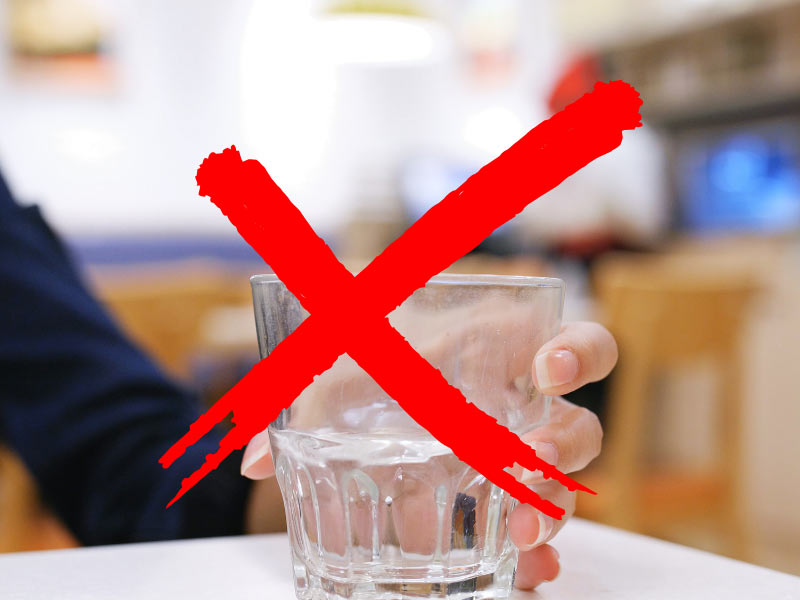
The case involved a tourist who spent a week over Christmas and New Year of 2019 at a five-star hotel in Corvara, a ski resort in the Dolomites region of northern Italy. She was staying on a half-board arrangement that included her evening meals but not her drinks. Each night at dinner, she asked for tap water. Each night, she was refused, and instead found a 0.75-liter bottle of mineral water priced at seven euros sitting on her table. By the end of the week, she had paid repeatedly for bottled water she had not asked for, having been systematically denied the alternative she had specifically requested.
She filed a lawsuit. She argued, ultimately all the way to the Court of Cassation, that water was a universal human right and that being denied access to tap water while dining at a hotel restaurant constituted a violation of that right and caused her both financial damage and emotional distress. She sought the equivalent of about three thousand dollars in compensation. The court disagreed, ruling that no Italian law requires restaurant or hotel operators to provide tap water to their customers, and dismissed the case entirely.
For American travelers planning trips to Italy, a country that receives more American visitors than almost any other European destination, this ruling is not an abstract legal curiosity. It is a practical reality that shapes what to expect at Italian restaurants and hotels, and what recourse, if any, exists when those expectations go unmet.
The Full Story of a Week in the Dolomites
The details of the original dispute give a clearer picture of what the tourist experienced and why she felt strongly enough about it to pursue legal action through multiple levels of the Italian court system over several years.
Corvara is a high-end ski resort in the South Tyrol region of the Italian Dolomites, a UNESCO World Heritage site that draws wealthy tourists from across Europe and beyond. The hotel involved was a five-star property, the category of establishment where guests typically pay premium prices with expectations of corresponding service standards. The tourist’s half-board arrangement covered her evening meals, which at that price point would be expected to come with a reasonable standard of hospitality.
Her request for tap water was not made as a budget-saving measure or as an abstention from the hotel’s offerings. She reportedly offered to pay for the tap water. She was still refused. The hotel’s position was that it served bottled mineral water with meals, at seven euros per 0.75-liter bottle, and that tap water was not on offer regardless of whether the guest was willing to pay for it or not.
The frustration is understandable. In the United States, tap water at a restaurant is so standard that most American diners have never once considered the possibility of it being refused. It arrives automatically, it is refilled without being asked, and it costs nothing. The idea of sitting at a dinner table, asking for tap water, being told no, and then being charged seven euros for the alternative every evening over a week-long stay reads, through an American lens, as a consumer practice that would be controversial at minimum.
The Italian courts did not see it that way, and understanding why requires understanding how the practice of charging for water sits within Italian restaurant culture more broadly.
What Italian Water Culture Actually Looks Like for Tourists
The question of tap water at Italian restaurants is more culturally complex than it might appear to American visitors, and that complexity is worth understanding before arriving and encountering it.
In Italy, the standard practice at sit-down restaurants is for the server to offer a choice of bottled water, either natural or sparkling, as a routine part of the dining experience. Bottled water is considered a service item and is charged to the table, typically appearing as a line item on the bill alongside food and any other beverages ordered. This is not considered exploitative by most Italian diners. It is the norm, understood and accepted as part of the dining transaction.
Asking for tap water at an Italian restaurant, particularly after a server has already offered the bottled water choice, is widely considered a social faux pas rather than a straightforward consumer request. The etiquette differs significantly from the American expectation. Some Italian restaurants do accommodate tap water requests, particularly in recent years as awareness of plastic waste and environmental concerns has grown and as urban restaurants catering to international tourists have adapted to different expectations. But it is not guaranteed, it is not culturally obligatory, and as the court ruling has now confirmed, it is not legally required.
The regional dimension also matters. Northern Italy, particularly South Tyrol where the Dolomites are located, has some of the purest mountain tap water in Europe. The irony that a tourist in a region with genuinely exceptional tap water was repeatedly refused access to it while being charged seven euros per bottle for commercially bottled water was not lost on Italian commentators who covered the case. But irony does not constitute a legal obligation, and the court’s ruling addressed the legal question rather than the cultural or ethical one.
Why the Court Ruled the Way It Did
Italy’s Court of Cassation, which is the country’s highest court for civil and criminal matters and whose decisions on points of law are definitive, confirmed what the lower courts had already found at first and second instance: there is no Italian law that requires restaurant or hotel operators to serve tap water to their customers.
The tourist’s legal argument rested on the framing of water as a universal human right and on the claim that tap water should be considered an integral part of the basic service provided by a restaurant or hotel, comparable to finding sheets on a bed, a warm room, or soap in the bathroom. These are provisions that guests can reasonably expect without specific request, and she argued tap water should be treated similarly.
The court rejected this framing. The analogy to bedding and bathroom amenities did not hold up legally because those items are specifically part of the accommodation service that a hotel guest has contracted for, while tap water in a restaurant setting is not defined as part of the standard dining service in any applicable law or regulation. The absence of a specific legal obligation meant the hotel had not violated any rule by refusing to serve it.
The ruling does not address whether the hotel’s practice was good business, ethical hospitality, or a sensible policy in a region with exceptional natural water resources. It addresses only whether any law required them to do otherwise. The answer was no, and the tourist received no compensation for the seven euros per evening she spent on mineral water she had not wanted.
What This Means for American Tourists at Italian Hotels and Restaurants
Americans visiting Italy should approach the water question with the understanding that what they expect at home does not automatically apply in a different cultural and legal framework. The free, automatic tap water that arrives without request at any American diner, cafe, or restaurant is not a global norm. It is an American norm, shaped by American culture and in some jurisdictions by local regulations that have no European equivalent.
At Italian restaurants, particularly those in tourist-heavy areas where the expectation of bottled water is well established and priced accordingly, asking for tap water may produce different results depending on the specific establishment. Some restaurants, especially in major cities like Rome, Florence, and Milan, have moved toward filtered tap water offerings as a response to environmental concerns and changing tourist expectations. Others maintain the traditional bottled water service and may decline a tap water request without any legal obligation to accommodate it.
At hotels, particularly high-end properties, the dining experience is typically structured around specific offerings for which the hotel has set its pricing. Understanding that structure before arrival, and accepting that some aspects of it reflect local practice rather than individual decisions made to frustrate guests, helps manage expectations in a way that prevents the kind of protracted frustration that can accompany a week of rejected requests.
The practical advice for American travelers is to check restaurant and hotel reviews before booking for any specific mention of how water and beverages are handled, particularly at high-end establishments where dining is included in a package deal. Where bottled water costs are a significant concern across a multi-day stay, factoring those costs into the overall trip budget rather than assuming tap water will be available is a more reliable approach than counting on accommodation that Italian law does not require.
The Travel Rights Question for Americans in Europe
The Italian tap water case illustrates a broader truth about traveling in Europe that Americans sometimes discover uncomfortably: consumer rights and service expectations that Americans consider standard are not universal, and the legal frameworks protecting consumers vary significantly between countries.
In Italy, the legal question addressed was whether a specific service must be provided. The answer was no. But there are related questions about charging practices, hidden fees, and service inclusions in European hospitality that are worth understanding before travel, because the answers are not always what an American accustomed to American consumer protection law would expect.
Cover charges, which appear on Italian restaurant bills as a per-person charge simply for sitting down and receiving the service of the establishment, are legal in Italy and standard practice in many regions. They typically cover the bread, the table setting, and the general service provided, and they appear as a separate line item on the final bill. American tourists who are unfamiliar with this practice sometimes dispute the charge, unaware that it is both legal and conventional. It is worth knowing about before ordering.
Service charges are handled differently in Italy and across Europe more broadly than they are in the United States. In Italy, service is often included in the bill or handled through a separate service charge line, rather than through the tipping culture that American diners are accustomed to. The norms around when to tip, how much, and whether a tip is already included vary by country, region, and type of establishment.
None of these practices are designed to disadvantage American tourists specifically. They are the conventions of local hospitality culture, shaped by history, economics, and social norms that predate American tourism to these destinations by centuries. Understanding them before encountering them is the difference between a smooth dining experience and one that produces the kind of frustration that, in the most extreme case, ends up in litigation before Italy’s highest court.
Italy Remains One of the World’s Great Destinations. Come Knowing the Rules
The Court of Cassation ruling on tap water should not discourage American travelers from visiting Italy. The country offers experiences in food, art, history, architecture, and landscape that remain unparalleled in the world, and the overwhelming majority of American visitors navigate Italian hospitality successfully without incident.
What the ruling does is confirm that some assumptions Americans carry into restaurants and hotels abroad need to be left at home. The automatic tap water refill is an American institution. The seven-euro mineral water bottle is an Italian one. Neither is wrong in its own context, and the friction arises from the collision of different expectations rather than from bad faith on either side.
Americans who go to Italy knowing that tap water is not a guaranteed right, that cover charges are normal, that bottled water is the default at dinner tables, and that these practices are legal and conventional, will find Italian dining and hospitality to be what it actually is: among the finest in the world. The tourist who spent six years fighting a court battle over a glass of water might have had a more enjoyable outcome from her Christmas holiday in the Dolomites if she had known before sitting down to dinner that the rules she was relying on did not exist in the country she was visiting.
That is the most useful lesson this case offers any American planning a trip to Italy. Go informed. The food is extraordinary. Drink the mineral water. And appreciate, perhaps, that it comes from somewhere quite close to those exceptional mountain springs that make the Dolomites worth visiting in the first place.