Some trips stay with you long after you get home, and not because of the photos you took or the places you ticked off a list. The Camino de Santiago is one of those journeys.
It is often described as a pilgrimage, but that word can feel intimidating if you have never done anything like it before. In reality, the Camino is many things at once. It is a long distance walk, a cultural route through Spain, France and Portugal, and for many people, a chance to slow down and spend time with their own thoughts.
You do not need to be religious to walk the Camino. People do it for all sorts of reasons. Some want a physical challenge, some are going through a period of change, and others are simply curious about why this route has drawn people in for centuries.
What Makes the Camino de Santiago Different
There are plenty of walking routes across Europe, but the Camino feels different from the moment you start. It is not a trail that exists in isolation. Instead, it takes you straight through villages, towns and cities where daily life carries on alongside the steady flow of pilgrims passing through.
Each day you walk past small cafes opening early for walkers, churches that have welcomed travellers for hundreds of years, and villages where it feels completely normal to arrive on foot with a backpack and dusty shoes. Over time, the Camino becomes less about the number of kilometres you walk and more about being present where you are.
One thing that often comes up when reading advice about the Camino de Santiago is the sense of shared experience. You might start the Camino alone, but it rarely stays that way. You see the same faces day after day, share meals with strangers, and before long, those strangers feel familiar.
What makes the Camino de Santiago such a special spiritual journey compared to other European routes?
What sets the Camino apart is the mix of history, routine and human connection. The simple rhythm of walking, eating and resting creates space for reflection without forcing it. Things tend to surface naturally as you walk.
Finding the Right Balance Between Walking and Reflection
The Camino is a physical journey, and there is no getting around that. Walking day after day can be tiring, especially if you are not used to it. But many people find that the bigger challenge is mental rather than physical.
With hours spent walking, your thoughts have time to wander. For some people, that is exactly what they are looking for. For others, it can come as a surprise. That is why planning your days carefully matters more than trying to cover as much distance as possible.
How should you plan an itinerary that balances walking with inner reflection?
A mindful travel itinerary with manageable daily distances and time to pause makes a big difference. It’s good to plan days that leave room to stop early, explore a village or simply rest when you need to. The Camino works best when it is not rushed.
Many people discover that their best moments come when they stop trying to follow a strict plan and instead listen to how they feel each day.
Choosing a Camino Route That Fits You
One thing that surprises a lot of first time pilgrims is that there is more than one Camino route. Each one has its own feel, scenery and pace.
Some routes are lively and social, with plenty of places to stop and lots of other walkers around. Others are quieter and more demanding, with long stretches of countryside and fewer services along the way.
Choosing the right route often comes down to what you want from the experience. Are you looking for company or solitude. Do you prefer coastal views or inland landscapes. These are the kinds of questions worth thinking about before you start.
Resources like Viaje Camino de Santiago can help make sense of the different routes, especially if you are new to the Camino and not sure what to expect.
Experiencing Local Culture Along the Way
One of the things I love most about the Camino is how connected it is to local life. Because you are moving slowly, you notice things you would miss if you were travelling by car or train.
You see villages waking up in the morning, locals chatting in the square, and small rituals that repeat day after day. Meals are often simple but satisfying, and there is something special about sitting down with other pilgrims at the end of a long walk.
What local customs and cultural experiences should pilgrims look out for?
Sharing communal meals, joining in local celebrations and taking time to explore small villages adds a lot to the Camino experience. These everyday moments help you feel part of something living rather than just passing through it and often end up being the ones you remember most.
Preparing for the Camino Without Overthinking It
The Camino has a way of teaching you that you need far less than you think. Comfortable shoes, a backpack that fits well and a realistic idea of your own limits are far more important than expensive gear.
Mental preparation matters too. Some days will feel easy and uplifting, while others might feel slow or uncomfortable. That is all part of the journey.
Having access to clear and practical advice before you set off can help take away some of the uncertainty.
When You Reach Santiago and What Comes After
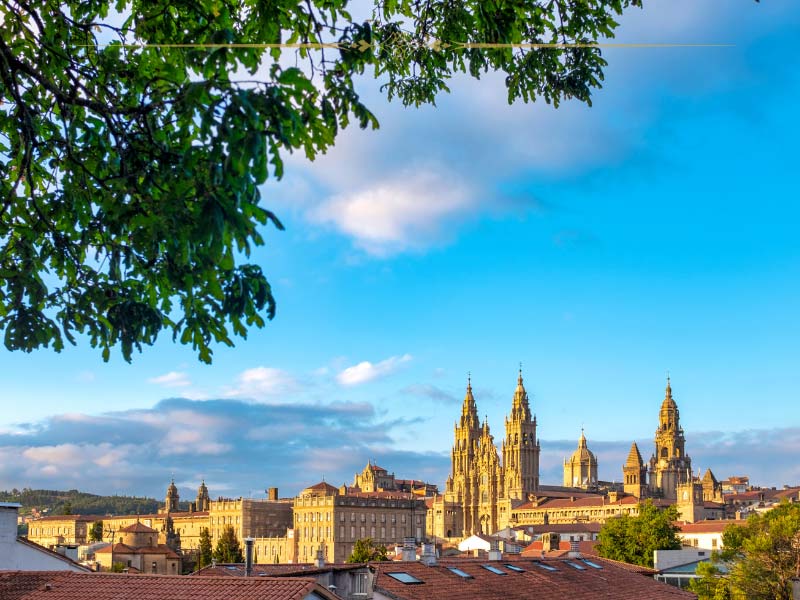
Arriving in Santiago de Compostela is an emotional moment for many people. Standing in the main square, watching other walkers arrive, there is a strong sense of shared achievement.
But what many people do not expect is how much the Camino stays with them once they return home. The habits you form on the road, walking every day, slowing down, needing less, have a way of carrying over into everyday life.
The Camino does not always give clear answers, but it often changes the way you look at things.
Final Thoughts
The Camino de Santiago is not just a famous walking route but a journey shaped by people, places and quiet moments that cannot be planned. Whether you walk for cultural interest, personal reasons or simply because you enjoy being on foot, the Camino offers something rare. Time and space to move at a human pace.
With thoughtful preparation and gentle guidance it becomes less about reaching a destination and more about everything that happens along the way.

Like it? Pin it!
Disclaimer: Some of the links on this website are “affiliate links.” This means that if you click on the link and do a purchase, I will receive an affiliate commission at no extra cost for you. This helps me keep my website running and continue to share my travelling knowledge with you. I thank you for booking your flights or hotels using the links on my website. Regardless, I only recommend products or services I use personally and believe will add value to my readers.