
While Everyone Was Focused on Italy Closing Its Citizenship Pathway, the Country Opened a Different Route That Thousands of Americans Could Use. The Problem Is Almost Nobody Knows It Exists.
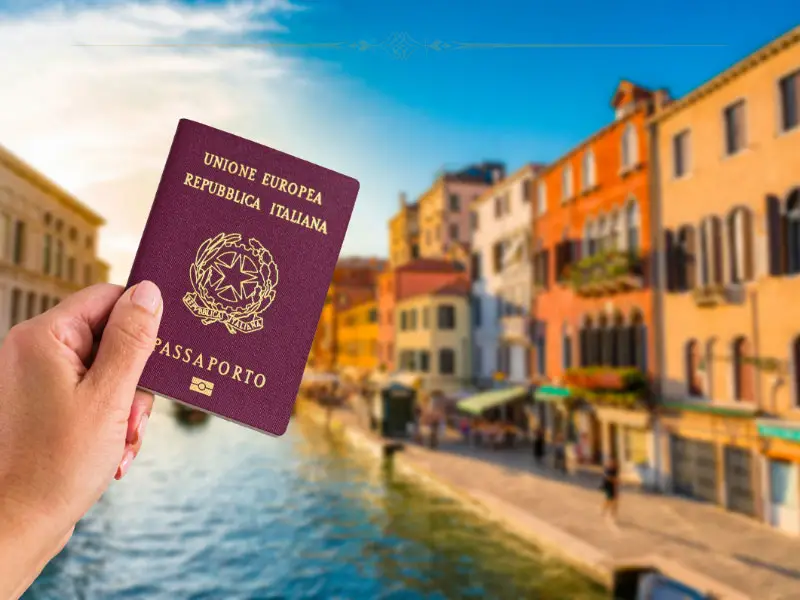
Italy made major changes to its citizenship laws in 2025, and the news coverage focused almost exclusively on what the country took away. Italy closed its broad pathway to citizenship by descent that had previously allowed Americans with great-grandparents or earlier Italian ancestors to claim citizenship through bloodline. The closure was significant and affected hundreds of thousands of Americans who had believed they might qualify for Italian citizenship. The disappointment was real and the coverage was substantial.
What received far less attention, and what most Americans have completely overlooked, is what the same Italian law quietly opened. Buried within the same legal framework that closed the broader descent pathway is a new residency-based citizenship route specifically designed for people with more recent Italian ancestry. The pathway allows foreigners with an Italian-born parent or grandparent to acquire Italian citizenship through two years of legal residency in Italy rather than through paper descent claims.
This pathway is not theoretical. It has been formally implemented by Italian consulates and immigration offices beginning in spring 2026, following confirmation by Italy’s Constitutional Court. Italian immigration attorneys have been actively directing clients toward this option as a realistic alternative to the now-closed descent pathway. For Americans with relatively recent Italian ancestry, particularly those whose descent claims were broken by ancestors who naturalized in the United States, this two-year residency option represents a genuine pathway to Italian and European citizenship.
The pathway requires actual commitment and genuine relocation to Italy. It is not a paper-only process that can be completed from the United States. But for Americans who were open to the idea of living in Italy anyway, or who are now reconsidering their life circumstances and exploring the possibility, the pathway offers something previously unavailable: accelerated access to Italian citizenship through lived connection rather than through bloodline alone.
What Got Closed and What Quietly Opened
Italy’s Law 74/2025, signed in May 2025 and officially confirmed by the Constitutional Court in March 2026, fundamentally restructured how Italy treats citizenship claims through descent. The law closed the jure sanguinis pathway that had allowed Americans with distant Italian ancestors to claim citizenship regardless of how many generations had passed since the Italian ancestor immigrated to America. Under the old rules, an American whose great-great-grandfather left Italy in the 1890s could potentially claim Italian citizenship if the chain of citizenship had remained technically unbroken.
The new law imposed strict limits on how distant an Italian ancestor could be. Citizenship by descent now only applies to applicants with a parent or grandparent who held Italian citizenship, and the descent chain cannot be broken by foreign naturalization at any point. For Americans whose Italian ancestors naturalized as American citizens before having children, the descent pathway no longer works. The closure has been the dominant story, and for good reason. Hundreds of thousands of Americans who believed they might qualify for Italian citizenship through distant ancestry are now ineligible.
But the same law, in Article 1-bis, paragraph 2, introduced something different. It created a two-year residency-based pathway to naturalization for foreigners whose parent or grandparent is or was an Italian citizen by birth. This pathway is separate from and operates under different rules than the descent pathway. The Italian ancestor does not need to have maintained unbroken Italian citizenship. They simply need to have been born an Italian citizen at some point in their lives. Even if they naturalized as American immediately afterward and were American citizens for the rest of their lives, they still qualify as the required Italian-born parent or grandparent.
The two-year pathway operates through Italian naturalization law rather than through descent law. The applicant must establish legal residency in Italy, maintain continuous presence for two years, demonstrate intermediate-level Italian language proficiency, pass a criminal background check, and then apply for naturalization. The application process is the same as for any foreigner seeking Italian citizenship, except the two-year residency requirement replaces the standard ten-year requirement. The compression of the timeline is substantial: from ten years down to two years for qualifying applicants.
How Eligibility Actually Works
The requirements for accessing this pathway are specific, and understanding exactly who qualifies is the first practical step for any American considering it. The most important requirement is the qualifying relationship. The applicant must have a parent or grandparent who was an Italian citizen by birth. This means the person was born in Italy as an Italian citizen, before any foreign naturalization. The ancestor does not need to have remained Italian. They can have naturalized as American, Canadian, British, Australian, or any other nationality at any point in their lives. What matters is the original Italian birth and citizenship status.
For Americans whose great-grandfather immigrated from Italy to America in 1900 and became a United States citizen shortly after, that grandfather still qualifies as the required Italian-born ancestor. His American naturalization does not retroactively erase the fact that he was born an Italian citizen. His grandchildren and great-grandchildren can therefore use him as the qualifying relationship for the two-year pathway, even though they would not qualify for the descent pathway because the naturalization broke the descent chain.
This distinction is crucial for understanding who can access the pathway. The Americans most affected by the closure of the broader descent pathway are often the same Americans who can access the two-year residency pathway. The grandfather born in Italy who naturalized as American before having children creates a descent claim that is broken and therefore ineligible under the new law. That same grandfather creates a residency pathway claim that is fully valid. His grandchildren can use him to qualify for accelerated residency-based naturalization.
Documentation of the qualifying relationship must be available and properly authenticated. Birth certificates, marriage certificates, death certificates, naturalization records, and other vital documents establishing the lineage from the Italian ancestor to the applicant are required. These documents must be apostilled, meaning they must receive official certification that they are genuine according to international standards. The documentation requirements are similar to what descent applicants must gather, and for many Americans, the documents are already available or can be obtained from government records offices.
The Financial and Practical Requirements
The two-year pathway is not accessible to everyone, regardless of whether they have the qualifying Italian ancestor. Several practical and financial requirements must be met. The most significant is the visa requirement. An applicant cannot simply move to Italy and establish legal residence without authorization. They must first obtain an appropriate Italian visa from a United States consulate or embassy, then convert that visa to a residence permit upon arrival in Italy.
Several visa categories can work for this pathway. The Elective Residence Visa is the most common option for retirees and people with passive income. This visa typically requires demonstrating approximately $32,000 in annual income from passive sources such as investments, rental income, or retirement accounts. The Digital Nomad Visa is designed for remote workers and typically requires demonstrating approximately $28,000 in annual income from remote work for a foreign employer. Other visa options include investor visas for people making qualifying investments, family reunification visas if the applicant has Italian family members, and work visas if the applicant can secure an employment offer from an Italian employer.
The financial requirement to support two years in Italy extends beyond the visa income threshold. The applicant must demonstrate the ability to support themselves financially during the residency period and cannot be dependent on Italian government assistance. The cost of living in Italy varies dramatically depending on location. A retiree in a small southern Italian village might live comfortably on $25,000 annually, while someone in Rome or Milan might need double that amount. Americans considering this pathway need to honestly assess their financial capacity to live in Italy for two years without income from Italian employment, if they choose an Elective Residence or Digital Nomad Visa.
The language requirement is another significant hurdle. Applicants must reach B1-level Italian language proficiency, which is intermediate proficiency. At this level, a speaker can carry on conversations about familiar topics, handle most situations encountered in an Italian-speaking environment, and communicate in writing with reasonable competence. B1 is not fluent, but it is substantially beyond beginner-level Italian. Most American adults without prior Italian language exposure can reach B1 within nine to eighteen months of dedicated study, but the timeline varies significantly by individual aptitude. Americans unwilling or unable to invest in serious Italian language acquisition will not pass the required B1 language exam and will not complete the citizenship process.
What Two Years in Italy Actually Involves
The two-year residency requirement is not a paper qualification that can be satisfied through brief visits. The applicant must actually live in Italy continuously for the two-year period. This means relocating to Italy, establishing a home, opening bank accounts, registering with local government, obtaining Italian tax identification numbers, and integrating into Italian daily life.
The first year typically involves substantial administrative work and cultural adjustment. The applicant obtains the long-term Italian visa from a U.S. consulate, a process that takes two to four months. Upon arrival in Italy, the visa must be converted to an official residence permit at the local police office, a process that can take four to eight weeks and involves Italian bureaucratic procedures that often move slowly. The applicant must register at the local municipality to establish legal residence, a process called anagrafe registration. They must open Italian bank accounts, obtain a codice fiscale (tax identification number), and set up housing, utilities, internet, and mobile phone service.
Simultaneously, the applicant must begin serious Italian language study. This typically involves formal language classes through schools or private tutoring. Daily immersion in the language through normal living, working, or volunteering accelerates progress. Many Americans report that the first six months of residency in Italy involve significant frustration as they grapple with language barriers, bureaucratic processes that operate on different principles than American systems, and cultural differences in how daily life functions.
The second year typically involves deeper integration and language improvement. By this point, the applicant has navigated the Italian bureaucratic system once and understands how it functions. Italian language proficiency increases through daily exposure and use. Social connections develop as relationships with neighbors, colleagues, friends, and acquaintances form through the normal course of living in Italy. The B1 language exam is typically scheduled during the second year, usually around month twelve to eighteen of residency, to give the applicant time to prepare and take the exam.
Toward the end of the second year, the applicant begins preparing the citizenship application. This requires updated criminal background checks from both Italy and the United States, current tax documentation proving financial self-sufficiency, the B1 language certificate, and the documents establishing the lineage to the Italian ancestor. The application is filed with the provincial government office, called the Prefettura, of the applicant’s province of residence.
The Timeline and Total Commitment
The total timeline from initial planning to citizenship in hand is substantially longer than the two-year residency requirement itself. The consular processing for the initial visa takes two to four months. The residency permit conversion takes another four to eight weeks. The two years of required residency must then be completed. Then the citizenship application itself enters processing, which officially takes up to twenty-four months, though some cases are processed faster and others take longer. The realistic total timeline is four to five years from the initial application to a consulate through receiving Italian citizenship.
This is significantly faster than the standard path to naturalization, which requires ten years of residency in Italy plus processing time. The two-year pathway is roughly half the total time for people who qualify. But Americans should not view it as quick. It is a multi-year project that requires sustained commitment.
For Americans who are open to actually moving to Italy and building a life there, the timeline is manageable. For Americans seeking to acquire an Italian passport quickly while maintaining their primary residence in the United States, the pathway does not work. The residency requirement is real and cannot be waived or shortened through exceptional circumstances.
Who This Pathway Actually Fits
The two-year residency pathway works for specific categories of Americans. It works poorly or not at all for others. Honest self-assessment is essential before committing to the process.
The pathway works best for Americans with a grandparent or parent born in Italy whose descent chain was broken by foreign naturalization. These are the Americans most directly affected by the closure of the broader descent pathway and most well-served by this residency alternative. The grandfather who came to America and naturalized does not support a descent claim, but he does support a residency pathway claim. His grandchildren can use the pathway to acquire Italian citizenship.
The pathway works for Americans who genuinely want to live in Italy, not just for those who want an Italian passport as a piece of paper. This is the defining characteristic. The pathway requires actual relocation and genuine integration. Americans who want EU citizenship purely for the passport and have no interest in actually living in Italy should not pursue this route. The two-year residency requirement will catch anyone trying to fake it, and the resulting waste of time and money will be substantial.
The pathway works for Americans with sufficient financial resources. The visa requirements combined with the cost of two years of Italian living require approximately $80,000 to $200,000 in available capital, depending on location and lifestyle. Americans without access to these financial resources will struggle to qualify for the visa and cannot sustain two years in Italy.
The pathway works for Americans willing to learn Italian to B1 level. This requires sustained effort over many months. Americans unwilling to make this investment will not pass the B1 exam and will not complete the citizenship process.
The pathway works for Americans at life stages or career stages that accommodate the multi-year commitment. Retirees, semi-retirees, remote workers with location flexibility, and people on career transition or sabbatical are the most likely to succeed. Americans in the middle of demanding careers requiring continuous U.S. presence generally cannot make the commitment.
Where This Reconceptualizes Italian Citizenship
The two-year pathway represents a specific reconceptualization of how Italy treats citizenship claims from descendants. Italy has not abandoned its descendants. Instead, Italy has redefined what connection means. Distant ancestry through paper descent alone no longer produces citizenship. Recent ancestry combined with genuine residency through lived connection produces citizenship through an accelerated pathway.
The Italian government is essentially saying: if you have a parent or grandparent who was Italian, and if you are willing to actually come to Italy and build a life here, we will welcome you as a new Italian citizen. The connection has to be real, meaning lived and experienced. But lived connection counts at an accelerated rate compared to foreigners without Italian heritage.
For Americans whose great-grandparents left Italy over a century ago and who have no direct family connection to Italy, the descent pathway no longer works. For Americans whose grandparent or parent was born in Italy, whether or not that ancestor remained Italian, the two-year residency pathway works. The distinction recognizes that citizenship becomes meaningful when there is genuine connection, not just genetic connection.
This pathway opened quietly in spring 2026. Italian consulates have been implementing it. Italian immigration attorneys have been directing clients toward it. But the dominant media narrative has been about closure rather than opening. Most Americans tracking Italian citizenship news have been processing the disappointment of the descent closure without realizing the residency alternative exists.
For Americans who meet the requirements and who are genuinely open to building a life in Italy, the pathway is available now. The work involved is real, the timeline is substantial, and the commitment is significant. But for the right applicants, the outcome is genuine Italian citizenship and access to the entire European Union. For Americans who want that outcome and who are willing to invest the years required to make it happen, the pathway that quietly opened this spring is worth pursuing.