
Italy has long attracted people from around the world with its beautiful cities, relaxed lifestyle, rich history and famous cuisine. Every year, thousands of people consider moving there, whether for retirement, work, study or simply a different way of life. What many don’t realise is that some may already have a legal connection to the country through their family history.
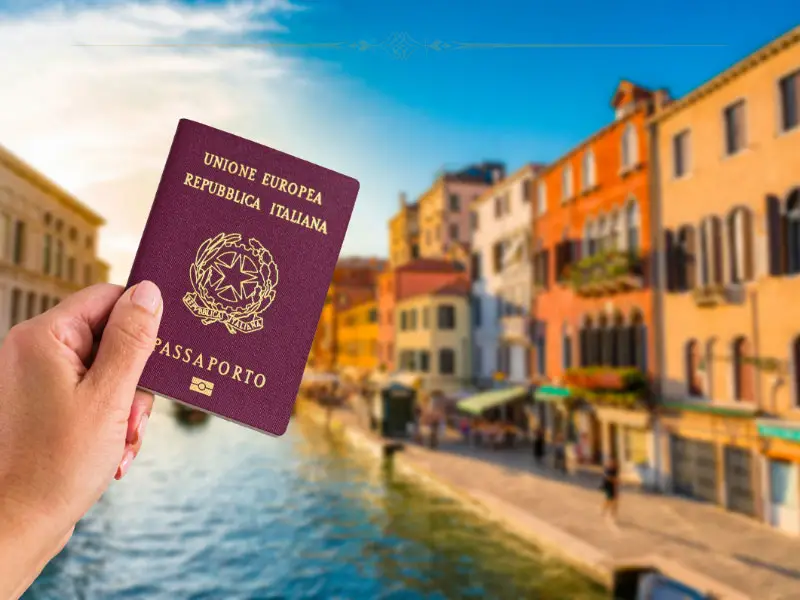
Italian citizenship by descent has become an increasingly popular route for people whose parents, grandparents or even more distant ancestors were born in Italy. In some cases, individuals who have never lived in Italy and do not speak Italian may still qualify for citizenship because of their ancestry.
For those who are eligible, obtaining Italian citizenship does not only mean becoming an Italian national. It also provides the rights that come with citizenship of a European Union member state, allowing people to live, work and study across the EU without needing visas or residence permits.
Although the process can take time and requires careful preparation, many applicants are now researching their family trees to discover whether they qualify.
How citizenship through ancestry works
Unlike some countries that place greater emphasis on where a person is born, Italy largely follows a legal principle known as jure sanguinis, or “right of blood”. This means citizenship can be passed from one generation to the next through family lines.
In practical terms, this allows descendants of Italian citizens to claim Italian citizenship if certain legal conditions are met. The key factor is proving that citizenship was successfully passed through each generation without being interrupted.
This is why researching family history is often the first step. Birthplaces, marriage records and naturalisation documents can all become important pieces of evidence during the application.
Many applicants discover their Italian roots through conversations with relatives, old family records or genealogy websites. Others only learn about their eligibility after researching their family tree for personal interest.
Why the year 1861 is so important
One date appears repeatedly in citizenship applications based on Italian ancestry: 17 March 1861.
That was the day the Kingdom of Italy was officially established, marking the creation of the modern Italian state. Because citizenship is linked to the existence of Italy as a unified country, this date plays an important role when determining eligibility.
Generally speaking, the Italian ancestor through whom citizenship is claimed must have been alive as an Italian citizen after the formation of the modern state. This historical detail often becomes one of the first things applicants verify when researching their family history.
Understanding where and when an ancestor was born can therefore make a significant difference to whether an application can proceed.
Not every family line follows the same rules
Although citizenship can often be passed down through several generations, the law contains some important distinctions.
One of the best-known concerns applications through female ancestors.
Italian law historically treated men and women differently when it came to passing on citizenship. As a result, descendants whose citizenship claim depends on an Italian woman face additional legal considerations.
For family lines involving Italian mothers, citizenship by descent generally applies only if the next generation was born on or after 1 January 1948. This date reflects changes introduced after Italy adopted its republican constitution.
Families whose ancestry falls outside these rules are not necessarily excluded altogether. Some applicants pursue their claims through the Italian courts, where certain cases involving pre-1948 maternal lines have been recognised.
Because these situations are often legally complex, many applicants choose to seek specialist advice before beginning the process.
Keeping the citizenship chain intact
One of the most important parts of any application is proving that Italian citizenship was continuously passed from one generation to the next.
Several circumstances may interrupt this chain.
Historically, many Italians emigrated to countries including the United States, Canada, Argentina, Australia, Brazil and the United Kingdom. Large numbers later became citizens of their new countries.
Whether this affects descendants depends largely on when naturalisation occurred.
If an Italian ancestor voluntarily became a citizen of another country before 16 August 1992, it may have affected their Italian citizenship. Timing is particularly important because if that naturalisation happened before the birth of the next generation, citizenship may no longer have been passed on.
Older cases involving women who automatically acquired another nationality through marriage before 1948 can also require additional examination.
For this reason, naturalisation records often become some of the most valuable documents in the entire application.
Why interest has grown in recent years
Applications for Italian citizenship by descent have increased significantly over the past few years.
Several factors have encouraged more people to investigate whether they qualify.
Remote working has allowed many professionals to consider relocating overseas while keeping their existing jobs. Others have become interested in spending part of the year living in Europe after retirement.
For younger applicants, access to European universities and employment opportunities has also become an important consideration.
Holding Italian citizenship provides the right to live in Italy without immigration restrictions. As Italy is a member of the European Union, citizens also enjoy freedom of movement across other EU countries under European rules.
For some families, citizenship is about reconnecting with their heritage. Others see it as creating additional opportunities for future generations.
Whatever the motivation, growing awareness of citizenship by descent has encouraged more people to begin researching family history that may have been forgotten for decades.
Finding the documents that matter
Family stories alone are not enough to establish citizenship.
Applicants must provide official records showing every generation connecting them to their Italian ancestor.
This usually involves collecting birth certificates, marriage certificates and death certificates covering the entire family line.
Naturalisation records are equally important. Where an ancestor never became a citizen of another country, applicants may instead need official confirmation that no naturalisation took place.
Obtaining these documents can be one of the longest stages of the process.
Some records remain in Italian municipal archives, while others are held by national or regional authorities overseas. Older certificates may exist only in handwritten registers dating back more than a century.
Small spelling differences between documents can also create delays, especially where names were changed after immigration or translated into another language.
Many applicants therefore spend months locating and checking records before officially submitting their application.
Why translations and authentication matter
Collecting certificates is only part of the preparation.
Documents issued outside Italy generally need to be translated into Italian before they can be accepted.
In many cases they must also undergo legal authentication to confirm they are genuine.
The exact requirements depend on where the documents were issued, but applications containing incomplete or incorrectly prepared paperwork can face delays.
Even small differences involving dates, surnames or places of birth may need to be explained before an application continues.
Carefully checking every document before submission can help avoid unnecessary complications later.
Patience is part of the process
Unlike some immigration procedures, citizenship by descent is rarely completed quickly.
Official processing alone commonly takes around two years, although more complicated applications may take closer to three years.
This estimate does not include the time needed beforehand to research family history and obtain records from multiple countries.
Applicants should therefore expect the entire process to take several years from beginning to end.
While waiting can be frustrating, careful preparation at the start often helps reduce problems later in the application.
Understanding the costs involved
Applying for Italian citizenship by descent involves more than the official application fee.
The current application fee is €300, but applicants should also budget for obtaining certificates, certified translations and document authentication.
Some people also decide to hire professional genealogists to trace family records or legal specialists to assist with more complex cases.
The overall cost varies considerably depending on how many generations need to be documented and how easily records can be obtained.
Applicants whose documents are already organised may spend considerably less than families needing to locate historical records across several countries.
Common reasons applications become more complicated
While many applications proceed successfully, several issues regularly create delays.
One of the most common is incomplete documentation.
Missing birth certificates, marriage records or naturalisation papers can prevent authorities from confirming the family line.
Differences between official records can also require correction. Surnames may have been altered during immigration, dates may not match perfectly, or places of birth may be recorded differently across various documents.
Older handwritten records can sometimes be difficult to read, adding another layer of complexity.
Because every generation must connect correctly to the next, even a relatively small inconsistency may require further investigation before an application can continue.
How people usually begin the process
For most applicants, the journey starts with family research rather than legal paperwork.
Speaking to older relatives often provides valuable information about where ancestors were born and when they emigrated. Old passports, family photographs and immigration papers may also contain useful clues.
Once an Italian ancestor has been identified, applicants generally begin locating official records from Italy and the countries where later generations were born.
As documents are gathered, it becomes easier to establish whether the legal requirements appear to be satisfied before submitting an application.
Some people complete the process independently, while others work with genealogy specialists or legal professionals, particularly if their case involves historical complications or missing records.
A growing interest in reconnecting with Italian roots
Interest in Italian citizenship through ancestry continues to grow as more people discover family connections stretching back several generations.
For some, the process represents an opportunity to reconnect with family history that was gradually forgotten after ancestors emigrated decades ago. For others, it offers practical advantages that come with becoming an Italian and European Union citizen.
Whatever the motivation, eligibility depends on meeting specific legal requirements rather than simply having Italian heritage. Applicants must demonstrate an uninterrupted line of citizenship and provide the official documentation needed to support every stage of their family history.
Although gathering records and waiting for decisions requires time and patience, those who qualify may find that their great-grandparents left behind more than family stories. Their ancestry could also provide a legal route to Italian citizenship and the opportunities that come with holding an EU passport.




Great article. I’ve been through the process and have a slight tweak for you… 1861 is indeed a critical date, but your Italian ancestor just needed to have been alive in this year. Even if your ancestor was born in 1830 before the republic was formed, they would have become an Italian citizen in 1861.
The hardest part of this process is getting an appointment with the Italian consulate in your region. Some regions have regular openings while others, seemingly have none and for long periods of time! As an alternative, you can petition the courts in Italy and/or move there and then manage this through the courts, but information on this path is difficult to find.