There are two types of people at an airport gate. The first group starts gathering as soon as the gate number appears on the departure screen. Some are already standing in a queue before the airline has even announced boarding. They have their boarding passes open, their passports in hand and their carry-on bags ready.
Then there are the others. They remain comfortably seated, watching the queue grow, checking their phones or finishing a coffee. Even when the first boarding groups disappear down the jet bridge, they show no particular interest in joining them. They wait until most passengers have boarded before finally getting up and making their way to the aircraft.
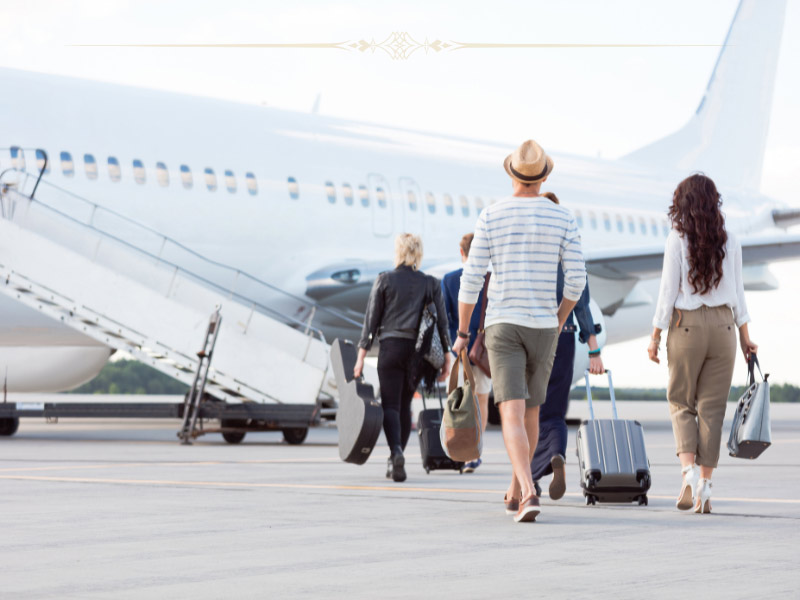
At first glance, it might look like they are running late or simply have no sense of urgency. But for some frequent flyers, waiting until the last possible moment is a deliberate travel strategy.
They know that boarding early does not mean the plane will take off earlier. They also know that the time spent inside an aircraft can feel considerably longer when everyone is still finding their seats, lifting suitcases into overhead compartments and moving around the cabin.
So why rush to get on?
There are several reasons why experienced travelers deliberately avoid being among the first passengers to board. Some are about comfort, others about avoiding the crowds, and a few are linked to the way airlines organise the boarding process. And while the strategy can make the airport experience more pleasant, it comes with one important risk: wait too long and you could find yourself watching your flight leave without you.
They simply don’t want to spend more time on the plane
One of the biggest reasons people wait to board is surprisingly simple. They do not want to spend any more time sitting inside an aircraft than necessary.
Think about what happens when you board early. You find your seat, put your personal belongings away, squeeze your carry-on into an overhead compartment and sit down. Then you wait.
And wait.
The boarding process can take quite a while, especially on a full flight. Passengers are still walking down the aisle, stopping to let others pass, trying to find their assigned seats and rearranging luggage in the overhead bins. The person sitting next to you might need to get up several times to allow other passengers into the row.
Even after the last passenger has taken their seat, the aircraft may still be waiting for the doors to close, the final checks to be completed and clearance to push back from the gate.
If you board 40 minutes before departure, you could spend a considerable amount of that time sitting in your seat without the aircraft moving.
For someone who dislikes being confined in a small space, this is not particularly appealing. It can feel much nicer to spend those extra minutes walking around the terminal, stretching your legs or having one last coffee before getting on the plane.
This is especially true on long-haul flights. If you are about to spend eight, ten or twelve hours in the air, there is little incentive to add another half hour of sitting in an aircraft that has not even left the gate.
Of course, waiting until the final boarding call does not shorten the flight itself. It simply reduces the amount of time you spend waiting inside the cabin.
They don’t want to stand in the boarding queue
Have you ever noticed how quickly passengers form a queue at the gate?
Sometimes it starts before boarding has officially opened. People begin gathering around the entrance, even though their group has not been called. Others stand nearby, watching the gate agent and waiting for the slightest indication that they can move forward.
It can create an uncomfortable crowd, particularly at busy airports where several flights are boarding from gates close to each other.
For passengers who prefer a calmer airport experience, there is little appeal in joining this crowd. If their boarding group has not been called, they would rather stay seated and wait.
This is one of the behaviours discussed in a Washington Post article about the psychology of airline boarding. The article focused mainly on passengers who rush to the gate before their group is called, a habit sometimes referred to by airline employees as being a “gate louse”. But it also highlighted the contrast with travelers who prefer to remain seated until the queue has mostly disappeared.
For the latter group, the reasoning is practical. There is no point standing in a crowded line when you could be sitting comfortably a few metres away.
If you have an assigned seat, your place on the aircraft is already secured, provided you meet the airline’s boarding deadline. Getting into the queue early does not give you a better seat or make the journey shorter.
There is also something to be said for avoiding the rush. Boarding can be one of the most chaotic parts of air travel, and some passengers would rather let everyone else get on with it before joining the process.
Boarding early doesn’t mean taking off earlier
This is perhaps the biggest misconception about airline boarding.
Some passengers seem to believe that getting onto the aircraft as quickly as possible means they will reach their destination sooner. In reality, the time you board and the time the aircraft takes off are two separate things.
Airlines usually have a scheduled departure time, but the aircraft cannot leave simply because a few passengers are already seated. The crew still has to complete the boarding process, secure the cabin, close the doors, carry out the required checks and receive permission to push back and taxi.
If you are among the first passengers on board, you might end up sitting for 30 or 40 minutes before the plane moves. Someone who boards near the end of the process may spend much less time waiting in their seat, yet both passengers will take off on the same aircraft.
There are, of course, exceptions. If boarding is delayed, if there is a problem with a passenger or if the aircraft is waiting for connecting travelers, the schedule can change. But in normal circumstances, being first through the aircraft door does not give you a head start.
Airline boarding procedures are designed to get everyone seated and ready for departure, not to reward the passengers who reach the gate first.
For travelers who understand this, rushing to board can seem like an unnecessary part of the airport experience.
They don’t have a problem with overhead bin space
There is one important reason why some passengers choose to board early, and it is also the main disadvantage of waiting until the end: overhead bin space.
Anyone who has travelled on a busy flight knows how frustrating it can be to find that the compartments above their seat are already full. You might have a perfectly valid carry-on bag, but there is nowhere to put it.
This is particularly common on flights where many passengers bring larger cabin bags instead of checking luggage. As airlines charge for checked bags on many fares, passengers have become increasingly protective of their cabin baggage allowance.
The result is competition for limited overhead storage.
Passengers who board early generally have a better chance of finding space close to their assigned seats. Those who board towards the end may have to store their bags several rows away, or have them taken at the gate if there is no room left.
American Airlines, for example, warns passengers travelling on its Basic Economy fares that overhead bin space is usually full by the time their boarding group is called. Its Basic Economy passengers typically board in Group 9, towards the end of the process.
This is one reason why waiting until the last minute is not a suitable strategy for everyone.
If you travel with a large carry-on suitcase and want it within reach of your seat, boarding early can be worth it. If you only have a small personal item that fits under the seat in front of you, you have much less to worry about.
Some frequent flyers who deliberately board late are happy to have their larger carry-on checked at the gate. They would rather avoid the boarding queue and the hassle of finding space in the cabin. For them, collecting a suitcase at baggage claim is a reasonable trade-off.
Others travel with everything they need in a small backpack, so the overhead compartments are not particularly important.
The decision often comes down to how much luggage you bring and how much you value having it close to you.
They prefer to spend their time in the airport lounge
For passengers with access to an airport lounge, there is another reason to delay boarding.
Airport lounges offer a more comfortable place to wait than a crowded departure gate. Depending on the lounge, you might have access to food, drinks, quieter seating, showers, workspaces and charging points.
If you have paid for lounge access, hold an eligible premium ticket or have frequent-flyer status, you may as well make use of the facilities for as long as possible.
Leaving the lounge as soon as boarding begins means giving up that comfort to sit inside an aircraft that is not going anywhere yet.
Some travelers therefore keep an eye on the boarding time and remain in the lounge until the process is well underway. They make their way to the gate when most passengers have already boarded.
This can be particularly appealing during a long layover. If you have spent several hours waiting for a connecting flight, the last thing you might want is to spend an additional 30 minutes sitting in an economy seat before departure.
However, this approach requires a little attention. Lounge announcements are not always available, and the walk to the gate can take longer than expected. At large airports, a gate might be a considerable distance away, sometimes requiring a train or shuttle transfer.
The comfort of the lounge is not worth missing your flight.
They want to avoid the chaos inside the cabin
The boarding process is rarely a particularly relaxing experience.
Passengers are trying to find their seats, lifting bags above their heads, moving into rows and stepping aside to allow others to pass. Someone might realise they are in the wrong seat, another person might be struggling to fit a suitcase into the overhead compartment, and a family may be trying to organise several bags at once.
The aisle can quickly become congested.
Boarding towards the end means that much of this activity has already happened. There are fewer people walking around, fewer passengers trying to get past one another and less chance of being stuck behind someone who is taking several minutes to organise their belongings.
You can walk to your seat, put away your smaller bag and settle in without having to navigate quite as much activity.
It does not mean the cabin will be completely quiet. The final passengers may still be getting seated, and flight attendants will be carrying out their pre-departure duties. But for some travelers, avoiding the busiest part of boarding makes a noticeable difference.
This is particularly relevant for people who find crowded spaces uncomfortable or simply prefer to keep their airport experience as straightforward as possible.
Some passengers are trying to avoid the pressure of boarding groups
Airlines have introduced boarding groups to organise the process and prevent every passenger from trying to enter the aircraft at the same time.
The exact system varies by airline, but passengers are generally called in a set order based on factors such as ticket class, frequent-flyer status, seat location, family boarding and other eligibility criteria.
American Airlines, for example, has multiple boarding groups, with premium passengers and eligible loyalty members called earlier than most economy passengers. Delta and United also use their own boarding group systems.
The problem is that boarding announcements can create a sense of urgency, even when there is no need to rush.
Passengers hear their group being called and immediately get up, even if there is already a long queue. Others join the line before their group is announced because they worry that they might somehow miss their opportunity.
For travelers who are familiar with the process, this can seem unnecessary. They know their group number, they know where the gate is and they understand that they have a specific window in which to board.
Rather than following the crowd, they wait until the queue has shortened.
It is a small way of taking control of an airport routine that can otherwise feel unnecessarily stressful.
They might be travelling with only a personal item
The amount of luggage you bring on board can make a big difference to your boarding strategy.
If you have a large roller suitcase, a laptop bag and a personal item, boarding early can be useful. You have more opportunities to find space in the overhead compartments and arrange your belongings before the cabin fills up.
But if you travel with only a small backpack or handbag, the situation is different.
A personal item that fits underneath the seat in front of you does not need overhead storage. You can walk onto the aircraft, place it under the seat and sit down.
There is little reason to rush for a compartment that you do not intend to use.
This is one reason why minimalist travelers can be more relaxed about boarding. They are not competing for overhead bin space, and they do not need to spend time rearranging their luggage once they reach their row.
It is also worth remembering that airlines have different rules about what counts as a personal item and what can be taken into the cabin. Check your ticket conditions before travelling, particularly if you are flying on a Basic Economy fare.
Is waiting until the last minute actually a good idea?
There are clear advantages to boarding later. You spend less time sitting inside the aircraft, avoid standing in a crowded queue and may have a calmer experience getting to your seat.
But there is a difference between boarding late and cutting it too close.
Airlines do not keep the gate open indefinitely. Boarding usually finishes before the scheduled departure time because the crew needs time to prepare the aircraft for departure.
American Airlines says that most of its flights begin boarding 30 to 50 minutes before departure, depending on the destination and aircraft. It also states that boarding ends 15 minutes before departure. Passengers who are not on board by then risk having their seats reassigned, and they cannot board once the doors have closed.
Other airlines have their own deadlines, which can vary by airport and destination. You should always check the boarding time printed on your boarding pass and the airline’s instructions.
It is also important to remember that the scheduled departure time is not the time you should aim to reach the gate. By then, boarding may already be finished.
If you are flying from a large airport, allow enough time to walk to the gate. Some terminals are enormous, and a gate change can add an unexpected journey across the airport.
Waiting until the final call might save you a few minutes inside the cabin, but missing your flight could cost you considerably more.
When boarding early makes more sense
Although waiting until the end works for some travelers, there are situations where boarding early is the better option.
If you are travelling with children, having extra time to settle them into their seats, organise snacks and put away their belongings can make the journey easier. Airlines often offer family boarding or early boarding for passengers travelling with very young children.
Passengers who need additional assistance may also be eligible to board early. This can provide more time to get settled without having to navigate a crowded aisle.
If you have mobility difficulties, need extra time to reach your seat or are travelling with medical equipment, speak to the airline before your flight about the assistance available.
Boarding early is also sensible if you are carrying items that need to go into the overhead compartment and want to avoid the possibility of having to store them far from your seat.
And if you have a tight connection, it may be worth being ready to board as soon as your group is called, particularly if the airport is unfamiliar and you do not want to risk any last-minute confusion.
The best boarding strategy is the one that makes your journey easier, not necessarily the one that gets you onto the aircraft first.
So, when should you actually board?
There is no universal answer. It depends on your luggage, your seat, the airline’s boarding rules and how much you value those extra minutes in the terminal.
If you have a large cabin suitcase and want it close to your seat, boarding when your group is called is a sensible choice. If you are travelling with a small backpack that fits under the seat, you might be perfectly happy waiting until most passengers have boarded.
If you have lounge access, you may prefer to enjoy it for as long as possible. If you are travelling with children or need assistance, boarding early can make the process less stressful.
What matters is knowing the airline’s boarding deadline and giving yourself enough time to reach the gate.
The next time you see passengers sitting calmly while everyone else rushes to form a queue, do not automatically assume they are disorganised or running late. They may simply have worked out that there is no prize for being the first person on the plane.
For some travelers, the holiday starts when they reach the airport. For others, it starts when they finally take their seat, just before the aircraft door closes.