
There is a particular kind of frustration that comes with waiting for checked luggage. You have made it through the flight, walked through the terminal, followed the signs to baggage claim, and found the carousel assigned to your flight. Then the belt starts moving.
A few suitcases appear. Someone grabs a bright pink carry-on-sized case. A family collects three bags at once. Passengers begin leaving the hall, one by one, while you keep looking for your own suitcase. Eventually, the belt seems to be carrying the same few bags around in circles. Yours is nowhere to be seen.
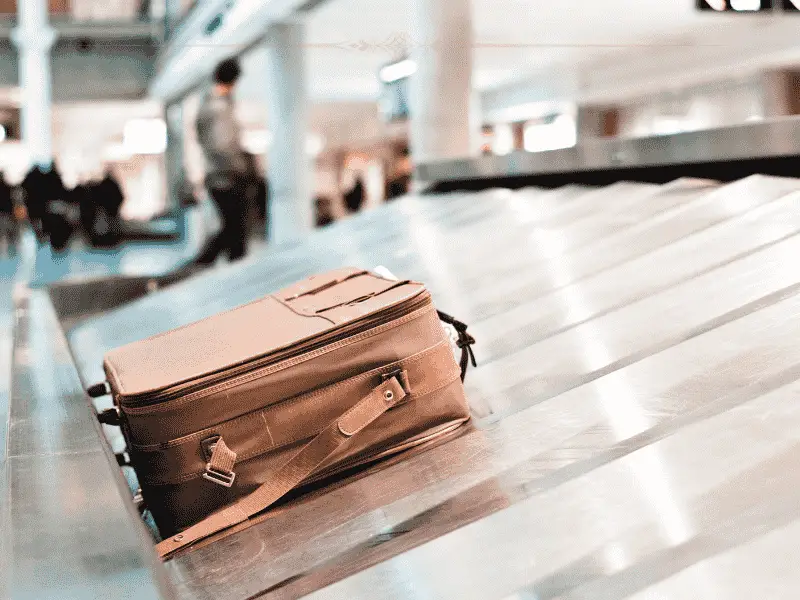
If this sounds familiar, you may have wondered if your suitcase was loaded last, if checking in early somehow put you at the back of the queue, or if the airline has misplaced it altogether.
The answer is more complicated than you might expect. Your suitcase could have been among the first bags loaded onto the plane. It could have been unloaded before many of the others. And it could still arrive last at the baggage carousel.
That is because the journey your suitcase takes after landing is not as straightforward as the one you take from the aircraft to the arrivals hall. The order in which bags are loaded, where they are stored, how ground crews unload them, and how they are transported to the terminal can all affect when you finally see your luggage.
So, why does your suitcase sometimes seem to be the last one out? And is there anything you can do to make it arrive sooner?
Your suitcase may have been loaded first
One of the most common explanations for a late-arriving suitcase is also one of the most counterintuitive: it may have been loaded onto the aircraft early.
Baggage is not always placed into the aircraft’s hold in the same order in which passengers check in. At many airports, suitcases are sorted by flight and then loaded into baggage carts or large containers before being transported to the aircraft. The containers are often known as unit load devices, or ULDs, and are designed to fit into the aircraft’s cargo hold.
The loading process has to take several things into account, including the aircraft’s weight and balance requirements. A plane cannot simply have all its luggage piled wherever there is room. The position of baggage matters, and loading teams follow procedures designed to keep the aircraft properly balanced.
This can mean that bags are loaded in batches, with one group of luggage placed in a particular section of the hold before another group is added.
When the aircraft arrives, the unloading process may happen in a different order. Depending on the aircraft and how the luggage has been arranged, bags that went into the hold early can be among the last to come out.
That does not mean every flight follows the same loading sequence. Aircraft types, airport facilities, baggage containers and airline procedures all vary. But it does help explain why checking in early is no guarantee that your suitcase will be among the first to appear.
The baggage carousel is only the final part of the journey
It is easy to imagine that once the plane lands, baggage handlers simply open the cargo hold, take out the suitcases and place them on the carousel.
In reality, the process involves several separate steps.
After landing, the aircraft has to reach its assigned stand or gate. Ground crews then begin unloading the luggage. Depending on the aircraft, bags may be taken out individually or removed in containers. They are transported across the airport on baggage carts or other equipment before reaching the baggage handling system that feeds the reclaim area.
At some airports, the route from the aircraft to the carousel is relatively short. At larger airports, it can involve a more extensive network of conveyors, sorting equipment and transport vehicles.
Toronto Pearson Airport, for example, describes how baggage handlers unload luggage from the aircraft, move it to the terminal and deliver it to the baggage carousel. The airport also notes that staffing, conveyor issues and weather can affect how quickly bags arrive.
This means that your suitcase could have been unloaded at roughly the same time as another passenger’s bag, but still reach the carousel later. The two suitcases may have travelled on different carts, entered the baggage system at different points or been delivered in separate batches.
The carousel is the final stop, not a live record of the order in which every suitcase left the aircraft.
Connecting bags can change the order
If you have ever watched the baggage carousel at a busy international airport, you may have noticed that the bags do not always arrive in a steady stream. Sometimes there is a sudden rush of suitcases, followed by a long pause.
One reason can be the way baggage is handled for connecting passengers.
A suitcase travelling to its final destination may follow a different route from one that needs to be transferred onto another flight. Transfer baggage has to be identified, sorted and sent to the correct onward flight, often within a limited time.
The International Air Transport Association says that baggage mishandling is particularly common during transfers. Its baggage-tracking requirements focus on key points in the journey, including when a bag is handed over, loaded onto an aircraft, delivered to a transfer area and returned to the passenger.
That does not mean connecting bags always arrive first or last at baggage claim. Their handling depends on the airport, the airline and the specific transfer arrangements. But it does show how much more complicated the journey can become when a suitcase has to move between flights.
At a large hub, a bag may be taken off one aircraft, sent through additional checks, sorted and loaded onto another plane. At the end of its journey, it still has to be delivered to the correct carousel.
If your suitcase is travelling on a nonstop flight, its route may be more straightforward. But even then, the order in which it reaches the belt can depend on the way the aircraft was unloaded and how the airport’s baggage system is operating.
Does checking in last mean your suitcase arrives first?
This is one of those airport theories that sounds plausible. If bags are loaded in batches, perhaps the suitcase checked in near the deadline is loaded last and therefore comes out first.
In some circumstances, a late-loaded bag could be easier to retrieve. But it is not a reliable way to get your luggage sooner.
The baggage system is not a simple first-in, first-out queue. A suitcase checked in early might be held in an automated storage area until it is ready to be sent to the aircraft. Another bag might be processed later but placed in a different container or section of the hold. The actual sequence depends on the airport and the flight’s loading plan.
Virgin Atlantic’s behind-the-scenes account of its baggage operation describes how bags are scanned, assembled into containers and moved to the aircraft in a planned sequence. The final bags may be brought into the process close to departure, but that does not mean every late bag will be unloaded first at the destination.
And there is a much bigger risk in trying to test the theory: checking in late can mean longer queues, less time to resolve a problem and, if you miss the baggage cutoff, the possibility that your suitcase will not travel with you.
The safest approach is to follow your airline’s check-in and bag-drop deadlines. Do not risk missing your flight in the hope of shaving a few minutes off the wait at baggage claim.
Priority luggage may arrive before yours
Another factor that can affect baggage order is priority handling.
Some airlines offer priority baggage delivery to passengers travelling in premium cabins or those with eligible frequent-flyer status. These bags may receive special tags, allowing ground crews to identify them and handle them according to the airline’s procedures.
Delta, for example, has described how baggage priority can be indicated by a special tag for eligible passengers. The airline has also explained that baggage handlers may separate connecting bags from bags staying at the destination to help with the handling process.
Priority baggage does not necessarily arrive first every time. Airport operations, the aircraft’s loading arrangement and other factors can affect the result. But if you are standing at the carousel watching several priority-tagged suitcases arrive before yours, there may be a reason.
It is also worth remembering that priority baggage is different from priority boarding. Getting on the aircraft early does not automatically mean your checked suitcase will be delivered early. The two processes are handled separately.
Your suitcase may be on a different carousel
Sometimes the explanation is much simpler: you may be waiting at the wrong belt.
At busy airports, several flights can arrive around the same time, and baggage claim areas can be large and confusing. Carousel assignments may change, and oversized items such as golf clubs, skis, strollers or musical instruments may be delivered to a separate area.
If the belt has been moving for a while and your suitcase has not appeared, check the airport’s information screens again. Look for your flight number rather than relying on the carousel number you saw when you first entered the hall.
Some airports also provide baggage information through their apps or arrivals pages. Schiphol Airport, for example, advises passengers to check the screens in the reclaim hall or use its app and arrivals information to find the assigned carousel.
It may sound obvious, but it is worth checking before assuming your suitcase has been delayed.
Weather and staffing can slow everything down
Not every late suitcase is the result of how it was loaded onto the aircraft. Sometimes the entire baggage operation is running behind.
Baggage handlers work outdoors and around aircraft, often in conditions that can change quickly. Heavy rain, strong winds, extreme temperatures or lightning can affect the work that can safely take place on the airport ramp.
Staffing can also make a difference. If several aircraft arrive close together, ground crews and baggage equipment may be needed in multiple places at once. A busy airport can experience delays even when the baggage system itself is working properly.
Toronto Pearson Airport lists shortages of baggage handlers, conveyor-belt problems and severe weather among the factors that can slow baggage delivery.
These issues can affect an entire flight’s luggage, rather than one particular suitcase. If the carousel has not started moving, or only a small number of bags have arrived, the delay may have little to do with where your suitcase was placed in the aircraft.
It may simply be waiting for the people or equipment needed to move it.
The red suitcase theory is not what you think
If you have spent time watching airport videos on social media, you may have come across the claim that red suitcases are loaded first and therefore arrive last.
The theory gained attention after a viral video showed baggage handlers loading red suitcases into an aircraft. Some viewers suggested that bright bags were deliberately placed in a particular position to help workers identify the end of the unloading process.
But airline staff have pushed back against the idea.
In a 2024 report, AFAR asked airline representatives about the claim. Delta’s Drake Castañeda, who had previously worked as a ramp agent, said there was no truth to the idea that red bags were loaded first. KLM also dismissed the theory.
The color of your suitcase is not a reliable way to predict when it will arrive. A red bag may appear first, last or somewhere in the middle, just like a black, blue or green one.
A distinctive suitcase can still be useful for identifying your luggage at the carousel. It just does not give you a special place in the baggage queue.
What can you do if your suitcase is taking too long?
There is no guaranteed trick that will make your suitcase arrive first. The process is controlled by airport and airline operations, and passengers have limited influence over the loading and unloading sequence.
However, a few practical steps can make the wait less stressful.
First, check the flight number and carousel assignment on the airport screens. If you are at the correct belt, give the baggage process a little time, particularly if the airport is busy or the weather is poor.
If the carousel stops and your suitcase has not appeared, do not leave the airport without reporting it. Find your airline’s baggage service desk or follow the airport’s instructions for reporting delayed luggage. Keep your baggage claim tag, as the number printed on it helps the airline identify and trace your suitcase.
If you use a luggage tracker, check its location as well. A tracker may help you understand whether your bag is still near the aircraft, moving through the airport or somewhere else. It does not replace the airline’s baggage reporting process, but it can provide useful information when you are trying to work out what happened.
For future trips, consider packing essentials such as medication, a change of clothes and anything you need immediately in your carry-on. This will not make your checked suitcase arrive faster, but it can make a delay easier to manage.
And if you have a tight connection, remember that your suitcase has to make the transfer too. Choosing a connection with enough time between flights can reduce the pressure on both you and your luggage.
Is there a way to get your suitcase first?
The short answer is that there is no dependable method available to every traveler.
Some airlines offer priority baggage services, and eligible passengers may receive priority tags. But the final order at baggage claim can still be affected by the aircraft, airport, staffing, weather and baggage system.
Checking in early is sensible because it gives you time to deal with unexpected issues. Checking in late is not a reliable shortcut. Choosing a brightly colored suitcase may make it easier to spot, but it will not change the order in which it is handled.
The best thing you can do is understand that baggage delivery is a separate operation from passenger disembarkation. Your suitcase is travelling through a system designed to move hundreds or thousands of bags safely, and its route may not follow the same timeline as yours.
The real reason your suitcase arrives last
The next time you are standing beside a baggage carousel, watching everyone else collect their luggage, remember that the last suitcase to appear is not necessarily the one that was loaded last, unloaded last or mishandled.
It may have been waiting in a container, travelling on a different cart, moving through a slower part of the baggage system or simply arriving in a later batch.
Airports have to coordinate aircraft loading, baggage sorting, security checks, ground crews and transport equipment. The process is far more complex than the moving belt suggests.
And while it can be frustrating to wait, the order in which suitcases appear is not always a sign that something has gone wrong.
Sometimes, your suitcase is simply taking the longer route from the aircraft to you.