
If your suitcase has been on a few trips, chances are it has collected more than a few airline stickers along the way. There’s the barcode from that flight to New York, the baggage tag from your vacation in Italy, and perhaps a faded sticker from a connecting flight you took years ago. For some travelers, these little pieces of paper are almost like souvenirs, a reminder of the places they’ve been.
But before you head to the airport with your suitcase covered in old baggage tags, there’s one small thing you might want to do. Remove them.
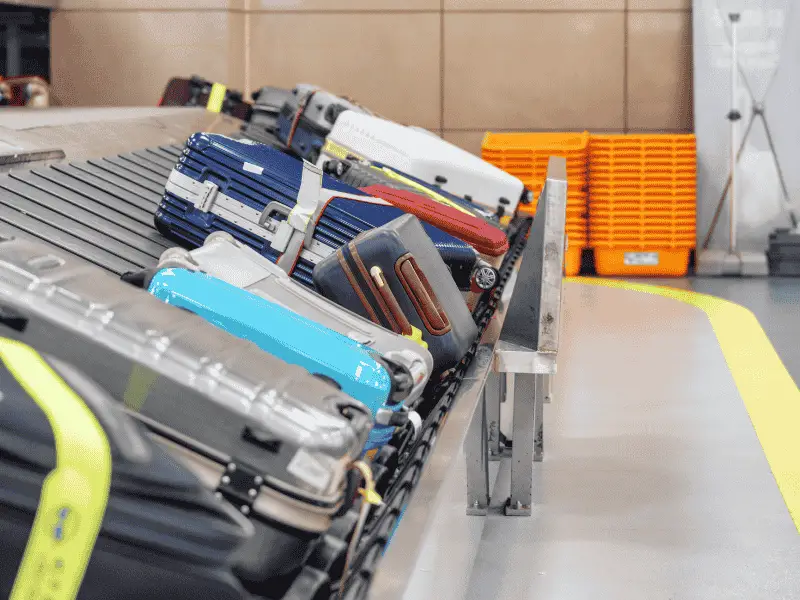
It might seem like an insignificant detail, especially when you’re already thinking about your boarding pass, packing your toiletries, and making sure your carry-on fits the airline’s size restrictions. Yet, those old stickers could interfere with the process that gets your checked luggage from the airport check-in counter to the correct aircraft.
Airports are now reminding travelers to remove outdated baggage tags before checking in their luggage. The advice is simple, takes only a few seconds, and could help prevent unnecessary complications during your journey.
So, what exactly happens when you leave old airline tags on your suitcase? And can a few forgotten stickers really make a difference to where your luggage ends up?
The Small Detail That Could Complicate Your Luggage’s Journey
There’s a reason airlines and airports recommend removing old baggage tags. Your suitcase doesn’t simply travel from the check-in counter to the aircraft in a straight line. It passes through a complex network of conveyor belts, scanners, sorting systems, and baggage handlers before it reaches the aircraft.
Each checked bag needs to be identified throughout this process. The baggage tag attached at check-in provides the information that allows the airport’s baggage handling system to direct it towards the correct flight.
When you check in your suitcase, the airline prints a new baggage tag containing information about your journey. This includes the destination airport, flight details, and a barcode used to identify the bag within the baggage system.
The barcode is particularly important. As the suitcase moves through the airport, scanners read its identification information and help determine where it needs to go next.
Now imagine that your suitcase still has several old barcode stickers attached from previous trips.
Although modern baggage handling systems are designed to process large volumes of luggage, multiple outdated identifiers can create unnecessary complications. An old tag might be scanned during handling, or a baggage handler might encounter conflicting information when trying to identify the suitcase.
This doesn’t mean that every suitcase carrying an old sticker will end up at the wrong airport. The baggage system has safeguards, and airlines use more than one method to identify and track luggage.
However, removing old tags helps ensure that the current information is the easiest to identify.
London Gatwick Airport specifically advises passengers to remove old baggage tags, previous airline stickers, and barcode labels before checking their luggage. The airport explains that this helps ensure scanners read the correct tag.
It’s a small precaution, but one that makes sense when you consider how many stages your suitcase passes through before reaching the aircraft.
How Does an Airline Actually Know Where Your Suitcase Is Going?
To understand why old baggage tags matter, it helps to know what happens after you hand over your luggage at the airport.
The process is considerably more complicated than most passengers realise.
When you check in your bag, the airline assigns it a new baggage tag. This tag connects your suitcase to your flight and provides the information needed to identify it throughout its journey.
The bag is then sent into the airport’s baggage handling system.
Depending on the airport, your suitcase may travel along a series of conveyor belts, pass through security screening, and be directed towards a particular sorting area. From there, it is grouped with other luggage heading towards the same flight before being transported to the aircraft.
At large airports, this process can involve thousands of bags moving through the system at the same time.
The European Union Aviation Safety Agency describes baggage handling as a coordinated process involving scanners, conveyor belts, security screening, sorting, and ground handling staff. The suitcase’s identification information is used throughout this journey to ensure it reaches the correct destination.
Airline baggage tags aren’t simply decorative stickers. They are part of a system designed to keep track of luggage as it moves through an airport.
And that’s precisely why having old tags attached to your suitcase isn’t ideal.
Can Old Baggage Tags Actually Send Your Suitcase to the Wrong Airport?
This is where things become interesting.
The advice to remove old baggage tags is often repeated online, sometimes with claims that leaving them attached will almost certainly result in lost luggage.
That’s an exaggeration.
Airline baggage systems are designed to handle large volumes of luggage and use several safeguards to ensure bags are correctly identified. A suitcase with an old sticker attached isn’t automatically going to be sent to a previous destination.
However, outdated baggage tags can create confusion, particularly if their barcodes are still readable.
Airport baggage handling systems rely on scanners to identify luggage as it moves through the sorting process. If a scanner reads an outdated barcode, it may create an identification problem that needs to be resolved.
The exact consequences depend on the airport’s equipment, the baggage system, and how the bag is being handled.
In some cases, the suitcase might be diverted for additional checks. In others, the old sticker might simply be ignored.
The important point is that there is no reason to leave outdated baggage information attached to your suitcase when removing it is so easy.
Airports and airlines themselves recommend doing so.
Virgin Atlantic, for example, advises passengers to remove old baggage tags and stickers. The airline explains that baggage tags are scanned throughout the journey to ensure bags are placed in the correct containers and loaded onto the appropriate aircraft.
The airline also recommends attaching a personal identification tag to the suitcase, including your name, flight date, and flight number, in case the main airline tag becomes detached.
These recommendations are particularly useful for travelers who regularly check luggage or take connecting flights.
Why Your Suitcase Might Be More Difficult to Identify Than You Think
There’s another reason to pay attention to the tags attached to your luggage.
Many suitcases look remarkably similar.
Walk through an airport baggage claim area and you’ll quickly notice how many passengers are travelling with black, grey, or navy suitcases. Even if you have a distinctive suitcase, someone else might have purchased the same model.
Now imagine that your suitcase has a collection of old airline stickers attached to it.
The baggage handlers need to identify the current tag, while you need to recognise your suitcase among dozens of similar bags.
Removing outdated tags helps keep the suitcase’s identification information clear. It also gives you a chance to check whether your current luggage tag is securely attached and easy to read.
A personal luggage tag can be useful here.
Unlike the airline baggage tag, which is printed for a particular journey, a personal luggage tag can remain attached to your suitcase between trips. It can include your name and a contact method in case your luggage becomes separated from you.
However, there’s no need to include your full home address on a tag that’s visible to everyone at the airport. A phone number or email address may be sufficient, depending on your preferences.
The airline’s baggage tag should still be the primary identifier for your checked luggage.
The Difference Between an Airline Baggage Tag and a Personal Luggage Tag
It’s easy to confuse the two, particularly if you’re not a frequent flyer.
An airline baggage tag is issued when you check in your luggage. It contains the information needed to identify your bag for a specific journey.
A personal luggage tag is the one you purchase separately and attach to your suitcase yourself.
The two serve different purposes.
The airline tag connects your suitcase to your flight. The personal tag provides additional information that can help identify the bag if the airline’s tag becomes detached.
Many airports and airlines recommend using a personal luggage tag, but it should never replace the official airline tag.
If you’re checking a bag, make sure the airline’s tag is correctly attached and that the barcode is visible.
You should also keep the baggage receipt provided at check-in. This receipt contains identification information that can be useful if your luggage is delayed or goes missing.
Airline baggage tags are designed to withstand the journey through the airport. Virgin Atlantic explains that the tags are made from durable materials and are designed to resist tearing, moisture, and temperature changes.
Even so, baggage tags can occasionally become detached or damaged.
A personal tag provides an additional way to identify your luggage, but it doesn’t replace the airline’s tracking system.
What About the Small Barcode Stickers Airlines Put on Your Suitcase?
If you’ve checked luggage before, you might have noticed that airlines sometimes attach more than one barcode to your suitcase.
There’s the long tag that wraps around the handle, but there may also be a smaller barcode sticker attached to the side of the bag.
These smaller stickers are part of the baggage identification process.
Depending on the airline and airport, they may provide an additional way to identify the suitcase during handling.
This is why it’s important to remove the old ones before your next trip.
If you’re preparing your suitcase at home, check the handles, sides, and other areas where airline stickers might have been attached.
Don’t assume that removing the large baggage tag from the handle is enough.
Some old barcode labels can be easy to overlook, especially if they’re tucked underneath a handle or partially covered by another sticker.
The aim is to ensure that the new baggage tag is the only current airline identification information attached to the suitcase.
Why Some Travelers Keep Their Old Airline Tags
Of course, not everyone leaves old baggage tags on their suitcase by accident.
For some travelers, they’re a way of documenting their journeys.
A suitcase covered in airline stickers can tell a story. It might remind someone of their first international flight, a honeymoon in Europe, or a long-awaited vacation with friends.
There’s something appealing about seeing those little reminders of previous trips.
But if you want to keep them, there’s a better way to do it.
Instead of leaving the stickers attached to your suitcase, remove them carefully and save them in a travel journal or scrapbook.
You could also take a photograph of your suitcase before removing the stickers.
This way, you can keep the memories without carrying outdated baggage information into your next trip.
Some travelers also collect the small baggage receipts issued at check-in. These can make interesting additions to a travel scrapbook, although you should be careful about keeping documents that contain personal information.
The important thing is to separate the memories from the luggage itself.
Your suitcase needs to be ready for its next journey, and the baggage system needs to be able to identify it correctly.
How to Remove Old Airline Tags Without Damaging Your Suitcase
Removing old baggage tags is usually straightforward, but some stickers can be surprisingly difficult to peel off.
Airline baggage tags are designed to stay attached during the journey. Their adhesive needs to withstand handling, moisture, and the movement of the baggage system.
If you’ve ever tried to remove one after a long-haul flight, you’ll know that the sticker can sometimes tear into small pieces.
The easiest approach is to remove the tags slowly.
Start with the large baggage tag attached to the handle. If it has a loop closure, gently pull the tag apart rather than trying to rip it off in one movement.
For smaller barcode stickers, peel them back carefully from one corner.
If a sticker leaves adhesive residue behind, check the suitcase manufacturer’s cleaning recommendations before using any cleaning product.
Avoid aggressive scraping or applying solvents that could damage the surface of your luggage.
Some hard-shell suitcases have textured surfaces that make removing stickers more difficult. In these cases, a soft cloth and a little patience may be all you need.
Once the old tags have been removed, check the suitcase again to make sure there aren’t any remaining barcode stickers hidden around the handles or sides.
It’s a simple habit that can be incorporated into your packing routine.
What Else Should You Check Before Handing Over Your Suitcase?
Removing old airline tags is one of several small steps that can help prepare your luggage for its journey.
Before checking your suitcase, take a moment to inspect it.
Make sure the zippers are fully closed and that any straps or accessories are secured. Loose items can become caught in baggage handling equipment, potentially causing delays or damage.
Gatwick Airport specifically advises travelers to remove loose straps, scarves, ribbons, bag covers, and other accessories that could become caught in the baggage system.
You should also check that the airline’s new baggage tag is correctly attached.
If you’re using a self-service bag drop, follow the instructions provided by the airline and make sure the barcode is positioned correctly.
It’s worth checking the destination printed on the tag before your suitcase disappears onto the conveyor belt.
This is particularly important if you’re travelling with connecting flights.
If your journey involves more than one airline, confirm that your luggage has been checked through to the correct destination. Don’t assume that every connecting flight automatically means your suitcase will be transferred without any additional steps.
And if you’re travelling with valuable items, keep them in your carry-on luggage whenever possible.
Passports, medications, important documents, electronics, and other essentials should not be packed in checked luggage unless there’s a specific reason to do so.
Your checked suitcase may travel through several stages of handling before reaching the aircraft, and keeping essential items with you can make a significant difference if your luggage is delayed.
A Simple Habit That Could Make Your Next Trip Easier
Removing old airline tags might not be the most exciting part of preparing for a vacation, but it’s one of those small details that’s easy to overlook.
Your suitcase has a job to do. It needs to travel from one airport to another, pass through baggage handling systems, and arrive at the correct destination.
The airline’s latest baggage tag provides the information needed for that journey.
Old stickers from previous flights don’t serve a useful purpose once you’ve arrived home. They can make the suitcase harder to identify and may create unnecessary complications during baggage handling.
Removing them takes only a few seconds.
Before your next flight, take a look at your suitcase. Check the handle, the sides, and any other areas where old airline tags might still be attached.
If you want to keep them as souvenirs, save them somewhere else.
And while you’re preparing your luggage, make sure your new baggage tag is securely attached, your personal identification information is up to date, and your suitcase is ready for its next journey.
It won’t guarantee that your luggage arrives on time, but it’s a simple precaution that can help keep the process as straightforward as possible.
Sometimes, the smallest travel habits are the ones worth paying attention to.