
A flight that should have been a straightforward journey from Kansas to Washington state turned into a medical emergency and forced landing when electronic equipment suddenly burst into flames in a passenger’s lap. The incident, which left one person hospitalized with burn injuries, has reignited concerns about the safety risks posed by lithium-ion batteries carried aboard commercial aircraft.
The drama unfolded on a Sunday afternoon in late February aboard a regional jet operating under the Alaska Airlines brand. What began as passengers settling in for their cross-country flight quickly transformed into chaos as flames erupted inside the cabin, sending smoke through the aircraft and prompting an immediate return to the departure airport.
The episode represents far more than an isolated mishap. It reflects a growing pattern of battery-related fires occurring on commercial flights, raising urgent questions about current regulations and whether authorities are doing enough to prevent potentially catastrophic incidents involving the rechargeable power sources that have become ubiquitous in modern travel.
How the Emergency Unfolded
Flight 2117 departed from Wichita Dwight D. Eisenhower National Airport on the afternoon of February twenty-second with Seattle as its intended destination. The aircraft, an Embraer 175 regional jet operated by Horizon Air on behalf of Alaska Airlines, had climbed away from the runway and was in the early stages of its flight when the emergency began.
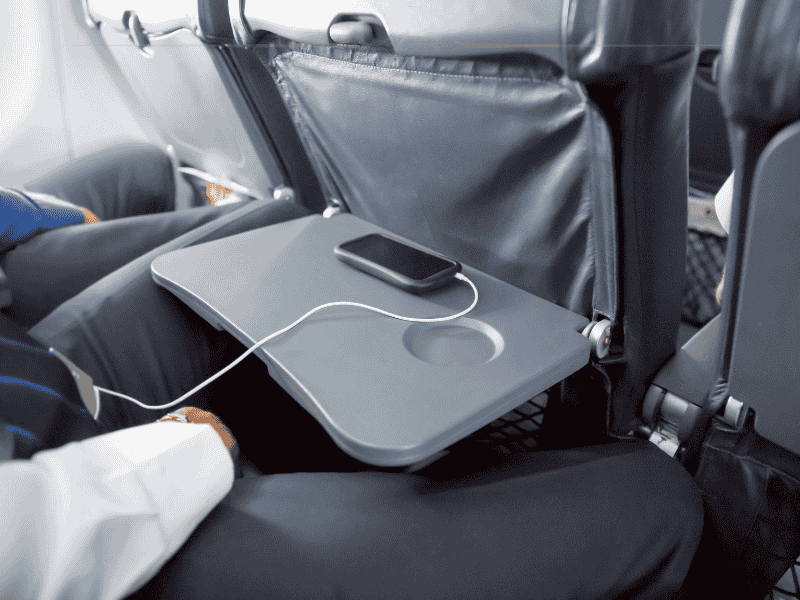
A passenger aboard the flight was using a portable battery pack to charge a mobile phone while seated. These external battery chargers, commonly called power banks, have become standard travel accessories for people who need to keep their devices charged during long journeys. Millions of travelers carry them in bags and pockets, using them routinely without incident.
This particular charging session ended very differently. The lithium-ion battery pack suddenly ignited while the passenger was using it, erupting into flames that rose approximately one foot high according to witnesses who observed the incident. The fire burned the passenger’s arms and legs as the device sat in their lap, causing injuries severe enough to eventually require hospitalization.
The passenger’s immediate reaction involved throwing the burning device away from their body into the aircraft aisle. This instinctive response removed the fire source from direct contact with their skin but created a new problem as flames now burned in the confined space between rows of seats.
Flight attendants responded immediately to the emergency unfolding in their cabin. Crew members rushed toward the fire with extinguishing equipment, using a fire extinguisher to suppress the flames before they could spread to other materials or cause additional injuries. Smoke from the burning battery and phone filled portions of the cabin as crew worked to contain the situation.
The flight deck received reports of the fire and made the decision to abort the journey to Seattle, instead returning to Wichita where emergency services could respond. The aircraft turned back toward its departure airport, landing safely approximately fifteen minutes after it had originally taken off.
The Aftermath and Passenger Care
Emergency response teams were waiting when the aircraft touched down back at Wichita. Airport emergency crews boarded or met the aircraft to assess the situation and evaluate anyone who might have been affected by the fire or smoke.
Medical personnel examined three people in connection with the incident. The evaluation determined that one passenger required additional medical care beyond what could be provided at the airport. That individual was transported to a local hospital for treatment of injuries sustained during the battery fire.
Alaska Airlines later confirmed additional details about how crew members managed the burning device once the flames were extinguished. Following established protocols for lithium battery fires, flight attendants placed the damaged phone and battery pack into a fire-containment bag while the aircraft prepared for landing.
These specialized bags are designed specifically for containing fires from electronic devices and lithium batteries. Made from fire-resistant materials, they prevent flames and heat from spreading while allowing gases to vent safely. Airlines began carrying these bags after recognizing that traditional firefighting equipment alone might not adequately address battery fires in the confined environment of an aircraft cabin.
The incident forced Alaska Airlines to cancel the original flight to Seattle. Passengers who had been aboard the aircraft during the emergency were rebooked on later flights to complete their journeys to Washington state. The aircraft itself likely required inspection and any necessary cleaning or repairs before returning to service.
For the passengers who witnessed flames erupting inside their aircraft cabin, the experience probably created lasting memories far different from typical flight experiences. Even though the crew managed to control the fire quickly and the aircraft landed safely, the psychological impact of seeing fire aboard an airplane can be significant.
The Growing Pattern of Battery Fires
This Alaska Airlines incident does not exist in isolation. It represents one event within a broader pattern of lithium battery problems occurring aboard commercial flights with increasing frequency. Federal aviation authorities have documented a troubling upward trend in battery-related emergencies.
The Federal Aviation Administration maintains records of incidents involving lithium batteries on aircraft. Their data shows ninety-five verified incidents in 2025 alone where lithium batteries caused smoke, fire, or extreme heat aboard flights or at airports. These numbers reflect only verified cases that meet specific reporting criteria, suggesting the actual number of battery problems may be even higher.
The year 2026 has already added to this concerning total despite being only weeks old when the Alaska Airlines fire occurred. Additional battery incidents reported in January and February indicate that the problem shows no signs of diminishing as new electronic devices and more powerful batteries continue proliferating.
Lithium-ion batteries power an enormous range of devices that passengers routinely carry onto aircraft. Smartphones, laptops, tablets, e-readers, cameras, headphones, smartwatches, and countless other gadgets all rely on these rechargeable power sources. External battery packs add another layer of lithium-ion capacity that travelers bring aboard.
The chemistry that makes lithium-ion batteries so useful for portable electronics also creates potential dangers. These batteries store significant energy in compact spaces, and various factors can trigger failures that result in fires. Physical damage, manufacturing defects, exposure to extreme temperatures, or internal short circuits can cause thermal runaway, a chain reaction where increasing heat leads to more chemical reactions that generate even more heat until the battery catches fire or explodes.
Current Regulations and Their Limitations
Aviation authorities have established rules governing lithium batteries on aircraft, but these regulations reflect a balance between safety concerns and the reality that electronic devices have become essential for modern travelers. Current U.S. rules permit passengers to carry and use power banks in aircraft cabins.
The Federal Aviation Administration specifically prohibits placing spare lithium batteries or power banks in checked baggage. This restriction exists because fires in cargo holds pose greater dangers than those in passenger cabins where crew can respond immediately. Checked baggage fires can go undetected longer and are much harder to access and extinguish during flight.
By requiring lithium batteries to remain in the cabin where passengers and crew can monitor them, regulations assume that early detection and rapid response will prevent small battery incidents from becoming major emergencies. The theory holds that crew members equipped with fire extinguishers and containment bags can manage battery fires before they threaten the aircraft.
However, the Alaska Airlines incident and dozens of similar cases each year demonstrate that battery fires still cause injuries and force emergency responses even when they occur in monitored cabin environments. The fact that crew successfully contained this fire doesn’t eliminate the reality that a passenger suffered burns serious enough to require hospitalization.
Current FAA rules do not restrict the in-flight use of power banks or the charging of devices during flights. Passengers can freely connect phones, tablets, and other electronics to external batteries while seated, as the injured passenger was doing when their battery ignited. This permissive approach reflects assumptions that properly manufactured batteries used normally present acceptable risks.
How International Policies Are Diverging
While U.S. regulations maintain relatively permissive stances on lithium battery use during flights, airlines and aviation authorities in other parts of the world have begun implementing stricter policies in response to the growing number of battery incidents.
Some international carriers have moved to restrict or ban the in-flight use of power banks entirely. Under these policies, passengers can still bring external batteries aboard aircraft, but they must keep them turned off and stored rather than actively using them to charge devices during flight. The restriction aims to reduce the number of batteries actively discharging or charging when failures are most likely to occur.
Other airlines have implemented requirements that lithium batteries remain visible during flights rather than stored in seat pockets or overhead bins. This visibility policy allows both crew members and nearby passengers to quickly identify if a battery begins overheating or showing other warning signs of impending failure. Early detection could provide crucial additional seconds to respond before a battery actually ignites.
These international policy variations create a patchwork of different rules that travelers must navigate depending on which airline they fly and where their journey takes them. A power bank that can be freely used on a U.S. domestic flight might need to remain stored and powered off on an international carrier, even if both flights involve the same passenger traveling with the same device.
The divergence between U.S. and international approaches raises questions about whether American regulators are behind the curve in addressing lithium battery risks. If foreign airlines and aviation authorities have determined that stricter policies are necessary for safety, why do U.S. carriers continue operating under more permissive rules?
The Risk-Benefit Calculation
Aviation authorities and airlines face difficult decisions about how strictly to regulate lithium batteries given their prevalence in modern life. Banning or severely restricting these devices would create enormous inconvenience for travelers who rely on electronic devices for work, communication, and entertainment during flights.
Business travelers need laptops and phones to remain productive during trips. Families use tablets to keep children occupied during long flights. Photographers carry camera equipment with lithium batteries. Medical devices increasingly rely on rechargeable power sources. Completely prohibiting lithium batteries from aircraft would be impractical and would face massive resistance from flying public.
However, the alternative of maintaining permissive policies means accepting that battery fires will continue occurring with some regularity. Each incident carries potential for injuries like those sustained in the Alaska Airlines fire, and the possibility exists that a future battery fire could prove more difficult to contain or could occur at a more critical phase of flight.
Regulators must weigh the statistical risks of battery fires against the practical impossibility of completely eliminating lithium-ion technology from air travel. The vast majority of batteries perform safely throughout their useful lives. Failures represent a small percentage of the billions of lithium-ion cells in use worldwide. Yet the consequences of failures in the confined environment of an aircraft cabin can be severe.
The challenge involves identifying policies that meaningfully reduce risks without imposing restrictions so onerous that they create new problems or prove impossible to enforce. Airlines cannot realistically inspect every battery that passengers bring aboard to verify its condition and manufacturing quality. Crew members cannot constantly monitor hundreds of devices throughout passenger cabins during flights.
What Makes Batteries Fail
Understanding why lithium-ion batteries sometimes catch fire requires examining the technology and various failure modes that can trigger thermal events. These batteries work through chemical reactions that move lithium ions between electrodes through an electrolyte medium. The process generates electrical current that powers devices.
Multiple factors can disrupt this normal operation and initiate thermal runaway. Physical damage to battery cells can occur from dropping devices, crushing them in baggage, or puncturing the battery casing. Such damage can create internal short circuits where different parts of the battery that should remain separated make contact, causing rapid discharge and heat generation.
Manufacturing defects represent another failure pathway. Quality control problems during battery production can result in cells with internal flaws that may not become apparent until the battery has been charged and discharged numerous times. These latent defects can suddenly trigger failures in batteries that previously functioned normally.
Exposure to extreme temperatures affects battery performance and safety. Lithium-ion batteries left in hot cars or exposed to freezing temperatures can develop problems that manifest later. The temperature inside aircraft cargo holds can vary dramatically, though this matters less now that regulations require batteries to remain in temperature-controlled cabins.
Charging practices influence battery health and safety. Using incompatible chargers, charging at excessive rates, or continuing to charge batteries after they reach full capacity can stress cells and increase failure risks. The proliferation of different charging standards and third-party charging accessories means many travelers use equipment combinations that may not be optimal for their devices.
Battery age and degradation play roles in failure risks. Lithium-ion batteries gradually lose capacity through normal use, and older batteries are more likely to develop problems than newer ones. However, many travelers continue using aging batteries rather than replacing them, potentially increasing the likelihood of failures.
Prevention Efforts
Airlines and aviation industry stakeholders have implemented various measures aimed at reducing battery fire risks even as overall incident numbers continue rising. These efforts range from crew training to specialized equipment to passenger education campaigns.
Flight attendant training now includes specific procedures for responding to lithium battery fires. Crew members learn to recognize signs of battery problems, how to use fire extinguishers and containment bags effectively, and protocols for communicating with flight decks during battery emergencies. This training aims to ensure rapid, coordinated responses when incidents occur.
Airlines have equipped aircraft with fire-containment bags designed specifically for lithium battery fires. These bags provide crew members with tools for isolating burning or smoking devices to prevent fire spread while allowing safe venting of gases produced during battery failures. The bags represent recognition that traditional firefighting equipment alone may not adequately address battery fires.
Some carriers have launched passenger education efforts aimed at promoting safer battery practices. These campaigns encourage travelers to inspect batteries for damage before flights, avoid using damaged or recalled batteries, and report any unusual heat or odors from devices to crew members immediately. Whether such education actually changes passenger behavior remains unclear.
Aircraft manufacturers have incorporated enhanced fire detection and suppression systems in newer aircraft designs, though these focus primarily on cargo hold fires rather than cabin incidents. The assumption remains that cabin fires can be managed through crew response rather than automated systems.
Battery manufacturers have worked to improve cell designs and incorporate safety features intended to prevent or mitigate thermal runaway events. These include pressure relief vents, thermal cutoffs, and separator layers designed to shut down batteries before failures cascade into fires. However, the enormous variety of battery manufacturers and quality standards means that safety features are far from universal.
Passenger Perspectives and Concerns
Travelers who learn about battery fires aboard aircraft often express surprise and concern that such incidents occur with regularity. Most passengers board flights without considering that the electronic devices filling overhead bins and seat pockets represent potential fire hazards.
The invisible nature of battery risks contributes to lack of public awareness. Batteries typically fail without warning, and passengers have no reliable way to assess whether their devices or those around them might be at risk. Unlike other hazards where warning signs might be visible, battery problems often manifest suddenly without opportunity for preventive action.
Passengers seated near battery fires experience trauma beyond what incident statistics convey. Witnessing flames erupting inside an aircraft cabin creates fear and stress that can affect future travel. The knowledge that a nearby passenger’s routine action of charging a phone led to fire and injuries reinforces feelings of vulnerability and lack of control.
Some travelers have begun questioning whether they should continue using power banks during flights given the apparent risks. However, the inconvenience of having devices run out of charge during long journeys creates pressure to maintain current practices despite awareness of potential dangers. The low absolute probability of any individual battery failing encourages most passengers to continue using them.
The Regulatory Question
The mounting evidence of battery fire incidents raises increasingly urgent questions about whether current U.S. regulations adequately address the risks. The Federal Aviation Administration faces pressure to reconsider its relatively permissive policies on battery use during flights.
Arguments for stricter regulations point to the growing incident numbers and the fact that existing rules have not prevented fires from occurring with concerning frequency. Proponents of tighter policies suggest that prohibiting in-flight use of power banks or requiring batteries to remain visible during flights could reduce risks without completely banning essential devices.
Resistance to regulatory changes comes from multiple directions. Airlines worry about enforcement challenges and passenger dissatisfaction if new rules create inconvenience. Technology industry groups argue that properly manufactured batteries are safe and that isolated incidents shouldn’t drive policy affecting millions of travelers. Civil liberties advocates raise concerns about expanding restrictions on passenger behavior.
The FAA must balance these competing interests while fulfilling its primary mandate of ensuring aviation safety. The agency typically moves cautiously on regulatory changes, gathering extensive data and consulting stakeholders before implementing new rules. This deliberative approach prevents rushed decisions but can also mean that policies lag behind evolving risks.
International regulatory divergence complicates U.S. decision-making. If the FAA implements restrictions similar to those adopted by some foreign carriers, it would harmonize policies and reduce confusion for international travelers. However, if the agency determines that existing U.S. rules remain adequate, the divergence continues and potentially undermines arguments for change.
The Alaska Airlines fire and others like it provide concrete evidence that current policies have not eliminated battery fire risks. Whether this evidence proves sufficient to drive regulatory change remains to be seen. For now, passengers continue carrying billions of dollars worth of lithium-powered devices aboard tens of thousands of daily flights, hoping that their batteries will be among the vast majority that function safely rather than the small percentage that fail catastrophically.