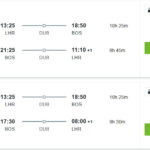
Something unusual is happening in the European airline market right now, and it is creating an opportunity for American travelers that is genuinely time-limited. Short-haul flights within Europe are getting cheaper. Not marginally cheaper in the way that airline pricing fluctuates day to day, but meaningfully cheaper, in a deliberate and coordinated way, as carriers across the continent cut fares to fill seats at a moment when passenger hesitancy has softened demand.

The chief executive of Wizz Air confirmed this week that European airlines are actively reducing short-haul fares in the short term specifically to encourage bookings. The economic uncertainty of recent months, driven by a combination of the ongoing fuel crisis, geopolitical instability, and the general anxiety that comes with watching prices rise across every sector, has made travelers cautious. Fewer people are booking with the confidence and speed that airlines need to fill aircraft at the margins that make the routes financially viable. The industry’s response has been to bring prices down enough to overcome that hesitancy and get seats sold.
For American travelers who have been watching Europe from the sidelines, waiting to see how the fuel situation resolves or whether prices would come down before committing to a summer trip, the answer to the second question is: they already have. The question now is how long that window stays open, and the honest answer from everyone who understands the underlying economics is that it will not stay open indefinitely.
Why Airlines Can Cut Prices While Fuel Costs Have Doubled
The apparent contradiction at the center of this story is worth explaining clearly, because it is the key to understanding both why the cheap fares exist right now and why they are temporary.
Jet fuel prices in Europe have roughly doubled since late February, when the conflict involving the United States, Israel, and Iran began disrupting supply through the Strait of Hormuz. Under normal conditions, Europe sources more than half of its jet fuel from Gulf producers through maritime shipping routes. That supply has been severely disrupted for the past eight weeks, and while alternative supplies are being shipped in from the United States and other sources, those alternatives come with higher costs and longer lead times that do not fully compensate for the disruption.
In a world where fuel costs have doubled, how are airlines cutting fares rather than raising them? The answer is hedging. Most European airlines purchased a proportion of their fuel supply in advance at fixed prices before costs surged. Those pre-disruption contracts, typically covering months of supply at the rates that prevailed before the conflict began, act as a financial buffer that insulates carriers from the full immediate impact of current market prices. An airline that locked in 70 or 80 percent of its fuel needs at pre-crisis rates is not paying double for all of its fuel right now. It is paying double only for the portion it has to buy at current market prices.
That buffer creates temporary room to maneuver. Airlines that are not yet feeling the full weight of doubled fuel costs can afford to reduce fares to fill seats, because the economics of their fuel supply have not yet fully reset to the new reality. They are operating on borrowed time, financially speaking, but that borrowed time is real and it is currently producing lower fares for travelers who book within this window.
The Clock Is Running on Those Hedging Contracts
The critical thing to understand about the current pricing situation is that it is explicitly temporary. The hedged fuel contracts that are giving European airlines room to cut fares will eventually expire. Airlines will then need to purchase fuel at whatever the current market price happens to be, which at approximately $1,500 per metric tonne is historically elevated and represents a cost that will need to be reflected in ticket prices.
Nobody in the industry is putting a specific date on when that repricing will hit fares, because the timeline depends on factors that are not yet known. How long will the Strait of Hormuz remain disrupted? Will alternative supply routes scale up quickly enough to bring European jet fuel prices down before the major carriers’ hedging contracts run out? Will a resolution to the underlying conflict change the picture before the supply crunch becomes acute? These are questions with uncertain answers, and the uncertainty itself is part of what makes the current pricing window feel unstable.
What is consistent in the advice coming from airlines, tourism officials, and travel industry analysts across Europe is the directional guidance: if you are planning to fly this summer, booking sooner rather than later is the sensible approach. The conditions that are producing lower short-haul fares right now will not persist indefinitely. When hedging contracts expire and airlines start buying fuel at current market prices rather than the pre-disruption rates they locked in months ago, that cost increase will be passed to passengers. It is not a question of whether fares will rise. It is a question of when.
The Long-Haul Picture Is Already Different
American travelers considering summer trips to Europe need to distinguish between two separate fare environments that are operating very differently right now. The short-haul pricing story, where European carriers are cutting fares on flights within the continent, reflects the hedging buffer described above. The long-haul story, which covers the transatlantic flights that bring Americans to Europe in the first place, is already telling a different and less encouraging tale.
United States carriers do not hedge their fuel purchases to the same degree that European airlines do. American airlines have historically managed fuel cost risk through different financial mechanisms and have maintained less extensive forward purchase coverage than their European counterparts. As a result, when fuel prices doubled, U.S. carriers felt the impact more immediately and more directly in their operating costs, and they have been passing those costs on to passengers through higher fares for months.
The practical consequence for American travelers is a two-speed pricing environment. Transatlantic flights from the United States to Europe have already become more expensive, reflecting the higher fuel costs that American carriers are absorbing without the same hedging buffer. But once in Europe, the short-haul flights between European destinations are currently cheaper than they would normally be, creating a situation where the internal European leg of a trip may be surprisingly affordable even as the crossing from America costs more than it did a year ago.
For Americans planning multi-destination European itineraries, this dynamic is worth factoring into the trip structure. The internal flights between cities, which often represent a significant portion of the complexity and cost of a European trip, are currently priced in a way that rewards booking now rather than waiting.
The Supply Problem That Started This Whole Situation
Understanding the broader fuel supply context helps explain why the current pricing environment exists and why it is likely to shift. Europe’s aviation fuel supply under normal conditions flows primarily from Gulf producers through the Strait of Hormuz, one of the most strategically critical maritime chokepoints in the world. Before the conflict began in late February, that supply chain was functioning reliably enough that European refineries and airlines had reasonable certainty about supply and pricing going forward.
The closure of the Strait of Hormuz changed that calculation fundamentally. More than half of Europe’s jet fuel supply suddenly became either unavailable or dramatically more expensive to source through alternative routes. European refineries, which produce a significant portion of the continent’s aviation fuel domestically, have been operating but cannot fully compensate for the lost import volume. The gap between what domestic refining produces and what European aviation consumes has to be filled from somewhere else, and the somewhere else currently being developed involves shipping fuel from the United States at higher cost and with longer delivery timelines.
That alternative supply pipeline is real and growing, but it is not cheap and it is not immediate. The fuel being imported from American sources costs more than what Gulf suppliers provided under normal conditions, and those higher input costs will eventually work their way into the prices that airlines pay when their current hedged contracts expire. The industry’s ability to absorb those costs without passing them directly to passengers is finite, and the current fare-cutting strategy is operating right at the edge of that absorption capacity.
What This Means for Your Summer Europe Plans Right Now
For Americans who have been considering a European trip this summer but have not yet committed, the combination of factors described above creates a specific and actionable recommendation: the time to book is now, not in a few weeks.
The short-haul fare reductions within Europe are real and currently accessible. The hedging window that is making them possible will eventually close. The long-haul fares from the United States to Europe have already moved higher and are unlikely to come down significantly given the fuel cost environment that American carriers are operating in. Waiting for a better moment to book risks sitting on the wrong side of a fare shift that the industry itself is signaling is coming.
The hesitancy that European airlines are trying to overcome with these fare cuts is understandable. The past several months have generated real economic uncertainty, and the instinct to wait and see before committing to a significant trip expenditure is a rational response to that uncertainty. But the fare data suggests that waiting is not currently being rewarded with lower prices on the transatlantic crossing, and the short-haul window that is providing some relief on internal European travel is explicitly temporary by the admission of the airlines offering it.
Summer travel to Europe remains one of the most sought-after experiences for American travelers, and the destinations themselves, the cities, the landscapes, the food, the culture, have not changed. What has changed is the pricing environment surrounding the trip, and right now that environment contains a window that will not stay open much longer.
The Practical Booking Advice That Follows From All of This
Travelers who decide to act on the current pricing window should approach the booking process with a few specific considerations in mind that are more relevant now than they would be in a normal market.
Booking flexible fares rather than the cheapest non-refundable option is worth the premium in the current environment. The fuel situation is evolving on a week-by-week basis, and the possibility that operational changes, route cancellations, or schedule adjustments affect booked itineraries is meaningfully higher than it would be during a period of normal supply stability. Paying for the ability to change a booking without prohibitive fees provides insurance against a situation that the industry itself acknowledges is unpredictable.
Travel insurance that covers trip cancellation and interruption is similarly more relevant now than in a typical booking environment. The risk that fuel supply developments force operational changes to planned itineraries is a real consideration that standard trip protection is designed to address. Reviewing the specific coverage terms for flight-related cancellations and supplier insolvency before purchasing a policy is a more important step than it would normally be.
For the internal European flights that are benefiting from the current fare cuts, booking directly with airlines rather than through aggregator platforms gives the most direct access to any schedule changes or re-accommodation offers if the operational situation changes. Third-party bookings can complicate the process of getting support if a flight is canceled or significantly delayed.
The fundamental message from every part of the industry that has spoken publicly on the current situation is consistent and worth taking at face value. The cheap short-haul fares within Europe are a temporary consequence of pre-crisis fuel contracts running out in slow motion. American travelers who want to take advantage of them have a window that is open now, that the airlines themselves say they are offering specifically to attract bookings during this period, and that the underlying economics suggest will not remain open much longer. For anyone who has been on the fence about a European summer trip, that window is the most concrete piece of actionable information available right now.