
Last year I spent five wonderful days exploring Montreal, and I did it slowly, the way I like best. I wasn’t rushing to tick off landmarks or cram in every museum, instead I let the city reveal itself to me one leafy street, one cosy café, and one unexpected discovery at a time. Montreal was the first Canadian city I truly got to know. Sure, I’ve technically been to Canada before, but only for a long layover in Toronto, which I mostly spent shopping for summer clothes in the middle of December, thanks to an airline losing my luggage on the way to Cuba.
Montreal completely surprised me, in the best possible way. I had expected a massive, bustling metropolis, and yes, it is a big city. But what I didn’t expect was how intimate and local it felt. Beyond the Downtown skyscrapers, the city sprawls out into charming neighbourhoods that feel more like little towns. Low rise homes with spiral staircases, tree lined avenues, and parks everywhere you turn, it’s easy to forget you’re in a city of over a million people.
Another thing that struck me was how beautifully multicultural Montreal is. Every neighbourhood feels like its own little world, shaped by the communities who live there. The Plateau is very French, Little Italy is buzzing, Chinatown is a medley of inviting aromas.
Most people only spend a couple of days here, ticking off the highlights. But I gave myself plenty of time to explore. And in return, Montreal offered up moments of quiet beauty, quirky finds, and a deep connection to the rhythm of local life. If you’re wondering what to do in Montreal and want to go beyond the guidebooks, here are the best things to do in Montreal, from someone who took the time to truly experience it.
How Many Days in Montreal?

You can technically see the highlights of Montreal in two days, especially if you stick to the main sights and plan every hour carefully. But if you ask me, Montreal deserves more than a quick glance. I would recommend spending at least three days here, especially if you want to explore the city at a slower pace and soak in its unique charm.
Two days will give you enough time to check off the classics: Old Montreal, Mount Royal, maybe a quick bite of poutine. But from the third day onwards, something shifts. You stop rushing and start noticing the little things. A hidden mural on a side street. A neighbourhood café with locals chatting over espresso. The maze of the underground city. The maple syrup tastings in Jean-Talon Market. The hum of live music floating out of a tucked-away bar.
That’s when Montreal starts to feel more homey. So if your schedule allows, give yourself at least three days, if not more.
Where to Stay in Montreal

Montreal is not exactly a budget-friendly city when it comes to accommodation. And if you leave booking to the last minute, like I did, your wallet might feel the consequences. Mine certainly did. I ended up staying in a hostel, which turned out to be a very good choice, because I didn’t just find a great place to sleep, but I also made friends with who I’m still in contact. Swiss Martin, I’m talking about you! 🙂
I found myself in the heart of the Latin Quarter, one of the trendiest and quirkiest areas in Montreal. This is also known as the Gay Village, the largest in North America, and the place where the parties seem to start and never really stop. It’s an incredibly vibrant and colourful part of the city, full of character and life, especially after dark.
I stayed at M Montreal, a large and very modern hostel that caters to all kinds of travellers. They offer both dorms and private rooms, and I was lucky enough to get one in their newly renovated building. My room had a full private bathroom and even a small, integrated kitchen, which was perfect for making coffee in the morning or a quick snack at night.
And yes, the rooftop jacuzzi is real, and yes, I absolutely made the most of it. There’s nothing quite like soaking in warm bubbles with a view over the rooftops of Montreal after a day of exploring the city on foot.
If you’re looking for where to stay in Montreal and want something social, stylish, and centrally located without breaking the bank, M Montreal is a solid choice. Click here to see the latest rates, and click here to see the reviews.
The Best Things to Do in Montreal
After spending five full days exploring Montreal at a slow pace, I uncovered some of the city’s most iconic sights, as well as a few hidden gems I stumbled upon by chance. Here are my favourite things to do in Montreal, based on my own experience exploring on my own but also chatting to locals.
Visit the Notre-Dame Basilica of Montreal

Tucked in the heart of Old Montreal, just a short walk from the waterfront, the Notre-Dame Basilica is one of the most iconic landmarks in the city and absolutely one of the best things to do in Montreal.
I hadn’t planned to visit it that afternoon. I was wandering through the cobbled streets when the skies suddenly opened up, sending everyone scattering for shelter. I dashed into the Basilica, and what was meant to be a quick escape from the rain turned into one a breathtaking moment.
From the outside, the church looks grand, yes, but relatively understated. Nothing really prepares you for the moment you step inside. The first thing that hits you is the colour: the deep, celestial blue that wraps around the entire interior, glowing softly under golden light of the electric candles, which are everywhere. Wooden arches stretch above like ribs, giving the space a sense of strength and calm. Carved balconies, rows of wooden benches, and intricate details in every corner make it feel like a sacred theatre.
And then there was the music. The organ was playing softly, echoing off the stone and wood, wrapping around the visitors, who stood silent, allowing the music to take over the space. I sat down on one of the benches and just listened. The rain fell quietly outside, but inside, it felt like time had slowed down.
You can buy tickets at the door, which is what I did, but if you’re visiting in peak season or just hate waiting, you can also book them online in advance here.
Explore Vieux Montreal

Whenever I arrive in a new city, I like to start with a walking tour to get a feel for the layout and the stories hiding behind the buildings. In Montreal, I joined a free walking tour of Vieux Montreal, the city’s old quarter, and it turned out to be the perfect way to begin my trip to this beautiful city. It helped me find my bearings and get a first taste of the area’s rich history and architecture. The next day, I came back on my own, ready to explore slowly and dive a bit deeper into the charm of this historic neighbourhood.
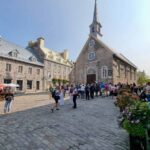
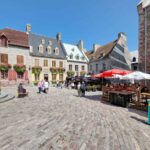
Vieux Montreal is where the city began. Here you will find cobbled streets, old stone buildings, and narrow alleys. This is where French settlers first established Ville-Marie in the 17th century, and you can still feel the influence of that early European presence in every corner, from the classic architecture to the hidden courtyards and wrought iron balconies.
One of the highlights of my visit was the Château Ramezay, once the home of a former governor of New France. Today it’s a small museum filled with artefacts that tell the story of colonial Montreal. What truly enchanted me, though, was its garden. On a cloudy morning, the flower beds were bursting with colour, almost defiantly brightening the grey skies. It felt like a peaceful little oasis tucked behind the stone walls.

Not far from there is the Bonsecours Market, a grand domed building that has been part of the city since 1847. It once served as Montreal’s main public market and even hosted city hall for a while. These days, it’s mostly souvenir shops and local boutiques. It definitely felt a bit touristy, but if you’re short on time, it’s a convenient place to try some maple syrup or pick up a few gifts. And yes, if you’re exploring on foot all day, it’s also good to know there are public toilets inside.
Right next door stands the Notre-Dame-de-Bon-Secours Chapel, one of the oldest churches in Montreal. With its silver roof and maritime-themed interior, it’s sometimes called the “Sailors’ Church,” and stepping inside feels like entering a quiet space filled with old seafaring prayers and stories. Climb up to the observation tower if you can as the view over the river is worth the effort.

From there, it’s just a short stroll to the Old Port of Montreal, where locals and visitors alike come to walk along the water, have a ride on the Ferris wheel, enjoy a boat ride, or simply sit and watch the world go by. It’s a lovely area for a break, with street performers, little food kiosks, and space to just breathe.
Vieux Montreal is often one of the first places people visit in the city, and with good reason. It’s a place where history and daily life blend beautifully, where you can sip coffee in a centuries-old square or find a quiet moment in a chapel that has watched over the harbour for generations.
Go Inside the Bank of Montreal Building

My next tip is a bit of a hidden gem in Montreal. If it weren’t for the guide on the free walking tour I joined, I would have walked right past it without realising that stepping inside was even an option.
Right across from Place d’Armes, the Bank of Montreal Building might not look like much from the outside, just another grand old bank in an old part of town. But once you walk through those revolving doors, you’re transported to a different era. Think old American movies with dramatic bank robberies. You know the ones. That’s exactly how this place feels.
This is Montreal’s oldest bank, built in 1847, and it still functions as a bank today. But what makes it special is the mini museum tucked inside, just to the right of the main entrance. It’s small, but filled with character. Here you’ll find historical exhibits, old teller stations, antique safes, and vintage mechanical coin banks, the kind kids used to drop pennies into in the 1800s. There are even ledgers and early banking documents from the 19th century on display.

The bank’s main hall is absolutely stunning, with incredibly high ceilings supported by polished black marble columns, chandeliers hanging above the old-style counters, and a general sense that the building is keeping a lot of very interesting secrets. It’s surprisingly spacious and grand without feeling overwhelming.
You can wander freely through the museum side, which is separated from the working part of the bank. Just remember, you’re allowed to take photos inside the museum area, but not of the employees or clients. They are, after all, still banking.
And the best part? It’s completely free to visit. So if you’re exploring Old Montreal and want a quick dive into the city’s financial past, this little spot is well worth a stop.
Climb Mount Royal

If there’s one thing nearly every visitor to Montreal agrees on, is that climbing Mount Royal is one of the best things to do in the city. Actually, I’d call it the second best thing to do in Montreal, just after losing yourself in the charm of the old town. And it’s easy to see why. Once you reach the top, the city unfolds beneath you like a giant map: downtown’s towers in the distance, the river shimmering beyond, and rooftops stretching out as far as you can see.
Mount Royal is the hill that gave Montreal its name. It rises right in the centre of the city, covered in forest and criss-crossed with trails, paths, and stairs. Designed in part by Frederick Law Olmsted (the same mind behind Central Park in New York), it’s not just a green space but a place where locals go for a walk, a run, and even a picnic.
There are several ways to reach the top, depending on your energy and mood. Some are gentler walking trails through the woods, others are steeper and more direct. Even the “easy” route isn’t exactly a walk in the park. The road leading to the start of the stairs is already a steep uphill climb, so be prepared to warm up before the real work begins.

I took the official staircase path on the way up. Hundreds of wooden steps that twist through trees and lead straight to the Kondiaronk Belvedere, the main viewpoint. There’s a small plateau at the top where people gather to take in the view, and luckily, there’s also a little shop selling snacks and drinks.
On the way down, I took a winding trail through the forest, quieter and more relaxed. It led me all the way to Mile End, where I had my eyes set on a very specific reward: Schwartz’s Deli and its legendary smoked meat sandwich. After all those steps, I felt like I’d truly earned it.
Eat Your Way Through the Mile End

Mile End is one of Montreal’s tastiest neighbourhoods. If you’re looking for the best things to do in Montreal and you enjoy food even half as much as I do, make sure this area is on your list. It’s where you’ll find iconic delis, legendary bagels, secret local gems, and some of the best ice cream in the city.
Let’s start with the most famous of them all: Schwartz’s Deli. You can’t go to Montreal and not try their smoked beef sandwich. Yes, there’s a queue. But yes, it’s worth it. These sandwiches are so packed with meat that the bread feels almost optional. And please, whatever you do, get the pickles. Don’t skip the pickles!
The meat here is prepared the old-fashioned way, over the course of 10 days. It starts with a rub made from a secret blend of herbs and spices, followed by a long marination. Then it’s smoked overnight, steamed to perfection, and hand-sliced. You can genuinely taste the love and tradition that goes into every bite.
Not far from Schwartz’s, you’ll find one of Montreal’s famous bagel spots: St-Viateur Bagel. It’s a tiny shop, easy to miss if you’re not paying attention, and the prices are refreshingly affordable. A few streets away is its biggest rival, Fairmount Bagel. The people of Montreal seem split down the middle on which one is better. I, not a bagel expert by any means, loved both equally.
Montreal-style bagels are a thing of beauty. What makes them special is that they’re always baked in wood-fired ovens, something only St-Viateur and Fairmount are licensed to do. The dough includes eggs and honey, and even the water used to poach the bagels before baking is sweetened with honey. That’s what gives them their signature subtle sweetness and chewy texture.

Just around the corner from St-Viateur, I stumbled across Drogheria Fine, a literal hole-in-the-wall selling the best tomato gnocchi I’ve had this side of the Atlantic. It comes in little cardboard takeaway boxes, and chopsticks are free, but if you want a fork, that’ll cost you an extra 30 cents. The menu is charmingly minimal: gnocchi with parmesan, gnocchi with extra parmesan, or gnocchi with extra parmesan and chilli flakes. That’s it. Prices start at just 5 dollars, including tax. The sauce was rich, comforting, and exactly what I’d expect from an Italian family-run spot.
Right next door is Kem Coba, a small, family-owned ice cream shop offering soft serve and sorbet in two rotating flavours. On the day I visited, it was passionfruit and lemon. I had both, of course. Cold, tangy, and absolutely perfect for that hot September afternoon.
These are just a few of the foodie treasures I discovered in Mile End. There are so many more. If your stomach still has room—mine definitely didn’t—keep wandering or book a guided foodie walking tour. You’ll find family-run restaurants, quirky coffee shops, and plenty of hidden gems waiting for you around each corner.
Explore Little Italy

I mentioned earlier that Montreal feels like a patchwork of multicultural neighbourhoods, each with its own rhythm, character, and charm. Little Italy is no exception. It’s exactly what you’d imagine it to be: lively, warm, and full of mouth-watering aromas that tempt you into every deli and trattoria you walk past.
This is one of those neighbourhoods where you don’t need an itinerary. Just wander. Listen to the chatter in Italian, follow the smell of espresso, grab a cannoli, and take your time peeking into shops filled with imported cheeses, fresh pasta, and more types of olive oil than you knew existed. There’s a sense of familiarity here, even if it’s your first visit. It feels like Sunday lunch at someone’s nonna’s house.
Little Italy is also home to one of Montreal’s most famous public markets: Jean Talon Market. I came here twice during my time in the city. The first visit was just to explore the area, see what it was all about. The second time was with a purpose as I came back to buy maple syrup to bring home as souvenirs.

Jean Talon Market is huge and packed with local vendors selling everything from seasonal fruit to artisan cheese and freshly baked bread. It’s a place where locals do their grocery shopping and tourists snap photos of the produce, but it’s also a great spot to browse, sample, and snack as you go.
While here, I got a little maple syrup education, because yes, there’s more than one type. I tasted several and landed on my favourite: the Amber one. It has a rich, balanced flavour, not too light and not overly strong. There’s a slight caramelised note that makes it perfect for pouring over pancakes, stirring into coffee, or, in my case, just sneakily sipping from a spoon.
Visit the Biodome

After spending a week exploring Nova Scotia and squeezing in an extra day in Toronto before my flight back to London, I returned to Montreal with one full day left. Just to be safe, I had left a buffer before my flight, and I’m glad I did. It ended up being a very rainy day, the kind where exploring outdoors just isn’t enjoyable. So I decided to check out the Biodome, located in the city’s former Olympic Park.
I didn’t expect much, to be honest. I thought I’d walk around for an hour or two and then head back into town for lunch. Instead, I spent almost the entire day there. The Biodome recreates five different ecosystems found across the Americas, and walking through them really does feel like stepping into different parts of the world. It’s immersive, beautifully designed, and surprisingly relaxing.
I bought my ticket from one of the machines at the entrance, which was quick and easy, but I noticed that entry times are set up in timed slots. If you’re visiting during a school holiday or peak travel season, I’d definitely recommend booking in advance.

The five ecosystems include the Tropical Rainforest, where it’s warm, humid, and full of exotic birds, lush greenery, and even a few sloths if you look closely enough. Then there’s the Laurentian Maple Forest, a more familiar temperate zone with streams, otters, and beavers. The Gulf of St. Lawrence area brings in the coastal marine vibe, with tanks full of colourful fish and sea creatures.
The Sub-Antarctic Islands zone was my favourite, without question. This is where the penguins live. I spent far too long just watching them dive into the water, hop around, and generally act like mischievous toddlers. I was lucky enough to spot a few baby Emperor penguins, still fluffy and grey, tucked next to their parents. Puffins live here too, adding to the charm. Getting to the enclosure involves walking through an ice tunnel, which, fair warning, is actually freezing. Don’t do what I did and walk in without a jacket.

The final area is the Labrador Coast, a cold maritime environment that feels much starker than the rest, with seabirds and simple rocky landscapes. It’s much quieter than the others, but still beautifully done and worth wandering through slowly.
I didn’t think I would enjoy the Biodome as much as I did, because I am usually against zoos. However, the Biodome isn’t just about putting animals behind bars or glass. Their focus is on education, conservation, and awareness, treating each ecosystem as a living laboratory. Their team works on biodiversity and sustainable development projects, both inside the Biodome and out in the field. The idea is that by observing these environments up close, and understanding how animals interact with their habitats, we become more aware of the impact of our choices. They have an educative section upstairs where you can learn more about the projects they run at the Biodome and the techniques they use in research.
Indulge in the Fresh Produce from Atwater Market

Most people visiting Montreal who want to explore a market will head straight to Jean Talon. It’s the one everyone talks about and the one that shows up in every guidebook. But a local I met suggested I try something different—Atwater Market—a little further out, and much less touristy. It only took a few extra stops on the metro, and it was still very easy to reach from the city centre.
As soon as I arrived, I could tell it was a good recommendation. The market was filled with locals doing their shopping, and I didn’t see a single tourist around me. The atmosphere felt relaxed and real, like a proper neighbourhood spot where people come for their weekly fruit and veg, not to take photos.
The smell of strawberries hit me before I even properly stepped inside. Rows of red berries sat next to neat piles of blueberries and blackberries, all lined up like they knew they were irresistible. Spoiler alert, I gave in immediately. I bought a punnet and found a bench by the canal just outside the market, where I sat and ate the berries in the sunshine. So simple, but feeling so good and satisfying.

I visited Atwater Market on my last day in Montreal, and I immediately regretted not coming sooner. The fresh meat stalls were packed with roulades and marinated cuts ready to cook, and they all looked so good. If I hadn’t already checked out of the hostel, I would’ve picked up something right then and made myself a proper dinner.
The market also has several bakeries with cakes that look far too tempting to ignore. There’s a smokehouse grilling steaks right by the entrance, and a fresh flour shop tucked among stalls selling all sorts of local edible goodies. It’s not a huge market, but it has everything and it feels like such a local community gathering spot.
Stroll Along the Canal

I stumbled upon the Lachine Canal completely by accident, just after visiting Atwater Market. With my punnet of sweet strawberries finished and nothing pressing on my agenda, I noticed a quiet path running alongside the water and decided to follow it. I didn’t know how far it went, where it led, or even if I was walking in the right direction, but that didn’t really matter. The canal was peaceful, lined with greenery, with the occasional glimpse of downtown’s skyscrapers in the distance. It felt like I had found a little pocket of calm in the middle of the city.
I ended up walking along the canal for about an hour, just taking in the views and enjoying the slow pace. Eventually, I found myself right back in the city centre, near the Old Port. That’s when I realised the canal actually links the Atwater Market area to the Old Port, and you can easily walk or cycle the entire route.
This spontaneous walk turned out to be one of the most relaxing experiences I had in Montreal. The mix of nature and city skyline, the people jogging or biking past, the occasional kayaker in the water, it’s a side of the city you wouldn’t necessarily expect unless you know where to look.
Poutine Poutine Poutine

You really can’t leave Montreal without trying at least one plate of poutine. This gloriously indulgent dish was born right here in Quebec, and Montreal has taken it to the next level. I made it my mission to ask every local I met where to go for the best poutine in town, and the only clear answer I got was that everyone has their own favourite. Some swore by tiny neighbourhood joints, others defended the classics with pride. The debate is real.
Let’s be honest, poutine is Canadian comfort food at its best. Golden fries, squeaky cheese curds, rich, salty gravy. What’s not to love? It’s one of those dishes that doesn’t make sense until you take your first bite and then suddenly you get it.
Now, if you’ve done even the smallest bit of research, you’ve probably come across La Banquise, often touted as the place to try poutine in Montreal. And yes, it’s a bit of a tourist magnet. And yes, it’s talked about so much that some people roll their eyes at the name. But here’s the thing: it’s delicious.
I came here for lunch expecting a queue out the door, but to my surprise, there were plenty of tables available. I picked a seat out on the terrace tucked behind the restaurant, perfect for some peaceful poutine time. The menu was massive with dozens of versions, all with their own wild combination of toppings. Because here, poutine isn’t just fries, cheese curds and gravy. It’s a full meal, usually with some extra meat (or pickles) thrown in.
I can’t remember exactly which one I ordered. Maybe it was the T-Rex, because I vaguely recall being face-to-face with a mountain of fries topped with ground beef, sausage, bacon, all swimming in gravy. I looked at it and thought there was no way I could finish it. Spoiler alert: I did.
Most poutine spots around Montreal will have a similarly creative menu. One of my favourites had a fried pickle on top, which felt oddly nostalgic. The Romanian in me was very pleased, even if I’d never had a fried pickle in my life until that moment.
So yes, when you’re looking for the best things to do in Montreal, poutine absolutely belongs on your list. Try a few different spots. Ask around. Build your own poutine ranking. And if you find the one with the fried pickle, definitely order it.

I didn’t expect to enjoy Montreal as much as I did. And that is probably because I went there without a clear plan and allowed the city to reveal itself to me. I didn’t realise how much I would enjoy simply walking its leafy neighbourhoods, getting lost in local markets, and eating my way through different communities, one plate at a time. There’s something about this city that feels both relaxed and full of energy at the same time. It’s big, yes, but somehow it still manages to feel familiar, even on your first visit.
If you’ve been wondering what to do in Montreal or how many days you should stay, I hope this guide helps you plan a trip that’s just the right mix of iconic landmarks and hidden gems. And maybe, like me, you’ll leave already thinking about your next visit.
For more similar articles, check out my recommendations below:
- Iconic foods to try in Montreal
- How to take a day trip from Montreal to Quebec City
- How to spend a day in Quebec City
Like it? Pin it!

Disclaimer: Some of the links on this website are “affiliate links.” This means that if you click on the link and do a purchase, I will receive an affiliate commission at no extra cost for you. This helps me keep my website running and continue to share my travelling knowledge with you. I thank you for booking your flights or hotels using the links on my website. Regardless, I only recommend products or services I use personally and believe will add value to my readers.


Clear, concise, and straight to the point. Great job!
A lovely article to read, with interesting photo’s thank you for writing this. We are embarking on a two-family trip/reunion to Montreal and Quebec. This was valuable reading, and atmospheric, thank you again. John – New York
Thank you very much. I loved Montreal – I hope you will enjoy is as much as I did. Quebec City is fantastic as well, make sure you spend the night there. That’s my only regret, going on a day trip from Montreal and not staying at least one night in Quebec City.
I didn’t get an opportunity to visit for five days, but I went with my family on an adult trip for three days. Like you, we were completely spellbound by Atwater market. It sounds like there were some gems that we missed. Your descriptors of the basilica remind me of words from a poet. It absolutely captivated me
Wow, it’s been years since I last visited Montreal! It was such a beautiful city with so much to explore back then. I’m hoping to return and experience it again maybe next year. Loving all your photos… Montreal truly is such a warm and welcoming place to visit!
I love Montreal and I agree that it deserves more time to enjoy it!
I was just in Montreal in June, but it seems like there are some things I missed out on! I’ll definitely need to plan another trip back to Montreal soon. Great list!
Thanks for the list! I’ve never been to Montreal but always wanted to. I’ll have to add these things to do to my agenda when I do.