You’re cruising at 40,000 feet. The flight is smooth as glass. You glance out the window at perfectly clear skies, not a cloud in sight. Then suddenly, that familiar seatbelt sign dings on. You look around confused, waiting for the bumps that never come.
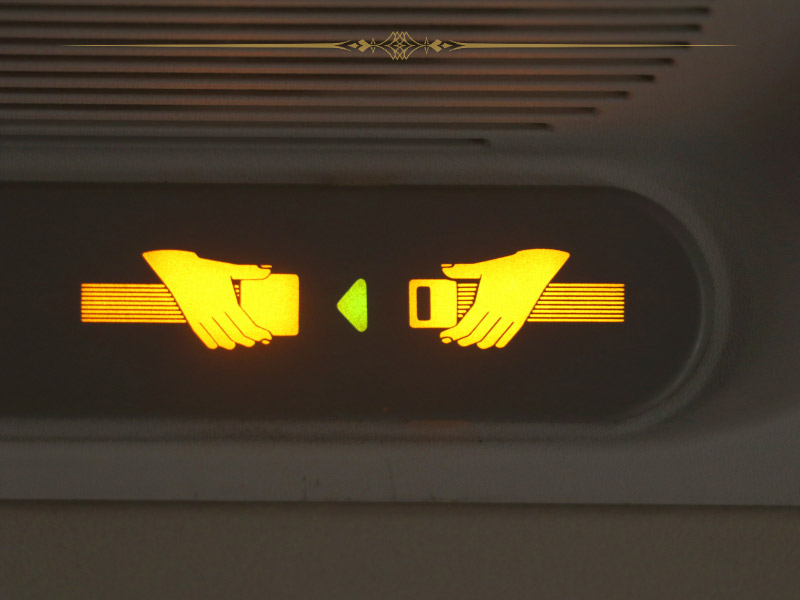
The seatbelt sign represents one of the most recognized safety features in commercial aviation. Mounted prominently throughout aircraft cabins, these indicators command attention and compliance from passengers who understand that turbulence can strike without warning. Most travelers dutifully click their buckles into place when the light appears, trusting that flight crews have detected conditions requiring this precaution.
Yet experienced cabin crew members acknowledge that turbulence explains only part of the story behind seatbelt sign being on. The light serves multiple functions beyond warning about atmospheric disturbances, some of which relate more to cabin management and crew efficiency than to safety concerns in the traditional sense.
Turns out, there’s more to that little orange light than warning passengers about rough air. A lot more. And some of the reasons might make you laugh.
The Meal Tray Slides Into the Picture
Picture this from a flight attendant’s perspective. You’ve just spent an hour pushing a heavy cart down the aisle, serving meals to 200 passengers. Your feet hurt. Your back aches. Now comes the fun part – collecting all those trays while dodging passengers who suddenly need the toilet.
Kenneth Brockweth worked as cabin crew for 26 years, and he’s seen it all. He admits that flight attendants would sometimes ask pilots to switch on the seatbelt sign for a very specific reason that had nothing to do with turbulence.
The worst time for passengers to start moving around? Right after meal service. Everyone’s finished eating, and naturally, everyone needs the loo at exactly the same moment the crew is trying to collect trays and tidy up the cabin.
So what’s a crew to do? Ask the pilots to flip on that seatbelt sign. Suddenly, passengers stay put in their seats, the aisles are clear, and the crew can work quickly without navigating an obstacle course of people queueing for the bathroom.
It’s cheeky, sure. But it also makes sense. The crew can finish their work faster, passengers get their tray tables back sooner, and everyone gets where they’re going on time.
When Nature Calls in the Cockpit
Here’s something most passengers never think about. Pilots are human. They need bathroom breaks too. And when they do, airlines have security procedures to follow.
Brockweth noticed something interesting on budget airlines he flies regularly. The seatbelt sign seems to click on whenever someone from the cockpit needs to use the toilet. He reckons it’s part of their security policy.
Think about it. When a pilot leaves the flight deck, there’s a brief moment when the cockpit door opens. Airlines want to minimize risks during those moments. What better way than keeping all the passengers nicely buckled in their seats?
It’s a simple solution to a security concern most travelers never even knew existed. The seatbelt sign does the job without anyone needing to make announcements or draw attention to what’s happening up front.
The Galley Invasion
Long-haul flights mean long working hours for cabin crew. After they’ve fed all the passengers and cleared away the mess, they finally get a chance to eat their own meals. On international flights, crew used to get proper hot meals, maybe some cheese, perhaps leftovers from business class.
But here’s the thing. Crew members eat in the galley. That’s also where passengers like to congregate after meals, stretching their legs and doing exercises to keep their circulation going.
Brockweth describes the scene perfectly. You’re trying to eat your dinner, and suddenly someone’s bum is in your face while they’re doing stretches in the limited galley space.
So yes, sometimes crew would request the seatbelt sign during their meal breaks. Can you blame them? They’re not asking for much – just the chance to eat without passengers performing yoga poses inches from their faces.
These days, budget airlines don’t even provide crew meals anymore. Staff have to bring their own food. But the galley invasion problem hasn’t gone away, so neither has the need to occasionally use the seatbelt sign to get some peace.
The Passengers Who Never Listen
Even when the seatbelt sign is blazing bright, some passengers simply ignore it. Brockweth jokes about not even wanting to get started on this topic.
There are the passengers who try to open the toilet door despite the sign. There are those who unbuckle the instant the wheels touch the runway, even though the plane is still hurtling down the tarmac at high speed. And there are the ones who pop their seatbelts open the second the sign switches off, standing up while the aircraft is still moving.
Flight attendants see this behavior constantly. It creates extra work and extra stress. Worse, it can be dangerous. Planes can hit unexpected bumps during taxiing. A sudden stop can send standing passengers flying.
The persistent non-compliance explains why crew members sometimes take matters into their own hands. If passengers won’t listen to direct instructions, at least keeping the seatbelt sign on a bit longer keeps them seated and safe.
When Turbulence Actually Is the Reason
Of course, most of the time, the seatbelt sign does exactly what passengers think it does. It warns about turbulence.
Sometimes that turbulence is already happening. You feel the bumps, the sign comes on, simple as that. But other times, pilots switch it on before things get rough.
They have access to weather radar and atmospheric data that passengers can’t see. They communicate with other aircraft that have flown the same route minutes earlier. They know about turbulent zones ahead that haven’t reached the cabin yet.
This proactive approach confuses passengers who look around at calm conditions and wonder what the fuss is about. But pilots aren’t being overly cautious. They’re giving everyone time to buckle up before the shaking starts.
Clear air turbulence is particularly sneaky. It happens in perfectly blue skies without any warning signs. No clouds, no storms, just invisible pockets of rough air created by high-altitude wind patterns. Pilots flying through areas known for this phenomenon will turn on the seatbelt sign as a precaution, even when everything feels smooth.
Different Skies, Different Rules
Fly in different parts of the world and you’ll notice very different passenger behavior around seatbelt signs.
In some countries, orderly compliance is the norm. Passengers stay seated until the sign switches off. Nobody rushes the aisles during landing. Everyone waits their turn. It’s almost peaceful.
In other places, the seatbelt sign seems more like a suggestion. Passengers make their own decisions about when it’s safe to move around. Cultural attitudes toward rules and authority shape these differences.
Airlines flying international routes have to adapt. What works in one market fails completely in another. Crew members need different strategies depending on where they’re flying and who’s on board.
The Bigger Picture
These revelations about seatbelt sign usage might seem trivial, but they reveal something important about modern air travel. Flying today involves managing hundreds of people in tight spaces with competing needs and different expectations.
Cabin crew don’t have many tools at their disposal. They can’t force passengers to behave. They can’t make the aisles wider or the galleys bigger. They work within constraints that would challenge anyone.
The seatbelt sign represents one of the few controls they have. It’s simple, everyone understands it, and it works across language barriers. So yes, sometimes it gets used creatively to solve problems that aren’t strictly about turbulence.
Is that dishonest? Maybe a little. But it’s also practical problem-solving in a challenging environment. Crew members are trying to do their jobs efficiently while keeping everyone safe and maintaining some semblance of order in a metal tube traveling 500 miles per hour.
What This Means for Passengers
Next time you see that seatbelt sign illuminate during smooth flying, you might wonder what’s really going on. Are you heading into turbulence? Is a pilot using the loo? Are the crew collecting trays? Is someone trying to eat lunch without a passenger’s backside in their face?
The honest answer is you probably won’t know. And that’s fine. The seatbelt sign exists for your safety, even if safety takes different forms than you might expect.
The best approach remains the same regardless of why the sign is on. Stay seated. Keep your belt fastened loosely when seated anyway, even when the sign is off. Don’t be the passenger trying to open the toilet door during turbulence or standing up while the plane is still moving after landing.
Flight attendants have difficult jobs made harder by passengers who don’t cooperate. They’re not trying to inconvenience anyone. They’re managing complex situations with limited resources in an environment where small problems can cascade quickly.
Understanding the multiple uses of the seatbelt sign doesn’t mean you should ignore it. If anything, it should increase your respect for the juggling act that cabin crew perform on every flight.
They’re keeping you safe, yes. But they’re also trying to feed you, clean up after you, maintain security, get their own work done, maybe grab a quick meal, and somehow keep hundreds of people moving smoothly through a confined space.
If occasionally using the seatbelt sign for reasons beyond turbulence helps them achieve all that, it seems like a small price to pay. Your job is simple – when the sign comes on, buckle up and stay put. What’s happening behind the scenes to prompt that request is less important than simply following the instruction.
The skies might be perfectly calm. The real turbulence might be happening in the galley or the aisle or the crew’s attempt to simply do their jobs. Either way, that little orange light deserves your attention and compliance.
So the next time you’re on a smooth flight and the seatbelt sign dings on, maybe smile to yourself. Somewhere on that plane, a flight attendant is probably breathing a sigh of relief that they can finally collect those trays in peace.