
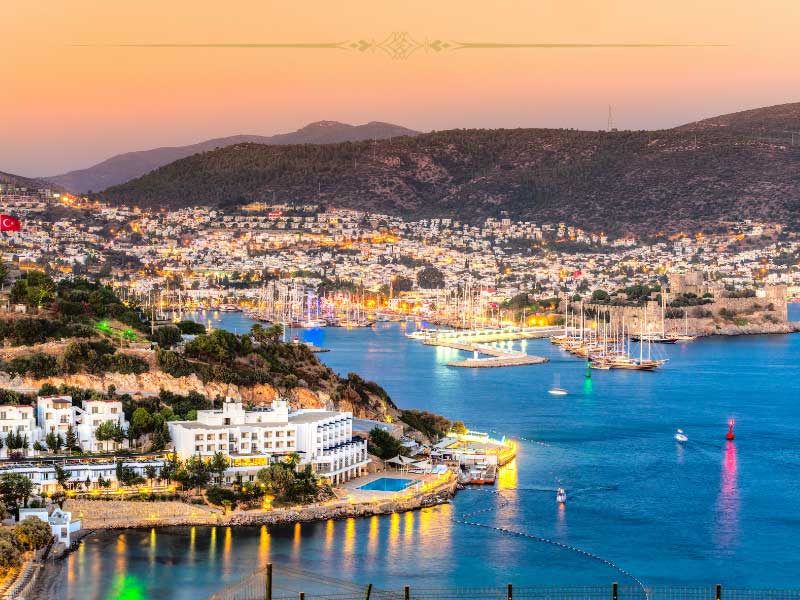
It has been one of the most consistently popular international destinations for Americans who want a trip that delivers history, food, beaches, and culture without the price tag of Western Europe. We are talking about Turkey, of course! Istanbul alone draws millions of visitors every year, and the Turkish coastline, with its warm Mediterranean waters and resort towns that stretch across the Aegean and the Mediterranean, has developed a global reputation as one of the best value beach destinations anywhere in the world. None of that has changed. What has changed is the level of attention that travel authorities are paying to conditions on the ground, and American travelers planning a Turkish trip need to know what the current advisory landscape actually says before they book.
The updated guidance that has just been issued around travel to Turkey covers a range of practical concerns, from passport validity requirements that are stricter than most Americans expect, to specific advice for travelers heading to Istanbul during a period of heightened activity around a major international sporting event. For a country that receives this much American tourist traffic and that covers this much geographic and cultural ground, the details of the current advisory are specific enough to be genuinely useful rather than simply cautionary.
Turkey sits at a crossroads in every meaningful sense. Geographically, Istanbul is the only major city in the world that straddles two continents, with one foot in Europe and the other in Asia. Culturally, the country blends Ottoman heritage, Byzantine history, and modern Mediterranean lifestyle in combinations that are hard to find anywhere else. Practically, it offers Americans a travel experience that punches well above its price point, with accommodation, food, transportation, and activities that cost significantly less than equivalent experiences in most of Europe. All of that remains true. What Americans also need to carry into that trip is an accurate understanding of the current entry requirements and the specific situations that are generating official concern right now.
The Passport Rule That Is Catching Americans Off Guard
Turkey has one of the stricter passport validity requirements of any popular international destination, and it is one that Americans frequently underestimate because the standard advice to keep six months of passport validity is not sufficient for Turkey.
To enter Turkey, your passport must have an expiry date at least 150 days after the date you arrive in the country. That is five months, not six, but it is calculated from your arrival date specifically rather than from the date you book or travel. Americans who are close to the 150-day threshold should calculate their validity carefully rather than assuming they are covered. A passport expiring on the borderline can result in denial of entry, which is an outcome that ruins a trip entirely and is entirely avoidable with advance planning.
The passport must also have at least one completely blank page available for immigration stamps. This is a standard requirement for many countries, but travelers who have been using their passports heavily for international travel sometimes find themselves with limited blank pages at inconvenient moments. Checking both the expiry date and the available pages before a Turkish trip is a two-minute task that eliminates a category of problems that travel advisories consistently identify as a source of avoidable disruption at the Turkish border.
For Americans who have passports that have been reported lost or stolen and then found again, travel authorities are explicit: attempting to enter Turkey or any country on a passport that has been reported compromised will result in denial of entry. If you previously reported a passport lost, received a replacement, and then found the original, the original is not valid for international travel regardless of its expiry date. Only the most recently issued passport should be traveling with you.
Americans traveling to Turkey who enter through land border crossings, a less common but not unusual route for travelers coming from Greece or Bulgaria, face an additional specific requirement. Border officials at land crossings must physically stamp and date your passport at the point of entry. This is not automatic at all crossings, and failing to ensure the stamp is applied creates complications for the entry/exit record that Turkish authorities maintain. If you are crossing by land, actively confirm that your passport has been stamped before you leave the border area.
Istanbul During Major Events
Istanbul is simultaneously one of the most rewarding cities in the world to visit and one of the most logistically complex during periods of heightened activity. The city of 15 million people has a transportation system that operates under significant pressure even during ordinary times, and when large international events bring tens of thousands of additional visitors into the same geographic area simultaneously, the pressure on movement, accommodation, and crowd management increases substantially.
The current travel guidance specifically addresses the period when UEFA’s major football tournament, UELF26, is drawing visitors to the city. Istanbul is hosting matches as part of the tournament, and the combination of sports fans, regular tourists, and local residents navigating the same streets, public transport systems, and gathering spaces creates conditions that require specific planning rather than a casual approach.
The advice being issued for travelers in Istanbul during this period centers on three practical areas. First, movement planning: anyone heading to fan zones at Gezi Park, Taksim Square, or to the stadium for matches should plan their route and timing to arrive well before events begin rather than attempting to navigate peak crowd conditions close to kickoff. Istanbul’s geography, built across hills on both sides of the Bosphorus, means that getting from one part of the city to another can take significantly longer than distance alone would suggest, particularly when public transport is under additional load.
Second, following local authority instructions during events and in crowded areas is specifically highlighted in the current guidance. This is not generic caution. Istanbul has robust crowd management protocols for major events, and local officials directing foot traffic, managing access points, and controlling movement around stadiums and fan zones are doing so as part of organized systems that work better when visitors follow them rather than attempting to navigate independently.
Third, personal security in crowded spaces receives specific attention. Pickpocketing and opportunistic theft in crowded tourist areas is a documented risk in Istanbul, as it is in virtually every major European city, and the current guidance specifically calls out the need for Americans to take care of their personal possessions, including passports, particularly in crowds and on public transport. The combination of a busy stadium event environment and the general tourist density of Istanbul’s historic areas creates elevated conditions for opportunistic theft that are worth planning around with the kind of bag and document security measures that are broadly applicable to any major European city in peak season.
The City Itself: Why Istanbul Is Worth the Planning
None of the current advisory guidance should be read as a reason to remove Istanbul from a travel list. It is, by nearly universal assessment among people who have visited, one of the great cities of the world, and the experiences it offers American travelers are not replicated anywhere else.
The Hagia Sophia, which stood for nearly a thousand years as the largest cathedral in the world before becoming a mosque and now serving as a mosque again, is an architectural experience that photographs cannot fully prepare you for. The sheer scale of the interior, the filtered light coming through ancient windows at height, and the sense of accumulated history across Byzantine, Ottoman, and modern Turkish eras combine to produce something that justifiably draws visitors from across the world.
The Blue Mosque, formally known as Sultan Ahmed Mosque, sits directly across the Hippodrome from the Hagia Sophia and completes one of the most architecturally dense public spaces anywhere in Europe or Asia. Its distinctive silhouette of six minarets has defined the Istanbul skyline for four centuries, and the interior, with its vast blue-tiled dome, is one of the most visited religious sites in the world. Both the Hagia Sophia and the Blue Mosque remain active places of worship, and visitors are welcome with appropriate dress and timing respect for prayer periods.
The Grand Bazaar, one of the world’s oldest and largest covered markets, covers an area of 61 streets and 4,000 shops within its historic walls. It is simultaneously a genuine working market where Istanbul residents shop and a tourist attraction where leather goods, ceramics, spices, textiles, and jewelry compete for attention in a labyrinth of covered passages that is genuinely easy to get lost in and genuinely difficult to leave quickly. The adjacent Spice Bazaar, smaller and more focused, is one of the best places in the city to experience the layered flavors of Turkish cuisine in raw ingredient form.
The Bosphorus itself is an experience that does not require any particular destination to deliver. Taking a ferry between the European and Asian sides of the city, a journey of under thirty minutes on regular commuter boats that cost almost nothing, gives American travelers a perspective on Istanbul that no museum or monument can provide. The skyline visible from the water, with minarets and modern towers sharing the ridgeline, and the constant commercial and pleasure traffic on one of the world’s busiest waterways, is as close to the essence of the city as any single experience can get.
The Turkish Coast and What Lies Beyond Istanbul
Istanbul receives the most attention in travel discussions about Turkey, but the country’s coastline represents an equally compelling and distinctly different travel experience that is worth understanding for Americans planning a broader Turkish trip.
The Aegean coast, stretching from the Greek border southward through towns like Bodrum, Cesme, and Marmaris, offers a combination of crystal water, ancient ruins, and resort infrastructure that has made it a premier Mediterranean destination for European visitors for decades. American awareness of this coastline lags behind European familiarity with it, but the beaches and bays of the Turkish Aegean are genuinely world-class by any comparative standard, and the prices for accommodation, food, and activities are dramatically lower than comparable quality on the Greek islands across the water.
The Mediterranean coast, known informally as the Turquoise Coast for the specific shade of the water in its sheltered bays, continues south from Marmaris through Fethiye, Ölüdeniz, Kaş, and Antalya in a stretch of scenery that includes some of the most dramatically beautiful coastline in the Mediterranean basin. The ancient Lycian ruins that dot this coastline, including the submerged city of Kekova and the rock tombs of Myra, add a historical dimension to what would already be a compelling landscape destination.
For Americans who have been to Greece or Italy and are looking for a Mediterranean experience that feels less crowded, less expensive, and in many ways less familiar in the best possible sense, the Turkish coast consistently delivers. The practical logistics of getting there from the United States typically involve flying to Istanbul and connecting domestically to the coastal airports at Bodrum, Dalaman, or Antalya, all of which have regular connections from Istanbul throughout the summer season.
Turkey Entry Requirements Beyond the Passport
American passport holders are currently able to enter Turkey without a visa for tourist or business stays of up to 90 days within any 180-day period. This visa-free access is a significant practical benefit that makes spontaneous or short-notice trips to Turkey considerably simpler than travel to countries requiring advance visa applications.
The 90-day limit within a 180-day rolling window is the same structure that governs many visa-free travel arrangements and deserves attention from Americans who visit Turkey regularly or who plan extended stays. The calculation is cumulative across the 180-day period, not simply reset at each entry. Americans who have spent time in Turkey on a previous trip within the past six months need to account for those days when calculating whether a new trip stays within the 90-day allowance.
Travel insurance that covers medical expenses in Turkey is strongly recommended and worth verifying specifically before departure. Turkey has high-quality private medical facilities in its major cities and resort areas, but costs without insurance coverage can be significant. Americans traveling on domestic health insurance should verify whether their policy extends internationally and what the specific coverage and reimbursement process is for treatment received in Turkey.
Currency is a practical consideration worth addressing before arrival. Turkey uses the Turkish lira, and while card payments are widely accepted in tourist areas, major cities, and resort hotels, cash is useful for smaller purchases, markets, transportation, and areas outside the main tourist circuits. Having a modest amount of local currency from the first day of arrival simplifies logistics and avoids the uncertainty of finding a currency exchange at an inconvenient moment.
Turkey remains one of the most accessible and rewarding travel destinations available to Americans planning international trips, and the updated advisory guidance is best understood as a practical roadmap for visiting it well rather than as a reason to reconsider the destination itself.