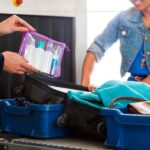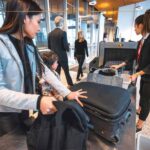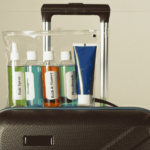
If you have been flying internationally for any length of time, the 100ml liquid rule is burned into your memory. Three-ounce containers, quart-sized clear bag, everything out at the checkpoint. It has been the standard at airports across the United States, the United Kingdom, and most of the world since 2006, when the rule was introduced following a foiled plot to bring liquid explosives onto transatlantic flights. For nearly two decades, it has shaped how American travelers pack toiletries, determined what gets confiscated at security, and created the familiar scramble to decant shampoo into travel-sized bottles before a trip.

That rule is now being phased out at some airports, thanks to the rollout of advanced CT scanning technology that can identify liquid threats more precisely than the older equipment, removing the need for the blanket restriction on container size. But the phase-out is not happening everywhere at once, and the inconsistency between airports that have upgraded and those that have not is creating a genuinely confusing situation for travelers, particularly Americans flying through or departing from UK airports this summer.
The practical consequence is that what you can bring through security at one airport on your trip may be completely different from what is permitted at another airport on the same journey. Understanding which rules apply where, and packing accordingly, is more important this summer than it has been at any point since the original 100ml rule was introduced.
What the New Scanners Actually Change
The CT scanners being installed at airports across the UK and elsewhere in Europe use technology that produces a three-dimensional image of bag contents, allowing security officers to examine items from multiple angles and identify potential threats with considerably more precision than the flat X-ray images produced by older equipment. This improved imaging capability means that the scanner can assess a bottle of liquid for threat characteristics without requiring the bottle to be removed from the bag and placed in a separate tray, and without requiring the container to be limited to 100ml on the assumption that larger containers are inherently harder to screen effectively.
Where these scanners are fully operational, passengers can leave liquids of any size in their carry-on bags, keep laptops and other large electronics inside their luggage rather than removing them, and move through the checkpoint without the unpacking ritual that has defined airport security for most travelers’ entire flying lives. For families traveling with toiletries, baby products, medications in larger quantities, or simply the normal range of personal care items that people want access to during travel, the difference is substantial.
The airports in the UK that have completed the scanner upgrade and are now operating under the new, more permissive liquid rules include some of the country’s busiest and most internationally significant facilities. London Heathrow, which is the primary hub for transatlantic travel between the United States and the United Kingdom and one of the busiest airports in the world, now allows liquids in containers of up to two liters in hand luggage. London Gatwick, which handles enormous volumes of American visitors arriving from the United States and connecting to European destinations, operates under the same two-liter limit. Birmingham Airport has also completed the upgrade and is operating under the new rules.
For Americans flying into the UK from the United States and then continuing to European destinations, this means that the security checkpoint on the connecting portion of the journey at Heathrow or Gatwick may be significantly more relaxed than anything they have experienced at American airports, where the equivalent scanner rollout is at an earlier stage.
The Airports Where the Old Rules Still Apply
The upgrade has not been completed uniformly across the UK, and several major airports continue to operate under the original 100ml rule for liquid container sizes. This is where the confusion begins for travelers who assume that a change at one airport means a change everywhere.
Stansted Airport, which is one of London’s four main commercial airports and handles significant volumes of budget airline traffic, continues to enforce the 100ml per-container limit. Manchester Airport, the largest airport outside of London and a critical hub for travelers in the north of England as well as a connection point for some transatlantic services, has not yet completed the full scanner rollout and maintains the 100ml rule. Liverpool, Glasgow, and Luton are also still operating under the original liquid restrictions.
There is an important nuance worth understanding at these airports: even though the container size restriction remains in place, the requirement to remove liquids from bags and place them in a clear plastic pouch has been dropped at some of these locations as part of the scanner upgrade process. The 100ml limit still applies, meaning oversized containers will be confiscated, but the physical procedure of unpacking and placing liquids in a separate tray has changed. The exact procedure varies by airport and is worth confirming directly before travel.
For American travelers whose UK itineraries include departure from or arrival at airports still operating under the 100ml rule, the practical advice remains what it has always been: pack liquids in containers of 100ml or less, keep them accessible in your carry-on for potential security review, and do not count on the more relaxed rules that apply at Heathrow or Gatwick extending to the airport you are actually departing from.
The Additional Wrinkle: Rules at Foreign Airports on the Return Journey
The inconsistency within the UK is complicated further by the fact that most airports outside the UK, including the majority of airports that American travelers pass through on European trips, continue to operate under older screening technology and the original 100ml liquid restrictions.
This creates a specific trap for travelers who fly into the UK or through a UK airport with upgraded scanners and take advantage of the relaxed liquid rules to pack full-sized toiletries in their carry-on, only to discover on the return leg or at a connecting airport that the airport they are now departing from enforces strict 100ml limits and will confiscate anything larger.
An American traveler who arrives at Heathrow, buys a full-sized bottle of sunscreen or shampoo during their UK trip, and packs it in their carry-on for the journey home via a European hub airport that still uses older scanners will lose that bottle at the security checkpoint on departure. The item is legal to carry through Heathrow. It is not legal to carry through airports still operating under the old framework, which currently includes the majority of European airports.
Travel advisories being issued in connection with the UK airport changes consistently emphasize that passengers need to research the rules at both their departure airport and any airports they transit through on the return journey, not just the airport where their trip begins. The rule that applies at the first checkpoint of the day does not automatically apply at the next one.
Powders, Foods, and the Items That Still Get Extra Scrutiny
Even at airports that have completed the CT scanner upgrade and moved to the more permissive liquid rules, certain categories of items continue to attract additional scrutiny or are still subject to restrictions that go beyond the standard liquid framework.
Powders are one such category. Security authorities in the UK and the EU have been paying increased attention to powder substances in carry-on luggage following incidents in which explosives were concealed in powder form. Several UK airports, including Gatwick and Liverpool, specifically recommend packing powders and powder-based products in checked luggage rather than carry-on bags where possible. This applies to items like protein powders, dry shampoo, talcum powder, and similar products. Powders that do travel through security in carry-on bags may be subject to additional testing or manual inspection, which adds time to the security process.
Food products, particularly those that are dense or have compositions that are difficult to distinguish from other substances in X-ray imaging, can also trigger additional screening at the checkpoint. Airports including Gatwick and Liverpool recommend placing food items in checked baggage where possible to reduce the likelihood of secondary screening that delays the process for everyone in the queue.
Liquids in metal or insulated containers present a specific issue even at airports that have otherwise relaxed the liquid container size restrictions. The materials used in insulated travel mugs, thermos flasks, and similar containers can obstruct the CT scanner’s imaging in ways that make the contents difficult to assess accurately. As a result, metal and insulated containers may be subject to additional checks or may need to be emptied before passing through the checkpoint, even at airports where a two-liter plastic bottle of water would pass through without any issue. If you are planning to travel with a metal water bottle or insulated coffee cup as part of your carry-on, checking the specific guidance at your departure airport is worth doing in advance.
What Travelers Departing From US Airports Should Know
The changes being implemented at UK airports are relevant to Americans in a different way than they are to UK-based travelers, because the starting point for most American international trips is a US airport where the situation is entirely different.
The Transportation Security Administration continues to enforce the standard 3-1-1 rule at American airports: liquids in containers of 3.4 ounces (100ml) or less, all containers fitting in a single quart-sized clear plastic bag, one bag per passenger. The TSA has been in the process of evaluating and deploying CT scanning technology at American airports, and some TSA checkpoints do use CT scanners, but the blanket removal of the 100ml restriction that has occurred at upgraded UK airports has not been implemented across US airports. The 3-1-1 rule remains in force at American checkpoints regardless of which scanner technology is in use at a specific lane.
This means that Americans departing from the US must comply with the standard liquid rules at the American end of any international journey, even if the UK or European airport they are flying into has more relaxed procedures. A full-sized liquid container that would be perfectly legal to carry through Heathrow is not legal to carry through a US airport checkpoint, and will be confiscated if it is in your carry-on at departure.
The practical guidance for Americans traveling internationally this summer, including those with UK or European itineraries, is to follow the most restrictive set of rules applicable to any checkpoint in the entire journey. If you are departing from a US airport, the TSA 3-1-1 rule applies to your carry-on liquids at that point, and your packing should reflect that. If you then arrive at a UK airport with relaxed liquid rules and purchase items there for the onward journey, research whether any airports between that point and your final destination still enforce the 100ml limit before placing those items in your carry-on.
The Simplest Way to Navigate the Confusion
The overarching advice from travel industry professionals and airport authorities dealing with the current transitional period in liquid rules is consistent and practical: check the specific rules for every airport you will be passing through, in both directions, before you travel. Do not assume that what applied on a previous trip still applies, and do not assume that rules are uniform across airports in the same country.
The official websites of individual airports are the most reliable source of current information on what is and is not permitted at each checkpoint. Airlines often include security guidance in their pre-travel communications, though they may not always reflect the most current airport-specific rules. The TSA website remains the authoritative source for what applies at American departure airports, and the UK Civil Aviation Authority website provides guidance on the overall UK framework even as implementation varies between airports.
Packing toiletries and liquids in checked luggage where possible remains the simplest way to avoid any issues related to liquid rules at any checkpoint on any journey. For travelers who prefer to keep personal care items in carry-on bags for access during long flights or who are traveling without checked luggage, the additional research investment of understanding the specific rules at each checkpoint in the journey is the straightforward alternative to potentially losing items at the security checkpoint.
The transition to a more permissive liquid framework is a genuine improvement for international air travel, and when it is fully implemented consistently across airports, it will make the flying experience meaningfully less stressful for everyone. The transition period, where different airports on the same journey operate under fundamentally different rules, requires more careful attention than either the old uniform system or the eventual new one will demand. For the summer of 2026, that careful attention is simply part of what international travel planning involves.