
It’s been a few years since the Baltic countries quietly climbed their way up my travel bucket list. But for a long time, flying there always seemed unnecessarily expensive, keeping those plans firmly in the “maybe one day category”.
When Jet2 asked if I wanted to join them on a Christmas markets trip to Tallinn, travelling on their inaugural flight from Birmingham, my answer was an immediate and very excited yes. Having already been on two Jet2 Holidays trips before, I knew exactly what to expect: easy travel, thoughtfully chosen hotels and the ease that allowed me to focus on the destination rather than on the logistics.
With just two days in Tallinn, I planned to experience the city at a pace that felt natural. Not rushed, but also not very slow. And with Tallinn being a small city, that’s extract what I did. I quickly discovered that Tallinn is perfect for a city break, and when the Christmas markets are involved, it gets even better.
I travelled with my friend Natalia who is originally from Latvia, so she knew a little bit about neighbouring Estonia, which helped make the trip to this new city even easier.
Getting to Tallinn with Jet2 Holidays

I flew to Tallinn on Jet2’s inaugural flight from Birmingham Airport, an early-morning departure at 8:45am. I arrived in Birmingham the night before from south London, and stayed overnight at the Ibis Birmingham Airport, to make the morning departure stress-free. The beginning of the journey, from Birmingham to Birmingham Airport was a very nice surprise as well, with the train ticket costing only £5.
After a few very busy days, I chose to check in at the airport rather than online. One of the things I genuinely appreciate about Jet2 is that you’re not penalised with extra fees if you don’t manage to check-in in advance. The check-in process itself was smooth and efficient, and within minutes me and my friend were heading through security with just our carry-on luggage.
Boarding began right on time, and shortly afterwards we were settled on board an Airbus A321 Neo, my favourite in the Airbus family. The cabin felt cheerful and festive, lit with red mood lighting and accompanied by Christmas music playing, as passengers found their seats. My friend and I had been assigned the emergency exit row, where there are only two seats, giving us extra space and the rare luxury of having no immediate neighbours.
The flight itself was exceptionally smooth. I slept through most of the journey, waking up as we began our descent into Tallinn. Arriving well-rested was the perfect way to begin our weekend trip to Tallinn in winter, ready to step straight into the city without the usual travel fatigue.
Airport to the City Centre
Getting from Tallinn Airport to the city centre couldn’t be easier, which is always a relief when arriving somewhere new. The airport is small, modern and efficiently run, making arrival quick and uncomplicated. Within minutes of landing, we were through passport control and collecting our luggage. Tallinn’s city centre is located just a few kilometres from the airport, and there are several straightforward ways to reach it. We used the pubic transport to get to our hotel, which was fast and costs only 2 euros each way. Buying a ticket is very easy, either from the machine in the airport, or directly by tapping the card on the reader on board.
There are several different buses that connect the airport to the city centre. We took number 2 to our hotel, and number 15 back to the airport.
Where to Stay in Tallinn

For our trip to Tallinn, we stayed at the Nordic Hotel Forum, a location that turned out to be perfect, located just outside the main gate to the Old Town, close enough to step straight into medieval streets, yet far enough to feel calm and spacious. The entire trip was booked through Jet2 Holidays, making the process seamless from flights to accommodation, and leaving us free to simply enjoy the city.
From the moment I saw the howling wolf statue in front of the hotel, I knew I would love my stay here. The design is beautifully Nordic: clean and simple, with carefully chosen details that feel intentional rather than decorative. Like the wolf statue outside.
Our room was impressively spacious. Instead of the usual narrow single beds you often find in twin rooms, we had two large, comfortable beds with plenty of room to move around them. Storage was generous, with space for luggage, winter coats, and a wardrobe that included a safe. Complimentary tea and coffee were provided, along with a kettle that proved very useful on the morning we took a day trip to Helsinki and left the hotel before breakfast service began.
Floor-to-ceiling windows filled the room with natural light, something I always appreciate during the darker winter months. The bathroom matched the rest of the room in both size and style: expansive, sleek and soothing. A large Nordic-style bathtub sat alongside a rain shower, and the wide sink area was framed by an oversized mirror with its own integrated lighting.

The hotel’s spa, located on the top floor, quickly became one of our favourite spaces to end the day. With a pool, jacuzzi, sauna and steam room, it’s the ideal place to warm up and relax after a day exploring the city. The panoramic windows are the real highlight, offering views over the red rooftops of Old Town Tallinn on one side and the city’s modern skyline on the other.
Breakfast each morning was exceptional. The continental spread was extensive, combining classic favourites with local Estonian specialities. Fresh fish featured prominently. There was plenty of salmon, herring and sardines, alongside traditional hams and cheeses. There was also an egg station and freshly made pancakes, making breakfast indulgent, and setting us up perfectly for a full day of winter exploring.
Tallinn in Winter

I really had hoped for snow on this trip to Tallinn, especially with the Christmas market in full swing. A couple of weeks before the trip, the forecast had looked promising, teasing the possibility of snow-covered rooftops and frosted cobblestones. But just days before our departure, a warm air front moved in, and with it, any real chance of snowfall disappeared.
Still, Tallinn in winter, even without the snow, it’s beautiful. We got a mixture of cloudy days, with the occasional drizzle, that helped us discover cute cafes and shops, whilst waiting for it to stop. The centre of the Old Town of Tallinn smelled like a mixture of mulled wine combined with roast sugary nuts.
I can imagine that in summer Tallinn is much more crowded than it is in winter. Even though the city centre felt a bit touristy due to the many souvenir shops, I enjoyed exploring without the crowds. Even the tours we took and the monuments we visited felt more intimate because of the low number of tourists joining.
The Tallinn Christmas Market

One of the main reasons for this Jet2 Holidays Tallinn city break was the Christmas market break. Set against the backdrop of Tallinn’s Town Hall Square, with a massive, beautifully decorated Christmas tree in the middle, the market was cute and filled with entertainment. On our first day in Tallinn we were welcomed with a traditional Estonian fold dance performance, on the stage adjacent to the market.
Wooden stalls, handmade crafts and seasonal treats create a festive atmosphere that doesn’t really need snow to bring that magic of Christmas to the city. Though, I can imagine how snowflakes make it even more magical.
Compared to other Christmas markets I visited around Europe, the one in Tallinn is very small, but it compensates through charm. Most of the stalls are selling glögi, a non-alcoholic hot winter drink made from berry juice spiced with cinnamon, cardamon, ginger, and cloves. If you want an alcoholic version, there are plenty of add-ons available, from the typical Tallinn Vanna to peppermint liquor or rum.
When it comes to food, there were a few typical Estonian dishes available. I was drawn by the appetising smell of braised cabbage with grilled sausages, which tasted divine. The potato pancakes and the creamy soups in edible cups looked delicious as well.
Day 1:
Free City Tour
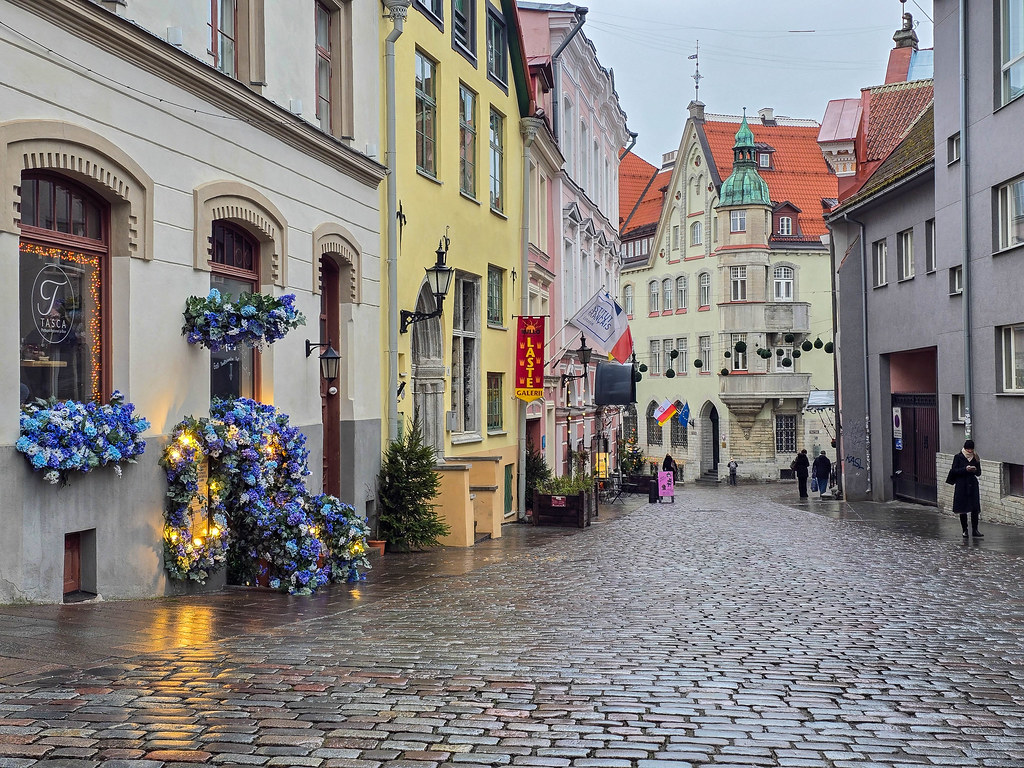
On my first day to any new place I like to go on a free walking tour, to understand more about the city I am visiting, learn about the country’s history, find out the layout of the place and ask the guide for insider tips that will make my trip more insightful.
And this is exactly what I’ve done in Tallinn. We were lucky that we were in Tallinn for the weekend because in winter, most of the tours only run at this time of the week. We met our guide in front of the tourist office in Tallinn, and we spent the next two hours walking through history around the old medieval streets of the city.
One of the things I’ve learned during this tour is that Estonia as a republic is actually younger than myself. Whilst the land of present day Estonia has been inhabited for at least 9000 years, as a free, independent country, it is just little over 30 years old.
Even though Tallinn is home to one of the best-preserved medieval cities in Northern Europe, protected by Unesco, a lot of it was bombed and destroyed during the Second World War. Today, we can see the remains of the old homes by looking at the pavement, which was designed to highlight where these buildings used to be.
Lunch al III Draakon

We stumbled upon this restaurant by accident, in the morning, when we were taking photos in the old town. The housekeeper tried to lure as in, and told us to cancel our dinner reservation in its favour. We didn’t want to do that, as we had our dinners very well planned, but we decided to come here for lunch. And what an experience this was!
As we entered the dark establishment lit only by candle light, we noticed the medieval wooden décor, with onions and apples hanging on the cabinets, the massive barred filled with pickles in the corner, as well as the soup cauldron, bubbling by the counter. The keeper of the house, dressed in medieval clothing, didn’t break character once. We ordered two bowls of their famous elk soup, accompanied by pickles and their house brewed beer. Behold my surprise when she sent me to the barrel to fish my own pickles with a spear. The soups came in uneven ceramic cups, without any cutlery. We picked up the bowls, the pickles and the beer, and headed into their dining room, dark, with only a few wooden dining tables.
The soup was so good and hearty, with plenty of elk meat inside, which I scooped out of the bowl with the help of the pickle. As an Eastern European with very strict criteria when it comes to pickles, I highly approved of them. They were just perfect.
I have to mention the toilet at III Draakon, which was a proper wooden throne. It did have running water, so don’t worry about everything being 100% medieval.
The damage to our pockets? Only 17 moneys, as they currency they use at III Draakon.
St Olaf Church

Estonia is not a religious country. However, the city has a striking number of churches for a country that doesn’t believe in religion. The reason is simple: every conqueror has built its own church in the city.
St Olaf’s Church is one of Tallinn’s most striking landmarks. For a time in the 16th century, its spire is believed to have made it the tallest building in the world. Dedicated to King Olaf II of Norway, the church has long been a symbol of Tallinn’s maritime importance. Sailors once used the spire as a navigational marker, guiding ships safely towards the harbour.
Other Churches in Tallinn
Alexander Nevsky Cathedral is impossible to miss. Sitting prominently on Toompea Hill, the Russian Orthodox cathedral stands in striking contrast to the medieval buildings around it, facing the Estonian Parliament. Built in the late 19th century during the Russian imperial period, its onion domes and richly decorated exterior feel bold and almost theatrical. Inside, the atmosphere is warm and enveloping, filled with icons, gilded details and the low glow of candlelight.
Nearby, Toomkirik, or St Mary’s Cathedral, tells a very different story. As the oldest church in Tallinn, dating back to the 13th century, it reflects the city’s Danish and German influences. The interior is understated, lined with coats of arms belonging to noble Baltic German families, quietly narrating centuries of shifting power and identity.
St Nicholas’ Church is another essential stop. Once a medieval parish church, it now functions as a museum and concert hall.
Kohtuotsa Viewpoint

As daylight began to fade, we made our way up to Toompea Hill, one of the best places to see a wonderful panorama of Tallinn. From here, the Old Town unfolds below in a patchwork of red rooftops, church spires and winding streets. Even in the drizzle, the terracotta tiles were still glowing vibrantly against the pale, bland, grey sky.
Dinner at Pelmen

Pelmen was such a fantastic foodie find on our first day in Tallinn. The restaurant is very small, decorated with old memorabilia from the Soviet Union. Coming from Romania, I recognised a few items from the walls from my own childhood.
The menu looked great and it reminded me of my travels on the Transsiberian, back in 2010. We ordered quite a few dishes, including the fish solyanka soup, the cured herring with potato pancakes, chicken and beef dumplings with sour cream and garlic sauce, as well as a honey cake for dessert. The highlight for me was the solyanka soup. I never had it with fish, which was absolutely delicious and so warming, contrasting with the outside weather. The potato pancakes with cured herring were amazing as well.
To drink, I tried kvass, a fermented cereal based drink that tasted just like rye bread. It was definitely an experience.
The Christmas Market

We ended the day back where much of Tallinn’s winter magic gathers, at the Christmas market in Town Hall Square. We arrived at the perfect time for the evening show, when Estonian folk groups took over the stage and performed traditional dances. Slowly, slowly, a crowd gathered in front of the stage, cheering and joining in singing.
The market is quite small, but still lovely to explore. Most of the stalls sell either food, hot drinks, Christmas decorations, or woollen socks and hats. I would have loved to get some, but they were so expensive. I get it though, as they were high quality and made to keep you warm.
Day 2:
Sadama Turg
We started our second day in Tallinn with a visit to the local market near the harbour. This is a great place to shop for cheaper souvenirs, especially that the ones in town are quite pricey. They also have a selection of fresh vegetables, as well as typical Estonian products.
Alternatively, there is another market you can go to, Balti Jaama Turg, but we went to this one as it was closer to our hotel and we wanted to drop off the souvenirs before heading off exploring for the day.
The Old Town

After a full first day discovering Tallinn through landmarks, history and guided walks, the second morning felt more relaxing. With an introduction to the Old Town already behind us, Day 2 was about returning to the streets we’d rushed through the day before, this time at our own pace.
Without the pressure of a fixed route, we wandered freely through narrow lanes, letting curiosity guide us rather than a map. We revisited favourite corners, noticed details we’d missed before, and ducked into small courtyards that revealed themselves almost accidentally. This is how we stumbled upon the fairytale trail of Tallinn, with classic stories portrayed inside unassuming courtyards, on buildings, or inside cellars.
We also explored some of the many shops around the city centre selling products made by local artists. I ended up with some gorgeous wooden coasters with wild animal shapes cut in the middle.
The Medieval Area and the Historic Walls

Tallinn’s historic walls are among the best preserved in Europe, and exploring them without haste allowed us to fully appreciate their scale and purpose. Built between the 13th and 16th centuries, the walls once encircled the entire city, protecting one of the most important trading centres.
Walking alongside the walls leads to hidden passages and alleyways, underneath sturdy beams supporting the stone buildings, giant wooden doors, as well as uneven cobbled stones. In this area of the old town it felt like indeed we were back in time. Even a lost Uber Eats driver got lost, probably unsure if the address he was looking for was really that medieval four meters high wooden door, that just opened in front of him.
A Surprising Ceramic Workshop

The highlight of the morning was a ceramic workshop that I spotted because of its cute uneven candle holders hanging in the window. We stepped inside and discovered an artist at work in one corner, surrounded by a lot of clay, next to a round oven. On the other side there was the shop, with random plates and decorations, none the same as the other.
I looked into a drawer market 5 euros everything, and found a cute plaque with a hedgehog on it. It reminded me of Mr. Picklepants, the hedgehog I looked after for 3 years, before I moved houses, so I bought it.
The Medieval Pharmacy

Raeapteek, or the Town Hall Pharmacy, has been operating continuously since at least the early 15th century. Often cited as one of the oldest pharmacies in Europe, Raeapteek is still la working pharmacy, even if there’s a museum in the back room as well.
The interior is lined with wooden cabinets with modern medicine, next to medieval recipes and potions in small vials. One of the most interesting facts about this pharmacy is that it used to sell a remedy for broken hearts. And what was… marzipan. To the day you can still buy marzipan for broken hearts at the counter.
Hot Chocolate and Cake at Kehrwieder Saiakang

After exploring the old town, we hid inside Kehrwieder Saiakang, a medieval café tucked away in the cellar of an old building in the Old Town. We were incredibly lucky to find a free table here, as the space is small and atmospheric, with uneven stone walls, low ceilings and wooden tables nestled onto wide window sills that look out onto the street above. To get to these tables you have to take your shoes off and leave them at the ground level. Adding to the charm was the café’s resident cat, quietly moving between tables as if overseeing the room.
I ordered a hot chocolate and a slice of chocolate and berry cake, while my friend chose a pot of tea accompanied by a slice of quiche. We took our time to warm up and just enjoy the dim lit atmosphere of the café, before going back outside to conquer more touristic attractions.
Kiek in de Kök and the City Walls

Kiek in de Kök is an imposing artillery tower, built in the late 15th century, which once formed a crucial part of the city’s fortification system. Its name, meaning “peek into the kitchen” in Low German, comes from the elevated vantage point soldiers had over the surrounding houses with legend has it they could see straight into the kitchens below.
Constructed to protect the city against the growing threat of firearms, Kiek in de Kök was one of the most advanced defensive structures of its time. With walls several metres thick, the tower was designed to withstand cannon fire, reflecting Tallinn’s strategic importance as a wealthy Hanseatic trading city.

A fun fact about the tower is that it has cannon balls embedded on the exterior walls. These were left there to remind Russian Tsar Ivan the Terrible that the tower stood tall in front of the attacks during the Livonian War, so he never comes back. And he never did.
The interior of the tower hosts exhibitions on several floors, each of them with interactive elements to entertain children, and myself. Because I was so happy to build the puzzle showcasing Tallinn in medieval times, put the soldiers in the correct order of the century they fought under, put on an armour and learn how to swing a sword. The top level is dedicated to Moomin, a bellowed fictional character of Nordic children books.
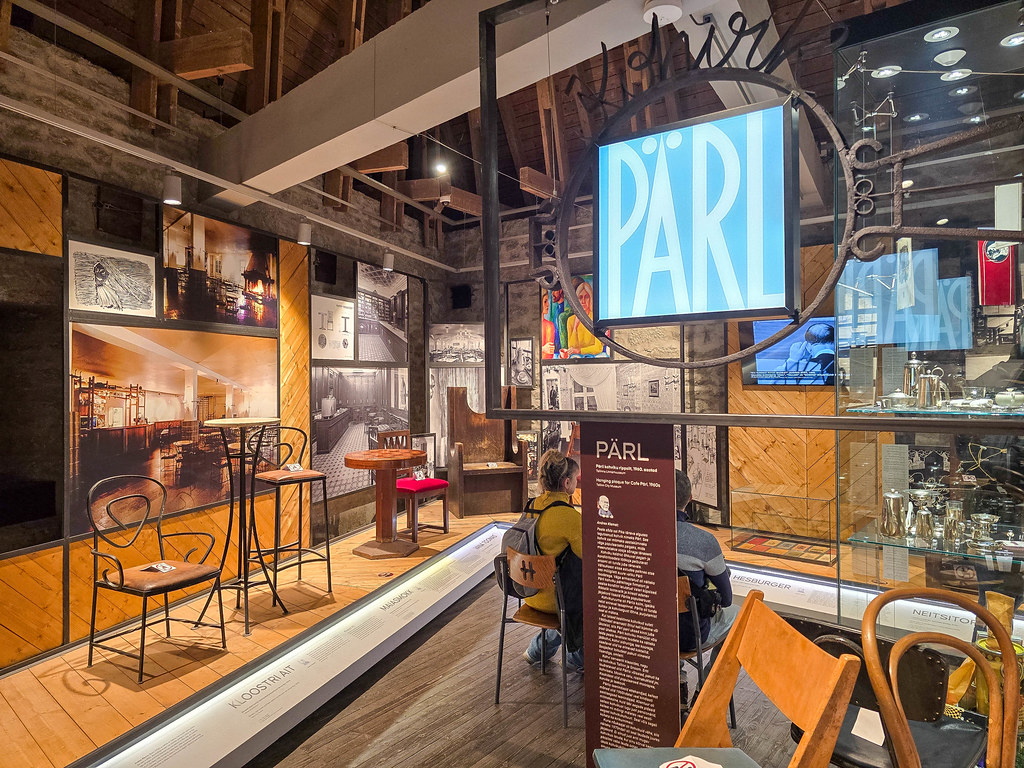
The ticket includes walking on the city walls and exploring two additional towers. One of them is a historic café with wonderful panoramic views over the churches of Tallinn, whilst the other one is the most haunted place in the city. Today though, it hosts a humble exhibition about the coffee culture in Tallinn. And whilst I wished I could see a medieval ghost inside, I promise, none of the exhibits moved during my time inside.
The Underground Museum

Beneath the tower lies another layer of history: the bastion tunnels. Dug during the 17th century, these underground passages were intended for troop movement and storage, allowing defenders to move unseen beneath the city during times of siege.
However, over the years, they served different roles, acting as shelters during the Second World War but also as the hideaway for punks later on. We were told that walking the tunnels is quick, and that we only need half an hour to visit them. However, it took us so much longer because of the great videos that bring the story of the tunnels to life.
Towards the end, the tunnels blend into the Carved Stone Museum, which exhibits over 200 decorative stone fragments found in Tallinn, representing tomb stones, coats of arms, portals, pillars, and many more. They are grouped on chambers, each with its unique name based on the nature of the stones exhibited such as the Garden of Eden, the Death Hall, or the Pillar Hall.
Dinner at Olde Hansa

The culinary highlight of the Jet2 city break to Tallinn was dinner at Olde Hansa. This medieval restaurant offers an experience rather than just dinner. I would highly recommend booking a table, as even during the low season all three floors of the restaurant were full with customers.
We got a table at the top floor of the 1565 Rich Merchants’ House, which used to host imported goods back in the day. The building didn’t suffer major modifications, and the interior has been redesigned specifically for the restaurant, before it opened in 1997, to resemble an old medieval tavern.
The dishes from the menu have recipes that have been researched in medieval documents to be as accurate as possible to what a wealthy family from the 15th century would eat.
I have to admit, I studied that menu days before dining at the restaurant, trying to decide on a dish. Because you see, Olde Hansa is not a cheap restaurant. And it’s understandable, for the experience that they are offering. The menu includes some very exotic meats, such as bear and deer, but beware, the price is accordingly.

We decided to share a meat platter, which included cold smoked deer sirloin with horseradish, tongue jelly, duck liver pate with onion jam, cream cheese and bread with herbs and nuts. For the main, I chose the pork sirloin served with a beer and ginger glaze, buckwheat, braised cabbage, parsnip, pickles and cranberries. My friend went for the deer fillet served with a rich mushroom sauce, buckwheat, root mash, cheese scone and pickles. They were generous plates, with delicious food.
To drink, I went for the house honey beer, whilst my friend chose the ginger option.
The dinner was accompanied by medieval singing and instrument playing, which was so nice.
The damage? 120 euros. Ouch!
Night Cap at the DM Baar

We finished the evening with a night cap at the DM Baar, which is Depeche Mode themed. It was quite empty when we arrived, but we still found it very fun. All the drinks in the menu were named after Depeche Mode song titles, and the soundtrack… you’ve guessed it, Depeche Mode all the way.
Extra Day? Day Trip to Helsinki
If you have an extra day in Tallinn, I recommend doing a day trip to Helsinki, which is only 2.5 hours away by ferry. Due to the Jet2 flights to Tallinn arriving early and leaving late back to England, we did get that extra day, so we went to Helsinki. To find out more about this, check out my article about how to take a day trip to Helsinki from Tallinn.
Like it? Pin it!
Disclaimer: Some of the links on this website are “affiliate links.” This means that if you click on the link and do a purchase, I will receive an affiliate commission at no extra cost for you. This helps me keep my website running and continue to share my travelling knowledge with you. I thank you for booking your flights or hotels using the links on my website. Regardless, I only recommend products or services I use personally and believe will add value to my readers.
This is such a lovely winter itinerary for Tallinn. I like how you balance Old Town highlights with cozy food stops like III Draakon and Kehrwieder Saiakang, plus practical tips for fitting it all into two days. The Christmas market focus really shows why winter is such a special time to visit.