Americans from coast to coast witnessed something extraordinary last night, and the show might not be over yet. The dancing ribbons of green, pink, and purple light that painted skies from Alabama to Alaska could make an encore appearance tonight as another blast of solar energy speeds toward Earth.
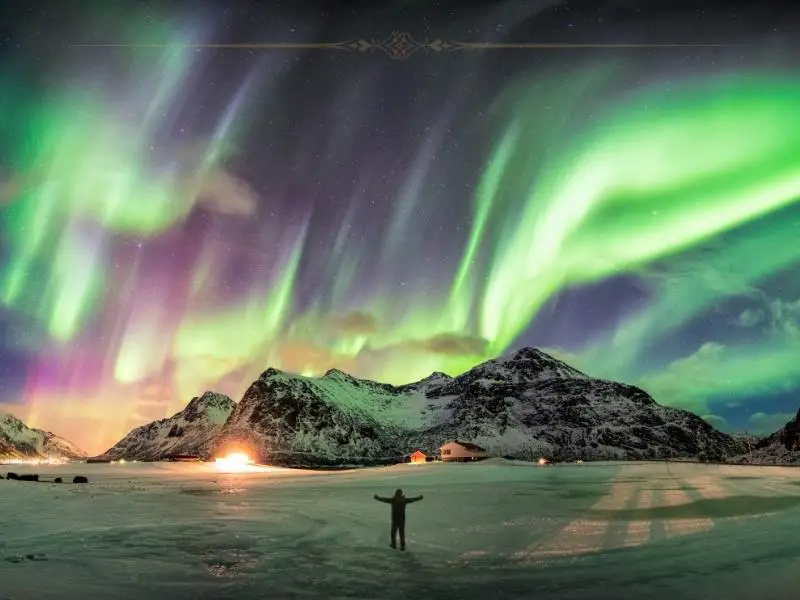
Space weather forecasters have their eyes locked on an incoming wave of charged particles that erupted from the sun early Tuesday morning. This solar outburst, classified as one of the most powerful flares of the current solar cycle, is expected to reach our planet sometime around midday Wednesday. When it does, it could trigger the kind of atmospheric light show that typically stays confined to the Arctic Circle.
What’s Happening Up There?
The sun has been particularly active lately, throwing off multiple bursts of energy over the past several days. These events, known to scientists as coronal mass ejections, are essentially massive clouds of electrified gas that rocket away from the sun’s surface at incredible speeds. When one of these clouds slams into Earth’s magnetic field, it can set off a chain reaction in our upper atmosphere that produces the aurora.
Tuesday night’s display was already spectacular. Social media lit up with photos and videos from people who had never seen an aurora in person before. Residents in states like Oklahoma, North Carolina, and even Florida reported visible light shows, sometimes bright enough to see with the naked eye even in areas with moderate light pollution.
The National Oceanic and Atmospheric Administration has issued what they call a severe geomagnetic storm watch for Wednesday. This is the fourth such warning they’ve issued during the current solar cycle, making it clear that we’re living through an unusually active period of solar behavior. Forecasters initially expected moderate storm conditions but were caught off guard when Tuesday’s activity came in two levels stronger than anticipated.
Shawn Dahl, a scientist with NOAA’s Space Weather Prediction Center, noted in a video update that the impacts from the first two eruptions packed quite a punch. The third wave, currently en route to Earth, appears to be moving even faster than its predecessors.
Where the Light Show Might Appear
According to current forecasts, at least 17 states could see auroras visible to the naked eye tonight. The list includes Alaska, Washington, Montana, North Dakota, South Dakota, Minnesota, Wisconsin, Michigan, Idaho, Wyoming, Oregon, Vermont, New Hampshire, New York, Iowa, Nebraska, and Illinois.
However, these predictions come with a significant caveat. Aurora forecasting isn’t an exact science, and conditions can change rapidly. Some meteorologists suggest the display could reach much farther south, potentially bringing the lights into view for states including Nevada, Utah, Colorado, Kansas, Missouri, Kentucky, West Virginia, Virginia, Maryland, and New Jersey.
In fact, if the incoming solar material arrives with the right magnetic orientation and at the right time, forecasters say the aurora could become visible in nearly every state in the continental U.S. Only the southernmost regions of Louisiana and Florida might miss out entirely.
The key factor that determines how far south the aurora reaches is the strength and orientation of the magnetic field embedded in the incoming solar cloud. If that field points southward when it arrives, it can create a more direct connection with Earth’s magnetic field, allowing charged particles to penetrate deeper into our atmosphere and produce brighter displays at lower latitudes.
Timing Is Everything
For those hoping to catch a glimpse tonight, patience and flexibility will be your best friends. The atmospheric disturbance is expected to intensify as evening approaches, with the strongest conditions potentially occurring between 7 p.m. and 10 p.m. Eastern Time, when forecasters predict the geomagnetic activity could reach strong levels.
After that initial peak, conditions are expected to moderate somewhat through the early morning hours, though the aurora could remain visible in northern states through 4 a.m. Eastern Time. Wednesday daytime could bring another surge in activity around midmorning Eastern Time, when the third coronal mass ejection is scheduled to arrive.
Spring and fall are traditionally the best seasons for aurora viewing at mid-latitudes, not because solar activity is higher but because of subtle ways the solar wind interacts with Earth’s magnetic field during these equinox periods. This can amplify geomagnetic storms and push the aurora farther from the poles than might otherwise occur.
The Science Behind the Colors
When those charged particles from the sun collide with gases in Earth’s upper atmosphere, they transfer energy to atoms of oxygen and nitrogen. As these atoms return to their normal state, they emit light at specific wavelengths, creating the characteristic colors of an aurora.
The most common color is green, produced when charged particles interact with oxygen molecules at altitudes between 60 and 150 miles above the surface. The red hues that sometimes appear at the top of aurora displays come from oxygen at even higher altitudes, while the purple and blue tones near the bottom are created by interactions with nitrogen.
What makes these displays so captivating is their movement. Unlike static light pollution or even stationary stars, auroras pulse and flow across the sky, sometimes forming curtain-like structures that seem to dance on invisible winds. This movement reflects the dynamic nature of the interaction between the solar wind and Earth’s magnetic field.
How to Maximize Your Chances
For people living in the forecast zone who want to see the aurora firsthand, preparation can make the difference between disappointment and an unforgettable experience. The most important factor is darkness. City lights wash out the fainter auroral displays, so getting away from urban areas significantly improves viewing prospects.
Look for a spot with a clear view toward the northern horizon. Even a small hill or elevated position can help by reducing interference from trees, buildings, or other obstructions. The farther north you can see, the better your chances of catching the show, especially if you’re near the southern edge of the viewing zone.
Your smartphone camera can be an invaluable tool, even before you see anything with your eyes. Modern phone cameras are much more sensitive to the kind of light emitted by auroras than human vision. By taking a few test photos aimed at the northern sky, you can often detect the presence of an aurora before it becomes bright enough to see unaqueably. Many phones now include night modes specifically designed for low-light photography, which work particularly well for capturing auroras.
Give your eyes time to adjust to the darkness. Human night vision takes at least 20 to 30 minutes to fully develop, and even brief exposures to bright light like a phone screen or flashlight can reset the process. If you need to check your phone or use a light, try using a red filter, which is less disruptive to night vision.
Dress warmer than you think you’ll need. November nights can get cold quickly, especially in northern states where the viewing prospects are best. Part of successful aurora hunting is being comfortable enough to stay outside for extended periods. The lights don’t always appear on a predictable schedule, and you might need to wait for the best displays.
Several smartphone apps can help you track aurora forecasts and receive alerts when conditions improve in your area. These apps use real-time data from satellites and ground-based magnetometers to predict aurora activity and estimate how far south it might be visible. While no forecast is perfect, these tools can help you decide when it’s worth making the effort to go outside and look.
The Bigger Picture
This recent surge in solar activity isn’t random. The sun follows an approximately eleven-year cycle of activity, during which its magnetic field completely flips. We’re currently in the active phase of Solar Cycle 25, which began in late 2019.
During this active period, the sun’s surface becomes increasingly turbulent, with more frequent sunspots, solar flares, and coronal mass ejections. The peak of solar maximum is expected to occur sometime between late 2024 and 2026, though scientists won’t be able to pinpoint the exact timing until months after it happens.
This means we’re likely to see more frequent aurora displays at lower latitudes over the next year or two. Events that would have been considered remarkable a decade ago are becoming almost commonplace. Last year saw one of the strongest geomagnetic storms in two decades, bringing aurora displays to locations that hadn’t seen them in generations.
The increased solar activity also brings some potential risks. Strong geomagnetic storms can interfere with satellites, GPS navigation systems, and high-frequency radio communications. Power grids can experience voltage fluctuations, and in extreme cases, widespread blackouts are possible. Airlines sometimes reroute polar flights during severe storms to avoid communication disruptions and elevated radiation exposure.
However, the infrastructure that runs our modern technological society has become increasingly robust against these solar threats. Power grid operators receive advance warning and can take protective measures. Satellite operators can put spacecraft into safe modes. The disruptions that do occur are generally minor and temporary.
Why This Matters for Travel
For travelers and tourism operators in northern states, increased aurora activity represents a significant opportunity. Aurora tourism has exploded in recent years, with destinations like Alaska, Iceland, and northern Scandinavia building entire industries around the phenomenon.
But you don’t necessarily need to book a flight to Fairbanks or Tromsø to see the northern lights anymore. When conditions are right, as they appear to be tonight, much of the northern United States enters the aurora zone. This democratization of aurora viewing has sparked interest among people who might never have considered themselves aurora chasers.
Hotels and lodges in states like Montana, Minnesota, and Michigan have started promoting aurora viewing as an attraction during the winter months. Some even offer wake-up calls when aurora forecasts improve overnight, allowing guests to step outside without having to monitor conditions themselves.
The unpredictability adds to the appeal. Unlike many tourist attractions that operate on a fixed schedule, auroras can’t be guaranteed. This element of chance makes successful viewings feel more special, almost like a gift from nature rather than a purchased commodity.
Not Just About the Beauty
While most people focus on the visual spectacle of auroras, these events offer a tangible connection to the enormous forces at play in our solar system. When you’re watching green light shimmer across the sky, you’re witnessing the direct impact of processes occurring 93 million miles away on the surface of the sun.
The particles that create tonight’s potential aurora began their journey as part of the sun’s superheated outer atmosphere. When that region became magnetically unstable, it ejected billions of tons of material into space at speeds exceeding a million miles per hour. That material has been racing across the void ever since, buffeted by magnetic fields and radiation.
When it arrives at Earth, our planet’s magnetic field catches those particles and funnels them toward the poles, where they slam into the upper atmosphere with enough energy to make it glow. The entire process, from solar eruption to terrestrial light show, represents a complex interaction between plasma physics, atmospheric chemistry, and planetary magnetic fields.
Aurora Watching
Humans have been watching auroras for thousands of years, though our understanding of what causes them is relatively recent. Ancient cultures developed elaborate mythologies to explain the lights. Some Indigenous peoples of North America saw them as spirits of the dead. Norse legends associated them with the Valkyries. Chinese records from thousands of years ago describe colored lights in the northern sky.
It wasn’t until the early twentieth century that scientists began to understand the connection between auroras and solar activity. The development of radio communications brought new urgency to this research, as operators noticed their signals were disrupted during periods of intense aurora activity.
Today we have satellites positioned between the Earth and sun that can detect solar eruptions and provide advance warning of incoming storms. Ground-based networks of magnetometers track the strength of geomagnetic disturbances in real time. This infrastructure allows forecasters to predict aurora activity with increasing accuracy, though significant uncertainties remain.
What to Expect
If you’re planning to head outside tonight in hopes of seeing the aurora, manage your expectations appropriately. The colors you see with your naked eye will almost certainly be less vibrant than the photos flooding social media. Cameras, especially those using long exposures, can accumulate light over time and capture wavelengths that human eyes struggle to perceive.
What you might see instead is a whitish or pale green glow on the northern horizon, perhaps with some subtle movement. In more active moments, the aurora can form distinct bands or rays that extend overhead. The most intense displays can indeed show obvious green or red colors to the naked eye, but these represent the exceptional conditions rather than the norm.
Cloud cover will be a critical factor. Even the strongest geomagnetic storm can’t compete with a thick blanket of clouds. Current forecasts suggest that some regions, particularly in New England and around the Great Lakes, may face cloudy conditions that obscure the sky. The Pacific Northwest and central Plains might see better viewing conditions.
The moon phase also matters. A bright moon washes out fainter auroras much like city lights do. Fortunately, we’re currently in a phase with limited moonlight during the prime viewing hours tonight, which should help if auroras do appear.
Beyond Tonight
Even if tonight’s aurora viewing doesn’t pan out, either because of clouds, timing, or weaker-than-expected activity, there will be more opportunities. Solar maximum is expected to continue for at least another year, bringing more frequent eruptions and more chances for mid-latitude aurora displays.
Forecasters have already issued watches for strong geomagnetic storm conditions extending into Thursday night as well. The sun appears to be in an active phase, with several large sunspot groups currently visible on its surface. Any of these could produce additional eruptions over the coming days.
The key is to stay flexible and keep checking forecasts. Aurora viewing requires patience and a willingness to accept that nature doesn’t always cooperate with our schedules. But for those who do manage to catch a display, the experience tends to be memorable enough to make all the waiting worthwhile.
For now, space weather forecasters are watching and waiting, monitoring the stream of data from satellites and ground stations. The incoming solar material should arrive sometime today, and when it does, we’ll know within minutes whether conditions favor another spectacular light show. Until then, aurora hunters across the country are preparing their cameras, charging their phone batteries, and checking the weather forecast, hopeful for another chance to witness one of nature’s most spectacular displays.
As one scientist put it, we’re living through an aurora fest. For those in the right place at the right time with clear skies, tonight could offer front-row seats to a cosmic light show that began its journey from the sun more than a day ago, traveled nearly 93 million miles through space, and culminated in a dance of colored light across our planet’s polar regions. All you need to do is look up.