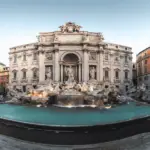
In a striking reminder of the ongoing tension between tourism and cultural preservation, a visitor from New Zealand recently faced significant financial and administrative penalties after taking an unauthorized swim in one of Rome’s most cherished historical landmarks. The incident at the Trevi Fountain, which resulted in a €500 fine and a temporary ban from the site, underscores the challenges facing authorities in protecting historical treasures while managing the pressures of mass tourism.
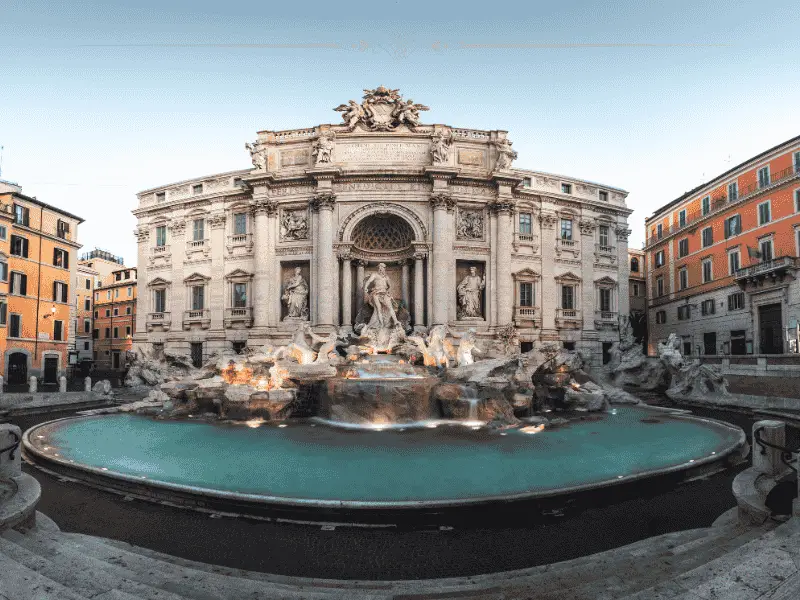
During the early hours of a Sunday morning, when the famous piazza typically experiences lower visitor numbers, the 30-year-old tourist decided to follow in the footsteps of countless film characters by entering the waters of the iconic Baroque fountain. Despite initial intervention by local police officers who had spotted the tourist and two companions approaching the monument with apparent intent to enter the water, the determined visitor managed to break away from authorities and briefly immerse himself in the fountain’s basin.
The consequences were swift and substantial. Municipal authorities imposed a fine exceeding €500, a significant sum that reflects the seriousness with which Italian officials view violations involving cultural heritage sites. Beyond the immediate financial penalty, the visitor received a temporary prohibition order, preventing his return to the historical monument. This type of administrative measure has become increasingly common as city officials work to deter behaviors that threaten the integrity of Rome’s ancient and Renaissance treasures.
The Trevi Fountain stands as one of Rome’s most recognized landmarks, attracting millions of visitors annually to the relatively small piazza in which it stands. Completed in 1762 during the pontificate of Pope Clement XIII, the monumental Baroque masterpiece depicts Neptune’s chariot being led by Tritons with sea horses. Its cultural significance extends beyond its architectural merit, having featured prominently in global cinema, most notably in Federico Fellini’s 1960 masterpiece “La Dolce Vita,” where actress Anita Ekberg’s memorable scene of wading through the fountain waters created an enduring cinematic moment.
This cultural legacy, ironically, contributes to the very behaviors authorities now work to prevent. The fountain’s appearance in films and other media has created a romanticized association with entering its waters, despite clear prohibitions against such actions. What may seem like harmless emulation of beloved film sequences to tourists represents a serious conservation threat to preservation experts and city administrators.
The monument recently underwent extensive restoration work, part of a multi-million euro project funded by Italian fashion house Fendi. These painstaking efforts to preserve the intricate marble carvings and ensure the fountain’s structural integrity make unauthorized interactions with the monument particularly problematic from a conservation perspective.
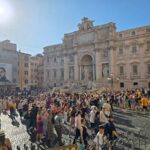
The Trevi incident represents just one example of the broader challenges facing Rome as it works to balance its identity as both a living city and an open-air museum of incalculable historical importance. With approximately 10 million visitors annually in pre-pandemic times, the pressure on the city’s infrastructure and historical sites has necessitated increasingly strict management measures.
City officials have implemented various strategies to address these pressures. At the Trevi Fountain specifically, crowd control measures now regulate visitor flow around the monument. These include designated viewing areas and movement patterns designed to prevent overcrowding while ensuring all visitors can experience the site. Despite these restrictions, access to the fountain remains free of charge, though municipal authorities have discussed the possibility of introducing an entry fee system similar to those in place at other Roman attractions.
Throughout the historic center, the local government has introduced additional regulations targeting behaviors deemed incompatible with the dignity of cultural sites. These include prohibitions against eating near monuments, sitting on historic steps, and “wild swimming” in various fountains and waterways. Enforcement of these rules typically falls to the municipal police force, whose officers regularly patrol tourist-heavy areas.
Tourism represents a critical component of Rome’s economy, with the industry accounting for approximately 12% of the city’s GDP and supporting tens of thousands of jobs. This economic reality creates a complex relationship between the city and its visitors—the very people whose spending supports local businesses and municipal services are sometimes the same individuals whose behavior threatens the city’s historical patrimony.
The financial penalties imposed for violations like unauthorized fountain entry serve multiple purposes within this context. Beyond their deterrent effect, the fines generate revenue that can theoretically support conservation efforts, creating a mechanism by which those who damage cultural resources contribute to their preservation.
However, critics argue that monetary penalties alone may prove insufficient, particularly for wealthy visitors for whom a €500 fine represents a minimal expense compared to the overall cost of international travel. This concern has prompted discussions about supplementing financial penalties with more significant consequences, such as extended bans from affected sites or even city-wide exclusions in cases of serious violations.
Rome’s struggles with tourism management and cultural preservation mirror similar challenges faced by heritage sites globally. From Angkor Wat’s temple complexes to Machu Picchu’s Incan ruins, authorities worldwide have implemented increasingly stringent visitor management systems to protect irreplaceable cultural resources.
Venice, another Italian city grappling with overtourism, has introduced particularly aggressive measures, including an experimental day-visitor fee system and restrictions on cruise ship access. Barcelona has limited new hotel development in its historic center, while Amsterdam has launched campaigns specifically discouraging certain types of tourism associated with disruptive behavior.
Archaeological sites in Greece and Turkey have established strict visitor pathways and limited handling of ancient stones, while Maya ruins in Mexico and Guatemala increasingly employ time-limited tickets and mandatory guide requirements to control visitor impact.
The common thread connecting these diverse approaches is recognition that unregulated tourism poses existential threats to the very attractions that draw visitors in the first place. Without effective management, the economic benefits of tourism can be outweighed by permanent damage to irreplaceable cultural resources.
Beyond punitive measures, cultural preservation efforts increasingly emphasize visitor education as a preventive strategy. Many cities with significant historical assets have developed campaigns aimed at promoting responsible tourism behaviors, explaining not just what rules exist but why they matter for preservation.
These educational efforts take various forms, from informational signage at monument sites to pre-arrival materials distributed through tourism websites and travel agencies. Some destinations have experimented with requiring visitors to acknowledge codes of conduct when booking tickets to major attractions or accommodations.
Rome itself has introduced the “Enjoy Respect Rome” campaign, which uses multilingual messaging to outline expected behaviors and explain the rationale behind seemingly restrictive rules. This approach recognizes that many violations stem not from malicious intent but from cultural differences in how public spaces are understood and used.
Educational approaches face significant challenges, however. The transient nature of tourism means new visitors constantly enter the city without the benefit of previous messaging. Language barriers can undermine communication effectiveness, while the sheer volume of information competing for tourist attention means preservation messages may go unnoticed among advertisements and other content.
The proliferation of social media has introduced new dimensions to cultural preservation challenges. Platforms like Instagram and TikTok can amplify both responsible and irresponsible tourism behaviors, with viral videos of rule violations potentially inspiring copycat actions.
The desire for distinctive social media content has been linked to various problematic tourism behaviors, from entering restricted areas to engaging with monuments in potentially damaging ways. The “Instagram effect” has created entire tourism subcultures focused on capturing specific images, sometimes with little regard for local regulations or preservation concerns.
At the same time, digital platforms offer opportunities for promoting responsible tourism. Influential accounts and official tourism channels can model appropriate behavior and explain preservation concerns to wide audiences. Geolocation features can deliver targeted information about site-specific rules when visitors arrive at sensitive locations.
As Rome and other historic cities continue refining their approaches to tourism management, several key strategies are emerging as particularly promising. These include time-specific ticketing systems that distribute visitor pressure throughout the day, dynamic pricing models that incentivize visitation during less crowded periods, and technological monitoring that allows for data-informed management decisions.
Some cities have begun employing these strategies selectively at their most vulnerable or popular sites. The Vatican Museums, for instance, now require advance reservations that specify entry times, reducing the once-common phenomenon of hours-long queues while better distributing visitor flow throughout the complex.
For open-air monuments like the Trevi Fountain, where complete access control presents greater challenges, hybrid approaches may prove most effective. These could combine physical barriers preventing direct contact with the monument, surveillance systems for early intervention when violations appear imminent, and prominent multilingual signage clearly communicating both rules and penalties.
The incident involving the New Zealand tourist highlights both the ongoing challenges and the evident determination of Roman authorities to protect their cultural heritage. As tourism returns to pre-pandemic levels, the balance between welcoming visitors and preserving historical treasures will remain a central concern for Rome and similar destinations worldwide.
For the millions who visit Rome annually, the message becomes increasingly clear: appreciating the Eternal City’s wonders comes with responsibility. Those who choose to disregard this principle may find their Roman holiday includes unexpected expenses and limitations as authorities work to ensure these irreplaceable treasures remain intact for future generations.