American travelers spend billions of dollars every year visiting Italy for the food. They arrive in Rome, Florence, Venice, and other Italian cities with high expectations about authentic Italian cuisine. They leave disappointed, having paid inflated prices for mediocre meals that bear little resemblance to the food they heard Italy was famous for. The tragedy is that these disappointing meals are not inevitable. The problems are entirely preventable and stem from predictable mistakes that tourists make again and again, often without realizing they are making them.
The restaurants that serve the worst food in Italy are almost always the same restaurants that are packed with tourists. The relationship is not coincidental. Restaurants positioned near major landmarks, with views of famous monuments, or in heavily trafficked tourist areas have no need to maintain quality because they have a constant supply of visitors who will never return. The restaurant will never see these customers again, so there is no incentive to invest in quality ingredients, proper preparation, or skilled cooking. The food at these establishments is frequently frozen, microwaved, or prepared in large batches hours in advance and reheated when ordered.
For American travelers who have saved money and planned for months to visit Italy, the experience of eating badly while spending too much represents a genuine loss. It is loss of money, loss of the opportunity to experience authentic Italian food, and loss of the experience of Italy that they came to have. But that loss can be prevented through understanding how Italian dining actually works and avoiding the mistakes that tourists systematically make.
The Problem With Eating Near the Famous Sights
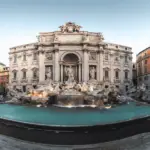
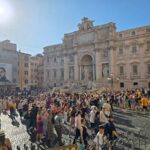
Walk near the Colosseum in Rome, stand across from the Duomo in Florence, or cross the Rialto Bridge in Venice and you will find restaurants with outdoor seating and views of these famous monuments. These restaurants are completely packed with tourists eating expensive meals. What those tourists do not realize is that the quality of the food is almost inversely related to the quality of the view.
The economics are simple. A restaurant with a view of a major monument has a line of customers waiting to sit down. Those customers have made the trip specifically to be near that landmark, and they are willing to pay premium prices for the location. The restaurant will serve each group of tourists exactly once. There is no possibility of them becoming repeat customers because they are vacation visitors from foreign countries who will not return for years if at all. The restaurant has no financial incentive to cook well, to use fresh ingredients, or to invest in quality.
What those restaurants do instead is maximize efficiency and margin. Pasta comes from frozen packages and is cooked in bulk. Sauces come from jars or from large batches made days in advance. Meat is the cheapest cuts available. Prices are marked up thirty to fifty percent compared to what the same dishes cost two streets away from the landmark. The waiter is accustomed to tourists who do not know any better, who will eat the food, pay the bill, and never complain because they have no frame of reference for how much better Italian food can be.
The solution is straightforward but requires deliberate action. Walk away from the monuments. Go ten minutes in any direction and the quality of the food improves dramatically while the prices decrease significantly. In Rome, the authentic food is in neighborhoods like Testaccio, Monti, or the residential sections of Trastevere, not on the main piazzas where tourists congregate. In Florence, cross the Arno River to the Oltrarno neighborhood where Florentines actually eat rather than staying on the main tourist circuit. In Venice, where tourists are unavoidable, get lost in the Cannaregio or Castello areas away from St. Mark’s Square and the main commercial areas.
The restaurants in these neighborhoods are full of local Italian families. Children are present. The customers are people who live nearby and who will eat at these restaurants regularly. The restaurant must cook well to maintain the business of these repeat customers. The food reflects that reality.
Timing Changes Everything in Italian Dining
American travelers often feel hungry when they arrive at their hotel in the afternoon or early evening. They sit down for dinner at six o’clock in the evening, genuinely confused about why the waiter seems uncomfortable or why the restaurant is almost completely empty. What they do not understand is that they are eating at a time when Italian restaurants are barely operational.
The kitchen is not yet fully prepared. The good ingredients have not been cut and arranged. The chef is still in the process of prepping for the service that will actually begin in an hour or two. The few other customers in the restaurant are almost always tourists who also do not know the schedule. The absence of Italian customers is a red flag that something is not right.
Italian restaurants operate on a very specific schedule that is built around the natural rhythms of Italian life. Lunch service occurs from approximately 12:30 in the afternoon until 2:30 in the afternoon. At that point, the kitchen closes. It does not reopen until 7:30 or 8:00 in the evening for dinner service. Some restaurants in southern Italy do not begin dinner service until 8:30 or even 9:00. This schedule has been consistent for generations and remains true across the country.
The period between 3:00 and 7:00 in the evening is what locals call the dead zone. Real restaurants are completely closed during this time. The only establishments serving food are tourist traps and casual places designed for light snacks. If a traveler is hungry during the dead zone, the correct approach is to find a bar or cafe and order an aperitivo, which is not just a drink but a social ritual. Between 6:00 and 8:00 in the evening, many Italian bars serve drinks with complimentary food, sometimes an entire buffet of small plates. An Aperol Spritz with a plate of snacks costs three to five euros and is genuinely better than most tourist restaurant meals.
By 9:00 in the evening, when a proper Italian restaurant is full of Italian customers, the kitchen is at its peak. This is when you should be eating if you want to experience excellent Italian food. The timing is not optional. It is essential to the entire experience.
How to Actually Find Good Restaurants
The most highly rated restaurants on Google Maps and TripAdvisor in Italy’s major cities are not where Italian people eat. They are where tourists who have no frame of reference leave five-star reviews based on eating something they think is Italian food for the first time. The rating algorithms reward volume over quality. A restaurant near the Vatican that serves five hundred tourists per day will accumulate more reviews than an authentic trattoria in a neighborhood that serves forty locals per night. The trattoria is substantially better. It simply does not appear on the first page of search results because it does not have the volume of reviews.
Finding good restaurants requires asking the right people the right questions. If staying at a hotel or Airbnb, ask the host or staff where they personally eat on their day off. That question is different from asking what they recommend to guests. The recommendations to guests are often the places where the hotel has a financial arrangement or where the staff has been trained to direct tourists. Where staff members actually choose to spend their own money and time off is where the real food is.
Other practical methods for finding good restaurants include looking for handwritten menus that change daily, which indicates the kitchen is cooking with whatever fresh ingredients arrived that day rather than pulling pre-made items from freezers. A short menu is another good sign because a restaurant offering eighty different dishes is not cooking any of them from scratch. A restaurant with fifteen dishes on the menu is preparing each one properly.
There is a guide called the Osterie d’Italia created by Slow Food, the international organization dedicated to preserving traditional food cultures. The guide costs approximately eight euros and is available as an app on smartphones. It functions as an insider’s bible for finding genuine trattorias across Italy and is frequently consulted by Italians themselves when traveling to unfamiliar regions.
Most importantly, ignore the ratings on Google Maps. A trattoria with a four-point-two rating in a Roman backstreet serving handmade food will be substantially better than a tourist restaurant near the Spanish Steps with a four-point-seven rating based on hundreds of reviews from satisfied tourists.
Understanding How Italian Meals Are Structured
American travelers often sit down at Italian restaurants with an expectation about how meals work based on their experience at restaurants in the United States. They do not understand that Italian meals have a specific structure and that how you order reveals to the waiter and kitchen whether you understand Italian dining or whether you are a tourist unfamiliar with the culture.
An Italian meal is composed of distinct courses, each serving a specific purpose and meant to be consumed in order. The antipasto is the starter course, typically featuring cold cuts, bruschetta, or small plates designed to stimulate appetite. The primo is the first course, featuring pasta, risotto, or soup. This is a full course, not a side dish. It comes after the antipasto and before the next course. The secondo is the second course, featuring meat or fish served completely alone, without pasta or rice on the plate. If you want vegetables or starch alongside the meat, these are ordered as a separate course called the contorno. Dessert, or dolce, completes the meal.
No one is expected to order all of these courses. Most Italians at a casual lunch order either a primo or a secondo, possibly with a contorno. At dinner, they might order an antipasto and a primo, or a primo and a secondo. The mistake tourists make is ordering far too much food by American standards. A typical order for a tourist might be a primo and a secondo and a contorno and bread, and then they are overwhelmed by the quantity of food that arrives. Italian portions are substantial but they are sized for eating one course at a time, not for eating multiple courses simultaneously.
Another common mistake is expecting the secondo to arrive with pasta or rice on the plate. It will not. The meat or fish comes alone. If you want anything served with it, you must order the contorno separately. Some tourists order only an antipasto and nothing else, or only a contorno as their entire meal. In a family-run trattoria where cooking is personal and traditional, this can actually be seen as disrespectful to the chef because you are not engaging with the meal structure that the restaurant has prepared.
The safe approach for travelers unfamiliar with the structure is to order a primo, which will typically be pasta, as the main course of the meal. Adding a shared antipasto provides a complete and satisfying meal that follows Italian dining traditions and will be accepted without question or judgment.
Dishes That Do Not Exist in Authentic Italian Cuisine
If a menu in an Italian restaurant features fettuccine Alfredo, spaghetti with meatballs, chicken parmesan, or pepperoni pizza, the establishment is a tourist restaurant designed for visitors who want American food with an Italian aesthetic. These dishes were invented by Italian immigrants in America and do not exist in Italy itself.
The sauce that Americans call Alfredo consists of butter and Parmigiano cheese emulsified with pasta water. It contains no cream. The dish exists in only one restaurant in Rome where it was invented over a century ago as a family specialty. It is not an authentic Italian preparation. Meatballs, known as polpette, do exist in Italian cooking but are never served on top of spaghetti. They are a secondo course, eaten on their own as a meat dish.
The confusion around pepperoni comes from language. In Italian, pepperoni means bell peppers. A traveler ordering a pizza with pepperoni in Italy will receive a pizza covered in roasted peppers and will spend the meal confused about what happened. Chicken pasta is another non-existent dish. Italian cuisine does not combine chicken with pasta. This combination simply does not occur in traditional Italian cooking.
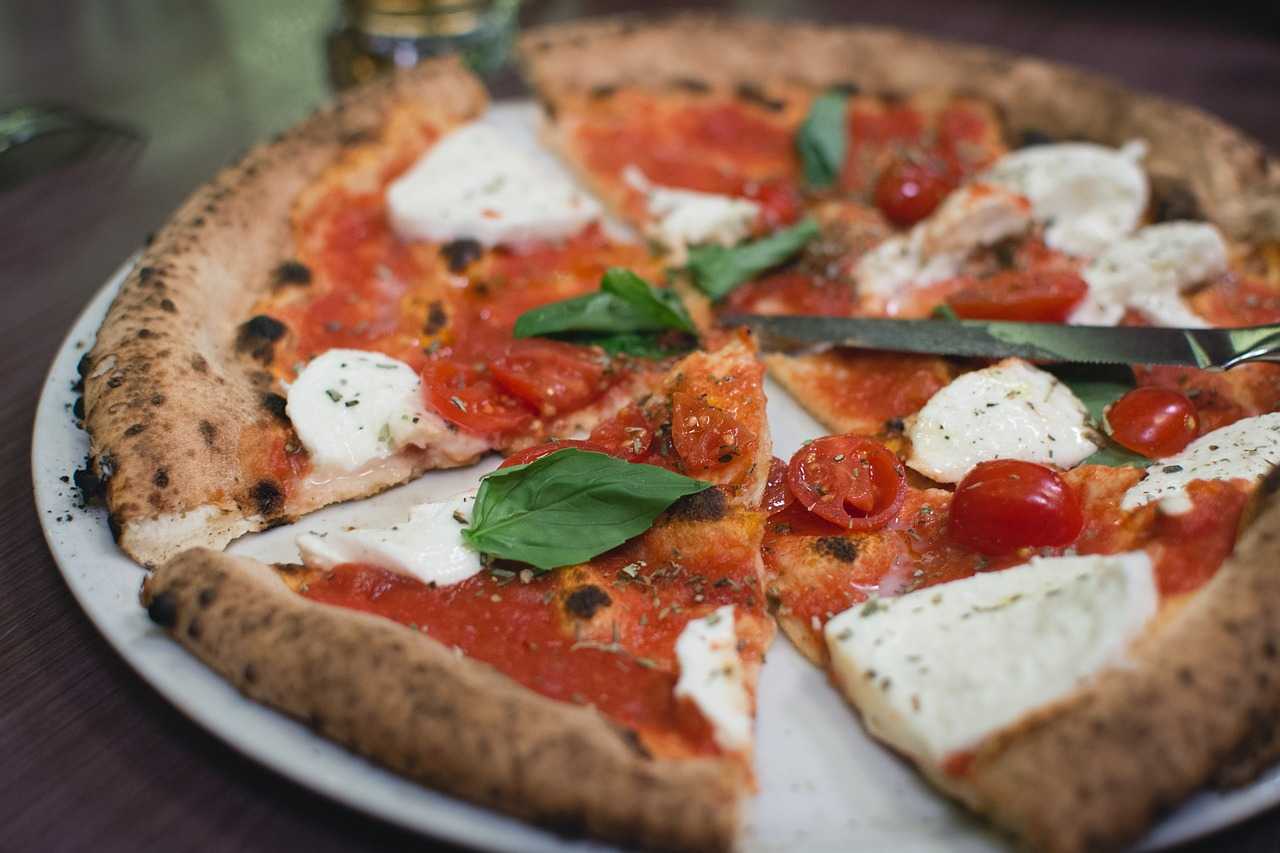
Understanding what actually belongs in different regions helps travelers order appropriately. In Rome, the traditional dishes are carbonara, cacio e pepe, amatriciana, and gricia. In Bologna, the signature pasta is tagliatelle al ragu, not the internationally known spaghetti bolognese, which is an Anglicized version that Italians actually find somewhat offensive. In Naples, pizza margherita and ragu napoletano are the iconic dishes. Every Italian city and region has its own pasta traditions, its own sauces, and its own food identity built over centuries. Eating what belongs to that place is eating authentically.
The Rules About Cheese and Seafood
Putting Parmesan cheese on seafood pasta will generate a reaction from an Italian waiter that ranges from subtle disapproval to outright refusal to serve it. This is not snobbery. It is based on genuine culinary principle. Parmigiano-Reggiano is an intensely flavored aged cheese with a strong, almost harsh taste. When combined with delicate seafood, the cheese overpowers and buries the subtle flavors of the fish or shellfish. The dish was specifically designed without cheese, and adding it does not enhance the experience but instead ruins it.
This applies to spaghetti alle vongole, which is spaghetti with clams, and to any pasta featuring shrimp, mussels, or other seafood. The rule is absolute: no cheese on seafood pasta. The same principle applies to pizza with seafood toppings. Seafood pizza comes without cheese because the fish is meant to be the primary flavor.
Parmesan is appropriate on pasta with meat-based sauces, on risotto that is not seafood-based, on vegetable soups, and on other preparations where the strong flavor of aged cheese complements rather than overwhelms. When a waiter brings grated Parmesan to the table of their own volition, it is appropriate to use it. When they do not bring it, do not ask. The absence is intentional.
Timing of Coffee and Other Beverage Rules
Cappuccino, the milk-heavy coffee drink that Americans associate with Italian culture, is consumed in Italy only during breakfast. By 11 o’clock in the morning, cappuccino season is finished. Ordering a cappuccino after lunch or dinner will result in the waiter bringing it because the customer has asked for it, but they will do so while internally questioning whether you are aware that this violates the natural order of Italian dining.
The Italian belief is that hot milk combined with a full stomach of pasta, meat, and vegetables is terrible for digestion. Whether this is scientifically accurate is less important than the fact that it is deeply held in Italian culture, and ordering cappuccino after a meal marks you immediately as a tourist.
The correct coffee to drink after a meal is an espresso, a small intense shot of strong coffee that is believed to aid digestion and to signal that the meal is ending. For people who find espresso too strong, a caffe macchiato, which is espresso with just a tiny amount of milk, is acceptable after meals.
Another common mistake involves ordering simply “latte” in Italy. The word latte means milk. Ordering latte will result in a glass of plain milk. What a traveler wants is “caffe latte,” which is coffee with milk, but this too is only appropriate at breakfast.
The Necessity of Reservations and Avoiding Tourist Menus
The best restaurants in Italian cities are frequently small, with only eight tables and perhaps thirty seats total. They fill up every single night. A traveler walking into a good trattoria in Trastevere at 8:30 on a Saturday evening without a reservation will not get in. Not because the restaurant is being exclusive, but because there are literally no empty chairs.
The restaurant next door with fifty open seats and a man standing outside inviting people in is always the tourist trap. An empty restaurant at prime dinner time is the single biggest red flag that something is wrong. The opposite of what tourists assume is true: emptiness means poor food and poor service.
Making a reservation is essential. This can be done by calling the day before, through an app called The Fork, which is widely used in Italy, or through WhatsApp, which many small restaurants accept. If everything good is full and no reservations are available, asking the host when an opening will occur often yields results. Italians eat late, and a 9:30 or 10:00 table frequently becomes available as the evening progresses.
Restaurants that advertise a “Menu Turistico,” a fixed-price meal for ten to fifteen euros that includes a primo, secondo, bread, and a drink, should be avoided. While it appears to be a bargain, tourist menus are mass-produced meals made in advance and reheated. The pasta is overcooked. The meat is the cheapest available. The wine is the worst house product. The entire menu exists because the volume of tourists eating it justifies the low price and low quality.
Italian law requires restaurants to mark frozen food on menus with an asterisk. If asterisks appear on fish, pasta, and desserts, everything was frozen. This is a clear signal to find another restaurant.
What Italy Actually Does Better Than Anywhere Else
Beyond pasta and pizza, Italy produces foods that genuinely cannot be replicated in other countries and that represent experiences worth traveling for. Fresh seasonal produce, olive oil from harvest, and street food are among the foods and experiences that differentiate eating in Italy from eating Italian food elsewhere.
The ritual of aperitivo between 6:00 and 8:00 in the evening is not just a drink but a social and culinary tradition. Bars serve complimentary food with drinks, sometimes entire buffets of small plates. It is the cheapest and most social meal available in Italian cities.
Fresh bread with excellent olive oil at a good restaurant is an experience most Americans have never had. Italian olive oil is nothing like what is available in most American grocery stores. Olio nuovo, fresh-pressed oil available between October and January, is green and peppery and transforms how someone understands the ingredient.
Eating seasonally is central to Italian food culture. Artichokes in spring in Rome, porcini mushrooms in autumn in Tuscany, fresh figs in summer, chestnut products in October, blood oranges in winter in Sicily. The food changes radically with the seasons, and eating in season is eating at peak freshness and flavor.
Street food represents the real everyday eating culture of Italy. In Naples, pizza fritta is fried pizza sold from carts. In Palermo, arancine and panelle are traditional street foods. In Rome, supplì are fried rice balls with melted mozzarella inside. In Florence, lampredotto sandwiches are sold from street carts. These cost two to four euros and are genuinely excellent. Some of the best meals in Italy happen standing at a market stall eating something for three euros that completely changes understanding of what food can be.