
Walk into any real estate office in the United States and ask to see homes under a dollar. The agent would think you’re joking. But in small towns across Europe, this is actually happening right now.
From Italian villages to Irish islands, communities are selling houses for pocket change. Some go for one euro. Others cost less than a quarter. A few Swedish towns are practically giving away land for free. It sounds like a scam, but it’s real.
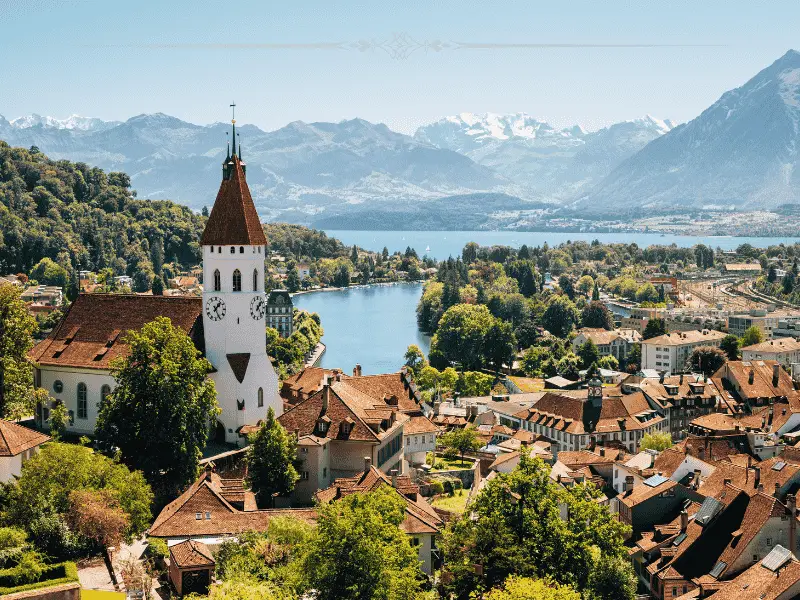
These aren’t luxury properties in Paris or Rome. They’re abandoned houses in dying towns that desperately need new residents. The local governments would rather give them away than watch them crumble. For Americans dreaming of a European escape, it’s an opportunity that seems almost too good to be true.
The question is whether it actually is.
Sweden Is Selling Land for Dimes
The town of Götene sits about four hours west of Stockholm. Most Americans have never heard of it. That’s kind of the point.
Local officials there are selling land for less than one krone per square meter. That’s about ten cents in American money. You could buy enough land for a house and pay less than what you’d spend on groceries for a week.
There’s a catch, though. You have to build a house on it. And you have to start construction within two years of buying the land. You also need a Swedish bank account to participate.
When Götene first announced this program, they got flooded with thousands of requests from around the world. The response was so overwhelming that officials had to pause everything and figure out a better system. They’re now considering some kind of bidding process for the remaining land.
For Americans who know construction or have the budget to hire Swedish builders, this could work. You’d get to design exactly the house you want. But you’d need to learn Swedish building codes, which are nothing like what you’re used to back home. And you’d have to deal with Swedish contractors who work on different timelines and expectations than American ones.
The whole point of the program is to bring young families to the area. Sweden’s population is aging fast, and small towns are emptying out. Götene hopes cheap land will convince people to move there and maybe start families.
France Wants You in the Loire Valley
About three hours south of Paris, there’s a small town called Saint-Amand-Montrond. It’s the kind of place you see in French movies. Quiet streets, old buildings, not much happening.
The town is selling homes for one euro. But you can’t just buy one and leave it sitting there. You have to live in it full-time. And you have to finish all the renovations within two years.
That might sound tough, but France helps out. The town offers big subsidies to cover some of your renovation costs. Some buyers can even get additional money from France’s National Housing Agency.
Saint-Amand-Montrond is doing this because it’s losing residents. Young people move to bigger cities for work. Businesses close down. Schools have fewer students. The town figures that bringing in new people is the only way to survive.
It’s a pattern playing out across rural France. Small towns can’t compete with Paris or Lyon. So they’re trying something desperate. Give away houses and hope people will come.
Croatia Has a Deal Near the Hungarian Border
In northern Croatia, right next to Hungary, there’s a town called Legrad. You can buy an abandoned house there for one kuna. That’s about sixteen cents.
But Legrad has stricter rules than most programs. You have to prove you have enough money to fix up the house. You have to keep ownership for at least fifteen years. And you have to be at least forty-five years old.
Families with kids get priority. The town wants children around to keep schools open and bring energy back to the community.
To make the deal sweeter, Legrad’s government will pay for twenty percent of your renovation costs, up to five thousand euros. That helps, because these houses need serious work.
Croatia, like many Eastern European countries, has seen massive population loss. People left for better opportunities in Western Europe or moved to Croatian cities. Towns like Legrad are half-empty. Selling houses for pennies is a last-ditch effort to bring people back.
Ireland Will Pay You to Live on an Island
In 2023, Ireland launched something called the Our Living Islands program. It targets thirty remote islands off the Irish coast that are losing residents fast.
Instead of selling cheap houses, Ireland gives you money. Eighty-four thousand euros, to be exact. But you have to use it to fix up a property on one of these islands. And you either have to live there full-time or rent it out long-term.
These aren’t tropical islands. They’re rocky Atlantic outposts that get hammered by storms. Many don’t have regular ferry service. Medical care might be an hour away by boat. In winter, you could be stuck there for days when the weather gets bad.
But if you want peace and quiet, you can’t beat it. These islands are beautiful in a harsh, wild way. The communities are tiny and tight-knit. Everyone knows everyone. There’s no crime because there’s nobody around to commit it.
Americans considering this need to really think about the isolation. It’s not like living in rural Montana where you can still drive to a town. You’re on an island. If the ferry doesn’t run, you’re stuck. If you need emergency medical care, it’s complicated. If you hate your neighbors, well, they’re the only neighbors you’ve got.
Italy Started This Whole Thing
Italy kicked off the one-euro home craze back in 2008. More than a dozen Italian towns are still doing it today. Most of them are in Sicily, but the idea has spread north.
A Sicilian town called Mussomeli launched its program in 2017. By 2020, the town had sold about three hundred houses. That was almost everything they had available. The program is still running, and you can find listings on several websites.
Another Sicilian town, Sambuca di Sicilia, got famous when HGTV did a show about it. The publicity drove prices up from one euro to two or three euros. Still basically free, but not quite as dramatic for the headlines.
Other Sicilian towns joined in. Campofranco, Acquaviva Platani, Cammarata, and Troina all have programs. Each one has slightly different rules about what you have to do with the house once you buy it.
Central Italy got in on the action too. The Abruzzo region has programs in towns called Penne and Pratola Peligna. Penne doesn’t even make you put down a deposit. You just have to start fixing up the house within three years.
Even Tuscany, which usually has some of the most expensive real estate in Italy, has a few towns selling cheap homes. Montieri and Fabbriche di Vergemoli are hoping new residents will bring life back to dying villages.
Up in Northern Italy, the town of Triora in the Ligurian Alps has a program. Down south, Chiaromonte in Basilicata and Biccari in Puglia are selling cheap houses. Even the island of Sardinia is doing it in a town called Ollolai.
Every Italian town has different requirements. Some give you strict deadlines to finish renovations. Others are more relaxed. Some require you to invest a minimum amount of money. A few just want you to make a good effort to fix the place up.
If you’re interested in Italy, you need to research each town carefully. Don’t assume they all work the same way.
The Real Costs Add Up Fast
Here’s where things get tricky. That one-euro price tag is mostly symbolic.
First, in many towns, the one euro is just the starting bid in an auction. Other people might want the same house. The price goes up. You might end up paying ten or fifty or a hundred euros. Still cheap, but not one euro.
Second, there are fees. Lots of fees. You need a surveyor to inspect the house before you buy it. You need a lawyer to handle the paperwork. You pay various taxes depending on where you’re buying. You pay for registrations and notaries and other bureaucratic stuff. These costs can hit several thousand euros before you even start fixing up the house.
Third, and this is the big one, you have to renovate. These houses are abandoned for a reason. Roofs leak or have fallen in completely. The plumbing is shot. The electrical system is ancient and dangerous. Walls are crumbling. There’s water damage, mold, and probably rats or other pests.
Some lucky people have done full renovations for twelve thousand euros. That’s still an amazing deal for a house in Europe. But others have spent hundreds of thousands. One person reportedly spent four hundred fifty thousand euros over four and a half years. At that point, the one-euro starting price doesn’t mean much.
The renovation cost depends on how bad the house is, how much local workers charge, how expensive materials are in that area, and how nice you want the finished product to be. Old houses also love to surprise you with hidden problems once you start opening up walls.
Budget high and expect surprises. That’s the reality.
The Paperwork Will Make You Crazy
Buying property in Europe is nothing like buying property in America. Every country does it differently. Even different towns in the same country can have different processes.
The biggest problem for Americans is language. These programs are in small towns where almost nobody speaks English. All the contracts, all the government forms, all the legal documents are in Italian or French or Croatian or Swedish. You’ll need to hire translators, which costs more money.
Getting permits to renovate is also complicated. In Europe, especially in historic towns, you often need approval from multiple government agencies before you can change anything. If the building is considered historically important, the rules get even stricter. Americans who are used to relatively simple permitting processes often find European bureaucracy incredibly frustrating.
Some people have given up entirely. They signed contracts to buy houses, started dealing with the paperwork, and just walked away because it was too much. Between the language barriers, the confusing legal systems, and the endless bureaucracy, they couldn’t handle it.
The key is hiring good local professionals who know the system. A local lawyer or architect who has done this before can save you months of headaches. Yes, it costs money. But it’s worth it.
Cultural differences go beyond just paperwork too. Construction workers in Europe operate on different schedules and have different expectations than American contractors. Payment works differently. Timelines are different. You need to adapt or you’ll have constant problems.
You Still Need a Visa to Actually Live There
This is important: buying a house does not give you the right to live in Europe.
Americans can visit Europe for up to ninety days in any six-month period without a visa. That’s fine for vacations. But if you want to actually live there, you need a residency visa.
Every European country has its own visa rules. Generally, you need to prove you have enough income or savings to support yourself. You usually need private health insurance. You have to pass background checks. The process costs several thousand dollars and takes months, sometimes over a year.
Some of these house programs require you to live in the house full-time. That means you need to get residency approval before you can even buy the house. Other programs let you use the house as a vacation home or rental property, so you don’t need residency right away.
Either way, don’t assume buying a house means you can move to Europe. Immigration and property ownership are completely separate issues.
Talk to an immigration lawyer who specializes in the country you’re interested in. Rules change, and everyone’s situation is different.
Life in These Towns Is Really Quiet
These super-cheap houses are in small, dying towns. That’s why they’re so cheap.
Young people have been leaving these places for decades. They go to cities for jobs and opportunities. What’s left behind are older residents, closed-up shops, and empty houses. The towns are peaceful and pretty, but there’s not much going on.
Don’t expect great internet. Many of these places have slow connections or spotty service. Healthcare might be basic or far away. Shopping means small local stores, not Target or Walmart. There aren’t movie theaters or restaurants or much entertainment. Public buses might run once a day or not at all.
These towns appeal to people who want to escape modern life. Retirees love them. People who work remotely and don’t need to go to an office can make it work. Artists and writers who want isolation do well there.
But if you’re used to having everything available 24/7, you’ll struggle. There’s no DoorDash. There’s no same-day Amazon delivery. There’s no Starbucks on every corner. Life moves slowly because there aren’t many people and not much happens.
The towns are doing these programs because they’re desperate. They need people to shop at local stores, to keep schools open, to participate in community events. They’re trying to avoid becoming complete ghost towns.
Visit before you commit. Stay for a week or two. See what daily life actually feels like. Talk to people who already live there. Figure out if you can handle the pace and the limitations.
Some People Make It Work
Despite all the challenges, plenty of people have successfully bought and fixed up these cheap European houses. Some use them as vacation homes. Others moved there permanently. Some turned them into vacation rentals that bring in money.
The successful ones went in with realistic expectations. They knew it would cost more than one euro. They knew renovations would be expensive and time-consuming. They hired local experts instead of trying to do everything themselves. They embraced the cultural differences instead of fighting them.
Vacation rentals can be smart if you buy in an area that attracts tourists. You can rent out the house when you’re not using it and use that income to pay for maintenance and offset some of the renovation costs. Some people buy specifically for this purpose.
Others just love the process of restoring old buildings. They like bringing history back to life. They enjoy working with old materials and traditional techniques. For them, the value isn’t just financial.
Whether it’s worth it depends completely on what you want. If you’re looking for an affordable European property and you’re willing to put in the time, money, and effort to renovate it, these programs can deliver. If you think you’re getting a move-in ready house for a euro, you’ll be disappointed.
Should You Actually Do This?
These European bargain house programs keep attracting Americans. The prices grab attention. But success requires planning, money, and realistic expectations.
Do serious research first. Every program is different. Every town has different rules. Look into specific properties. Visit in person if you can. Talk to people who have done it before. Calculate the real total cost, including purchase price, fees, renovations, and ongoing maintenance.
Think hard about whether you’d actually enjoy living in a small rural European town. They’re quiet and beautiful, but they’re also isolated and slow-paced. Some people thrive in that environment. Others get bored or lonely.
Consider the time commitment. Many programs require you to keep the house for years. Renovations have deadlines. You can’t just buy the house and forget about it or sell it immediately if you change your mind.
Be ready for frustration with paperwork, language barriers, and cultural differences. Dealing with foreign legal systems and government bureaucracies tests your patience. You need persistence and flexibility.
For Americans willing to take on the adventure, these programs offer European homes at prices you could never find through normal real estate channels. The cheap purchase price is just the beginning of a complex process that requires commitment and resources. But if you go in with your eyes open and a realistic plan, you might end up with a dream European home that actually cost less than a used car.



I get the allure, these charming towns look so magical and the idea of leaving it all behind for a small European town sounds like a fairytale, especially these days. Very interesting article.