
A major airport in southern Florida is on track to receive a new name honoring the current president, following legislative action that has sparked fierce debate about local control, branding rights, and the appropriate timing for such tributes. The facility currently serving millions of travelers annually as Palm Beach International Airport could soon bear Donald Trump’s name, pending only the signature of Florida’s governor to make the change official.
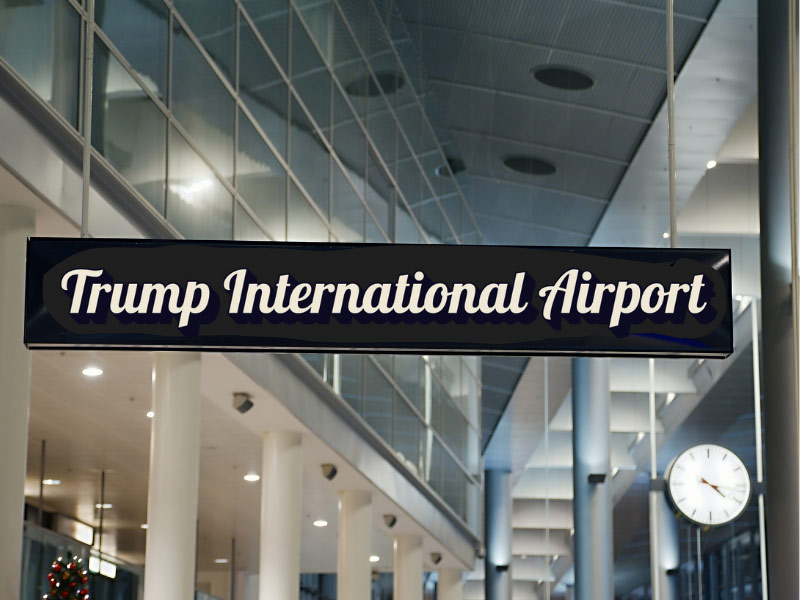
The transformation from a geographically neutral designation to one explicitly celebrating a political figure represents more than a simple name swap. It touches on questions of state authority versus local governance, the intersection of politics and infrastructure, and the unusual circumstance of renaming a facility after a sitting president who happens to live just miles away from the runways.
How the Bill Moved Through the Legislature
The legislative journey toward renaming began with a bill introduced by Republican representatives in the Florida House. The proposed change would redesignate the airport as President Donald J Trump International Airport, a title that explicitly references both the office and the individual currently holding it.
House members debated the measure before voting on a Tuesday in late winter. The final tally showed eighty-one representatives supporting the renaming while thirty opposed it. The voting pattern followed strict party lines, with Republican legislators uniformly backing the change and Democratic representatives standing in opposition.
The speed of the legislative process raised eyebrows among observers who noted that major infrastructure naming decisions typically involve extended deliberation and public input periods. Rather than allowing time for community feedback or further debate, the bill moved immediately to the state senate after clearing the house.
Senate action came just two days after the house vote. Senators advanced the measure through their chamber with similar partisan divisions, sending it to the governor’s desk for final approval. The rapid timeline from introduction to passage suggested coordinated effort among Republican leadership to expedite the renaming before the end of the legislative session.
Republican lawmakers backing the bill framed it as appropriate recognition of Florida’s connection to the president. Meg Weinberger, a representative from Palm Beach Gardens who co-sponsored the house version, emphasized the geographic proximity between Trump’s residence and the airport during floor debate.
She noted that the president lives approximately five miles from the airport and characterized the area as his hometown. This local connection formed a central argument for supporters who maintained that renaming the facility honored a prominent Florida resident rather than simply a national political figure.
The Political Context
Palm Beach International Airport sits in a location freighted with political symbolism. The facility lies less than six miles from Mar-a-Lago, Trump’s waterfront estate in Palm Beach that serves as both a private club and a residence the president uses frequently when away from Washington.
During winter months, Trump maintains a regular pattern of weekend visits to Florida, arriving aboard Air Force One at the airport that would bear his name. These trips have become routine features of his presidency, with the presidential aircraft touching down at Palm Beach International before motorcades transport him to Mar-a-Lago.
The drive between airport and residence already carries Trump branding along part of its route. In January, the Florida legislature approved renaming a stretch of roadway as Donald J Trump Boulevard, creating a symbolic pathway between the airport and the president’s home. The airport renaming would complete a geographic arc of Trump-named infrastructure in the area.
This concentration of Trump-associated naming in a single region of Florida reflects both the president’s personal ties to the area and the political dynamics of state government. Republicans control both chambers of the legislature and the governor’s office, giving them authority to advance such measures without requiring Democratic support or consensus.
The partisan nature of the renaming has intensified debate about whether such honors should wait until after a presidency concludes. Historical precedent shows that most infrastructure named after presidents received those designations after their terms ended and often after their deaths, allowing for assessment of their full historical legacy.
Democratic Opposition and Local Concerns
Democratic legislators and officials representing Palm Beach County mounted vigorous opposition to the renaming proposal. Their objections centered on procedural concerns about local input, questions about appropriate timing, and broader worries about politicizing major infrastructure.
Lois Frankel, a Democratic congresswoman whose district encompasses much of Palm Beach County including the island where Trump resides, issued a statement condemning the legislature’s action. She characterized the vote as misguided and unfair, arguing that state lawmakers had ignored the preferences and concerns of county residents.
Her criticism focused particularly on the lack of meaningful opportunity for local input into a decision affecting a facility that serves the region daily. Major airports function as economic engines and gateways for their communities, making their names matters of local identity and practical concern beyond symbolic politics.
Frankel advocated for delaying such naming decisions until after a president’s service has concluded. This approach would allow for fuller historical perspective and avoid the complications of naming facilities after sitting officeholders who remain embroiled in current political controversies and whose legacies remain unformed.
Kelly Skidmore, a Democrat in the state legislature representing Palm Beach County, raised additional concerns about the trademark dimensions of the renaming. She questioned why the Trump Organization would pursue trademark protection for the airport name if the family business had no intention of profiting from it.
Her skepticism reflected broader Democratic suspicions that the renaming might ultimately serve commercial purposes alongside or instead of purely honorific ones. The involvement of Trump’s business interests in seeking trademark protection for airport-related names created an unusual situation where private commercial concerns intersected with public infrastructure naming.
Democratic opponents also objected to the process by which state legislators exercised authority over a locally owned and operated facility. The principle of local control over community infrastructure clashed with the state’s assertion of naming rights through legislative preemption.
The Trademark Twist
An unexpected dimension of the airport renaming emerged when news broke that Trump had filed trademark applications covering multiple variations of airport names. These filings with the US Patent and Trademark Office occurred just days before the Florida legislature voted on the renaming bill.
The trademark applications covered at least three different name variations that airports might use, including the specific designation proposed in the Florida legislation. The applications encompassed a broad range of travel-related goods and services that could potentially carry Trump branding at airports.
Items covered in the pending trademark applications included luggage, suitcases, and carry-on bags that travelers might purchase. The applications also extended to airport facilities and services such as shuttle buses that transport passengers between terminals and parking areas, as well as passenger jetways that connect terminal gates to aircraft.
This commercial dimension raised questions about whether the airport renaming served primarily as tribute or whether it could facilitate business opportunities for Trump-branded products and services. The breadth of categories covered in the trademark applications suggested potential for extensive merchandising tied to the airport name.
The Trump Organization responded to concerns about commercial exploitation by insisting that the president would not receive royalties, licensing fees, or other financial consideration from the renaming. A statement provided to Florida media outlets emphasized that Trump was not seeking to profit from having his name on the airport.
The organization indicated it would provide any necessary licensing agreement to Palm Beach County at no charge, positioning the trademark protection as defensive rather than commercially motivated. This explanation portrayed the trademark filings as protecting Trump’s name and brand from unauthorized use rather than as groundwork for profit-making ventures.
However, the final text of the senate bill contained no requirement for licensing agreements or provisions addressing trademark usage. The legislation simply stated that the airport’s name would change effective July first, without mention of intellectual property arrangements or restrictions on commercial use.
This gap between the Trump Organization’s statements about providing free licensing and the actual statutory language created ambiguity about what legal obligations or protections would govern use of the Trump name at the airport. Critics pointed to this uncertainty as evidence that commercial opportunities remained open despite public assurances.
Debbie Mayfield, a Republican senator who co-sponsored the bill, acknowledged that Trump retained freedom to monetize his name if he chose to do so. She noted that Trump’s name has been trademarked for years and argued that restricting his ability to merchandise his own brand would violate free market principles.
Her comments suggested that Republican supporters of the renaming saw no conflict between honoring Trump with the airport name and allowing him to profit from that designation if opportunities arose. The distinction between public tribute and private commerce appeared less clear-cut than initial assurances suggested.
Questions of Authority and Process
The mechanism by which Florida legislators asserted naming authority over Palm Beach International Airport highlighted tensions between state and local government powers. Palm Beach County owns and operates the airport through its county commission, making it local public infrastructure under county control.
The legislative renaming employed a doctrine called preemption, which allows state government to override local authority in certain circumstances. By passing state legislation mandating the name change, lawmakers in Tallahassee seized naming rights away from the county commission that actually owns and manages the facility.
This assertion of state supremacy over local infrastructure decisions troubled not only Democratic opponents but also advocates for local governance across the political spectrum. The principle that communities should control their own facilities and make decisions affecting local residents directly conflicted with the state’s exercise of preemption power.
The lack of county input into the naming decision particularly galled local officials who pointed out that no formal process existed for Palm Beach County residents to express their preferences. Public hearings, community surveys, or other mechanisms for gathering local sentiment were absent from the legislative process.
Supporters of the renaming argued that state legislators represent their districts and thus provide democratic input into such decisions. Representatives from Palm Beach County areas voted on the measure, carrying the voices of their constituents into the legislative process according to this reasoning.
Critics countered that statewide partisan politics dominated the vote rather than any genuine assessment of local preferences. The strictly partisan voting pattern suggested that party loyalty rather than constituent sentiment drove the outcome, making the process less responsive to actual community views.
The speed of the legislative action also prevented meaningful public engagement even if lawmakers had been inclined to seek it. The brief window between bill introduction and final passage left little time for organized community response or for local officials to formally register positions.
Federal Approval and Implementation
Despite state legislative action and anticipated gubernatorial approval, the airport renaming requires one additional step before becoming official. The Federal Aviation Administration must approve the name change, as airports receiving federal funding and operating within the national airspace system fall under FAA jurisdiction.
This federal approval process typically reviews proposed airport names to ensure they meet technical standards and don’t create confusion with other facilities. The FAA considers factors such as clarity in radio communications, distinctiveness from nearby airports, and compliance with various regulatory requirements.
In most cases, FAA approval of legislatively mandated name changes proceeds as a formality rather than a substantive review. The agency defers to state and local decisions about naming while ensuring that technical aviation requirements are met. Rejections of proposed airport names are rare and usually involve technical problems rather than disagreements with the choice itself.
The current FAA administrator, Bryan Bedford, has personal and professional connections to Trump that suggest the approval process will encounter no obstacles. Bedford’s relationship with the president as a friend and ally makes it unlikely that the administration would block or delay the name change on any grounds.
Assuming the governor signs the legislation and the FAA provides approval, the airport would officially become President Donald J Trump International Airport on July first. This timeline would allow several months for updating signage, revising promotional materials, and implementing the name change across airport systems and communications.
The practical implications of renaming extend beyond installing new signs. The airport’s branding appears on everything from its website to directional signage throughout the region to materials used by airlines and travel companies. Coordinating these changes across multiple entities requires planning and expense.
Airlines will need to update their systems to reflect the new airport name in booking platforms, boarding passes, and passenger communications. Travel websites and apps must revise their listings. Rental car companies, hotels, and other businesses referencing the airport will need to adjust their materials and systems.
The Broader Pattern of Presidential Naming
The Palm Beach airport renaming fits within a longer American tradition of naming infrastructure after presidents, though the timing and circumstances differ from most historical examples. Airports, highways, bridges, and buildings across the country bear presidential names as recognition of their service and legacy.
Washington Reagan National Airport outside the nation’s capital represents perhaps the most prominent example of an airport named for a president. That facility’s renaming in 1998 honored Ronald Reagan more than a decade after he left office and several years before his death. The timing allowed for assessment of his presidency’s impact while he was still alive.
John F. Kennedy International Airport in New York received its name within a month of Kennedy’s assassination in 1963, representing an exception to the general pattern of waiting for temporal distance. The trauma of his death and the desire to honor him quickly drove that immediate renaming.
Other airports named for presidents followed similar patterns of post-presidency or posthumous designation. George Bush Intercontinental Airport in Houston honored the elder Bush, while various smaller facilities around the country carry presidential names typically awarded well after their subjects left office.
The Trump airport renaming breaks from this tradition by occurring during an active presidency while the honoree continues to exercise power and make decisions affecting the nation and state. This timing creates an unusual situation where public infrastructure celebrates a current political figure rather than an historical one.
Supporters argue that Trump’s continued residence in Palm Beach and his prominence in Florida politics justify the exception to standard practice. They characterize the renaming as recognizing a local connection rather than simply honoring a sitting president.
Critics maintain that the timing reflects political opportunism rather than genuine tribute, suggesting that Republican control of state government enables celebration of a partisan figure at a moment when his legacy remains unformed and contested. The strictly partisan vote pattern reinforces perceptions that politics rather than merit drove the decision.
Economic and Practical Considerations
Beyond symbolism and politics, the airport renaming carries practical implications for the facility’s operations and regional economy. Palm Beach International Airport serves as a major transportation hub for southeastern Florida, handling millions of passengers annually traveling for business and leisure.
The airport’s name functions as a brand that conveys information to travelers about location and service. Palm Beach International clearly communicates the facility’s geographic placement and its role serving international destinations. Whether President Donald J Trump International Airport provides equal clarity remains debatable.
Business and tourism interests in the region have expressed mixed reactions to the proposed change. Some welcome the attention and prestige associated with presidential recognition, hoping it might enhance the area’s profile and attract additional visitors curious about Trump connections.
Others worry that politicizing a major piece of economic infrastructure could create complications. International travelers from countries where Trump remains controversial might view the naming as unwelcoming or unnecessarily political. Business travelers from across the political spectrum might find the partisan associations unhelpful.
The cost of implementing the name change represents another practical consideration. Replacing signage, updating systems, and revising materials throughout the airport and across partner organizations requires significant expenditure. Whether these costs ultimately fall to taxpayers, the airport authority, or other entities remains to be determined.
Tourism marketing for the Palm Beach area will need to adjust to the new name, determining how to incorporate or downplay the Trump association depending on target audiences. International marketing in particular may require careful navigation of political sensitivities around the presidential name.
What Happens Next
With the bill passed by both legislative chambers, attention turns to Governor Ron DeSantis who must decide whether to sign the measure into law. As a Republican who has maintained generally supportive relations with Trump despite occasional tensions, DeSantis seems likely to approve the renaming.
His signature would trigger the process of seeking FAA approval and beginning practical preparations for the July first implementation date. Airport management would need to coordinate with airlines, contractors, and other stakeholders to execute the transition smoothly without disrupting operations.
Legal challenges remain a possibility, though the grounds for successfully blocking a legislatively mandated name change appear limited. Opponents might argue that the preemption of local authority violates state constitutional provisions or that the trademark dimensions create conflicts of interest warranting judicial review.
The controversy surrounding the renaming seems likely to persist regardless of whether the name change proceeds. Democrats and Trump critics will continue citing it as an example of partisan overreach and inappropriate timing. Republicans and Trump supporters will defend it as proper recognition of the president’s Florida connections.
For travelers passing through the airport, the name change will become simply another piece of information in their journey planning. Some will notice and care about the political symbolism. Others will remain focused on flight times, fares, and getting to their destinations without concern for what name appears on terminal buildings.
The renaming of Palm Beach International Airport to honor Donald Trump represents a convergence of state politics, presidential branding, local governance questions, and practical infrastructure management. How this intersection plays out in the coming months will provide insights into the complex relationships between politics, commerce, and public facilities in contemporary America.