A dog found secured to a metal baggage measuring frame at a major American airport in the middle of the night has become the center of an animal abandonment case that has shocked travelers and animal welfare advocates alike. The incident, which unfolded at Harry Reid International Airport in Las Vegas during the late evening hours of early February, has resulted in criminal charges and sparked conversations about pet travel regulations and animal welfare.
The story begins with a woman attempting to board a commercial flight with her dog but finding herself unable to complete the journey due to documentation issues. What happened next transformed a routine travel complication into a criminal matter that left airport staff scrambling to help an innocent animal left behind in one of the busiest terminals in the country.
Late Night Discovery at Terminal Three
Airport employees working the overnight shift at Terminal Three discovered the abandoned animal around half past eleven in the evening on February second. The dog had been tied to one of the carry-on baggage sizers, the metal frames that airlines use to help passengers determine whether their luggage meets size requirements for overhead bin storage.
The location of the abandonment carried particular significance. Baggage sizers stand prominently in ticketing areas where thousands of travelers pass daily. The choice to secure an animal in such a public location suggested either desperation or complete disregard for the dog’s wellbeing and safety in a chaotic airport environment.
Staff members at the JetBlue ticket counter noticed the distressed animal and immediately contacted airport authorities. The discovery triggered a response involving multiple agencies, from airport security to local law enforcement to animal control services. Within the busy terminal, travelers witnessed the unusual scene of a dog waiting alone while uniformed personnel worked to understand what had occurred.
The dog appeared confused and stressed by the abandonment, though airport employees who first encountered him reported that he seemed gentle despite the traumatic circumstances. Staff members took time to comfort the animal while waiting for authorities to arrive and determine the appropriate next steps.
The Failed Boarding Attempt
Investigation into the incident revealed that a woman identified as Germiran Bryson had arrived at the airport intending to travel with the dog. The twenty-six-year-old attempted to board her flight with the animal designated as a service dog, a classification that allows dogs to accompany passengers in aircraft cabins under specific federal regulations.
However, airlines require passengers traveling with service animals to complete mandatory documentation before departure. These requirements exist to verify that animals meet training and behavior standards necessary for safe air travel. The paperwork must be submitted through online systems within specific timeframes before scheduled flights.
Bryson had not completed the required online documentation necessary for her dog to be accepted as a service animal on the flight. When she arrived at the ticket counter to check in for her departure, airline staff discovered the missing paperwork and informed her that she could not receive a boarding pass while accompanied by the undocumented animal.
This situation presents challenges that many travelers face when attempting to fly with pets. Airlines maintain strict protocols around animal travel, both for legitimate service animals and for pets traveling in cargo or cabin. Missing or incomplete documentation routinely results in passengers being denied boarding until they can resolve the paperwork issues.
Most travelers in such situations either complete the documentation requirements, make alternative arrangements for their animals, or reschedule their flights. The typical response involves problem-solving rather than abandonment.
From Ticket Counter to Departure Gate
After being informed that she could not board with her dog due to the documentation failure, Bryson made a choice that would lead to criminal charges. Rather than seeking alternative solutions or accepting that she would need to miss her flight, she secured the dog to the baggage sizer and proceeded toward her departure gate.
The decision to continue toward boarding after abandoning the animal suggests premeditation rather than a panicked spur-of-the-moment choice. Walking from the ticket counter through security and on to a departure gate requires time and multiple decision points where reconsideration might have occurred.
Las Vegas Metropolitan Police Department officers began searching for the individual responsible for abandoning the dog based on descriptions provided by airport staff and security camera footage. They located Bryson at Gate D1, where she was apparently preparing to board her flight as if nothing unusual had occurred.
When officers approached and questioned her about the abandoned animal, her response added another disturbing element to the case. She allegedly told police that the dog would return to her location because it was equipped with a tracking device. This statement implied an expectation that the animal would somehow navigate through airport security, past thousands of travelers, and locate her at a specific gate in a massive terminal complex.
The interaction with law enforcement deteriorated further when Bryson allegedly became hostile during questioning. Officers reported that she resisted arrest when they attempted to take her into custody. The resistance added additional charges to the animal abandonment allegation that had initially prompted police involvement.
The Criminal Charges
Bryson was arrested and booked on multiple misdemeanor charges stemming from the incident. The primary charge involved animal abandonment, reflecting the deliberate decision to leave the dog secured in a public location without ensuring its safety or care.
Additional charges included resisting arrest, based on her alleged behavior when officers attempted to take her into custody at the departure gate. The charges also included providing false statements to a public officer, related to claims she made during the investigation about the dog and the circumstances of the abandonment.
The classification of these charges as misdemeanors rather than felonies meant that Bryson was not required to post bond for her release from custody. She was processed through the criminal justice system and released with a court date scheduled for the end of March, roughly two months after the incident occurred.
Animal abandonment laws vary by jurisdiction but generally address situations where owners leave animals in circumstances that endanger their welfare or fail to provide necessary care. Airports present particularly challenging environments for abandoned animals due to crowds, noise, security concerns, and the risk that animals might wander into dangerous areas.
The legal proceedings will determine what penalties Bryson ultimately faces for the charges. Misdemeanor convictions can result in fines, community service, probation, and in some cases, prohibitions on future animal ownership. The court date at the end of March will begin the formal adjudication process.
The Dog’s Journey Through the System
After animal control officers took custody of the dog from the airport, he entered a mandatory holding period required under Nevada law. Animals found abandoned or seized in neglect cases must be held for a specified period to allow owners the opportunity to reclaim them if the abandonment resulted from circumstances beyond their control.
The ten-day hold period passed without Bryson or anyone else coming forward to claim the dog. This lack of action to retrieve the animal reinforced the intentional nature of the abandonment and cleared the way for the dog to be transferred to a rescue organization that could provide proper care and seek a permanent home.
Retriever Rescue of Las Vegas, a nonprofit organization dedicated to rescuing and rehoming dogs, accepted the animal into their program. The rescue has extensive experience evaluating dogs from difficult backgrounds, providing necessary veterinary care, and matching animals with appropriate adoptive families.
The organization made the decision to name the dog JetBlue, acknowledging the airline employees who first responded to help the abandoned animal. The name serves as a reminder of the kindness shown by airport staff who could have simply reported the situation and moved on but instead took time to comfort a frightened dog in an overwhelming environment.
Preparing JetBlue for Adoption
Once in the care of Retriever Rescue of Las Vegas, JetBlue underwent the standard intake procedures that all rescued dogs receive. Veterinary examinations assessed his overall health, checking for any medical issues that might have gone untreated or conditions requiring ongoing care.
The rescue arranged for JetBlue to be neutered, a standard practice that prevents unwanted breeding and can reduce certain behavioral issues. Neutering also makes dogs more suitable candidates for adoption, as many potential adopters prefer animals that have already undergone this procedure.
JetBlue received updated vaccinations to protect against common canine diseases and parasites. Proper veterinary care ensures that adopted dogs enter their new homes healthy and protected, reducing medical complications for adoptive families and giving animals the best chance at thriving in new environments.
Following his medical care, JetBlue was placed with a foster family. Foster homes serve critical roles in rescue operations, providing temporary care in home environments rather than kennel settings. Foster families observe dogs in everyday situations, gathering information about personality, behavior with people and other animals, house training, and any special needs.
The foster period allows rescue organizations to create accurate descriptions of animals available for adoption. Potential adopters benefit from detailed information about temperament, energy levels, compatibility with children or other pets, and any behavioral considerations. This matching process increases the likelihood of successful permanent placements.
JetBlue’s Personality and Adoption Prospects
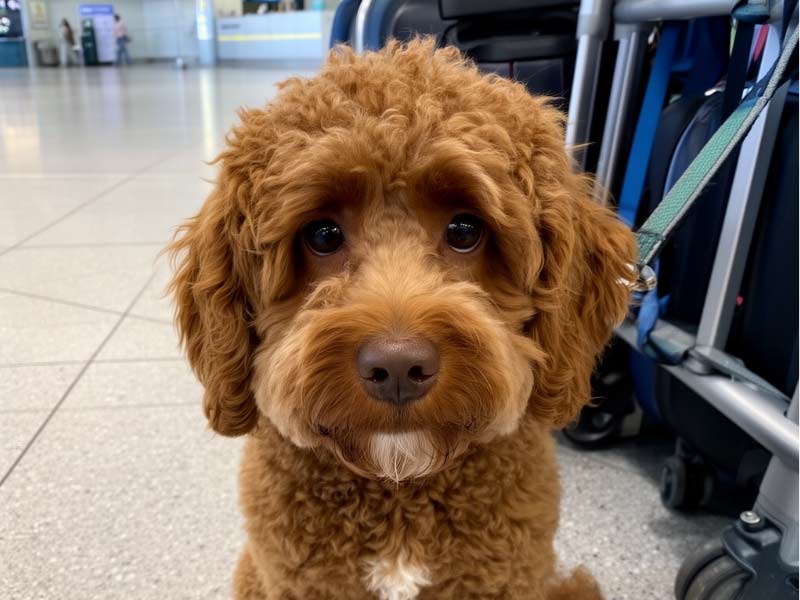
Staff and volunteers at Retriever Rescue of Las Vegas who have spent time with JetBlue describe him as affectionate, gentle, and highly social. Despite the traumatic experience of abandonment in a chaotic airport environment, the dog has shown resilience and maintained a friendly disposition toward people.
His social nature suggests he would thrive in a home where he receives regular interaction and attention. Dogs with affectionate personalities typically bond strongly with their families and enjoy being included in household activities. The gentle temperament indicates he would likely do well with families that include children or with elderly adopters seeking calm companionship.
The rescue’s positive assessment of JetBlue’s personality increases his adoption prospects significantly. While all shelter and rescue dogs deserve homes, those with easygoing temperaments and good socialization tend to find families more quickly than animals with behavioral challenges requiring experienced handlers.
JetBlue’s story has generated public interest that could work in his favor. Media coverage of unusual animal rescue cases often brings attention to individual animals and prompts adoption inquiries from people moved by their stories. The dramatic circumstances of his abandonment combined with his reportedly sweet nature create a compelling narrative that resonates with potential adopters.
The Broader Context of Pet Travel
This incident highlights the complexities and challenges surrounding traveling with animals on commercial flights. Airlines have tightened their policies regarding service animals and emotional support animals in recent years following concerns about fraudulent claims and incidents involving poorly trained animals in aircraft cabins.
Federal regulations distinguish between service animals trained to perform specific tasks for individuals with disabilities and emotional support animals that provide comfort but lack specialized training. Airlines can require documentation proving that animals qualify as legitimate service animals and meet behavior and training standards.
The documentation requirements that prevented Bryson from boarding with her dog exist for legitimate safety and operational reasons. Airlines must ensure that animals in cabins will not pose risks to other passengers, crew members, or flight operations. Untrained or poorly socialized animals in confined aircraft spaces can create dangerous situations.
Travelers planning to fly with service animals must familiarize themselves with specific airline policies and ensure they complete all required paperwork within designated timeframes. Most airlines provide detailed information on their websites about documentation requirements, deadlines for submission, and procedures for traveling with animals.
Pet owners who cannot meet service animal documentation requirements have other options for traveling with dogs. Many airlines allow small pets to travel in carriers that fit under seats, though this option requires advance reservations and involves fees. Larger dogs can sometimes travel in cargo holds under specific conditions and temperature restrictions.
Airport Response and Animal Welfare
The response by Harry Reid International Airport staff to the abandoned dog demonstrates the importance of employee training and compassion in unexpected situations. Airport workers encounter countless unusual circumstances, but animal abandonment requires specific protocols to ensure both public safety and animal welfare.
Staff members who discovered JetBlue took appropriate immediate action by contacting authorities while also providing comfort to the distressed animal. This dual response addressed both the investigative needs of the situation and the immediate wellbeing of an innocent creature in a frightening environment.
Airports handle various animal-related incidents, from escaped pets during travel to wildlife entering facilities to service animal issues. Having clear protocols for different scenarios ensures consistent, appropriate responses that protect both human and animal welfare while minimizing disruptions to airport operations.
The collaboration between airport staff, law enforcement, and animal control agencies in this case exemplifies the coordinated response necessary for complex incidents. Each entity brought specific expertise and authority to address different aspects of the situation, from investigating the abandonment to ensuring legal accountability to providing proper animal care.
Public Reaction and Awareness
News of JetBlue’s abandonment and subsequent availability for adoption spread through social media and traditional news coverage. The story resonated with animal lovers who expressed outrage at the abandonment while celebrating the positive outcome of the dog finding rescue placement.
Public interest in individual animal rescue cases can bring attention to broader issues surrounding pet abandonment, responsible ownership, and the challenges faced by rescue organizations. While JetBlue’s story generated significant attention due to its unusual circumstances, countless other animals enter rescue systems under less dramatic but equally tragic conditions.
Animal welfare advocates use stories like JetBlue’s to educate the public about responsible pet ownership, including understanding the commitment required before acquiring animals and knowing what resources exist if owners face circumstances that make keeping pets impossible.
Rescue organizations consistently emphasize that surrendering animals to shelters or rescue groups represents a far more responsible choice than abandonment. While giving up a pet is difficult, it ensures animals receive care and have opportunities for adoption rather than facing dangers of abandonment or remaining in situations where owners cannot provide adequate care.
The Path to a Forever Home
As JetBlue waits for his permanent family, Retriever Rescue of Las Vegas continues caring for him and processing adoption applications from interested individuals and families. The organization conducts thorough screening of potential adopters to ensure good matches between animals and homes.
Adoption processes typically include applications, interviews, home visits, and meet-and-greet sessions between dogs and potential adopters. These steps protect animals by placing them with families prepared to provide appropriate care, training, and long-term commitment.
Adopters interested in JetBlue would need to demonstrate ability to meet his needs for exercise, socialization, veterinary care, and training. The rescue seeks families who understand the responsibilities of dog ownership and have stable living situations suitable for pets.
The adoption fee charged by rescue organizations typically covers costs of veterinary care, spaying or neutering, vaccinations, and other expenses incurred while animals are in rescue care. These fees represent a fraction of actual costs and help fund rescue operations that save additional animals.
For JetBlue, the ideal home might include a family with time for regular interaction, a secure yard for exercise, and perhaps other friendly dogs for companionship given his social nature. The rescue will work to identify adopters whose lifestyles and expectations align with JetBlue’s personality and needs.
His journey from abandonment at an airport to the comfort of a foster home demonstrates the safety net that animal rescue organizations provide. What began as a traumatic experience has transformed into an opportunity for JetBlue to find a family that will value and care for him properly.
The case serves as a reminder that animals depend entirely on human decisions for their welfare. When those decisions fail them, community systems including rescue organizations, animal control, and compassionate individuals step in to provide second chances. For JetBlue, that second chance is now available to a family ready to welcome an affectionate, gentle dog into their home permanently.