
Travel competitions tend to follow a familiar formula. Submit your best travel photo, write an inspiring essay about why you deserve the trip, demonstrate some level of skill or enthusiasm, and hope your entry rises above the thousands of others. Icelandair has thrown that entire playbook out the window with a campaign that is probably the most counterintuitive travel offer an airline has ever put together.
The Icelandic flag carrier is actively searching for someone with no photography experience, no interest in photography as an art form, and ideally a camera roll that serves as evidence of consistently terrible pictures. The reward for being that person is a fully paid ten-day trip to Iceland, including round-trip flights and accommodation, plus fifty thousand dollars in cash for showing up, taking photos, and allowing the airline to use whatever comes out of it. The campaign is called, with complete sincerity, the Really Bad Photographer competition, and it is open to Americans right now.
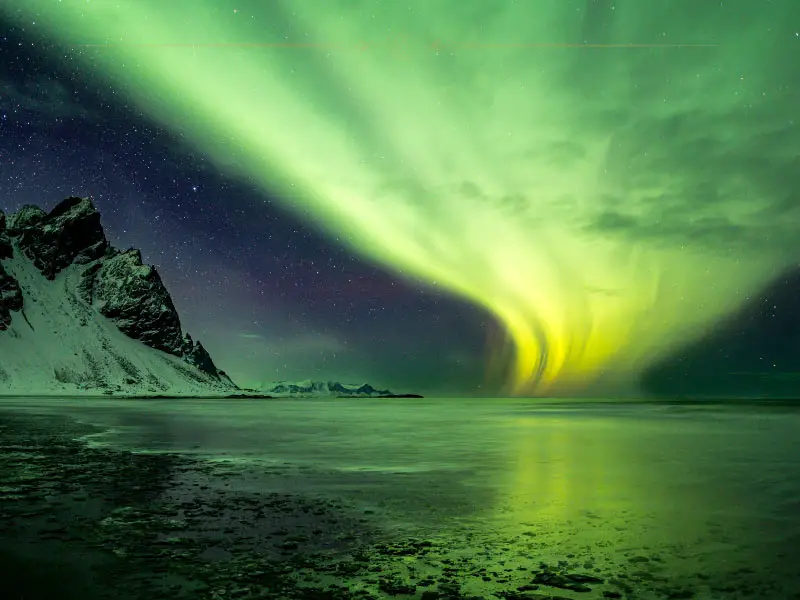
The premise is deliberately provocative. Icelandair is making the argument that Iceland is so visually spectacular, so inherently photogenic in every direction you point a lens, that even someone with zero photographic ability cannot take a bad picture there. The competition exists to prove that point, and the winner gets fifty thousand dollars and a free vacation as the proof of concept.
Why an Airline Would Pay Someone to Take Bad Photos
The marketing logic behind this campaign is more straightforward than it might initially appear. Iceland has a well-established reputation as a destination for serious photographers. The Northern Lights, the geysers, the black sand beaches, the glaciers, the dramatic volcanic landscapes, these are the kinds of subjects that professional and enthusiast photographers travel specifically to capture. Photography tours of Iceland are a substantial part of the country’s tourism industry, and images of the landscape fill travel publications and social media feeds constantly.
That established reputation, while positive in many ways, can create an unintended barrier for a different kind of traveler. If Iceland exists in the popular imagination primarily as a destination for people who care deeply about getting the perfect shot, it can feel less accessible to the majority of travelers who just want to experience an extraordinary place without feeling like they need a professional camera and technical knowledge to justify being there.
The Really Bad Photographer campaign is Icelandair’s way of addressing that perception head-on. By hiring someone with genuinely no photography background and turning their amateur snapshots into the centerpiece of a major marketing campaign, the airline is communicating that Iceland welcomes everyone, not just the photographers, and that the country’s beauty is so overwhelming it does the work for you regardless of your skill level.
The fifty thousand dollar prize is the part that makes people stop scrolling and pay attention. It is a serious sum of money attached to a genuinely accessible premise, and together they create the kind of campaign that travels far beyond the people who would normally pay attention to airline promotions.
What Iceland Actually Looks Like for Someone Who Has Never Been
For American travelers who have not yet made it to Iceland, understanding what the competition winner will actually encounter during those ten days helps explain why Icelandair is confident that even technically terrible photographs will come out looking remarkable.
Iceland sits in the North Atlantic at the intersection of the North American and Eurasian tectonic plates, and the geological consequences of that location are visible everywhere. The landscape is young by geological standards, actively shaped by volcanic activity, glacial movement, and geothermal forces that produce features found nowhere else on Earth at the same scale or concentration.
The geysers, of which the country has hundreds, send columns of boiling water erupting from the ground at regular intervals. The most famous, Strokkur, erupts every few minutes, producing a consistent spectacle that photographs dramatically under virtually any lighting conditions. The black sand beaches of the southern coast, formed from volcanic basalt worn smooth by the Atlantic Ocean, create visual contrasts that are stark and immediately striking regardless of the time of day. The glaciers, several of which are accessible to visitors and can be walked on with basic gear, reflect light in blues and whites that cameras capture easily even without any technical adjustment.
Then there are the Northern Lights. Iceland sits inside the Aurora Oval, the geographic zone where auroral displays are most frequent and most intense. Between September and March, the Northern Lights appear on clear nights with a regularity that makes Iceland one of the most reliable places in the world to see them. Photographing them properly requires understanding exposure settings and long-exposure techniques that take time to learn. But even a smartphone pointed at the sky on a clear Icelandic night in peak Aurora season produces something extraordinary.
Time Out’s most recent guide to the world’s most beautiful places included two Icelandic destinations, which puts the country in a very short list of places recognized for exceptional natural beauty by one of the world’s most widely read travel publications. The competition winner will be moving through a landscape that has been drawing travelers from around the world for exactly this reason for decades.
The Full Details of the Prize
The prize package Icelandair has assembled for this competition is worth spelling out clearly, because the combination of what is included makes it one of the more generous single-winner travel competition prizes currently on offer anywhere.
The winner receives a ten-day trip to Iceland with round-trip flights included. Accommodation for the duration of the trip is covered as part of the package, meaning the winner is not paying for anywhere to stay during those ten days. Spending money is also included in the trip package to cover day-to-day expenses during the visit.
On top of the trip itself, the winner receives fifty thousand dollars in cash for their participation. That payment is made in exchange for the winner allowing Icelandair to use the photos and content produced during the trip for the campaign. The airline is essentially commissioning a ten-day photography project from someone with no photography background, paying them fifty thousand dollars for the results, and betting that those results will make the point it wants to make about Iceland’s visual appeal.
The total value of the prize, combining the trip costs and the cash payment, makes this a genuinely substantial competition prize rather than a token gesture. For American travelers who win, the trip itself would represent one of the more memorable experiences available anywhere in the world, and the fifty thousand dollars represents a meaningful financial reward on top of it.
Who Can Actually Enter
The eligibility requirements for this competition are specific in a few important ways, and they are worth understanding clearly before investing time in an application.
Entrants must be at least 21 years old, hold a valid passport, and be eligible to travel to Iceland, from the United Kingdom, and the United States. The last requirement reflects the logistics of how Icelandair operates its routes and the practicalities of the trip itinerary, and for most American citizens with a current passport it is not an obstacle.
The most important eligibility condition is the one that defines the spirit of the competition: applicants must have no professional background in photography and no particular personal interest in photography as an art form or hobby. This is not a competition for people who shoot on weekends, follow photography accounts online, own dedicated camera equipment, or have ever taken a photography course or workshop. It is specifically designed for people who take photos only incidentally, when phones are pointed at things for practical reasons rather than artistic ones, and who would genuinely describe their photographic output as unremarkable at best.
Applicants also need to be willing to share video and photo content of themselves as part of the campaign. The competition is a marketing project, and the winner’s participation involves being documented throughout the trip in a way that goes beyond simply taking pictures of the landscape. Comfort with having your experience captured and potentially shared publicly as part of the campaign is a genuine requirement of the prize.
How to Enter Before the Deadline
The application process is designed to be accessible, which is consistent with the broader premise of the campaign. Anyone who has managed to navigate a basic website can complete it.
The entry point is a dedicated campaign website at reallybadphotographer.com. On that site, applicants work through six questions that form the core of the application. The questions are designed to establish eligibility and to get a sense of the applicant as a person and as a potential participant in the campaign. Answering them honestly and specifically, rather than trying to seem more interesting or qualified than you are, is the appropriate approach given that the competition is explicitly looking for authenticity over polish.
The optional but strongly recommended addition to any application is a sixty-second video explaining why you should be chosen. Icelandair has indicated that including this video meaningfully increases an applicant’s chances of selection. The video does not need to be technically accomplished, which should surprise no one given the nature of the competition, but it should communicate something genuine about why this particular person would make a compelling Really Bad Photographer.
For Americans applying, the sixty-second video is the place to be specific about your complete indifference to or incompetence with photography, and to give the selection team a reason to believe your ten days in Iceland will produce content that serves the campaign’s purpose. A specific story about a particularly bad photo you took, or an honest account of your general relationship with cameras, is likely to land better than a generic explanation of why you love travel.
Iceland Beyond the Competition
For Americans who enter and do not win, or for those who find the competition is not the right fit for them personally, the campaign itself is a useful reminder that Iceland is a destination that deserves serious consideration regardless of whether a free trip and fifty thousand dollars are attached to the decision.
The country is more accessible from the United States than many Americans realize. Icelandair operates direct flights from multiple American cities, and Iceland’s location in the middle of the North Atlantic makes it a natural stopover for travelers also considering European destinations. The airline has for years offered a stopover program that allows transatlantic passengers to spend time in Iceland at no additional airfare cost on the way to or from European destinations, making it possible to combine an Icelandic trip with travel elsewhere on the continent.
The cost of visiting Iceland has been a deterrent for some American travelers, as the country is not an inexpensive destination by any measure. Accommodation, food, and activities in Iceland reflect a high-cost-of-living economy, and a ten-day trip requires budgeting accordingly. But the experience the country offers, a concentration of natural wonders in a small geographic area that can be navigated without extensive logistical complexity, justifies the investment for travelers who prioritize landscape and natural spectacle over urban amenities.
The Really Bad Photographer campaign, whatever else it achieves for Icelandair, makes a straightforward point that the airline’s marketing team clearly wants American travelers to internalize. Iceland does not require any particular skill, preparation, or prior experience to appreciate. You show up, you look around, and the country handles the rest. Fifty thousand dollars and a free trip are just the most dramatic possible illustration of that argument.