Millions of Americans travel every year with their phones in hand, documenting everything from the view out the window to their meal to the first glimpse of a destination city through the clouds. Social media has turned the act of flying into a content opportunity, and for many travelers, capturing the experience is as natural as buckling a seatbelt. On most flights, nobody thinks twice about it.
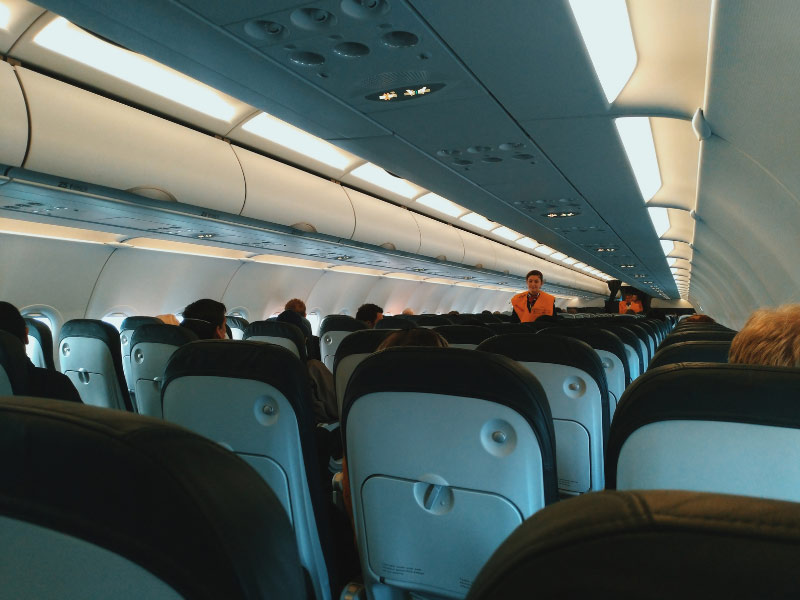
British Airways wants its passengers to start thinking about it. The carrier, one of the most important transatlantic airlines connecting the United States and the United Kingdom, has updated the conditions of carriage that govern passenger behavior on board its aircraft. The change specifically addresses photography and video recording, and the consequences it outlines for violations are serious enough that American travelers who regularly fly with the airline or plan to should understand exactly what the new rules require.
The core of the update is straightforward but has significant practical implications: filming, live-streaming, or photographing British Airways cabin crew or other airline colleagues without their explicit consent is now a violation of the airline’s terms of carriage. If the airline reasonably believes a passenger has done this, it can take any measures it deems necessary to stop the behavior. That includes having the passenger removed from the aircraft upon landing, denying them carriage on the remaining legs of their ticket, and reporting the incident to relevant authorities with a view to potential criminal prosecution.
What the Policy Actually Says and What It Covers
The update appears in section 11a of British Airways’ conditions of carriage, under the category of behavior on the aircraft. The language is deliberate and specific in a way that matters for understanding what is and is not covered.
The prohibition applies to filming, live-streaming, and photographing cabin crew and other airline colleagues without their consent. The key phrase is without their consent, which means the rule is not a blanket prohibition on all photography on board. Passengers are explicitly permitted to photograph their seat, the view from the window, the cabin environment, their meals, their drinks, and other personal elements of the travel experience. The restriction is specifically about capturing airline staff without asking first.
The same principle extends to other passengers. Filming or photographing fellow travelers without their consent is also addressed in the updated conditions, reflecting a broader principle of consent that the airline is now formalizing. In practice, this means that the most common types of travel photography, the window seat sunrise, the food tray, the overhead shot of the cabin for a trip report, the selfie in business class, remain entirely permissible. What crosses the line is pointing a camera at a crew member or another passenger without their knowledge or agreement.
The mention of live-streaming is particularly relevant for American content creators who use platforms like Instagram, TikTok, or YouTube and who might broadcast directly from the cabin in real time. A live-streamed interaction with a crew member, even one that the creator considers lighthearted or positive, now falls within the prohibited category if the crew member has not given consent to be part of that broadcast.
The Consequences British Airways Has Outlined
The consequences specified in the updated conditions of carriage are more serious than many travelers might expect for what they might perceive as a minor or innocent act of filming.
At the lower end of the scale, a passenger who violates the photography rules can be removed from the aircraft after landing and denied carriage on any remaining sectors of their ticket. For American travelers with connecting flights or multi-leg itineraries, being denied carriage on remaining sectors means being stranded at an intermediate destination without the airline’s obligation to continue the journey. The financial and logistical consequences of that outcome, which include arranging alternative transportation and potentially accommodation, can be substantial.
The more serious end of the consequence scale involves the airline reporting the incident to relevant authorities for potential criminal prosecution. This is not empty language. In the UK, there are existing laws around harassment and the use of private communications that can apply to non-consensual filming in certain contexts, and British Airways is signaling that it is prepared to refer cases to authorities where it believes those laws may have been broken.
There is also a financial dimension that receives less attention than the removal threat but is equally significant. If a flight is diverted to an unscheduled destination as a result of a passenger’s unacceptable behavior, the airline can require that passenger to pay the reasonable costs of that diversion. A transatlantic flight diversion involves substantial costs in fuel, landing fees, and operational disruption, and the prospect of being personally liable for those costs is a consequence that most travelers would find genuinely alarming if they understood it was on the table.
Why British Airways Is Drawing This Line Now
The timing of the policy update reflects a broader shift in how airlines are thinking about the relationship between social media content creation and the work environment of cabin crew. The growth of influencer culture and the normalization of documenting every aspect of daily life through phone cameras has created situations on aircraft that simply did not exist at scale a decade ago.
Cabin crew, like any workers, have a reasonable expectation of privacy in their workplace. Being filmed without consent while serving passengers, managing difficult situations, making announcements, or going about the routine tasks of their job is something that crew members have increasingly encountered as passengers treat the aircraft cabin as a public content creation space rather than a shared private environment. The footage that results can be posted without context, shared in ways that distort what actually occurred, and in some cases used to harass or embarrass individual workers who have no control over how their image is used once it is online.
The airline industry has been watching this dynamic develop for years, and British Airways’ policy update represents one of the more formal and legally grounded responses from a major carrier. By embedding the prohibition in the conditions of carriage that passengers agree to when they book, the airline creates a contractual basis for enforcement that goes beyond asking nicely or relying on social pressure at the point of incident.
British Airways Is Not Alone on This
American travelers should be aware that the photography consent rule is not unique to British Airways. Ryanair, which operates an enormous network of European routes and carries significant numbers of Americans traveling within Europe, has its own explicit prohibition on recording or photographing airline personnel at the airport or on board without their consent. Ryanair’s terms specify that only recordings or photographs personal to the passenger may be permitted, drawing the same distinction between documenting the personal travel experience and capturing airline staff.
Other European carriers have similar provisions in their conditions of carriage, and the trend toward formalizing these rules is consistent across the industry rather than being an idiosyncratic position of any single airline. For American travelers who are accustomed to the relatively permissive approach to in-flight photography that has prevailed in practice until now, the direction of travel across European carriers is clearly toward clearer rules and firmer enforcement.
American carriers have not yet made similarly formal updates to their publicly stated conditions of carriage on this specific point, but the underlying principles around consent and non-consensual filming are not unique to European law, and it would be premature to assume that US airlines will not move in a similar direction as the issue becomes more visible.
The Practical Guide for American Travelers on British Airways Flights
For Americans flying British Airways, whether on transatlantic routes between the United States and the UK or on European connections, the practical implications of the updated policy are specific enough to be worth spelling out clearly.
Taking photos of yourself, your travel companion, your meal, your seat, the cabin environment as a setting, or the view from the window remains entirely fine and is not addressed by the updated conditions. These are personal travel photographs that document the passenger’s own experience, which is exactly what the policy carves out as permissible.
Asking a crew member to take a photo for you, or asking whether it is acceptable to include them in a photo, is the appropriate approach if you want to include crew in your content. Asking is the step that makes the difference between compliant and non-compliant photography, and most crew members will either accommodate the request or politely decline, both of which are acceptable outcomes under the updated policy.
Live-streaming from the cabin requires particular care. If a live stream is focused on the passenger’s personal experience and does not capture identifiable crew members or other passengers, it falls within the permissible range. If it captures crew members delivering service, making announcements, or going about their duties, those individuals need to have given consent for that broadcast. For content creators who routinely document travel in real time, building in a step of getting verbal consent from crew before including them in any broadcast is the practical adaptation that keeps the content creation within the rules.
If you are unsure whether what you want to film is within the permitted range, the simplest approach is to ask the crew before filming rather than after. The policy is triggered by filming without consent, and consent given in advance resolves the issue entirely. A quick question to a crew member about whether they are comfortable being included in a photo or video is a straightforward interaction that takes ten seconds and removes any ambiguity about compliance.
The Broader Context of Privacy and Flying
The British Airways photography update is part of a wider conversation about privacy, consent, and how the norms of social media content creation interact with environments where other people have not chosen to become part of someone’s public content.
An aircraft cabin is a contained, shared space where passengers and crew spend hours in close proximity. Unlike a city street or a public park, where a reasonable expectation of being photographed in public spaces is well established, the aircraft cabin has a more complex privacy character. It is a workplace for crew members, a temporary private space for passengers who may be sleeping, eating, dealing with medical conditions, or simply existing without any expectation of being filmed, and a commercial environment with its own rules and terms of service.
The increasing formalization of photography rules by airlines reflects a recognition that the default assumption of unrestricted filming that social media culture has normalized is not compatible with the rights and reasonable expectations of everyone sharing that space. For American travelers, many of whom grew up with a strong cultural assumption that public photography is essentially unrestricted, the European airline approach may feel unfamiliar at first. The underlying principle, that consent matters and that the workplace of a crew member deserves the same basic respect as any other workplace, is not a foreign concept once it is stated directly.
British Airways has stated it directly, in its conditions of carriage, with consequences attached. American travelers flying the airline now know exactly where the line is, and staying on the right side of it requires nothing more than a moment of consideration before the camera comes out.