
The bright yellow livery of Spirit Airlines has become a familiar sight at airports across America, synonymous with no-frills travel and rock-bottom fares. But behind the scenes, the budget carrier is fighting for survival in a drama that could reach its climax within weeks. The airline’s creditors are now weighing a decision that will determine whether Spirit continues flying or becomes another casualty of an industry still grappling with post-pandemic realities and regulatory headwinds.
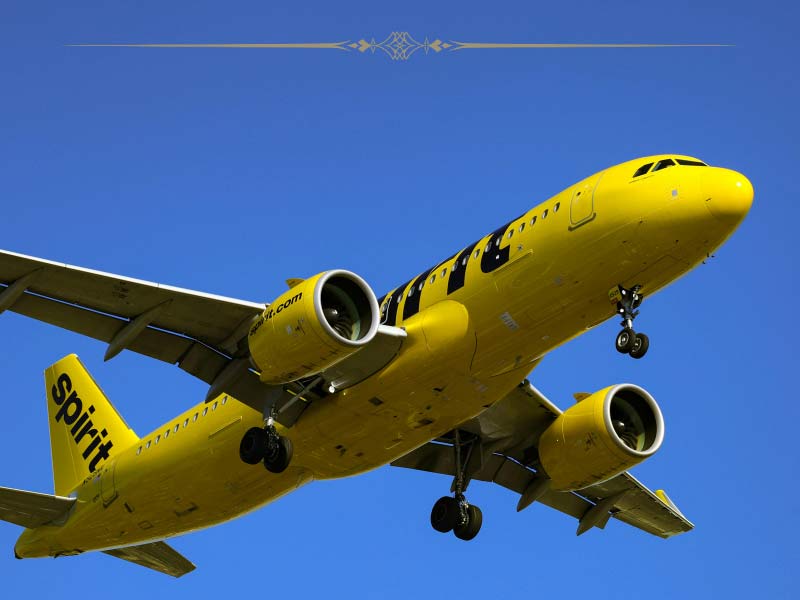
The stakes couldn’t be higher for the thousands of employees whose livelihoods hang in the balance, nor for the millions of travelers who have come to rely on Spirit’s ultra-low fares to make air travel accessible. What happens next could reshape the competitive landscape of American aviation and serve as a cautionary tale about the perils facing discount carriers in an increasingly consolidated market.
A Union Sounds the Alarm
In an unusual move that underscores the gravity of the situation, the labor organization representing Spirit’s flight deck crews has gone public with their concerns. The Air Line Pilots Association issued an open letter this week directed at the financial institutions that currently hold Spirit’s fate in their hands. The message was clear: the airline needs continued support to complete its restructuring efforts.
The union represents approximately 2,600 pilots, though that number tells only part of the story. Around 500 of these aviators have already been placed on furlough, joining hundreds more who lost their positions in previous workforce reductions throughout the past year. These aren’t just statistics—they’re families facing uncertainty, careers put on hold, and communities affected by the ripple effects of a struggling airline.
The timing of this public appeal is significant. It suggests that behind closed doors, negotiations have reached a critical juncture. When labor groups break from their typical channels to make direct pleas to creditors, it’s often a sign that traditional avenues have been exhausted and the situation has become dire.
The Money Question
At the heart of Spirit’s immediate crisis is a financing arrangement that was supposed to provide stability but has instead become a source of tension. Last month, the airline secured access to half of a planned funding installment—receiving just 50 million dollars when it had expected double that amount. The remaining funds are being held back, contingent on Spirit demonstrating meaningful progress toward reorganization.
This conditional approach to financing reveals the creditors’ calculus. They’re not willing to throw good money after bad, but they haven’t completely closed the door either. According to bankruptcy experts, this kind of staged funding is common when lenders want to maintain leverage and ensure the debtor company is hitting specific milestones. It’s a pressure tactic, but it’s also a sign that the door remains at least partially open.
The arrangement isn’t set in stone either. The financial backers could decide to walk away if they determine that Spirit isn’t moving quickly enough toward a viable business model. That flexibility—or lack of commitment, depending on your perspective—is precisely what prompted the pilots to take their concerns public. The union leadership clearly believes that without a public push, the money might dry up entirely.
A Prominent Voice in the Debate
Among the creditors, one name stands out: Citadel, the Miami-based hedge fund founded by billionaire Ken Griffin. The pilots’ letter specifically called out this major bondholder, appealing to local pride and economic self-interest. Spirit’s headquarters sits in South Florida, and the airline represents a significant source of employment and economic activity in the region. Shuttering the carrier would create what the pilots described as a substantial gap in the local economy.
In response to questions about its position, the hedge fund defended its track record, noting that it has backed Spirit both before and after the bankruptcy filing. The firm pointed to its approval of emergency funding in December, which ensured Americans could travel during the holiday season. This wasn’t legally required—the creditors chose to provide that funding voluntarily.
But Citadel also took the opportunity to place blame elsewhere, pointing fingers at government regulators and their approach to competition policy. The firm argued that Spirit’s current predicament stems directly from antitrust officials blocking a merger that would have benefited employees, customers, and investors alike. It’s a pointed critique that adds a political dimension to what might otherwise seem like a straightforward business failure.
The Long Road to This Moment
Spirit’s troubles didn’t emerge overnight. They’re the culmination of years of financial pressure, failed merger attempts, and an industry transformation that has left ultra-low-cost carriers struggling to find their footing. Understanding how the airline arrived at this precipice requires looking back at a series of pivotal moments.
The carrier was last solidly profitable in 2019, posting net income of 335 million dollars. That seems like ancient history now, separated from the present by a pandemic that upended travel patterns and a subsequent recovery that has proven uneven and challenging for budget airlines.
The first major turning point came in early 2022 when Frontier Airlines proposed combining operations with Spirit. The deal valued Spirit at approximately 2.9 billion dollars and seemed to offer a path forward for both discount carriers. But the agreement quickly became complicated when JetBlue Airways emerged with a rival bid offering substantially more money—around 3.7 billion dollars in cash.
What followed was a months-long corporate drama involving competing offers, board recommendations, shareholder votes, and ultimately a decision to go with JetBlue’s higher bid despite the board’s initial preference for Frontier. Spirit’s shareholders chose the more lucrative option, setting in motion a chain of events that would prove disastrous for the airline.
When Regulators Say No
The federal government had different ideas about airline consolidation. The Justice Department filed suit to prevent the JetBlue merger from going forward, arguing that reducing competition would harm consumers through higher fares and reduced seat availability. The government’s position was clear: allowing another merger in an already concentrated industry would be bad for travelers.
A federal court agreed, issuing a preliminary injunction that effectively killed the deal. The judge found that the proposed merger violated antitrust laws and would hurt consumers—precisely the outcome the Justice Department had predicted. In early 2024, JetBlue and Spirit officially terminated their agreement.
The financial consequences were immediate and severe. While JetBlue paid Spirit a 69 million dollar termination fee as required by their contract, along with roughly 425 million dollars in advance payments to shareholders, this wasn’t nearly enough to offset the damage. Spirit had been counting on the merger to solve its structural problems. Now it was back to square one, but in a weaker competitive position than before.
The First Bankruptcy and Brief Revival
By late 2024, Spirit had run out of options and filed for Chapter 11 bankruptcy protection. Management expressed confidence that the airline would emerge from bankruptcy by early 2025, and for a moment, that optimism seemed justified. The company secured a debtor-in-possession financing package worth approximately 300 million dollars, providing breathing room to restructure.
Even more remarkably, Spirit managed to complete its bankruptcy proceedings ahead of schedule. By March 2025, the airline had officially exited Chapter 11, having converted roughly 795 million dollars of debt into equity and secured a 350 million dollar investment from new backers. It appeared the airline had pulled off a successful turnaround.
Frontier reappeared during this period with renewed merger interest, first offering 400 million dollars in new debt and a 19 percent equity stake to Spirit’s creditors, then later increasing the bid to 2.2 billion dollars. Spirit rejected both offers, believing its standalone restructuring plan offered better value. A bankruptcy court validated this decision, affirming Spirit’s reorganization plan.
The airline seemed to have weathered the storm. Management had shed debt, secured new capital, and charted a path forward without giving up independence. But the relief proved temporary.
The Slide Back Into Crisis
The reprieve lasted only months. By summer 2025, Spirit announced it was furloughing 270 additional pilots—the third round of job cuts in twelve months. The pattern was troubling and suggested the underlying business problems hadn’t been solved by the bankruptcy process.
In August, Spirit reported a staggering net loss of 245 million dollars for the quarter. Days later, the airline filed for Chapter 11 protection for the second time in barely a year. In regulatory filings, management warned that without additional liquidity, there was substantial doubt about the company’s ability to continue operating for another twelve months. It was a shocking admission that the first restructuring had failed.
Competitors took notice of Spirit’s deteriorating condition. United Airlines and Frontier both announced they were adding routes that overlapped with Spirit’s network. A United executive made the subtext explicit, noting that if Spirit suddenly ceased operations, it would create massive disruption for travelers. The new routes were positioned as providing customers with backup options if Spirit disappeared.
The October bankruptcy court approval of up to 475 million dollars in new financing provided another lifeline, offering immediate cash and runway to continue operations. In December, the pilots union agreed to approximately 100 million dollars in concessions spread over two years, a painful sacrifice made in the belief that the airline could still be saved.
The latest financing agreement followed soon after, authorizing 100 million dollars in additional credit—but with that crucial catch that half would be withheld pending further progress. That’s where matters stand today, with creditors holding the purse strings and unions making public appeals for continued support.
The Broader Industry Context
Spirit’s struggles are playing out against a backdrop of significant change in the airline industry. The ultra-low-cost carrier model that Spirit pioneered has come under increasing pressure in recent years. While these airlines succeeded by stripping out amenities and charging rock-bottom base fares, the model has proven vulnerable when fuel prices spike, when labor costs rise, or when larger carriers adopt elements of the budget playbook.
Major airlines have increasingly offered basic economy fares that compete directly with Spirit’s pricing while maintaining more extensive route networks and better operational reliability. This competitive dynamic has squeezed Spirit’s margins and made it harder for the carrier to fill planes profitably.
The regulatory environment has also shifted in ways that complicate Spirit’s situation. The blocked JetBlue merger is just one example of heightened antitrust scrutiny in the airline sector. While supporters of aggressive competition policy argue this protects consumers, critics contend it prevents airlines from achieving the scale necessary to compete effectively and invest in their operations.
There’s also the question of whether there’s room for multiple ultra-low-cost carriers in the American market. Frontier continues operating, but it too has faced challenges. Allegiant Air serves a different niche focused on leisure destinations from smaller cities. The market may simply not be large enough to support all these competitors alongside the major carriers.
What Comes Next
The next few weeks will likely determine Spirit’s fate one way or another. Creditors must decide whether they see a viable path to reorganization or whether liquidation makes more financial sense. The pilots’ public letter suggests the union believes the airline is close to completing its restructuring work and deserves more time to finish the job.
Several factors will influence the creditors’ decision. They’ll want to see detailed financial projections showing how Spirit can return to profitability. They’ll evaluate whether the concessions from labor unions are sufficient to improve the cost structure. They’ll assess whether consumer demand for Spirit’s services remains strong enough to support the route network. And they’ll consider whether holding out for better terms makes sense or whether cutting losses now is the prudent choice.
There are essentially three possible outcomes. First, creditors could continue funding the restructuring, giving Spirit more time to complete its reorganization and emerge from bankruptcy for a second time. This seems to be what the pilots are hoping for in their appeal.
Second, another airline could swoop in with an acquisition offer that creditors find attractive. Frontier has shown persistent interest, though its previous offers were rejected. Perhaps a different price point or structure could change the calculus. Other carriers might also see value in acquiring Spirit’s assets, particularly its landing slots at congested airports and its aircraft.
Third, Spirit could be liquidated, with assets sold off piecemeal to different buyers. This would mean the end of the Spirit brand and the loss of thousands of jobs, but it might maximize creditor recovery if the restructuring path seems unlikely to succeed.
The Human Cost
Behind all the financial maneuvering and legal proceedings are real people whose lives are being disrupted. The furloughed pilots represent just a fraction of the workforce affected by Spirit’s struggles. Flight attendants, mechanics, gate agents, and office workers have all faced job losses or uncertainty. Many of these employees have spent years or even decades building careers in aviation, and they face difficult questions about what comes next if Spirit doesn’t survive.
For travelers, Spirit’s potential demise would mean one fewer option in markets that are already seeing reduced competition. While some passengers might not miss the carrier’s bare-bones service and fee-heavy model, others have relied on Spirit to make air travel affordable. The routes Spirit serves would presumably be picked up by other airlines eventually, but possibly at higher price points.
Communities that Spirit serves as a primary or sole carrier to certain destinations would face service gaps. Smaller markets in particular could find themselves with fewer flight options if Spirit disappears and other carriers don’t immediately fill the void.
The broader message is about the fragility of airlines operating on thin margins with significant debt loads. Even companies that successfully navigate bankruptcy once can find themselves back in distress if underlying business challenges aren’t truly resolved. The airline industry has seen numerous bankruptcies and liquidations over the decades, and Spirit’s story is playing out as another chapter in that history.
As creditors deliberate and the clock ticks down, everyone with a stake in Spirit’s future is watching closely. The decision that emerges in the coming weeks will reverberate through the airline industry and determine whether America’s pioneering ultra-low-cost carrier gets another chance to reinvent itself or becomes a cautionary tale about the limits of the budget airline business model.