Travelling doesn’t always have to mean ticking destinations off a bucket list or visiting the same places that dominate social media feeds. Tenerife is often presented through its most iconic beaches, viewpoints and photogenic spots, but the island offers a very different experience for those willing to slow down. Beyond the highlights, there are quiet villages, local markets, street art and everyday scenes that reveal a more authentic side of the island.
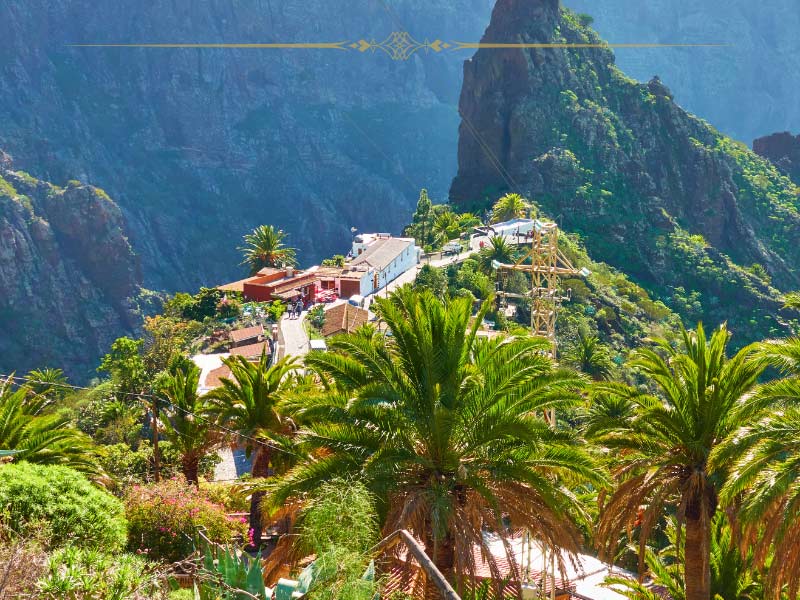
This slower approach allows visitors to see Tenerife beyond the surface and understand it as a place shaped by colour, tradition and local life.
That’s the Tenerife I want to discover.
An island understood through colour
Tenerife can be read through its colours. The deep blue of the ocean, the red and dark brown tones of Mount Teide, and the intense green of the mountains all create a landscape that constantly changes throughout the day. It’s an atmosphere that feels striking without any filters.
While social media often presents Tenerife as a perfectly curated destination, the reality is far from it. Traditions, contrasts and a strong sense of place become more noticeable when the pace slows and there’s time to observe everyday life without rushing.
Northern Tenerife: villages with soul

Walking through northern Tenerife reveals corners that rarely appear in travel guides. It’s a part of the island where daily routines continue largely unaffected by mass tourism, making it ideal for understanding local life.
Garachico y El Sauzal
Villages such as Garachico and El Sauzal show a different side of the island. Colourful houses, balconies filled with flowers and small terraces create an atmosphere that feels lived-in rather than staged.
Garachico, shaped by its volcanic past and known for its natural rock pools, has a calm presence that contrasts with busier coastal areas. El Sauzal, with its viewpoints overlooking the Atlantic, offers a clear picture of how the sea, the mountains and everyday life come together in Tenerife.
Markets and local traditions
Local culture is especially visible in markets and traditional spaces. Places such as the markets of La Orotava showcase seasonal produce that create the best dishes to eat in Tenerife, local fruit and vegetables, and a way of shopping that still revolves around conversation and familiarity. Visiting these markets feels less like an errand and more like a glimpse into daily life.
Street art that tells a story
Urban culture also plays an important role in Tenerife’s identity. Walking through Santa Cruz de Tenerife and San Cristóbal de La Laguna reveals a strong street art scene that blends naturally into the urban landscape.
Murals and graffiti here often reflect themes such as identity, nature and social history. Rather than standing out as tourist attractions, they form part of the city itself. Certain neighbourhoods feel like open-air galleries, where walls quietly tell stories about the island and its people.
Moving without limits: freedom to improvise

Exploring Tenerife at a relaxed pace is much easier with flexible transport. Many rural areas, small villages and natural spaces are difficult to reach by public transport alone. Having access to a car in Tenerife, allows visitors to move beyond the main routes and reach places that remain largely untouched by crowds.
Villages such as Arafo or Vilaflor, located inland and at higher altitude, offer a completely different landscape and rhythm of life. From these areas, it’s also easy to continue towards places like the Pyramids of Güímar, which add historical interest to the journey.
For travellers planning their route in advance, using a car hire comparison service in Tenerife such as DoYouSpain can simplify the process. These platforms compare vehicles by provider, location and category, helping visitors find competitive prices while keeping travel plans flexible. Having that freedom often makes the difference between following a fixed itinerary and discovering places spontaneously.
Anaga Rural Park: nature at its most unexpected
Away from the coast, the Parque Rural de Anaga offers one of the island’s most surprising landscapes. Lush, humid and densely green, it contrasts sharply with the volcanic image many people associate with Tenerife.
Winding roads, viewpoints and small settlements hidden between mountains make the journey itself part of the experience. There’s no need for a strict plan here; stopping, observing and adjusting the route naturally becomes part of exploring the area.
Walking as a way to connect

Hiking in Tenerife is often seen as a physical activity, but it can also be a way to connect more deeply with the environment. Trails through forests, coastal paths and mountain routes offer moments of silence and perspective.
Moving on foot allows details to emerge: changes in vegetation, sounds of nature and views that are easily missed when travelling quickly. It’s a slower, more immersive way to understand the island’s diversity.
Local crafts and traditional knowledge
Craftsmanship remains an important part of Tenerife’s cultural landscape. In smaller towns, workshops still produce ceramics, textiles and wooden pieces using traditional techniques. Many artisans have adapted their work to modern tastes while preserving the essence of their craft.
Visiting these workshops and learning about the time and skill behind each piece offers insight into a way of working that values patience and continuity.
Everyday life beyond the highlights
Local markets, small festivals and neighbourhood gatherings often reveal more about Tenerife than its most photographed locations. These everyday moments, rarely promoted in travel guides, show how traditions remain part of modern life.
Experiences like these help move beyond the polished image often seen online and offer a more grounded understanding of the island.
Tenerife, beyond the obvious
Exploring Tenerife slowly and with curiosity transforms the experience. The island is far more than its famous beaches or viewpoints. It’s a place shaped by colour, culture, landscapes and people who live at their own pace.
Perhaps that’s the real value of travelling this way: not trying to see everything, but allowing space to truly experience what’s there.
Like it? Pin it!
Disclaimer: Some of the links on this website are “affiliate links.” This means that if you click on the link and do a purchase, I will receive an affiliate commission at no extra cost for you. This helps me keep my website running and continue to share my travelling knowledge with you. I thank you for booking your flights or hotels using the links on my website. Regardless, I only recommend products or services I use personally and believe will add value to my readers.