
Every few years, usually after a contentious election or a stretch of national turbulence, the question of moving abroad resurfaces in American households. It tends to get dismissed as frustrated talk, the kind of thing people say but rarely mean. What is different now is the data. The number of Americans actively researching international relocation, pursuing foreign visas, and reaching out to immigration lawyers in other countries has moved well beyond the level that can be explained by casual venting. The interest is real, and for a growing subset of Americans, it is becoming a concrete plan.
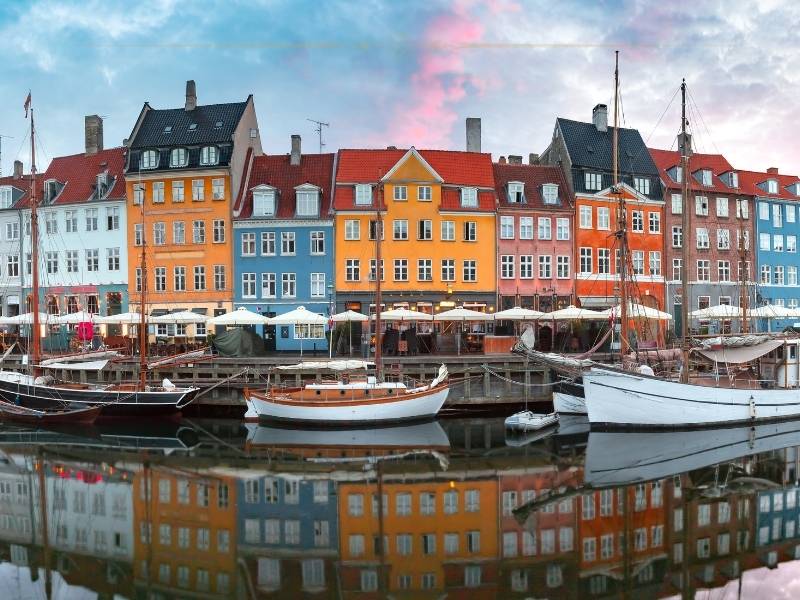
The World Happiness Report, which ranks countries annually based on a combination of factors including income, social support, life expectancy, freedom, generosity, and perceptions of corruption, has for years pointed to a consistent cluster of nations at the top. They tend to be smaller, wealthier, and Northern European or Pacific countries with strong social infrastructure. They are also, in many cases, actively interested in attracting skilled, financially stable international residents. For Americans weighing the possibility of a life elsewhere, understanding which of these countries are genuinely accessible and what they actually offer is a more useful starting point than a list of rankings.
This is not a fantasy for the independently wealthy. Several of the world’s happiest nations have established pathways for working-age professionals, retirees with stable income, and remote workers that bring international residents into the country without requiring them to secure local employment first. The barriers are real but navigable for Americans who approach the process with accurate information and realistic expectations.
Denmark: The Country That Keeps Winning the Happiness Ranking
Denmark sits at or near the top of the World Happiness Report with a consistency that has made it something of a cliché in discussions of international wellbeing. But the reasons behind that ranking are specific enough to be worth understanding rather than simply accepting as a fact about Scandinavian culture.
The Danish model of social organization rests on a foundation of universal access to services that most Americans pay for privately or go without. Healthcare is available to all residents at no point-of-service cost, funded through the tax system. Higher education is not just affordable; it is free for citizens and EU residents, and heavily subsidized for others. The social safety net is genuinely comprehensive, covering unemployment, disability, parental leave, and elder care in ways that remove the financial anxiety associated with life transitions that many Americans experience as high-stakes gambles.
The work culture in Denmark is genuinely different from the American norm in ways that are not simply rhetorical. A standard working week is around 37 hours, and working beyond that regularly is not considered a mark of dedication. It is considered a management failure. Minimum annual vacation entitlements start at five weeks. Parental leave provisions are extensive and used by both parents. The result is a population that reports significantly lower work-related stress than the American average, which shows up in the happiness data but also in health outcomes, family stability, and community engagement.
For Americans considering Denmark specifically, the most common legal pathway is the Positive List, which grants work permits to professionals in fields experiencing shortages, or the Pay Limit scheme, which allows employers to sponsor high-earning international workers. Danish is the language of daily life, and learning it is genuinely important for integration beyond the professional sphere, even though English fluency in Denmark is nearly universal. Taxes are high by American standards, and that is the honest trade-off for everything the system provides. The calculation is personal, but it is a straightforward one to make with the right information.
Finland: Where Education and Nature Are Both World Class
Finland’s happiness ranking often surprises Americans who associate the country primarily with cold weather and geographic remoteness. The surprise diminishes quickly when the specifics of Finnish life are examined. Finland operates one of the most consistently praised education systems on the planet, built on a philosophy that prioritizes depth of learning over standardized testing, teacher autonomy over scripted curriculum, and student wellbeing as a precondition for academic performance. For American families with children who have become frustrated with the state of American public education, Finland’s approach is a genuine draw rather than an abstract accolade.
The country’s relationship with its natural environment is also a defining characteristic of Finnish life in a way that goes beyond tourism brochure descriptions. Access to wilderness is legally protected through a concept called Everyman’s Rights, which allows anyone to walk, camp, forage, and move through forests and natural areas regardless of who owns the land. For a population that has watched access to nature in the United States increasingly mediated by fees, permits, and private ownership, the Finnish approach to the outdoors represents something qualitatively different.
Finland has made specific efforts to attract international talent through its digital infrastructure and its openness to remote workers and technology professionals. The country’s startup ecosystem, centered in Helsinki, has produced a disproportionate number of globally successful companies and continues to attract investment and skilled workers from around the world. Americans with backgrounds in technology, design, engineering, or entrepreneurship will find a professional environment that is both competitive and welcoming to international expertise.
The Finnish language is genuinely difficult for English speakers, and that is not something to minimize. Integration into Finnish social life takes time and deliberate effort, and the country’s reputation for social reserve means that building local friendships requires patience. Americans who go in understanding these realities and commit to the process of genuine integration report finding it profoundly rewarding. Those who expect the process to be easy or quick tend to struggle.
Switzerland: Stability, Prosperity, and a Quality of Life That Is Hard to Argue With
Switzerland operates as something of an outlier in the happiness rankings because it achieves its consistently high scores through a different mechanism than the Scandinavian countries. Where Denmark and Finland build happiness through social solidarity and comprehensive public provision, Switzerland builds it through economic stability, political neutrality, and a level of institutional reliability that is genuinely unusual in the modern world.
The Swiss political system, which distributes power extensively between the federal government and individual cantons, and which allows citizens to vote directly on policy questions through regular referenda, produces a population that feels meaningfully connected to how their society is governed. Political stability in Switzerland is not the stability of stagnation. It is the stability of a system that processes disagreement through well-established channels rather than through polarization and upheaval.
Economically, Switzerland offers Americans one of the most attractive professional environments in Europe. Salaries are high by any international standard, unemployment is low, and the concentration of international organizations, financial institutions, pharmaceutical companies, and technology firms in Swiss cities creates a job market with genuine depth for qualified professionals. Zurich and Geneva consistently rank among the most livable cities in the world, and the physical environment of the country, the Alps, the lakes, the medieval towns, is as extraordinary in reality as it appears in photographs.
The complexity for American expats in Switzerland centers on the multilingual environment, with German, French, Italian, and Romansh all serving as official languages in different parts of the country, and on the immigration system, which distinguishes carefully between EU citizens and third-country nationals. Americans fall in the third-country category, which means obtaining work authorization typically requires employer sponsorship and a demonstration that no qualified EU candidate was available for the position. The process is navigable for professionals with specialized skills, but it requires patience and advance planning.
The Netherlands: A Practical Choice With Strong Expat Infrastructure
The Netherlands occupies a specific and useful niche in the landscape of international relocation options for Americans. It is not quite as high on the raw happiness rankings as the Scandinavian countries, but it offers a combination of practical advantages that make it one of the most genuinely accessible options for Americans making a first move abroad.
English is effectively a second official language in the Netherlands. The level of English fluency among Dutch residents is extraordinarily high, to the point where conducting daily life entirely in English is genuinely possible in most Dutch cities, particularly Amsterdam, Rotterdam, and The Hague. This does not mean learning Dutch is unnecessary for full integration, but it does mean that the initial adjustment period is less linguistically isolating than it would be in Denmark, Finland, or Switzerland.
The country has developed a substantial infrastructure specifically for international residents. The Highly Skilled Migrant visa, which allows employers to sponsor international workers who meet a salary threshold, has brought large numbers of international professionals to the Netherlands over the past two decades. That community of established expats means that social networks, practical guidance, and community support are more readily available than in countries with smaller international populations.
Amsterdam in particular functions as one of Europe’s major international business hubs, with the European headquarters of numerous American companies creating a pipeline of Americans who have relocated through corporate transfers and then chosen to stay. The cycling culture, the canal-side urban environment, the proximity to the rest of Europe through direct rail and air connections, and the progressive social policies all contribute to quality of life in ways that consistently rank the Netherlands near the top of surveys of American expat satisfaction.
New Zealand: The Option for Americans Who Want Distance and Nature
New Zealand occupies a different position in this conversation than the European options, and that difference is both its greatest appeal and its most significant practical challenge. The country is extraordinarily beautiful, deeply committed to environmental stewardship, culturally diverse in ways that reflect its Pacific location and Maori heritage, and governed in a way that most international observers regard as functional and fair. It also sits at the bottom of the world, roughly 8,800 miles from the American East Coast, and getting there from anywhere in the United States involves a journey that takes the better part of a day.
For Americans who are specifically drawn by the idea of physical distance from the United States, whether that is distance from its political climate, its cost of living, or its pace of life, New Zealand is a genuinely compelling option rather than a compromise. The country’s commitment to outdoor culture, from hiking to surfing to mountaineering to simply having access to some of the most dramatic and varied landscapes on the planet, creates a quality of life that is difficult to quantify but consistently shows up in the satisfaction of people who have made the move.
The immigration pathway that has attracted the most attention from Americans is the Skilled Migrant Category, which operates as a points-based system rewarding employment, qualifications, work experience, and age. New Zealand also offers specific visa categories for investors and entrepreneurs, and has been responsive to the growing global market for remote workers, though its digital nomad visa framework is less developed than some European counterparts. The cost of living is lower than major American cities but not dramatically so, and housing in Auckland has become significantly more expensive over the past decade.
The Practical Reality of Actually Making the Move
Understanding which countries rank highly for happiness is useful. Understanding what it actually takes to move to one of them is essential for any American who is moving from casual interest to serious planning.
Every country on this list requires some form of legal authorization to live and work there beyond the tourist visa that Americans receive automatically. The specific pathways vary considerably, but the general categories include employment-based visas requiring employer sponsorship, income-based visas available to retirees or remote workers who can demonstrate sufficient financial means without needing local employment, investor visas requiring substantial capital commitments, and family reunification visas for those with existing citizen or resident connections.
Healthcare registration, tax residency, banking setup, and pension considerations all require advance attention and in many cases professional advice. Americans living abroad are uniquely obligated to continue filing U.S. tax returns regardless of where they live, a requirement that distinguishes American expats from the citizens of almost every other country. Managing U.S. tax obligations alongside the tax requirements of a new country requires either sophisticated personal financial knowledge or the guidance of an accountant who specializes specifically in American expatriate tax situations.
The social and cultural adjustment is the dimension of international relocation that is hardest to prepare for and most commonly underestimated. Moving to a new country as an adult means rebuilding a social life from scratch, navigating unfamiliar cultural norms, and doing so while simultaneously managing all the logistical challenges of establishing a new life. Americans who succeed in international relocation consistently report that the process took longer and required more deliberate effort than they expected, and that the investment was worth it. That combination of honest acknowledgment and ultimate satisfaction is probably the most accurate picture of what the experience involves.