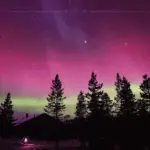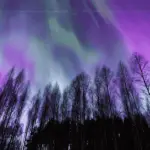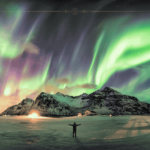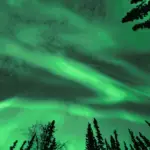
Atmospheric forecasters are alerting residents across the northern United States to prepare for a potential celestial display as geomagnetic conditions are expected to intensify Wednesday evening. A stream of solar wind from a coronal hole on the sun is forecast to spark G1 to G2 (Minor to Moderate) geomagnetic storms, potentially triggering aurora visible across 14 U.S. States.
The phenomenon represents a significant opportunity for American sky watchers to witness the aurora borealis from their own backyards, as charged particles from our nearest star interact with Earth’s magnetic field system in ways that could produce visible light displays far south of their typical range.
Solar Wind Stream Approaches Earth’s Magnetosphere
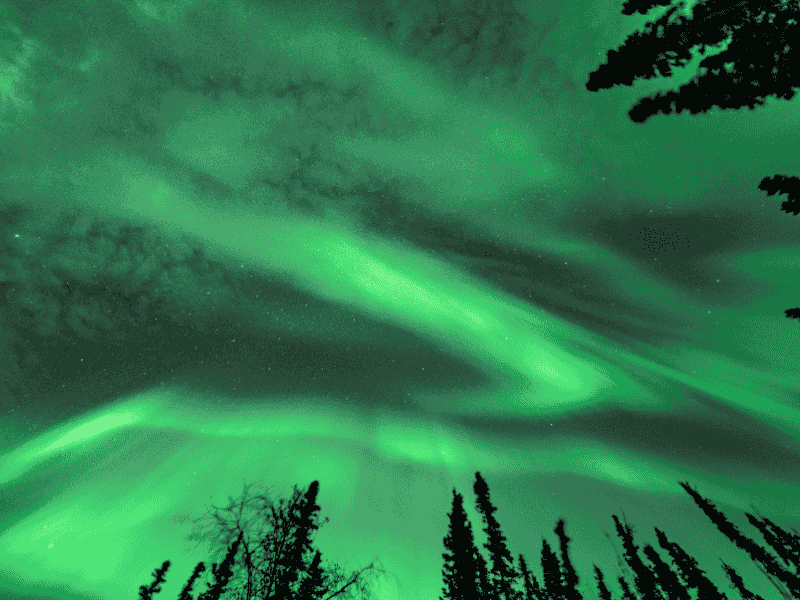
Space weather monitoring agencies have identified an incoming stream of turbulent solar particles originating from a specific atmospheric disturbance on the sun’s surface. This equatorial coronal hole has been releasing a steady flow of charged material that began its journey toward Earth several days ago, creating conditions ripe for enhanced auroral activity.
The intensity of this solar wind stream has prompted forecasters to issue geomagnetic storm warnings reaching G2 levels on the standard five-point scale used to measure space weather events. These moderate-level storms possess sufficient energy to push the aurora oval significantly southward from its typical Arctic positioning, bringing the light show within viewing range of populated areas across the northern continental United States.
Space weather prediction models indicate that the arrival of this solar material will coincide with evening hours across American time zones, potentially creating optimal viewing conditions as darkness falls. The timing appears favorable for observers who won’t need to stay awake until the early morning hours typically required for aurora viewing at these latitudes.
Fourteen States Positioned for Optimal Viewing
Geographic positioning places numerous American states within the potential viewing zone for Wednesday evening’s anticipated aurora display. The northern tier of states stretches from the Pacific Northwest through the Great Plains and into New England, creating a substantial corridor where residents might witness the phenomenon.
Washington state’s northern regions offer excellent positioning for aurora observation, particularly areas away from the light pollution of major metropolitan centers. The state’s mountainous terrain and relatively clear night skies during late June provide advantageous conditions for detecting the subtle glow that often marks the beginning of an aurora display.
Moving eastward, Idaho’s northern counties join Montana and Wyoming in the potential viewing zone. These sparsely populated regions benefit from minimal artificial lighting, creating dark sky conditions that enhance the visibility of faint auroral activity. Montana’s vast open spaces and elevated terrain offer particularly promising observation opportunities.
The upper Midwest presents exceptional possibilities for aurora viewing, with North Dakota, South Dakota, Minnesota, and Wisconsin all positioned within the forecast zone. These states have historically recorded aurora sightings during periods of enhanced geomagnetic activity, and their relatively flat terrain provides unobstructed northern horizon views essential for aurora detection.
Michigan’s location and geography place it favorably for Wednesday evening’s potential display. The state’s numerous lakeshores offer dark sky locations away from urban centers, while its northern latitude positions residents within the anticipated aurora viewline. Wisconsin shares similar advantages, with rural areas providing optimal viewing conditions.
Iowa represents one of the southernmost states expected to potentially witness the aurora, demonstrating the unusual extent of Wednesday evening’s forecast geomagnetic disturbance. The state’s agricultural landscape offers numerous locations with minimal light pollution and clear northern horizon views.
New England rounds out the eastern portion of the viewing zone, with New York, Vermont, New Hampshire, and Maine all positioned for possible aurora observations. These states benefit from mountainous terrain that elevates observers above local light sources and provides excellent northern sky visibility.
Geomagnetic Storm Classification and Intensity Predictions
The approaching space weather event has been classified using the standardized system that measures geomagnetic disturbances on a scale ranging from G1 through G5. Wednesday evening’s anticipated storm falls within the G2 category, representing moderate-level geomagnetic activity capable of producing visible aurora displays at latitudes significantly south of the Arctic Circle.
This classification system helps observers understand the potential intensity and geographic extent of aurora displays. G2 storms typically push the aurora oval to latitudes around 55 degrees north, bringing the phenomenon within range of northern United States population centers that rarely experience such displays.
The Kp index, which provides another measurement of geomagnetic activity intensity, is forecast to reach values of 5 during the peak of Wednesday evening’s disturbance. This level of activity historically correlates with aurora displays visible from northern United States locations, particularly during periods of astronomical darkness.
Forecasting models suggest the geomagnetic enhancement will persist for several hours, potentially providing multiple opportunities for observation as Earth rotates through the solar wind stream. The extended duration increases the likelihood that sky watchers will have sufficient time to locate dark sky viewing locations and allow their eyes to adjust to nighttime conditions.
Seasonal Challenges and Summer Solstice Considerations
The timing of Wednesday evening’s anticipated aurora display presents unique challenges related to the recent summer solstice. Northern latitudes experience extended daylight hours during late June, with complete astronomical darkness limited to a relatively brief window during the middle of the night.
Areas near the United States-Canada border may struggle with persistent twilight conditions that could obscure faint aurora displays. However, the moderate intensity forecast for Wednesday evening’s geomagnetic storm suggests the aurora may be bright enough to overcome ambient light from the extended twilight period.
Sky watchers in northern states will need to wait until local sunset and the subsequent twilight period before aurora detection becomes possible. The exact timing varies by location, with western states experiencing later darkness than their eastern counterparts due to time zone boundaries and seasonal solar positioning.
Despite these seasonal limitations, the forecast intensity suggests dedicated observers may still witness the phenomenon. Historical records indicate that G2-level geomagnetic storms can produce aurora displays bright enough to compete with summer twilight conditions, particularly when viewed from locations with excellent northern horizon visibility.
Understanding the Solar Maximum Cycle Impact
The current period of enhanced aurora activity reflects broader patterns in solar behavior as our nearest star progresses through its approximately eleven-year activity cycle. Solar maximum conditions, which peaked in late 2024, continue to influence space weather patterns and aurora frequency throughout 2025.
This phase of the solar cycle is characterized by increased numbers of coronal holes, solar flares, and coronal mass ejections that can trigger geomagnetic storms when their effects reach Earth. The elevated activity levels create more frequent opportunities for aurora displays at latitudes typically too far south to witness the phenomenon.
Solar maximum periods often produce their most spectacular aurora displays during the years immediately following peak activity. This pattern suggests that 2025 and 2026 may continue to offer enhanced opportunities for aurora viewing from United States locations, as solar activity gradually decreases from its recent peak levels.
The specific coronal hole responsible for Wednesday evening’s anticipated display represents just one of many solar atmospheric features currently active during this phase of the solar cycle. Similar disturbances may continue to produce aurora-generating solar wind streams throughout the remainder of 2025.
Optimal Viewing Strategies and Location Selection
Successful aurora observation requires careful attention to viewing location selection and environmental conditions. Light pollution represents the primary obstacle for urban and suburban residents hoping to witness Wednesday evening’s anticipated display, making travel to rural areas essential for optimal viewing experiences.
Agricultural regions within the forecast zone offer excellent aurora viewing opportunities due to their minimal artificial lighting and expansive open skies. Elevated locations such as hills or ridges provide additional advantages by increasing the visible horizon and reducing the impact of distant light sources.
Observers should focus their attention on the northern horizon, where aurora displays typically first appear as a subtle glow or arc-shaped formation. Initial aurora activity often resembles distant city lights or approaching storm clouds, requiring patient observation to distinguish the phenomenon from terrestrial light sources.
Clear weather conditions are essential for aurora observation, as even thin cloud layers can completely obscure the display. Wednesday evening’s weather forecast becomes crucial for determining which areas within the potential viewing zone will offer cloud-free skies during the anticipated geomagnetic storm.
The Science Behind Aurora Formation
The spectacular light displays that characterize aurora phenomena result from complex interactions between solar particles and Earth’s magnetic field system. Solar wind streams carry electrically charged particles across the solar system at speeds reaching millions of miles per hour, creating a continuous flow of energy that interacts with planetary magnetic fields.
Earth’s magnetosphere acts as a protective barrier that deflects most solar wind particles away from the planet’s surface. However, during periods of enhanced solar activity, increased particle density and energy can overwhelm portions of this magnetic shield, allowing charged particles to penetrate deeper into Earth’s atmospheric system.
These infiltrating particles follow magnetic field lines toward Earth’s polar regions, where they collide with atmospheric gases at altitudes between 60 and 200 miles above the surface. The collision process excites oxygen and nitrogen atoms, causing them to release energy in the form of visible light that creates the characteristic colors and patterns of aurora displays.
Different atmospheric gases produce distinct colors when excited by solar particles. Oxygen typically generates green and red light emissions, while nitrogen contributes blue and purple hues to the aurora palette. The specific altitude at which these collisions occur influences the predominant colors visible during any particular display.
Real-Time Monitoring and Forecast Updates
Space weather monitoring systems provide continuous surveillance of solar conditions and geomagnetic activity levels that influence aurora visibility. These sophisticated networks combine satellite observations, ground-based magnetometers, and computer modeling to generate accurate short-term forecasts of aurora activity.
The National Oceanic and Atmospheric Administration operates the primary space weather prediction center responsible for aurora forecasts affecting United States observers. Their monitoring systems track solar wind conditions, magnetic field orientations, and particle density measurements that determine geomagnetic storm intensity.
Real-time updates become available through various online platforms and mobile applications designed specifically for aurora enthusiasts. These resources provide current geomagnetic activity levels, cloud cover forecasts, and viewing recommendations tailored to specific geographic locations within the potential aurora zone.
Observatory networks across northern states contribute ground-based observations that supplement satellite data and improve forecast accuracy. These facilities often share real-time images and activity reports that help confirm when aurora displays become visible from surface locations.
Frequency Patterns
Aurora displays visible from northern United States locations represent relatively rare events that typically occur only during periods of enhanced geomagnetic activity. Historical records indicate that such displays become more frequent during solar maximum periods, with intervals of several months or years between visible events during solar minimum conditions.
The current solar cycle has already produced several notable aurora displays visible from United States locations, including major events in 2024 that brought the phenomenon as far south as the southern Great Plains states. These exceptional displays demonstrated the potential for intense geomagnetic storms to push aurora visibility well beyond typical geographic boundaries.
Climate patterns and seasonal variations influence aurora visibility independently of geomagnetic activity levels. Winter months traditionally offer the best viewing conditions due to extended periods of astronomical darkness and typically clearer atmospheric conditions in northern regions.
Long-term space weather patterns suggest that opportunities for aurora viewing from United States locations may continue throughout 2025 and into 2026 as solar activity gradually declines from its recent peak. However, the frequency and intensity of such displays will likely decrease as the solar cycle progresses toward its minimum phase.
Photography The Northern Lights
Digital photography has revolutionized aurora documentation, allowing observers to capture images that reveal details invisible to the naked eye. Modern camera sensors can detect faint aurora activity that appears too subtle for direct visual observation, making photography an valuable tool for confirming aurora presence during marginal viewing conditions.
Successful aurora photography requires specific camera settings optimized for low-light conditions and relatively long exposure times. Wide-angle lenses help capture the full extent of aurora displays, which can span large portions of the sky during intense geomagnetic storms like the one anticipated for Wednesday evening.
Tripod stability becomes essential for aurora photography due to the extended exposure times necessary to capture sufficient light for clear images. Even slight camera movement during exposures can result in blurred or streaked images that fail to accurately represent the aurora display.
Social media platforms have become important venues for sharing real-time aurora observations and photographs, creating informal networks of observers who report activity levels and viewing conditions across the forecast zone. These community-generated reports often provide valuable information for other potential observers.
Viewing Recommendations
Wednesday evening’s anticipated aurora display represents a significant opportunity for residents across fourteen American states to witness one of nature’s most spectacular phenomena. The convergence of favorable geomagnetic conditions, moderate storm intensity, and strategic geographic positioning creates circumstances that may not recur for months or years.
Successful observation requires advance planning, including identification of suitable viewing locations away from light pollution sources and monitoring of local weather conditions. The brief window of optimal viewing time during late June nights necessitates preparation and readiness to travel to dark sky locations once aurora activity becomes apparent.
The scientific understanding behind aurora formation adds depth to the viewing experience, helping observers appreciate the complex solar-terrestrial interactions that produce these magnificent displays. Wednesday evening’s event serves as a reminder of Earth’s position within a dynamic solar system where space weather events can create spectacular visible phenomena accessible to ground-based observers equipped with nothing more than clear skies and dark viewing locations.