
Mestia in winter is both an adventure and a winter wonderland. I have recently returned from an incredible trip to Mestia, where I’ve learned about the local culture and traditions, I spent time in snow drifts almost as heigh as me, I attempted a cooking class, enjoyed a hot tub in the middle of the forest, and visited the highest permanent inhabited settlement in Europe. And these were just the highlights. I knew Mestia would be an experience, but I didn’t imagine it would be one that I will remember forever.
In this guide, I want to tell you about all the amazing things I’ve done in Mestia in winter and help you plan the perfect trip to the heart of the Georgian Caucasus mountains.
How to Get to Mestia in Winter

Getting to Mestia in winter can be quite challenging, I won’t lie. Our journey began in Tbilisi at 9 am, but we didn’t reach Mestia until 9 pm – and we were among the lucky ones. To get there from Tbilisi, you can opt for a bus or train to Zugdidi, the nearest town to the mountain road leading to Mestia. From Zugdidi, you have the choice of hiring a driver or joining a public transport minivan, which costs 35 lari each way.
Our ascent up the mountain was tough. What started as rain in Zugdidi gradually turned into snow as we climbed. The 2-hour drive from Zugdidi to Mestia stretched to 5 hours in the winter conditions. The road quickly became covered with snow, reducing visibility to almost zero. We were immensely grateful for our skilled drivers and their trusty Mitsubishi Celica vans, which I affectionately dubbed “mountain goats with wheels” by the end of the trip.
I highly recommend breaking the trip over two days, spending the night in Zugdidi, and attempting the drive up the following day. Make sure the driver you hire, if you choose this option, has a 4WD van, otherwise you won’t be able to reach Mestia. The road is too difficult for a normal car.
Alternatively, you can fly from Tbilisi to Mestia with Vanilla Sky. However, be aware that they operate a very small plane with only 19 seats, often fully booked in advance. Tickets can only be purchased in person at their office in Tbilisi or by phone. It’s also worth noting that the plane doesn’t fly every day and has strict luggage restrictions, allowing only small bags with a maximum weight of 15kg. During my week in Mestia, I only saw the plane take off once.
Where to Stay in Mestia in Winter
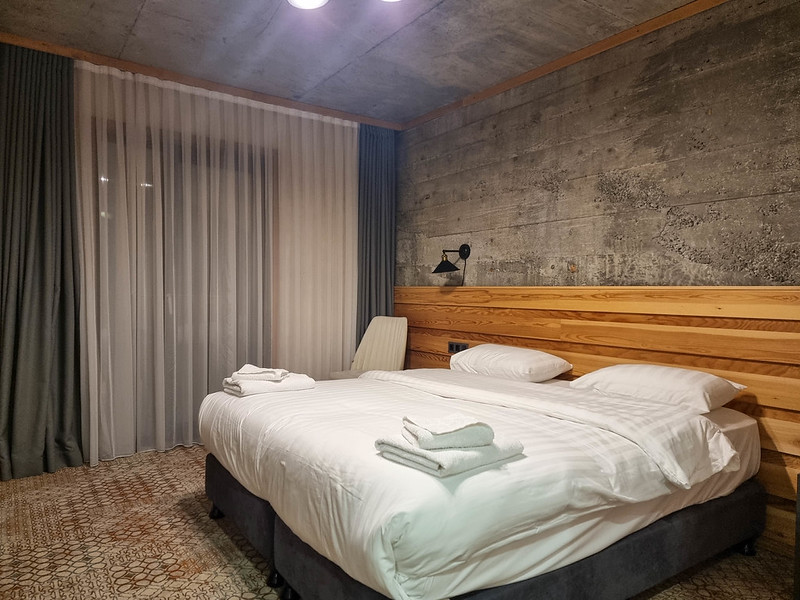
During my week in Mestia, I stayed at the wonderful Posta Hotel. Located in the centre of the town, the hotel features its own restaurant and bar, a sauna, a heated pool, as well as evening entertainment.
My room at the Posta Hotel was spacious and featured a large, comfortable double bed. While I didn’t have a balcony (though some rooms do), I enjoyed a stunning view of the mountains and ski slopes. Despite a snowstorm knocking out some electricity poles during the first two days of my trip, the hotel managed to run on its own generator. I was impressed that even in these challenging conditions, we still had access to hot water in the showers and all the facilities remained open.
You can check the latest rates for Hotel Posta here.
Since our group was quite large, we were divided among three hotels. Others stayed at Hotel Paliani and Hotel Gistola, both of which offered excellent services.
The Best Things to Do in Mestia in Winter
Affordable Ski

If you’re passionate about skiing, Mestia offers a fantastic resort worth considering. While I’m not a skier myself and prefer to avoid the risk of injury, I’ve heard from friends who are enthusiasts that skiing holidays in the Alps can easily cost upwards of £2000 for a week. In contrast, Mestia offers a full day of skiing, including passes, equipment rental, and private transport to the slopes, for less than £33 – a steal!
You can also reach Hatsvali Ski Resort from the outskirts of Mestia, by the sky lift which connects to the gondola that goes to the top of the slopes. The resort consists of a network of mostly red slopes, and it also has a beginner area. Whilst I personally didn’t try it (again, I didn’t want to come back home early with a broken leg), a few people from our group took lessons and they were very happy with the service provided.
Have Lunch at the Highest Restaurant in Georgia

Zuruldi is a restaurant located at the top of the piste, in Hatsvali Ski Resort, at 2340m. It’s a popular place for skiers and snowboarders to have a hot drink and a hearty lunch. The restaurant has a lovely terrace, for when the weather is good. The panoramic views over the mountains, from the terrace, are breathtaking. As soon as I arrived, after taking photos in the snow for a good half an hour, I ordered a hot chocolate to warm up. This was thick and creamy, served in a glass mug which warmed up my hands.
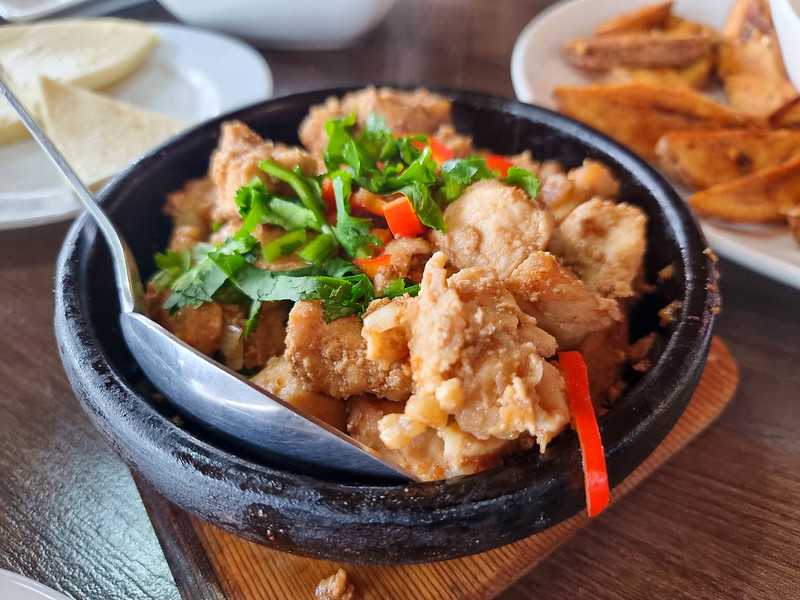
We enjoyed a great lunch here, with Svan khachapuri, chicken salad, fried pork, cheesy patties and Mexican potatoes. Yes, they are a thing in Georgia and are delicious, but despite their name, they have nothing to do in Mexico.
Relax in a Local Banya

Visiting the Banya is a must-do activity in Mestia during winter, no question about that. Papa’s Qel Banya, just a short drive from Hatsvali Ski Resort, offers a cosy wooden lodge equipped with a sauna, a cold plunge, and an outdoor hot tub which, when it snows, is even more magical.
After we changed into our bathing suits, in the warmth of the lodge, we went outside and climbed into the wooden hot tub. The water was very hot, but it felt so good when we got it, due to the cold outside. The entire scenery around the tub was covered with snow, with only one small path leading to it, from the lodge. From time to time, when the wind blew, large chunks of snow would fall off the tree branches above.
After getting out of the tub, I actually felt warm, even if the temperature was close to 0 degrees Celsius. I took advantage of this and jumped in the snow – when else would I have another chance to do it? As soon as my body was deep into the snow, I started to feel cold. Ok, I need to go into the sauna right now, I told to myself. The sauna was very warm as well and made my skin as soft as a baby’s.
You can book the banya on Papa’s Qel Facebook, by clicking here. A session lasts for one and a half hours and includes hot drinks such as tea and coffee.
Visit a 12th Century Svan Tower

The fortified towers of Svaneti, constructed between the 9th and 12th centuries, served as defensive structures against both enemy attacks and natural disasters like avalanches, which are common in Mestia during winter. These towers functioned as sentry posts and provided refuge for families during times of war.
The Margiani’s House Museum is a great place to learn more about how families used to live in these towers, especially during wintertime. It took a while to climb the hill to the museum, which was quite slippery because of the heavy snow. When we arrived, the caretaker was still digging up the path towards the entrance through the meter-high snowdrifts.
The entrance to the museum costs 10 Lari and includes the guided tour of the premises. The interior is very interesting, with everything centred around the fireplace, in the middle of the room. Around it, there were benches, as well as a throne-like chair, which was used by the head of the family. Above the fireplace, there is a large cauldron, which was used to make food.
Throughout the room, large wooden boxes stored grains, while others served as shelter for animals during winter to generate warmth inside the house. Family members slept above these boxes. The house also features a cellar for storing wine and honey in clay jugs, as well as a gated room at the back where enemies were once imprisoned.
Usually, the top of the tower can be visited as well, but due to the heavy snow, we couldn’t reach it. However, we still admired the gorgeous panorama over the town and the valley below, from the garden of the house.
Learn How to Make Kubdari

As a foodie, I’m always looking for cooking classes when I travel. Not only to learn how to cook some of the local dishes but also to connect with the locals and learn more about their culture and traditions. In Mestia, if you’re keen on mastering the art of traditional Svanetian Kubdari, Lali Nikoloziani at Lali’s Guesthouse is the go-to person.
We were dropped off at the bottom of the small hill leading to Lali’s workshop. One by one we followed the narrow path through the snow, which was cleared just before we arrived, after the overnight snowstorm. Lali’s workshop is at the top of the hill, and I can imagine that in better weather conditions, the view over the mountains is breathtaking. Today though it’s snowing and the clouds are very low, covering the view.
Welcomed with glasses of chacha to warm us up, we gathered around a table filled with jars of herbs and spices. Lali, with an almost century-old wooden trough, demonstrated the art of kneading dough. Although she didn’t speak English, our guide provided translations, explaining that the trough’s dimensions were perfect for crafting the ideal Kubdari and had been passed down through generations.
Firstly, she showed us how to make Petvraali, which is a type of khachapuri specific to the Svaneti region, with millet inside the Imeruli cheese filling. Next, we learned how to make Kubdari, the representative dish of the Svanetian cuisine. Kudbari is a meat pie made with dough that has been leavened, making it extremely light and fluffy. The filling is made with either beef or pork, or a combination of both, onions, and a blend of spices including the Svanetian salt. Lali makes her salt in-house, mixing it with typical spices from the area such as blue fenugreek, dried marigold and wild carraway flower which only grows in the mountains here.
Lali filled a piece of dough with a large bowl of the meat mixture, covered it in a bowl, and then rolled it with her hands on the wooden trough until it got its round shape. She placed it on top of the wood fuelled oven to fry on each side, before placing it inside to cook thoroughly.
Besides Petvraali and Kubdari, Lali also showed us how to make Tashmijabi – very cheesy mashed potatoes, Chvishtari – cornbread patties filled with cheese, and garlic soup. At the end of the cooking class, we joined the entire family inside the house, for an ad-hoc supra, where we feasted on all the dishes we’ve learned how to cook, accompanied by wine and walnut brandy.
If you want to book the same cooking class, you can send a message to Lali on her Instagram page, by clicking here.
Attend a Svan Hat Making Masterclass

A Svan hat, also known as a Svanetian hat, is a traditional headpiece originating from the Svaneti region. It is characterized by its unique design, which has the shape of a person’s head. Making a Svan hat uses around 250 grams of wool and takes around 30 hours. They are all made by hand, in the villages around Svaneti.
The Svan hat is both a practical item of clothing but also a cultural symbol. It is meant to keep you warm in winter and cool in summer, and it is worn by both men and women on different occasions.
To see how the Svan hat is made, we travelled to the village of Chvabiani, where we met Maia Caldani – the craftswoman. She started doing Svan hats when she was 17, creating over 1000 pieces so far. It takes her 3 days to make a hat, as the process requires time for the wool to dry. She demonstrated the process of making a Svan hat, from layering the wool to structuring it in its iconic shape. She explained how the hats are sword-proof, and how they have been used in battles as shields. The hat is holding so well together that you could pour water and drink from it, without any spillage.
You can take the same masterclass by contacting Maia here. The price of the class is 300 Lari, and it doesn’t matter how many people attend. You can also stay at her guesthouse, which has stunning views of the surrounding mountains, for 100 Lari a night. The price includes breakfast and dinner as well.
Visit Ushguli

Ushguli is the highest permanent settlement in Europe, at an altitude of 2,200 meters. Comprising five villages, one of which holds UNESCO heritage status, it offers breathtaking vistas of the Caucasus mountains and, on a sunny day, you can even spot Shkhara – the highest peak in Georgia at 5,193 meters.
Because of the snow storm, our plans to visit Ushguli had to be postponed until the last day of our trip to Mestia, hoping for better weather. The night before we saw Dede at the cinema in Mestia, and everyone was in high spirits, hoping to make it to Ushguli and explore the villages we’ve seen on the screen. As soon as we got word that the first cars leaving Mestia early morning had reached Ushguli and that the road was safe, we embarked on the two-hour journey. The distance between Mestia and Ushguli is only 45 kilometres, but the mountain road is challenging and we had to go slow, especially due to the ice and snow. Our guide told us that most of the road has been rebuilt, and now it is much easier to travel between the two areas, in the summer months.

On the way to Ushguli, we stopped at the Tower of Love, a monument on the shore of a river, which can be visited in normal weather conditions. The legend says that this used to be the meeting point of two lovers. The man died in the war, but the woman didn’t want to believe it, so she kept coming to the tower, waiting for him. The family of the woman built the tower in their memory.
We continued our journey and as we approached Ushguli, the clouds dissipated and the sun came out, revealing the incredible mountain scenery surrounding us. We stopped at Chazha, the Unesco village, which we could see from the side of the road. This village is not inhabited, and it was covered with snow. We could only take photos from afar, but imagine the scenes from the movie, from the previous night, which were filmed here. We then continued further, until the vans couldn’t advance anymore. From here, we could get a tiny glimpse of Shkhara, before the clouds covered it again.

We stayed in Ushguli for half a day, exploring the snowy landscape, taking photos, and climbing up to the 12th-century Lamaria church, which wasn’t an easy trek through the snow. The church has a stunning small chapel with frescoes painted directly on the rocks. Lamaria is the name of a pagan deity, goddess of grains, cattle, and needlework. Later, paganism was replaced with Christianity, and now Lamaria, in Svan language, means “St Mary”.
Another point of interest in Ushguli is the Queen Tamar winter residence, which is located in Chazhashi village. From the mighty 10th-century fortress, today we can only see one tower and a small chapel, next to the ruins of the other two towers.

Even if Ushguli is so remote and hard to get to in winter, we found a restaurant where we had a feast for lunch. Cafe “Ushguli Maspindzeli” welcomed us with hot soup, chicken stew, kubdari, khackapuri, and vanilla cake.
Watch Dede at the Cinema
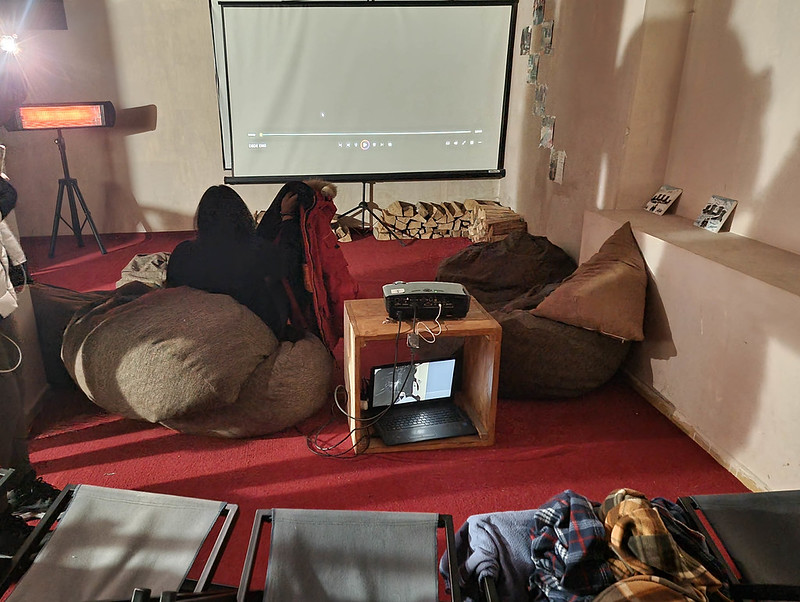
“Dede,” is a Georgian film released in 2017 which won numerous awards at various European film festivals. The storyline revolves around Dina, a young woman from a village in the Caucasus Mountains, who embarks on a journey to break free from the area’s rigid traditions. Shot in Ushguli, the film features mostly local inhabitants as actors, adding an authentic touch to the narrative. Set in 1992, “Dede” provides insight into Georgia’s traditions, culture, and recent history.

The cinema screening “Dede” offers a cosy atmosphere, in their small basement furnished with beanbags and deck chairs. Despite the warmth inside, we were offered extra blankets, in case we got cold. The space offers a very intimate atmosphere and runs the movie every 2 hours during the day. Because we were a larger group, they ran a special preview for us, at 10 pm.
The entrance fee is 10 Lari and you can find it on the main road in the city. They also have the original trophies that the movie won, on display, which to be seemed surreal. I can imagine that most of the awards won by movies are kept in secure places, under glass, not on a simple table.
Indulge in Homemade Desserts

When the weather is bad, what’s better than sweetening the day with a bit of cake? I’ve noticed there are a few cafes and bakeries in town. I bought cakes from Ineza bakery, on the main road in Mestia. The bakery is run by a lovely lady who even if she doesn’t speak English, can well communicate which are the best cakes. I treated myself to a slice of honey cake and a slice of bird’s milk cake. They were both very good, and we ended up sharing them at dinner, with everyone in our group. The price for each cake was 3 Lari.
Have Lunch or Dinner at Café Laila

I had to check out Café Laila after hearing it’s one of the top spots in Mestia. Walking in, I immediately noticed its unique vibe and admired the staff’s boldness. They all wore shirts with “20% of my country is occupied by Russia” written on them. Even the WiFi network name, “Abkhazia is Georgia,” and password, “Samachablo is Georgia,” made a statement.

Now, let’s talk about the food – it was fantastic! I tried the garlic chicken, which was hands down the best I had in Georgia. The sauce was creamy, indulgent, and packed with garlic flavour. I also ordered the Adjaruli Khachapuri, which is shaped like a boat with a raw yolk on top. It was incredibly delicious, oozing with cheese.
What’s cool about Café Laila is that everyone’s free to write on the walls, which are covered in scribbles, adding to the rebellious charm of the place. Highly recommended!
Visit the Svaneti Museum of History and Ethnography

When it’s snowing and you don’t really want to spend time outdoors, go visit the Svaneti Museum of History and Ethnography. It’s a great place to spend a good two to three hours, especially if you are taking a guided tour, as we did. The museum is focused on providing insights into the history of the area, from its ancient times through the medieval period until current days. There are so many amazing artefacts and pieces of art exhibited here.

In addition to historical exhibits, the museum also focuses on Svaneti’s ethnography, highlighting aspects of traditional culture, customs, and traditions. You can learn about traditional Svan clothing, music, dance, cuisine, and religious practices, providing a comprehensive overview of the region’s heritage.
In addition, during my visit, the temporary exhibition featured photographs taken by Vittorio Sella, an Italian photographer and mountaineer, who visited Svaneti in 1889, 1890, and 1896.
Listen to Georgian Folk Music
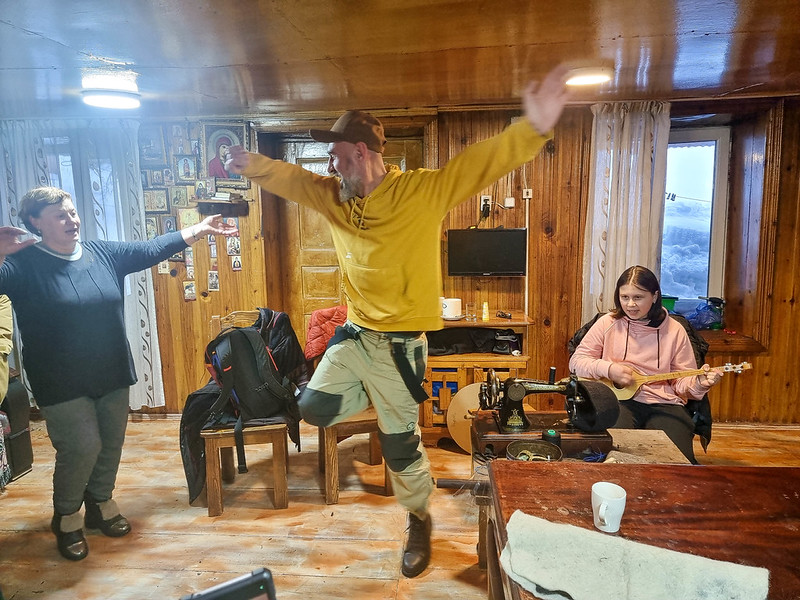
Every evening, the restaurant at our hotel treated us to a wonderful traditional folk music performance. By the time our stay ended, we practically knew all the songs by heart! The music was played on traditional Georgian instruments, like the panduri, a three-string lute commonly found in the highland regions of the country.
We also had the pleasure of experiencing folk music at Maia’s Guesthouse in Chvabiani. After she taught us how to make Svan hats, Maia and her niece treated us to a delightful performance, singing a few songs together. It was such a memorable experience!
Explore Mestia

Last but not least, don’t forget to explore Mestia in winter. It’s a lively town, both at day and night. Walk between the famous Svan Towers, join the locals for an ad-hoc supra or birthday celebration in the middle of the road, and enjoy the beauty of the area.
For more similar articles, check out my recommendations below:
Like it? Pin it!

Disclaimer: Some of the links on this website are “affiliate links.” This means that if you click on the link and do a purchase, I will receive an affiliate commission at no extra cost for you. This helps me keep my website running and continue to share my travelling knowledge with you. I thank you for booking your flights or hotels using the links on my website. Regardless, I only recommend products or services I use personally and believe will add value to my readers.


Incredible as alwaysss! the hat-making class looks so fun and unique! I would definitely consider Georgia for my next ski trip, sooo cheap!
What an amazing journey filled with the perfect skiing weather, delicious food where you can learn from the locals and the Banya looked so relaxing. I learned about a new location thanks to your post.
An very enjoyable insight into the culture, history and some wonderful activities to explore and enjoy. Love the hot tub option and embracing laying in the snow.
Wow, love this resort, I’d love to visit the local Banya for some dip. Saving this!
Isn’t that incredible about the hats protecting you from swords?! This little spot is definitely on my travel list!
I just returned from my second Georgia trip, and although I have not visited Mestia yet, nowhere in Georgia was disappointing. Glad it is still pretty much under the radar, and Svaneti or Tusheti are firmly on my wish list for the next trip!
What a lovely trip! I can’t believe the low price for the ski vacation, it’s really a steal. Will definitely consider this as an option for my future ski trips. Also, loved the picture of the cake, seems absolutely delicious.
Wow! This is so cool! I didn’t know anything about Georgia so this was an interesting read!