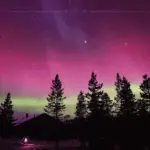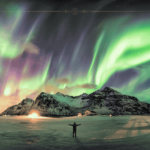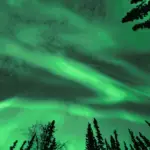
Residents across the northern tier of the United States may have an opportunity to witness one of nature’s most spectacular displays this week as forecasters predict the aurora borealis could become visible across multiple states. The celestial show is expected to unfold overnight Tuesday into Wednesday, offering sky watchers from coast to coast a chance to see the shimmering lights that typically remain confined to latitudes much closer to the Arctic Circle.

Space weather specialists have issued guidance indicating that conditions are aligning for a geomagnetic disturbance that could push the northern lights southward from their usual haunts. While this event isn’t expected to match the intensity of some recent displays that painted skies across much of the globe, it still represents a noteworthy opportunity for millions of Americans who rarely get to experience this atmospheric phenomenon firsthand.
The timing comes just days after another geomagnetic event captured worldwide attention, reminding people of the dynamic relationship between our planet and the sun. These recurring episodes underscore how solar activity continues to create windows of opportunity for aurora viewing at lower latitudes than historical norms would suggest.
The Forecast
The anticipated light show stems from turbulent solar wind expected to interact with Earth’s magnetic field during the specified timeframe. Forecasters from the National Oceanic and Atmospheric Administration’s Space Weather Prediction Center have classified the incoming disturbance as a minor event on their five-level scale, specifically a G1 geomagnetic storm.
This classification sits at the lower end of the intensity spectrum, which means the effects will be relatively modest compared to more severe space weather events. However, even minor geomagnetic storms can produce visible auroras at higher latitudes, particularly when viewing conditions cooperate and observers know where and how to look.
The mechanism driving this event involves a high-speed stream of particles flowing from the sun toward Earth. When this solar wind reaches our planet’s magnetosphere, it can cause disturbances that channel charged particles down toward the poles along magnetic field lines. As these particles collide with gases in the upper atmosphere, they create the luminous curtains and arcs that characterize auroral displays.
The predicted timing suggests the most favorable viewing window will occur as darkness settles across the northern United States on Tuesday evening and extends into the predawn hours of Wednesday. Space weather dynamics are notoriously difficult to predict with precision because the speed and characteristics of solar wind can vary, but current models point to this general timeframe as most promising.
Geographic Viewing Prospects
According to projection models that map where auroras might become visible, up to eleven states positioned along or near the Canadian border could potentially observe the phenomenon. The viewing line extends from the Pacific Northwest through the northern plains and upper Midwest before reaching the northeastern corner of the country.
Alaska stands in the most favorable position, as it typically does for any aurora event affecting North America. The state’s proximity to the magnetic north pole means residents there frequently witness northern lights displays that remain invisible to observers thousands of miles to the south.
Moving eastward across the Lower 48, the northern reaches of Washington State could see activity, particularly in areas close to the international boundary. Idaho’s panhandle region similarly falls within the potential viewing zone, though residents in southern portions of the state face diminishing prospects.
Montana’s expansive northern territory places much of the state in a good position for observations, while Wyoming’s viewing chances concentrate in its northernmost counties. The Dakotas both appear within the projected viewing area, with South Dakota having slightly better odds in its northern sections compared to southern regions.
Minnesota’s position makes it a strong candidate for aurora sightings, particularly in the northern half of the state where communities are accustomed to occasional displays during periods of enhanced geomagnetic activity. Wisconsin shares similar prospects, with the northern counties having the best sight lines toward any visible activity.
Michigan’s Upper Peninsula and northern Lower Peninsula fall within the viewing zone, giving residents of those areas a realistic chance of seeing something if conditions align favorably. Rounding out the list, Maine’s northern sections could potentially observe low-horizon displays, though these would likely appear quite faint compared to what observers in western states might see.
The common thread connecting all these locations is latitude. The viewing line typically extends to areas where observers can see far enough north on the horizon to catch the glow of auroras occurring in the upper atmosphere over Canada or closer to the Arctic. Urban residents in these states may face challenges from light pollution, while rural observers with darker skies stand better chances of detecting fainter displays.
Understanding the Challenges
While the forecast creates an opportunity for aurora viewing, several factors will influence whether the display materializes and how impressive it appears. Chief among these considerations is the inherent unpredictability of space weather events at these relatively modest intensity levels.
The solar wind’s speed determines when it will reach Earth, and slight variations in velocity can shift the timing by hours. This uncertainty means observers may need patience and flexibility, potentially requiring them to check conditions multiple times throughout the night rather than expecting a specific moment when lights will appear.
The orientation of the interplanetary magnetic field plays a crucial role in whether incoming solar wind can effectively interact with Earth’s magnetosphere. Specifically, a component called Bz determines how readily the two magnetic fields can connect. When this component points northward, Earth’s magnetic field tends to deflect the solar wind. When Bz swings to point southward, the fields can merge, allowing charged particles to stream into the magnetosphere and potentially create auroras.
Observers monitoring real-time space weather data should watch for Bz values that turn negative, indicating a southward orientation. Sustained readings of negative five nanoteslas or stronger typically signal conditions conducive to auroral activity. Various websites and mobile applications provide access to this data, allowing dedicated aurora watchers to make informed decisions about when to venture outside.
The Moon Factor
Tuesday night brings an additional complication in the form of lunar interference. The moon will be approximately two-thirds illuminated as it progresses toward full phase, which arrives several days later. This substantial moonlight will wash out fainter auroral displays, potentially rendering only the brightest features visible to the naked eye.
The moon’s position in the sky matters significantly for aurora viewing. When the moon sits high overhead flooding the landscape with light, it becomes much harder to detect the subtle glows associated with minor geomagnetic storms. Observers might have better luck during periods when the moon drops closer to the horizon or sets entirely, though this depends on local conditions and exact timing.
There is a silver lining for sky watchers who venture out regardless of aurora success. The moon will appear positioned near the Pleiades star cluster, also known as the Seven Sisters, in the constellation Taurus. This fortuitous alignment creates an attractive celestial scene independent of any auroral activity, offering some consolation if the northern lights fail to materialize.
Maximizing Your Viewing Success
People hoping to catch the display should prioritize finding locations with minimal light pollution and unobstructed views toward the northern horizon. Urban and suburban areas present significant challenges due to artificial lighting that overpowers faint auroral glows. Even streetlights and nearby buildings can severely diminish what observers can see.
Rural locations away from cities and towns provide the best opportunities. Fields, hilltops, lakeshores, and other open spaces work well provided they offer clear sight lines northward. Resources exist online to help identify darker locations, including maps that show light pollution levels across different regions and databases of designated dark sky areas.
Weather conditions will obviously play a determining role. Cloud cover blocks views of anything happening in the upper atmosphere, making clear skies essential. Observers should consult local weather forecasts and potentially use satellite imagery to identify areas where clouds are expected to remain absent during the prime viewing window.
Temperature considerations shouldn’t be overlooked for late January viewing across northern states. Dressing appropriately for potentially hours of outdoor observation in winter conditions is essential. Warm layers, insulated footwear, gloves, and headwear help maintain comfort during extended viewing sessions.
Photography Considerations
Modern smartphones have evolved into surprisingly capable tools for capturing auroras, often revealing details and colors that appear much fainter or even invisible to the naked eye. This phenomenon leads to the term photographic aurora, where cameras detect light that human vision struggles to perceive.
The key lies in understanding how to optimize phone camera settings for low-light conditions. Most contemporary smartphones include dedicated night modes or manual controls that allow users to extend exposure times. Accessing these features varies by device but typically involves switching from automatic to night or professional shooting modes.
Stability is absolutely critical for aurora photography. Even slight camera movement during the extended exposures necessary for low-light photography creates blur that ruins images. Using a tripod designed for smartphones provides the ideal solution. In absence of a tripod, improvising by propping the phone against a stable surface can work, though this limits compositional flexibility.
The main camera lens typically performs better than ultra-wide or telephoto options in low light conditions. Framing shots to include foreground elements like trees, buildings, or landscapes can add context and visual interest to aurora photographs. However, the primary focus should remain on capturing the aurora itself, particularly during fainter displays where every bit of light matters.
The Broader Solar Context
This week’s anticipated aurora event unfolds against a backdrop of elevated solar activity that has characterized recent years. The sun operates on an approximately eleven-year cycle of varying activity levels, alternating between quiet periods called solar minimum and active phases known as solar maximum.
Evidence suggests the sun reached or approached its peak activity phase during late 2024, though pinpointing the exact maximum often requires months or years of retrospective analysis. What’s certain is that the current period features frequent solar eruptions, sunspot development, and other phenomena that drive geomagnetic disturbances on Earth.
Interestingly, the years immediately following solar maximum often remain quite active and can produce some of the most intense individual events of any given cycle. This declining phase means that opportunities for aurora viewing at mid-latitudes will likely continue sporadically through 2025 and into 2026, even as the overall trend gradually diminishes toward the next solar minimum.
Recent months have delivered several noteworthy geomagnetic storms that pushed auroras far south of their typical range. The most extreme event occurred in May 2024 when a severe disturbance classified as G5 on the intensity scale created spectacular displays visible across much of the Northern Hemisphere. That storm ranked as the strongest in over two decades and produced auroras that amazed observers at latitudes that rarely or never see such phenomena.
Just last week, another significant geomagnetic storm generated aurora sightings across many parts of the world, reinforcing how frequently these events are occurring during the current active phase. While Tuesday night’s anticipated minor storm won’t approach that intensity, it represents another data point in the pattern of enhanced auroral activity characterizing this solar cycle.
What Creates the Colors and Movement
The aurora borealis earns its reputation as one of nature’s most mesmerizing displays through its characteristic shimmering curtains of light that dance and undulate across the night sky. Understanding what creates these visual effects helps appreciate the complex physics underlying the phenomenon.
When charged particles from the sun penetrate Earth’s magnetosphere and spiral down magnetic field lines toward the poles, they gain tremendous energy. As these accelerated particles collide with oxygen and nitrogen molecules in the upper atmosphere, they transfer energy to those gases. The excited gas molecules subsequently release this energy as photons of light, creating the visible glow we observe as aurora.
Different gases produce different colors depending on the altitude and energy levels involved. Oxygen molecules at higher altitudes around 200 miles up produce red auroras, though these often appear quite faint. At lower altitudes around 60 to 120 miles, oxygen creates the green colors that dominate most auroral displays. Nitrogen contributes blue and purple hues, particularly at lower altitudes.
The curtain-like structures and rippling movements occur because the charged particles follow Earth’s magnetic field lines, which converge toward the magnetic poles. As the solar wind fluctuates and the magnetosphere responds dynamically, the flow of particles varies, creating the dancing motion that makes auroras so captivating to watch.
During minor geomagnetic storms like the one forecast for Tuesday night, observers at mid-latitudes typically see only a soft glow on the northern horizon rather than the dramatic overhead displays common at high latitudes. This glow may appear greenish or whitish to the naked eye, though cameras often capture more vibrant colors.
Real-Time Monitoring Tools
For dedicated aurora chasers, numerous resources exist to monitor conditions in real time and make informed decisions about when to head outside. The Space Weather Prediction Center maintains continuously updated forecasts showing the current extent of the aurora viewing zone. These maps refresh every thirty minutes and provide the most authoritative source for immediate conditions.
Various websites cater specifically to aurora enthusiasts by aggregating space weather data into accessible formats. These platforms display solar wind speed, density, and magnetic field measurements, along with indices that quantify geomagnetic activity levels. Learning to interpret this data empowers observers to anticipate when conditions might intensify or diminish.
Mobile applications bring this information to smartphones, sending alerts when conditions favorable for auroras develop. Different apps emphasize different features, with some focusing on notifications while others provide detailed technical data for users who want to dig deeper into the numbers. Many are free or inexpensive, making them accessible tools for anyone interested in aurora viewing.
Social media has become an invaluable resource for real-time aurora reports. When displays become visible, observers often share photographs and location information almost immediately. Following aurora-focused accounts or joining regional aurora groups can provide grassroots confirmation that lights are appearing and help calibrate expectations about what might be visible from different locations.
Planning Your Viewing Attempt
Those hoping to catch Tuesday night’s potential display should begin preparations ahead of time rather than making last-minute decisions. Identifying suitable viewing locations during daylight or at least familiarizing yourself with how to reach them avoids fumbling around in darkness when time matters.
Checking weather forecasts as the viewing window approaches helps determine whether conditions will cooperate. If clouds are expected to blanket your area, you might consider traveling to a location forecast to have clearer skies, provided the distance is reasonable and you’re comfortable with nighttime driving.
Arriving at your chosen viewing spot early allows time for eyes to adjust to darkness, which takes approximately twenty to thirty minutes. Starting from a brightly lit indoor environment and immediately expecting to see faint auroras leads to disappointment. Patience and allowing your vision to adapt dramatically improves what you can perceive.
Bringing companions transforms aurora viewing into a shared experience rather than a solitary pursuit. However, everyone in your group should understand the need to minimize white light, which destroys night vision adaptation. Using red-filtered flashlights or red screen settings on phones preserves darkness adaptation while still allowing necessary illumination for safety and equipment adjustment.
Setting reasonable expectations helps avoid disappointment. During minor geomagnetic storms, auroras at mid-latitudes often appear subtle and quite different from the dramatic displays photographed at high latitudes or during intense events. What cameras capture may look more impressive than what eyes see directly, and that’s perfectly normal for these viewing conditions.
The aurora forecast for Tuesday night into Wednesday morning offers northern-tier residents a chance to witness a remarkable natural phenomenon without traveling to Arctic regions. While success is never guaranteed with aurora viewing and this event’s minor classification suggests modest displays rather than spectacular shows, the opportunity exists for those willing to venture out into the cold winter night. Whether the lights appear in brilliant curtains or subtle glows, any aurora sighting provides a tangible connection to the powerful forces at work between our sun and planet.