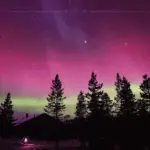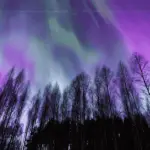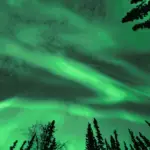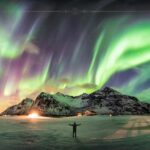
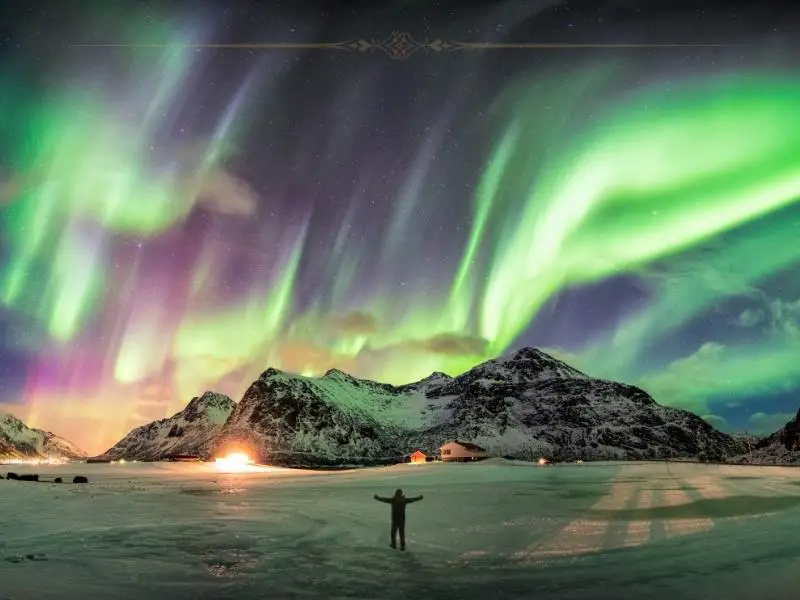
A celestial treat awaits skygazers this month as another spectacular aurora display is set to paint the night canvas, offering a rare second chance to witness one of nature’s most mesmerizing phenomena in November.
Unlike the dramatic geomagnetic storm that kicked off November, this week’s aurora display presents a more subtle but equally enchanting show. The display began on November 18, and will last until November 21st.
Location, Location, Location
For this celestial performance, front-row seats are available across several northern U.S. states. The prime viewing territories include:
- Alaska (offering the most spectacular views)
- Northern regions of Montana
- Upper portions of North Dakota
- Northern Minnesota
Residents in Washington, Idaho, Wisconsin, and Michigan might also catch glimpses of this ethereal light show, though views may be more limited.
This month’s second aurora event differs from its predecessor in that it’s not driven by a geomagnetic storm. Operating at a Kp index of 3 on NOAA’s scale (which ranges from 0 to 9), the display promises to be subtle yet captivating. While not as intense as storm-driven auroras, these displays often offer more delicate color variations that create their own unique charm.
Tips for Perfect Aurora Viewing
The ingredients for successful aurora viewing are surprisingly simple:
Timing Your Watch
- Best viewing times occur just after sunset or before sunrise
- Complete darkness is essential
- The recent passing of the November 15 full moon works in viewers’ favor, offering darker skies
Distance and Visibility
Even if you’re not directly under the aurora, don’t lose hope. These celestial lights can be visible from up to 1,000 kilometers away when conditions align perfectly. The key is finding a location with minimal light pollution and clear skies.
Capturing the Magic: Photography Tips
Modern technology has made aurora photography more accessible than ever. Here’s how to capture the moment:
Smartphone Photography
- Activate your phone’s Night Mode feature
- Avoid using flash
- Lock focus to infinity for sharper images
Advanced Tips
- Consider using a tripod for stability
- Explore specialized apps like Northern Lights Photo Taker or NightCap Camera
- For Android users, ProCam X Lite offers excellent night photography capabilities
- iOS users might find Slow Shutter or ProCamera particularly useful
Weather Considerations
While the aurora forecast looks promising, weather conditions play a crucial role in visibility. Key factors include:
- Cloud cover
- Fog presence
- Ambient light levels
- Local weather patterns
While this November’s double feature of northern lights is unusual, it represents part of a broader pattern of increased solar activity. As we move through the solar cycle, such displays might become more frequent, offering more opportunities for viewers to witness this spectacular phenomenon.
The key to successful aurora viewing lies in preparation and patience. While the display may not match the intensity of a major geomagnetic storm, this more subtle show offers its own rewards, particularly for photographers who can capture details the naked eye might miss.
For those lucky enough to be in the viewing zone, this second chance at catching the northern lights this month offers a rare opportunity to witness one of nature’s most captivating displays. Remember to check NOAA’s aurora forecast regularly for real-time updates and adjust your viewing plans accordingly.