
The Nubian villages in Aswan are a hidden gem within Egypt, that offer an escape from the hassle of Cairo and bring a cheery, more relaxed time to your trip.
Egypt is vast in land, and rich in history, dating back thousands of years. So it is no surprise that walking through the Hypostyle Hall in the beautiful Karnak Temple in Luxor, or strolling around the pyramids of Giza are top of many visitors’ bucket lists.
However, if you head south down the Nile, you will find a cultural treasure trove in the Nubian villages of Aswan. The Nubian culture engulfs large sections of the southern city, as the locals try and keep their traditions loud and proud.
After temple hopping in Luxor, it was a lovely surprise when I arrived in Aswan and noticed the bright colours and the much more relaxed atmosphere of the city.
This blog will detail what you can expect when visiting a Nubian Village in Aswan, and how to make the most of your visit, based on my own experience.
A Brief History of Nubia and Its Culture

Nubians have roamed the African lands for thousands of years, dating back to 2000 BCE, making it one of the oldest civilisations in the world.
The Nubia region spanned from Aswan in Southern Egypt to Khartoum in Sudan, with it being split into Upper Nubia and Lower Nubia. As with Egyptians, most of the Nubian population lived in close proximity to the River Nile.
Over the millennia, Ancient Egypt had a strong influence over Nubia, which is shown by some of the Egyptian Pharaohs descending from Nubia Origin, especially during the ‘Kushite’ periods.
The long term impact of Ancient Egypt has seen a reduction in the number of original Nubians as traditions integrated with each other, and even the religion of the locals changed over time.
The Nubian people changed from Christianity to Islam, gradually.
As of today, the Nubians of Aswan still display their cultural traditions loud and proud, which contributes towards Aswan becoming a destination of choice for many visitors seeking an authentic experience.
As I explored Aswan and its islands I noticed some differences from the rest of Egypt:

- Colourful murals and decorations.
- Children riding camels unsupervised.
- Strong smells of spices and incense.
- Expect to be offered local tea and be invited for dinner in someone’s house.
- Singing and dancing.
- Crocodiles.
Aswan – Egypt’s Southern Wonder

Aswan is a beautiful city in Southern Egypt which is located on the banks of the Nile. Many of its famous sights are located on different islands across the river, therefore, taking a cruise on the Nile is a mustduring your trip.
You can reach Aswan in a variety of ways via road, train or in the air, depending on the length and order of your Egypt itinerary. I found the Ernst Watania train to be a very reasonable and comfortable option, although it is not very quick!
The city vibe in Aswan is somewhat different to Luxor and Cairo, as it offers a more chilled ambience, especially on Elephantine Island, which is home to many Nubian families, therefore, a great option to stay on overnight. There are different Nubian villages to visit depending on your plans, however the most popular one is the ‘Gharb Seheyl’ Village.
The Gharb Seheyl Village
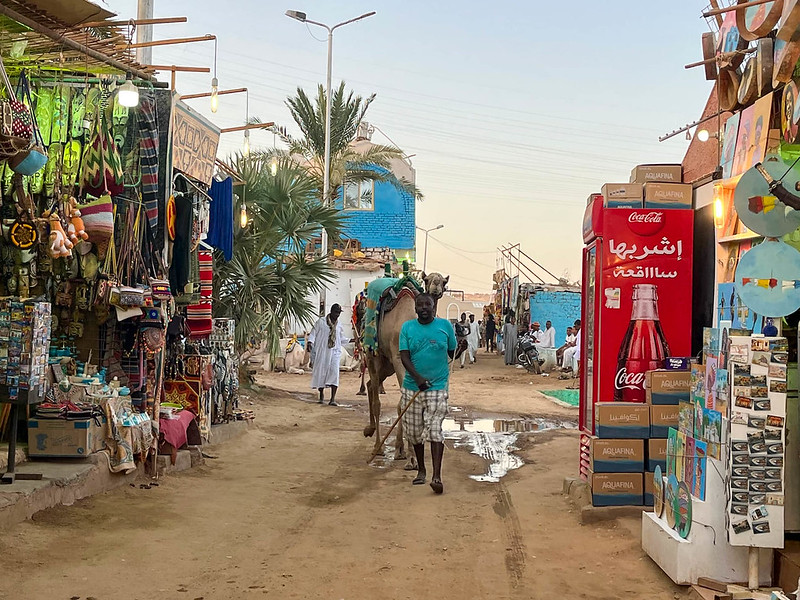
Gharb Seheyl Village is the most popular choice for tourists wanting to witness the rustic way of life for the Nubians people.
A famous feature of the village are the visually absorbing mud brick homes, which are constructed from a mixture of clay, water, sand and hay. They are then decorated with bright colours and murals.
Aswan reaches inhumane temperatures in the summer, so the locals have traditionally built domed ceilings to distribute heat from the sun’s rays evenly throughout the homes.
I vividly remember my first impressions of the Gharb Seheyl Village were the strong aromas of spices and incense circulating the small dock I got off the motorboat.
As I made my way up into the village, I arrived straight into a bustling market, which had stalls either side of the walkway. This was made even more fun by the flock of camels walking straight through the middle, taking over the space. I didn’t get bored of seeing the elegant animals wandering around during the time I spent in the village, and I even saw children riding them with no supervision.
Not what I expected to see!
How to Get to the Village

Gharb Seheyl Village is located around 30 minutes away from the main areas of Aswan and Elephantine Island.
There are two main ways to reach the village: by taxi-boat, or a car taxi.
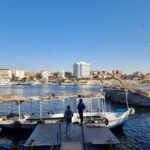
If you choose the ferry option, you are in for a treat as you proceed along the Nile past various famous sights and beautiful nature. A young local named ‘Feroukh’ was my driver and he waited around at the boat entrance until I was finished exploring the village. This cost around 400 EGP (£10), which was reasonable with him waiting etc. I did tip him some extra as he was a cheery lad.
Although you will spot some of the famous feluccas at the start of the journey, they struggle with the currents upstream in the Nile, therefore aren’t suitable. By motor boat, it took me around 35 minutes on the way to the village and 25 minutes on the way back. On the return journey it was dark so many of the motor boats were lit up with bright colours. This was awesome.
The other transport option is to hire a car taxi driver in Aswan. Another time I stopped a taxi driver and negotiated a fare of 200 EGP (£5) to go to the Nubian village, which included a two hour waiting time. I paid him on the way back, to make sure that he waits for me. There aren’t many options to come back from Aswan, besides the boat, so don’t take a taxi only one way.
The Colours of a Nubian Village in Aswan

The atmosphere of the village screams positivity, with smiling locals and as much colour as you can imagine!
The interior and exterior of the homes are a multitude of colours, along with quirky art murals displayed on the many walls. I even noticed a school which was decorated with smiling local children. This was a beautiful touch to a stunning village.
I didn’t get bored of taking some quirky photos of the Nubian creativity.
It is hard to believe the poor conditions that the locals have to live in when you interact with them – certainly an eye opener!
Another colourful characteristic of the village are the geometric triangular patterns which are displayed everywhere in the village. They are said to represent the earth, sun, sky and Nile, all important life sources for the locals.
The Warm Welcome Into a Nubian Home

After wandering up and down the lively areas of the Village I was invited into one of the Nubian homes to experience the local traditions.
I enjoyed local tea with the ladies who lived in the home, which was followed by some singing and dancing.
The atmosphere was building gradually as we sat and enjoyed our drinks, before some local men came into the main room with some drums and started a beat going. We all joined in clapping, as the energy intensified. They then proceeded to sing and invite everyone up to the main area to dance along. Everyone was enjoying themselves for around 10 minutes before the show came to an end and the tip jars came out.
It was well worth a tip though as it was a very unexpected joyful experience.
The comradery which occurred in the home was an awesome way of interacting with locals and the other International tourists – ideal for a solo adventure in Egypt.

Another beautiful experience I had whilst visiting another Nubian village in Aswan, was being invited by a local into his home. I had arrived by taxi to the village, and the driver was waiting for me. The owner of my hostel told me about the great food the Nubian people make, but until that moment, I had troubles finding a free table at one of the two restaurants in town. So, when the owner of the house asked me if I wanted to join for dinner, I happily said yes. His wife welcomed me with a cold cup of hibiscus tea, whilst the man showed me up to the rooftop of the house.
Soon, the food cooked by his wife started to arrive: a steaming bowl of molokhia, one of the most traditional Egyptian dishes, half a roast chicken, macaroni in a spicy tomato sauce, a pea stew, a fragrant green salad, accompanied by flatbreads. More tea arrived as well. As I enjoyed my dinner alongside the house owners, I listened to their beautiful stories as the sun was preparing to set.
The Crocodile Culture of the Village

Another unique thing that you will notice as you wander around the village and into some homes, is the locals’ love for crocodiles.
The Nubians have kept the reptiles as pets for thousands of years, as they have seeked protection from survival threats. They worshiped and mummified them back in ancient times, however, in today’s world this habit is more to attract tourists to the village rather than for religious purposes.
I saw crocodile themed homes, street murals and themed menus inside the Nubian homes I entered.
Along With Actual Crocodiles!

Unfortunately, this is an aspect of Nubian culture which I do not agree with. I witnessed giant crocodiles kept in small cages inside some homes, just for tourists’ entertainment. I feel that any local cultural traditions have been lost in trying to maximise revenue off the visitors to the village. There were signs up for ‘selfies’ with the crocodiles for cash etc. My memory is still vivid about how unhappy the reptiles looked.
Shopping in the Local Market
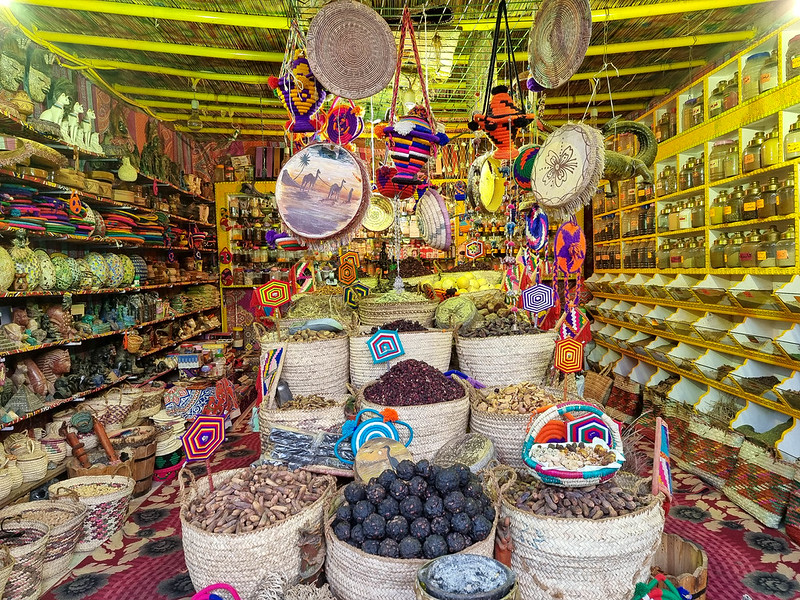
Market stalls line the maze of streets when you first enter the village via the boat taxi entrance.
You will find a vast range of local souvenirs, such as jewellery, Nubian style masks which are made out of wood and ivory, and an array of local spices.
I had many fun interactions with the market traders, bartering for my souvenirs and some refreshments. It felt a lot more laid back than the markets in Luxor or Cairo. I bought some tea from one of the vendors in the market who, when finding out that I’m going to Abu Simbel the following day, packed me a bag of nuts as well, so I don’t get hungry on the way there.
Staying in a Nubian Guest House
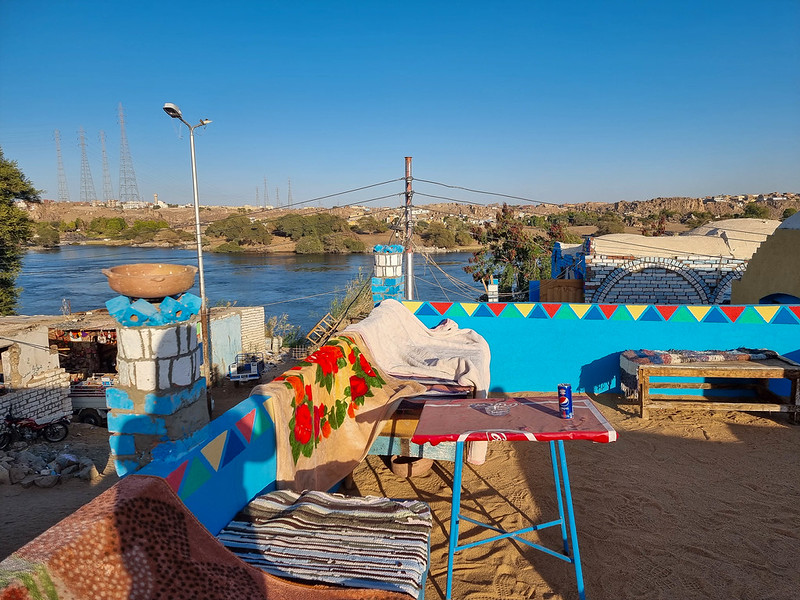
Elephantine Island is a great location to book your accommodation in Aswan. The island is home to several Nubian Guest Houses which offer an authentic experience with the locals.
I would recommend the Bob Marley Guest House as the owners and staff are lovely and the stay was very comfortable. I enjoyed a local chicken dish (Nubian style) in the Guest House restaurant which is up on a terrace overlooking the River Nile.
You have to catch a ferry ride across to the Island from the mainland, however, it is only 5EGP per way, and they run constantly. This is a minor inconvenience to enjoy the Nubian way of life, which is a lot more peaceful than the other areas of Egypt I travelled.
Other notable Nubian Guest Houses include Mango Guest House, Nubian Lotus, and Nubian Dreams.
Visiting the Nubian Museum
There is no doubt that after visiting the Nubian Village, your intrigue levels will be substantially heightened. The local way of life is interesting to say the least.
I enjoyed a trip to the Nubian Museum on the mainland in Aswan to deepen my knowledge of the locals – this rounded off the cultural side of the city very well.
The museum is immaculate and is a gateway to the history of Nubia!
I found the plaques to be informative as they are displayed in English and Arabic and ordered in chronological order, following the notable events throughout the turbulent history of Nubia.
Nubian Museum Opening times: 9 A.M – 1 P.M and then from 4 P.M – 9 P.M.
Nubian Museum Entrance cost: 140 EGP (£3.50).
Concluding Thoughts on Visiting A Nubian Village in Aswan

Visiting a Nubian Village is a must if you want to experience a different perspective on Egypt down in Aswan.
Finding out about the different cultures from ancient times helped me to understand Egypt better. My time in Aswan felt like a world away from Luxor and Cairo, which ended my trip with some very thought provoking experiences with the cheery Nubians, who displayed beautiful levels of gratitude and joy, despite living in a challenging environment.
It is time to head down the Nile and explore the Nubian way of life yourself!
For more similar articles, check out my recommendations below:
- How to spend two days in Luxor
- How to spend two days in Cairo
- Pack to pack for Egypt in a carry-on
- 10 days in Egypt itinerary
Like it? Pin it!

Disclaimer: Some of the links on this website are “affiliate links.” This means that if you click on the link and do a purchase, I will receive an affiliate commission at no extra cost for you. This helps me keep my website running and continue to share my travelling knowledge with you. I thank you for booking your flights or hotels using the links on my website. Regardless, I only recommend products or services I use personally and believe will add value to my readers.
Wow I’ve never heard of the Nubian Villages but these all look so beautiful! I’d absolutely love to visit here when I go to Egypt, a must see by the looks of it, can’t wait to see all of those colourful buildings in person and try the local food!
Amazing, this part of the world is somewhere I’ve never been before so I truly appreciated all of your photos and insight. Thank you for sharing -it’s been a fantastic read, especially about the little quirks, like their love for crocodiles. The bright patterns, colours and textures of the town are just incredible.
Hi Joanna I loved reading this article! Nubia has long been on my bucket list for its reputation as having kind and generous villages and people. Your post gets me even closer to making the trip a reality
This is a great post, and I love the great colours of the houses! I was always wondering what visiting a Nubian village would be like! I visited Aswan but didn’t have enough time for a Nubian Village visit… it was a rather unplanned getting off the plane in a panic on my way back from Abu Simbel, so I just went to Philae Temple. Next time I will definitely take the train again.
What an interesting area to explore. I traveled to Aswan years ago and visited the Nubian museum, but I think I missed a lot by not visiting a Nubian village!