
Sweden’s tourism board has launched an unusual travel opportunity that is part vacation offer, part psychological experiment, and part public health initiative. The Stay Quiet experience invites selected travelers to spend three nights in a secluded beachfront cabin in the Skåne region of southern Sweden, completely free of charge, with one notable restriction: they must keep noise levels low enough that a sound monitor never exceeds forty-five decibels, or their stay will be terminated and they will be asked to leave.
The offer is genuine and the stakes are real. Selected participants receive free accommodation, curated meals, guided activities, and transportation to and from Skåne. The only cost is maintaining an atmosphere of quiet that most people accustomed to modern life find genuinely challenging to sustain. The first Stay Quiet experience launched in 2025 and attracted applications from more than two hundred couples worldwide. The success of that inaugural program prompted the organizers to expand the experience, and it is now returning with a new location on the Swedish coast.
For travelers accustomed to constant noise from traffic, neighbors, work environments, and electronic devices, the Stay Quiet challenge represents something genuinely different from typical vacation experiences. The vacation is not about relaxation achieved through luxury amenities or active recreation. It is about experiencing what happens when external noise is removed and when digital distractions are eliminated. For some travelers, the prospect is appealing. For others, the restrictions seem impossibly difficult.
Why Quiet Has Become a Luxury Good
The Stay Quiet experience exists because noise pollution has become recognized as a genuine public health crisis. Prolonged exposure to noise pollution has been linked to increased stress levels, poorer sleep quality, elevated blood pressure, and other health consequences. In modern urban environments, noise is nearly constant. Traffic noise, construction, neighbors, sirens, machinery, and electronic notifications create an acoustic environment that is fundamentally different from what humans experienced for most of evolutionary history.
The recognition that quiet is increasingly rare and increasingly valuable has created a market for silence. People are willing to pay substantial amounts to stay in quiet locations, to attend silent retreats, and to experience environments without constant noise stimulation. The Stay Quiet program takes this concept further by not just offering quiet but by making the maintenance of quiet an active requirement and a central part of the experience.
The health benefits of quiet and of disconnection from constant noise are well-documented. Sleep quality improves when external noise decreases. Stress levels decline in quiet environments. Cognitive function improves when people are not constantly processing background noise. The human nervous system, when freed from the constant processing of environmental noise and digital stimulation, can finally relax into a state that modern life rarely permits.
The Stay Quiet organizers have created an experience specifically designed to deliver these benefits by enforcing quiet and by eliminating digital distractions. Participants are asked to put away phones and other devices for the duration of their stay. The sound monitor tracks noise levels inside the cabin continuously. These restrictions are not punitive. They are the structure that makes the quiet experience possible.
Noise Threshold and How It Works
The forty-five decibel threshold that participants must stay below might sound like a strange and arbitrary number until it is understood in context. Forty-five decibels is roughly equivalent to the sound level of a quiet library or a soft conversation conducted at normal speaking distance. It is not complete silence, which would be virtually zero decibels and would be impossible to maintain in any lived environment. Forty-five decibels is quiet enough to be restful and quiet enough to allow sleep and concentration, but it is not the absence of all sound.
In practice, living within the forty-five decibel limit means speaking softly when you do speak. It means avoiding playing music, watching videos with sound, or listening to podcasts. It means not shouting, not slamming doors, and not engaging in activities that produce significant noise. Normal conversation at library-level volume is acceptable. Loud laughter is not. Animated discussion is not. The challenge is not to maintain complete silence but to consciously moderate noise production and to be aware of the acoustic environment.
A sound monitor measures overall noise levels inside the cabin continuously. The monitor records only decibel levels, not conversations or audio content. This distinction is important because it means that while participants are being monitored for volume, the content of their conversations remains private. The sound monitor functions mechanically, registering sound energy without any ability to understand speech or to distinguish between different types of sounds. A loud laugh, a dropped pan, a shouted exclamation, or amplified music all register the same way: as decibel measurements exceeding the acceptable threshold.
If the sound level exceeds the limit consistently over time, participants receive a friendly notification reminding them to lower the volume. The notification is not immediate or automatic. A single loud noise, a sneeze, or a momentary increase in volume does not trigger immediate consequences. The system is designed to measure patterns of behavior rather than to penalize isolated incidents. If the volume continues to exceed the limit after notification, participants are informed that their Stay Quiet experience is ending and they are asked to leave the cabin the following morning.
The Complete Package: What Participants Actually Receive
The free three-night stay includes far more than simply access to a cabin. Participants receive all transportation costs to and from Skåne covered. They receive accommodation in a private cabin designed specifically for the Stay Quiet experience. They receive a curated program of activities designed to help them embrace stillness and presence. They receive meals selected to complement the quiet experience. They receive guidance from local people who help shape how the experience unfolds.
The program itself is designed around the concept of experiencing Skåne through quietude, nature, and presence. Activities might include guided nature walks where participants move through landscapes without conversation, allowing the sounds of wind, waves, and birdsong to dominate the acoustic environment. Activities might include meditation or mindfulness sessions. Activities might include time spent simply sitting and observing the natural environment without the pressure of constant stimulation or engagement.
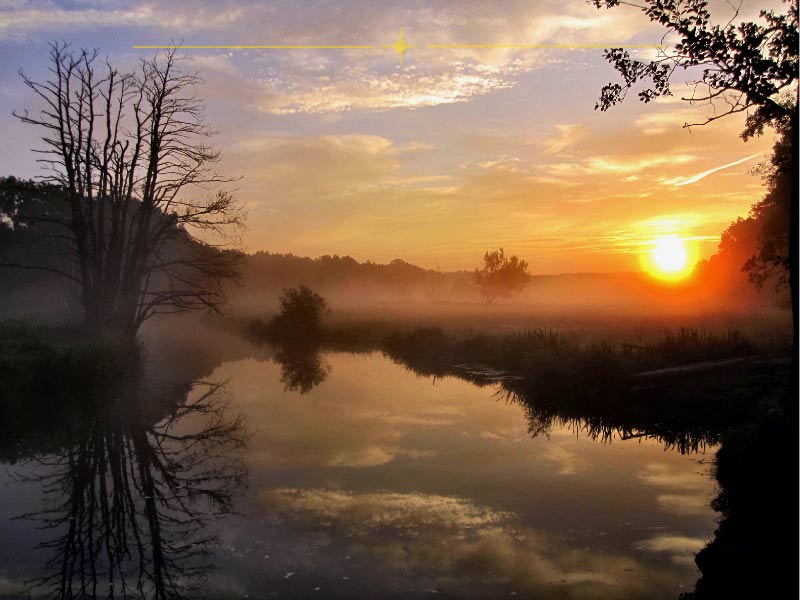
The cabin itself is positioned on apple orchards with views of the sea, surrounded by natural landscape rather than urban development. The location itself is chosen to provide acoustic environment dominated by natural sounds. The cabin is equipped with the sound monitor that continuously measures noise levels, but otherwise contains no recording devices or cameras inside the private space where participants live.
The most radical aspect of the experience is the elimination of digital devices. Participants are asked to put away phones, tablets, laptops, and any other electronic devices capable of producing notifications or content stimulation. An emergency phone is always available if needed, and the Stay Quiet team can be reached if there are genuine emergencies. But the elimination of constant digital connectivity is essential to the experience. Without the pull of notifications, the constant urge to check messages and social media, and the stream of content, participants are freed to experience something most modern people rarely encounter: extended time without digital stimulation.
Who Can Apply and What the Selection Process Looks Like
Applicants must apply in pairs. Friends, partners, siblings, or family members can apply together, but single applications are not accepted. The experience is designed as a shared journey where two people navigate the quiet challenge together. Applicants must be at least eighteen years old and must be available for the late September to early October timeframe when the experience occurs.
Applicants are required to demonstrate genuine curiosity about experiencing quiet and to show that they are prepared to embrace a slower pace of life. The application process involves creating a short video explaining who the applicants are, where they live, and why they need the Stay Quiet challenge. The video is submitted through Instagram direct message to the Visit Skåne official account. Applications close on September 6th at 8 PM Central European Summer Time.
Selection is based on motivation, availability, and how well applicants fit the spirit of the experience. Organizers are looking for people genuinely interested in experiencing quiet, not for people seeking a free vacation as a novelty or for social media content. Applicants must be comfortable spending several days with minimal conversation. Applicants must be willing to put away digital devices. Applicants must be comfortable with light physical activities such as hiking and biking. Applicants must speak English fluently since the experience is conducted in English.
The selection process prioritizes genuine motivation over other factors. The organizers recognize that this experience is not for everyone, and they deliberately select participants who are likely to benefit from the quiet and who are likely to embrace rather than resist the restrictions.
The Documentation and the Trade-Off
Participants must agree that portions of the experience will be documented for marketing and storytelling purposes by Visit Skåne. Photography and video recording will occur, though participants will have periods where they can experience the stay without cameras present. Interviews about the experience will be conducted in English before and after the stay. Participants are essentially giving permission for their experience to become part of the marketing and storytelling around the Stay Quiet program.
This documentation requirement represents a trade-off that participants must accept in exchange for the free experience. The organizers are not simply offering free vacations out of generosity. They are creating content that will help publicize the Stay Quiet program and encourage future participation. The documentation helps tell the story of what happens when people experience quiet, and the interviews capture the before-and-after perspective of how the experience affects participants.
For participants, the documentary aspect means they are contributing to the larger Stay Quiet mission of raising awareness about noise pollution and the benefits of quiet. They are also creating a record of their personal experience that they will possess and that can be shared with family and friends.
The Realities of Maintaining Quiet
For most people, maintaining forty-five decibels of noise for three days is genuinely challenging. Modern life has conditioned people to speak at levels well above library volume. Laughter, excitement, and animated conversation typically produce sound levels significantly above forty-five decibels. People accustomed to having background music, podcasts, or television constantly available must adjust to silence. People accustomed to receiving notifications constantly must adjust to electronic silence.
The challenge intensifies when two people are sharing a small space and trying to maintain quiet together. Coordinating activities, discussing what to do, resolving minor disagreements, or simply engaging in the kind of casual conversation that characterizes normal cohabitation all require conscious moderation of volume. The pairs selected for the program are likely to include people with existing communication patterns and compatibility. Couples who are already comfortable with quiet time together, friends who know how to coexist peacefully, or siblings with established ways of sharing space are more likely to succeed.
The program acknowledges this challenge by building structure into the experience. Guided activities provide framework for how time is spent. The curated program of quiet experiences gives participants things to do beyond simply sitting in silence. Local guides help shape the experience and provide companionship and guidance. The meals are prepared and provided rather than requiring participants to cook, which would generate significant noise.
Why This Matters Beyond the Individual Experience
The Stay Quiet program is part of a larger cultural shift toward recognizing quiet as a valuable commodity and toward creating spaces and experiences where quiet can be experienced and valued. The program raises awareness about noise pollution as a public health issue. It demonstrates that people are willing to undertake genuine challenges to access quiet. It documents what happens when people experience extended periods without noise and digital stimulation.
The marketing around the program and the documentation of participant experiences will be shared widely to promote future iterations of Stay Quiet and to raise broader awareness about noise pollution and the importance of quiet in human wellbeing. By making this experience visible and by allowing people to see how others respond to the quiet challenge, the program contributes to a cultural conversation about how modern life has created constant noise and constant stimulation, and about what might be gained by choosing quiet.
For travelers considering applying, the Stay Quiet experience represents an opportunity to participate in something genuinely unique and to benefit from a well-designed intervention specifically created to deliver health benefits through the provision of quiet and the elimination of digital distraction. The restrictions are real, but so are the potential benefits of three days spent in genuine quiet with another person and with the natural environment.