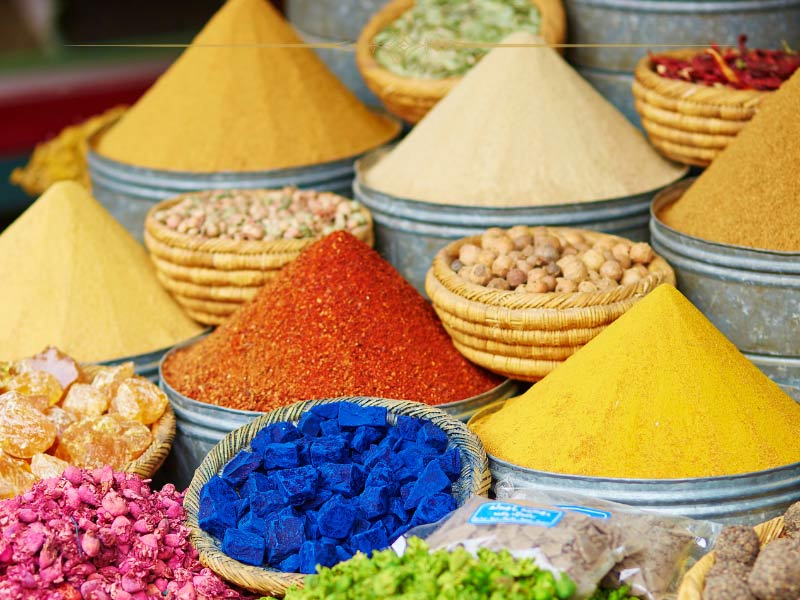
The first time I wandered into the spice souk in Marrakech, I was completely overwhelmed by the explosion of colours and aromas. Stalls were stacked high with pyramids of saffron, turmeric, paprika, and blends I couldn’t even recognise. The scent of cumin hung in the air, while vendors invited me to try mysterious powders they claimed would cure everything from a cold to a broken heart. On my first visit to Marrakech I was suffering from a nasty cold and, during a food tour, the guide took me into one of the shops in the souk, where the vendor made me a little pouch for “breathing”. He mixed nigella seeds with peppermint crystals, which, when inhaled, could open even the most congested blocked nose.
For a foodie like me, the souks in Marrakech are a fun playground, a maze where the end reward is a new flavour.
Whilst my Moroccan friends tell me that the Moroccan food has no spice, I always disagree. Sure, it’s not spicy, but the flavour is given by the amalgam of aromatic spices that are so typical to the Moroccan cuisine. Spices are at the heart of Moroccan cuisine, and shopping for them in Marrakech is an adventure in itself. This guide to Moroccan spices is based on my own experience exploring the souks, tasting, haggling, and learning which ones are truly worth taking home. If you’re wondering about the best spices to buy in Marrakech, here’s everything you need to know.
Why Moroccan Spices Are So Special

Morocco’s history as a crossroads of trade between Africa, the Middle East, and Europe means its cuisine is infused with flavours from all directions. Spices are part of the culture and tradition. Imagine a tagine without Ras el Hanout! Unimaginable!
Walking through the markets in Marrakech, you’ll see mounds of vibrant powders in every shade of red, orange, and yellow. Sellers will encourage you to smell, touch, and even taste before buying. Some of the spices are familiar, others completely unique to Morocco. And that’s what makes shopping here so exciting.
The Best Spices to Buy in Marrakech

Here are the spices I found most essential to bring home, not only because they’re delicious, but also because they carry the taste of Morocco in every pinch. I am one of those people who bring home edible souveniers rather than objects hat will end up in a box, stored in the garage, never to see the light of day again.
1. Saffron
If you ask locals about the best spices to buy in Marrakech, saffron will always be at the top of the list. Known as “red gold,” it’s one of the most expensive spices in the world, and for good reason. Each delicate thread is actually the stigma of a crocus flower, harvested by hand. It takes thousands of flowers to produce just a few grams, which is why saffron is sold in tiny jars and treasured across Morocco.
The most famous Moroccan saffron comes from Taliouine, a town in the Atlas Mountains that produces some of the world’s highest-quality saffron. Vendors in Marrakech will often proudly tell you if their saffron is from there, and you’ll notice the difference immediately: the threads are deep crimson, with a subtle honey-like aroma that becomes stronger when steeped in warm water.
When I first bought saffron in Marrakech, the seller invited me to rub a single thread between my fingers. The colour was so intense it stained my skin, and the smell was rich, earthy, and slightly floral. Back home, I used it to make a chicken and lemon tagine, and just a few strands transformed the dish, giving it a beautiful golden hue and delicate flavour that took me straight back to the souks.
Tip: Be cautious when buying saffron in Marrakech. Some vendors try to pass off dyed corn silk or turmeric as saffron. Real saffron is sold as threads (never as powder) and should not crumble too easily. If possible, buy from spice shops with a good reputation, or ask your Riad owner for a recommendation.
Saffron may cost more than other spices, but if you want to bring home one truly authentic taste of Morocco, this is the one to choose.
2. Ras el Hanout

If saffron is Morocco’s most luxurious spice, then Ras el Hanout is its most versatile. The name literally translates to “the head of the shop,” which means it’s the best mix a spice merchant can offer. No two blends are ever the same; some may have 10 spices, others more than 40. Every stall in the souk has its own “secret recipe,” passed down through generations, and merchants will proudly tell you that theirs is unique.
Walking through the spice market in Marrakech, I must have been offered at least half a dozen different samples of Ras el Hanout. Some were deep and earthy, with notes of cumin and nutmeg, while others had a sharper kick with chilli and ginger. One vendor scooped a bit onto the palm of my hand and encouraged me to taste it. The blend was warm, aromatic, and complex, with so many layers that it was impossible to identify every spice. That’s exactly what makes Ras el Hanout so special: it’s a flavour of Morocco you simply can’t recreate anywhere else.
Traditionally, Ras el Hanout can include spices like cinnamon, cardamom, cloves, nutmeg, turmeric, paprika, ginger, and dried rose petals. Some blends even incorporate exotic additions like grains of paradise or dried lavender. In Moroccan cooking, it’s used in everything from tagines and couscous to marinades and rubs. My favourite way to use it is in a slow-cooked lamb tagine with apricots. The Ras el Hanout gives the dish a deep, aromatic base that balances the sweetness of the fruit.
Tips for buying Ras el Hanout in Marrakech:
- Don’t just buy the prettiest pyramid of spices you see but ask to smell and taste the blend. The fresher it is, the stronger the aroma. The best places will grind it for you fresh.
- Be prepared for price differences: a basic blend will be cheap, while a premium one with more spices will cost more.
- Buy smaller amounts unless you cook Moroccan food regularly, as the blend loses its punch over time.
Of all the spices I brought back from Marrakech, Ras el Hanout was the one I reached for most often in my kitchen. Usually, Ras el Hanout costs more than other spices because it’s a blend rather than just one spice. If a small bag of spices costs 20 dirhams, expect to pay double for the same amount of Ras el Hanout.
3. Cumin
If there is one spice that defines Moroccan cooking, it’s cumin. In Marrakech, you’ll even find little pots of cumin on restaurant tables, sitting right next to the salt and pepper. It’s considered essential, not just for flavour, but also for its digestive properties. Cumin is essential when enjoying the roast lamb from the Mechoui Alley. You dip the meat in salt, then cumin, before eating the juicy, tender, meat.
The cumin I bought in Marrakech was unlike the ground spice I’d used at home. It had a much stronger, earthier scent, almost smoky, and when I sprinkled it over a simple lentil soup, the difference was incredible. I also loved it sprinkled on grilled lamb skewers, exactly the way I had them in small stalls in the medina.
Tip: Cumin is sold both whole and ground. Whole seeds last longer and retain more flavour, but ground cumin is more convenient for everyday cooking. If you buy ground cumin, store it in an airtight bag to keep it fresh.
Cumin may be inexpensive compared to saffron or Ras el Hanout, but it’s one of the most authentic souvenirs you can bring home from Marrakech, one you’ll definitely use.
4. Cinnamon

Sweet, warm, and fragrant, Moroccan cinnamon is used in both savoury and sweet dishes. One of the most unforgettable meals I had in Morocco was pastilla, a flaky pastry pie stuffed with pigeon, almonds, and spices, then dusted with cinnamon and icing sugar. It sounds unusual, but the combination of savoury and sweet was pure magic.
I bought bundles of cinnamon sticks wrapped in brown paper from a shop near Place des Épices. The aroma was incredible, much richer and more complex than the supermarket cinnamon I was used to. At home, I drop a stick into mint tea or simmer it in rice pudding, and instantly the kitchen fills with the scent of Marrakech.
Tip: Choose cinnamon sticks rather than powder if you want the freshest flavour. Powder loses strength quickly, while sticks can be reused a couple of times by rinsing and drying.
5. Turmeric

You’ll spot turmeric in Marrakech from a distance as its golden yellow powder forms bright mounds on spice stalls, almost glowing in the sunlight. In Morocco, turmeric is used not only for cooking but also for its medicinal and dyeing properties. Locals told me it’s considered good for inflammation and digestion.
When I bought turmeric, the seller scooped it with a flat piece of cardboard into a bag, the powder staining his fingertips bright yellow. I love using it in tagines and vegetable stews at home, just a pinch adds colour and an earthy flavour.
Tip: Turmeric stains easily, so pack it carefully if you’re bringing it home. Some sellers will vacuum-seal it for you.
6. Paprika

Another staple in Moroccan kitchens is paprika, which comes in sweet, hot, and smoky varieties. It’s often used to season kefta (spiced meatballs), grilled chicken, or vegetable dishes. I bought both sweet and smoky paprika in Marrakech and found that even a small spoonful added depth and warmth to my cooking.
I always buy paprika from everywhere I travel to, because, it’s always different. I have at home quite a few jars, each filled with paprika from a different corner of the world.
Tip: Ask vendors if they have different types of paprika and try a pinch before buying. The flavours vary widely.
7. Ginger
Ground ginger is a staple in Moroccan spice cupboards, used in everything from soups to desserts. It has a sharp, zesty kick that balances rich stews and adds brightness to dishes. I bought a packet from a small stall near the spice square, and the vendor insisted I try a pinch on my tongue; it was fiery and fresh, far stronger than what I was used to at home.
Tip: Moroccan ginger is usually sold ground rather than fresh, but it’s so strong that a little goes a long way.
9. Black Pepper
Black pepper is another staple spice that I buy from spice markets around the world. I am still dreaming of going back to Jordan, to Amman’s market, to buy that fragrant, incredible, black pepper. But as I can’t right now, the second best is the Moroccan black pepper.
It might surprise you, but black pepper is one of the most essential spices in Moroccan cuisine. While it may seem ordinary compared to saffron or Ras el Hanout, the black pepper you find in Marrakech is noticeably fresher and more pungent than what you’ll pick up in a supermarket.
In Morocco, black pepper is often paired with cumin as a table condiment, ready to sprinkle over soups, grilled meats, or even boiled eggs.
When I bought a bag of freshly ground pepper from a spice vendor, he told me it had just been milled that morning.
Tip: Always ask for freshly ground black pepper, or better yet, buy whole peppercorns. They last much longer and release their full flavour when ground at home.
Black pepper might not be as exotic as saffron or Ras el Hanout, but it’s a spice you’ll use almost every day and in Marrakech, you’ll find some of the best quality at unbeatable prices.
10. Other Spices Worth Trying

Beyond the famous staples like saffron, cumin, and Ras el Hanout, Marrakech is full of lesser-known spice treasures that you won’t often find outside Morocco. Exploring the souks, I came across blends and single spices that locals use in everyday dishes, and bringing them home gave me the chance to recreate authentic meals in my own kitchen.
Rfissa Spice Mix
One of the most intriguing blends I discovered was the Rfissa spice mix, used for the traditional Moroccan dish Rfissa, a comforting stew of chicken, lentils, and fenugreek, served over shredded msemen or trid pancakes. The mix usually includes fenugreek, turmeric, ginger, and ras el hanout, creating a warm, slightly bitter flavour that makes the dish so unique. When I bought a small bag from a spice seller, he explained that Rfissa is often made for family gatherings and even for new mothers, as the spices are believed to aid recovery. Cooking it at home was like having a little piece of Moroccan tradition in my kitchen.
Mechoui Spice Blend
Another must-try is the Mechoui spice blend, used for Morocco’s famous slow-roasted lamb. I first tasted mechoui in Marrakech at a tiny restaurant where the lamb had been cooked for hours until it melted off the bone. The blend usually contains cumin, paprika, coriander, garlic, and sometimes saffron, rubbed generously over the meat before roasting. I bought a packet to take home, and it instantly transformed my Sunday roast lamb into something that tasted like it belonged in a Moroccan souk.
Aniseed
Aniseed adds a gentle sweetness and a hint of liquorice to Moroccan breads, pastries, and even tea. I loved how bakers sprinkled it into small, chewy breads sold fresh in the medina. At home, I use it in baking, and the flavour always reminds me of wandering past Marrakech bakeries where the scent of warm aniseed bread drifted through the streets.
Fenugreek
Fenugreek is another spice with a strong presence in Moroccan kitchens. It has a slightly bitter, nutty flavour and is often used in stews or spice blends like Rfissa. Locals also value it for its health benefits – several sellers told me it’s good for digestion and strength.
Herbal Blends

Finally, don’t miss the chance to try herbal mixes. I stumbled upon a few combinations of dried mint, thyme, and oregano that sellers claimed were perfect for teas or sprinkling over salads. These little discoveries are often inexpensive, but they add an authentic Moroccan touch to everyday meals.
Tip: These “other” spices and blends often come in unlabelled bags, so it’s worth asking the vendor to write down the name for you. That way, when you get home, you’ll remember exactly how to use them.
Where to Buy Spices in Marrakech

The best place to buy spices is the souk itself. Souk el Attarine in the Medina is famous for its spice stalls, where pyramids of powdered colour rise high above the baskets. Don’t be afraid to wander, compare prices, and talk to the sellers.
I also recommend looking for small, family-run shops rather than tourist-heavy stalls. They’ll usually let you taste and explain how to use each spice. And if you’re not confident haggling, some fixed-price shops exist too, especially near the spice square in Place des Épices.
Tips for Buying and Bringing Spices Home
- Check freshness – good spices should have a strong aroma and vibrant colour.
- Ask for small amounts – spices lose their strength over time, so buy what you’ll actually use.
- Packaging – ask vendors to seal spices in airtight bags; some will even vacuum-pack them for you.
- Beware of fake saffron – real saffron threads are vivid red and slightly sticky; avoid yellow powder claiming to be saffron.
- Customs – check your country’s rules, but generally dried spices are fine to bring home.
Final Words
Walking through the spice souks of Marrakech is an experience you’ll never forget. It’s not just about buying ingredients but also about the colours, the aromas that cling to your clothes, and the little conversations with vendors who are proud to share a piece of their culture with you.
Back home, I still smile every time I open a jar of Ras el Hanout or drop a pinch of saffron into a Moroccan inspired dish. The smell instantly takes me back to those winding lanes of the medina, with their endless rows of spice pyramids glowing in the sunlight.
If you’re planning a trip to Marrakech, don’t rush the spice stalls. Take your time, breathe it all in, taste as much as you can, and pick the blends that speak to you. More than souvenirs, these spices are memories of Marrakech you can bring back to your kitchen every time you cook.
For more similar articles, check out my recommendations below:
- The best restaurants in Marrakech
- How to spend a weekend in Marrakech
- The best street food in Marrakech
- Where to stay in Marrakech
Like it? Pin it!
Disclaimer: Some of the links on this website are “affiliate links.” This means that if you click on the link and do a purchase, I will receive an affiliate commission at no extra cost for you. This helps me keep my website running and continue to share my travelling knowledge with you. I thank you for booking your flights or hotels using the links on my website. Regardless, I only recommend products or services I use personally and believe will add value to my readers.