
Travelers arriving at airport security checkpoints in cities across the United States are encountering a frustrating and unexpected problem. Their carry-on luggage, which they believed was compliant with TSA size regulations and which they have been using for years on previous flights, no longer fits through the new security scanning equipment. The mismatch between the size of modern carry-on luggage and the dimensions of the new scanning technology is creating bottlenecks at security checkpoints, forcing passengers to remove bags from the conveyor belt, repack their belongings, or check bags they had intended to carry on board.
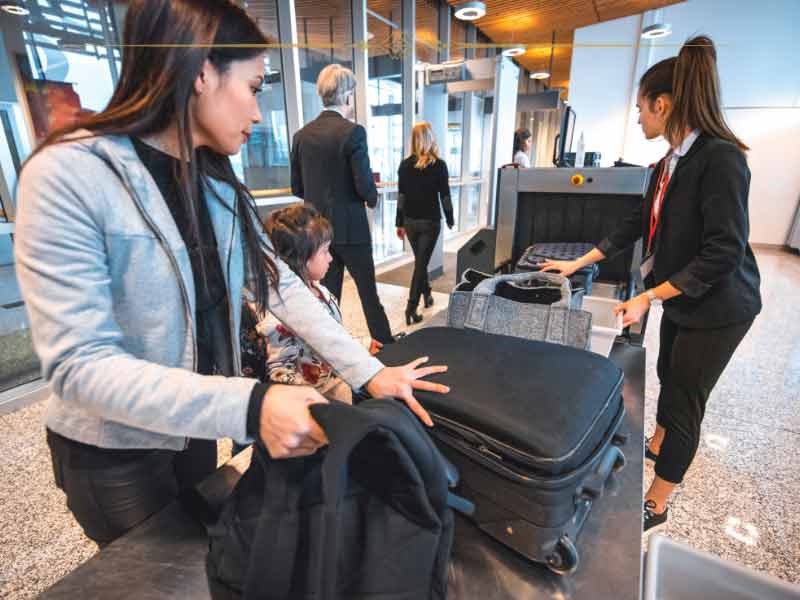
The problem stems from a well-intentioned technology upgrade that the TSA has been gradually rolling out across the country. The new computed tomography scanners, commonly called CT scanners, represent a significant advancement in security screening technology. The scanners produce detailed three-dimensional images that allow security officers to see inside luggage thoroughly without requiring passengers to remove laptops, liquids, or other items. The technology is genuinely more efficient and more convenient from a screening perspective.
However, the physical dimensions of the opening through which bags must pass in the new CT scanners are slightly smaller than the opening dimensions of the older X-ray scanning equipment that the new technology is replacing. The difference in dimensions is measured in fractions of an inch on each side. This seemingly minor difference has created a major practical problem because modern carry-on luggage, particularly expandable bags marketed as maximum-capacity compliant luggage, can be too large to fit through the new scanners when fully packed.
The Old Screening System and Its Limitations
For decades, the TSA has relied on conventional X-ray technology at airport security checkpoints to screen carry-on luggage. The X-ray scanners produce two-dimensional images that allow security officers to see into luggage but that lack the detailed clarity and depth that three-dimensional imaging provides. The limitations of the two-dimensional imaging meant that security officers often could not see completely what was inside a bag, particularly if items were overlapping or if the bag’s contents were densely packed.
To address these limitations, the TSA developed a procedure that required passengers to remove certain items from their carry-on bags and place them in separate bins for screening. Laptops, tablets, large electronics, and liquids in containers larger than one hundred milliliters had to be removed from bags and screened individually. The procedure created inconvenience for passengers, who had to open their bags at the security checkpoint, remove items, place them in bins, and then repack their bags after items had been screened. The procedure also created congestion at security checkpoints because the extra steps required additional time per passenger.
For security officers, the two-dimensional imaging required them to make judgments about what they were seeing based on limited information. If the image was unclear or if items were overlapping, the officer might not be able to determine definitively what was in the bag, which could lead to additional screening, bag searches, or delays as officers attempted to clarify the contents.
The removal requirement was also the source of passenger frustration because it created an extra step that many passengers viewed as unnecessary hassle. Travelers had to remember which items needed to be removed, had to locate those items in their carry-on bags, had to place them in bins, and had to then retrieve them after screening. The process added time to the security screening experience and created delays.
The Advancement to Three-Dimensional Scanning Technology
The TSA developed computed tomography scanning technology to address the limitations of conventional X-ray screening. CT scanners, which are similar to the medical CT scanners used in hospitals, use multiple X-ray beams rotating around an object to create detailed three-dimensional images. The technology allows security officers to see inside luggage from multiple angles and with much greater clarity and detail than two-dimensional X-ray imaging provides.
The three-dimensional imaging capability solved the fundamental problem that motivated the item-removal requirement. Security officers using CT scanners can see clearly what is inside a bag even when items are overlapping or densely packed. The detailed imagery eliminates the need for passengers to remove laptops, liquids, and other items because the scanners can clearly identify what is in the bag regardless of whether items are removed or left in place.
For passengers, the elimination of the item-removal requirement represents genuine convenience. Travelers no longer need to open their bags at the security checkpoint, locate and remove specific items, place them in bins, and then retrieve and repack them after screening. The procedure is faster and less cumbersome for passengers.
For security officers and for airport operations, the technology also provides benefits. The faster screening process reduces congestion at security checkpoints. The ability to screen bags without removing items reduces the time security personnel need to spend with each passenger. The detailed three-dimensional imagery allows security officers to make more informed decisions about bag contents and reduces the need for additional screening or bag searches.
The TSA has been gradually rolling out CT scanners across the country over the past several years and months. The rollout has been deliberate and methodical, with the TSA prioritizing installation at major airports and busy security checkpoints. The rollout is continuing as the TSA works toward installing CT scanners at more airports nationwide.
The Unexpected Consequence and the Dimension Problem
Despite the genuine advantages of the new CT scanning technology, the rollout has created an unanticipated problem related to the physical dimensions of the equipment. The new CT scanners scan bags through a tunnel with an opening measuring twenty-four point five inches wide by sixteen point five inches tall. This opening is approximately zero point four to zero point seven inches smaller on both the width and height dimensions compared to the openings in the older X-ray scanning equipment that the CT scanners are replacing.
The difference of less than an inch on each dimension might seem insignificant, but it has created real problems for travelers with modern carry-on luggage. The standard size allowance for TSA-compliant carry-on luggage is approximately twenty-two inches by fourteen inches by nine inches, which represents the maximum dimensions that airlines permit for carry-on bags. In theory, a bag within these dimensions should fit through the CT scanner opening without issue.
However, modern carry-on luggage, particularly expandable bags marketed as maximum-capacity or maximum-size compliant luggage, often includes expansion panels that increase the depth of the bag when opened. These bags are designed to fit within TSA size allowances when the expansion panels are not fully open, but when expansion panels are fully extended and the bag is packed to capacity, the bag can expand beyond the original dimensions.
A bag that fits comfortably through an older X-ray scanner tunnel with clearance on all sides can become noticeably wider or taller when its expansion section is filled with items. The bag that had clearance space in the older scanner can become too large to fit through the smaller opening of the new CT scanner. The expansion panels, designed to help travelers pack more efficiently, actually create a problem with the new scanning technology.
The Real-World Impact on Travelers
The mismatch between luggage dimensions and CT scanner opening dimensions is creating practical problems for travelers. Security personnel at checkpoints with new CT scanners are encountering carry-on bags that do not fit through the scanner opening. The officer must remove the bag from the conveyor belt and attempt to feed it through the opening at different angles or with compression attempts.
If the bag still does not fit, the passenger faces several options, none of them convenient. The passenger can attempt to remove items from the bag to reduce its dimensions, repacking at the security checkpoint. The passenger can check the bag with the airline, converting their carry-on bag to a checked bag, which means they will not have their belongings during the flight and will need to wait for baggage claim. The passenger can remove the expansion panels or attempt to collapse the bag to reduce its dimensions.
The situation creates delays at the security checkpoint because the officer must deal with a bag that does not fit through the equipment. Other passengers are waiting in line behind the passenger with the oversized bag. The delay can back up the security line and can create congestion.
For frequent travelers, the situation is particularly frustrating because luggage that has worked fine on previous trips no longer works with the new scanning technology. A traveler with a bag that has fit through security checkpoints at multiple airports can encounter the problem at a new airport that has the CT scanner equipment. The traveler must adapt their packing or their luggage choices.
Expandable Luggage and the Design Problem
The problem is particularly acute with expandable carry-on luggage because the expansion panels are specifically designed to allow the bag to increase in size beyond the original dimensions. Luggage manufacturers market these bags as offering maximum capacity while maintaining TSA compliance, emphasizing that the bag will fit in airline overhead bins and within airline carry-on size restrictions.
However, the marketing of these bags as TSA-compliant is becoming problematic with the new CT scanners. A bag can be TSA-compliant in terms of size regulations but can still be too large to fit through the CT scanner opening when fully expanded and packed. The difference between TSA size compliance and CT scanner opening fit is creating confusion for travelers who purchase luggage with the understanding that TSA-compliant luggage will work at all airports with TSA screening.
Luggage manufacturers are beginning to face questions about whether their marketed compliance is accurate given the new CT scanner technology. Travelers who purchase expandable bags marketed as TSA-compliant and then encounter problems at CT scanner checkpoints have reason to feel misled. The gap between what the luggage is marketed as and what the luggage can actually do is widening.
What Travelers Need to Know
For travelers using carry-on luggage at airports with new CT scanners, several considerations apply. Travelers should verify that their bags, when fully packed, will fit through a twenty-four point five inch by sixteen point five inch opening. Simply being TSA-compliant is not sufficient guarantee that the bag will fit through the new scanners.
Travelers with expandable luggage should understand that expansion panels can make the bag too large for the CT scanners when fully extended. Packing more efficiently and using less expansion, or avoiding expansion entirely, can help ensure the bag fits through the scanners.
Travelers purchasing new luggage should consider not only TSA compliance but also the specific dimensions of the bag when fully expanded and packed. Bags with minimal expansion panels or bags with fixed dimensions are more likely to fit through CT scanners reliably.
Travelers arriving at a security checkpoint with a new CT scanner should be prepared for the possibility that their bag might not fit through the scanner opening. Having a contingency plan for checking the bag if necessary can reduce stress and surprise if the bag does not fit.
The Broader Implications
The problem created by the mismatch between CT scanner dimensions and modern luggage design highlights a common challenge with technology upgrades. New technology that solves one problem can create unanticipated problems elsewhere. The TSA focused on improving the quality and detail of security screening without fully considering how the physical dimensions of the equipment would interact with the luggage that modern travelers use.
As the TSA continues to roll out CT scanners across the country, the dimension problem will become more widespread. More travelers will encounter the issue. More airports will face congestion at security checkpoints because of bags that do not fit through the scanners. The problem could become significant enough to require either changes to the equipment, changes to luggage design, or changes to how travelers pack their bags.
The situation also raises questions about coordination between TSA equipment design and luggage industry standards. If new security equipment creates problems with compliant luggage, the solution requires input from both sides. The TSA might need to modify scanner openings or find alternative solutions. Luggage manufacturers might need to reconsider expansion panel design to ensure bags work with new security equipment.
For travelers in the near term, the new CT scanners represent both an advancement in security technology and an unanticipated source of complications. Understanding the dimension limitations and planning accordingly is essential for avoiding delays and frustration at security checkpoints.