
Every year, American travelers file millions of claims for lost, delayed, or damaged luggage. The experience of landing after a long flight, standing at the baggage carousel watching bag after bag come through that is not yours, and eventually accepting that your suitcase is somewhere it should not be is one of the more reliably miserable parts of air travel. Most people chalk it up to bad luck or airline incompetence and move on. The reality, according to people who work inside the systems handling that luggage every day, is considerably more specific.
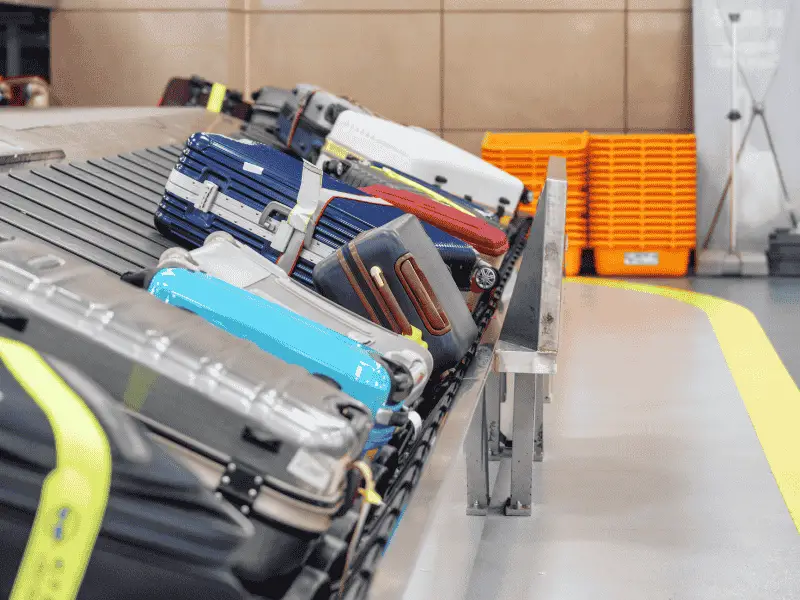
Major American airports are processing between 3,000 and 5,000 pieces of luggage every single hour during peak travel periods. At the largest hub airports, the daily passenger count can exceed 120,000 people, each of whom may have checked one or more bags. Moving that volume of luggage from check-in counter to aircraft hold and back again with any degree of reliability requires a highly automated system operating within very precise parameters. When something falls outside those parameters, the consequences cascade quickly, and the traveler whose bag triggered the problem rarely knows it happened until they are standing at a claims desk.
A veteran airport maintenance professional with years of experience inside those systems has shed light on the specific luggage choices and packing habits that are responsible for a surprising proportion of the problems that travelers experience. Some of what they describe is counterintuitive. Some of it contradicts advice that travelers have been following for years. All of it is worth understanding before the next trip.
The Luggage That Looks Great But Disappears in the System
One of the more unexpected findings from people who work directly with baggage handling technology concerns the trend toward metallic and mirror-finish suitcases. These bags have become increasingly popular in American airports over the past several years, and it is not hard to understand why. They look distinctive, they stand out on a carousel, and they feel like a step up from the standard black rolling case that most travelers use.
The problem is what those reflective surfaces do to the optical scanning equipment that routes luggage through an automated handling system. The scanners that read baggage tags and direct bags to the correct flight use sensor beams that bounce off the surface of the luggage to capture the information on the tag. When that surface is highly reflective, the beam bounces directly back to its source rather than reflecting at the angle needed for a clean read. To the scanner, the bag effectively disappears. It cannot be read, which means it cannot be routed automatically, which means it ends up being pulled from the system and handled manually, if it is handled at all before the flight departs.
A traveler who buys a metallic suitcase because it looks distinctive and easy to spot is inadvertently creating a bag that the system cannot see. The irony is considerable. The feature designed to make the bag more visible to its owner makes it invisible to the technology responsible for getting it where it needs to go.
Why Duffel Bags Are the Most Disruptive Item in Baggage Handling
The duffel bag is one of the most popular pieces of luggage among American travelers, particularly for weekend trips, sports travel, and situations where packing flexibility matters more than structure. It is also, according to maintenance professionals who deal with baggage system disruptions, the single most problematic item type in an automated handling environment.
Duffel bags account for approximately half of all system disruptions in baggage handling operations. The primary reason is the handles. Duffel bags typically have one or more loose, dangling handles that hang freely from the bag when it is placed on a conveyor. Those handles are precisely the right size and flexibility to catch on the mechanical components of the conveyor system, particularly at the transition points where bags move between different belt sections or pass through diverters that route them toward different flights.
When a duffel bag handle catches on a conveyor component, the consequences are not limited to that one bag. The bag stops moving, or moves in a way that is not controlled, and the bags behind it begin to pile up. In a system processing thousands of items per hour, a single jam point can affect hundreds of bags within minutes. The system stops, maintenance staff are called in, the affected bags need to be manually sorted and rerouted, and in many cases bags that should have made a flight do not because the time required to resolve the disruption exceeds the window before departure.
For American travelers who regularly travel with a duffel as their primary or only checked bag, this context suggests that the choice of bag type is a more consequential decision than it might appear. The convenience of the duffel comes at a statistical cost that manifests as elevated risk of delay, disruption, and misdirection in the automated systems through which every checked bag travels.
The Telescoping Handle Problem That Travelers Do Not Notice
Most modern rolling suitcases feature telescoping handles, the retractable poles that extend for pulling and collapse for storage. They are a standard feature of travel luggage, and most travelers give them very little thought beyond extending and retracting them at the beginning and end of each trip.
What baggage handling professionals see from the inside of the system is a different picture. Telescoping handles that have developed even slight mechanical faults in their locking mechanisms become significant hazard points during automated transport. If the lock is not holding perfectly, the vibration and movement of the conveyor can cause the handle to partially extend during transit. A partially extended telescoping handle on a moving conveyor functions exactly like the loose handle on a duffel bag: it catches on mechanical components, creates snag points, and can disrupt the movement of other bags in the system.
The issue is that this kind of damage is often invisible to the traveler. The handle extends and retracts normally when tested by hand but fails to hold under the specific combination of weight, vibration, and movement that occurs during automated transport. Travelers who have noticed that their bag seems to be handled roughly or that the handle is not quite as firm as it used to be may be traveling with a suitcase that poses exactly this kind of risk.
The practical implication is that checking the mechanical integrity of a bag’s telescoping handle before travel, specifically testing whether it locks firmly under pressure rather than just whether it extends and retracts, is a maintenance step that most travelers skip but that has real consequences for what happens to their bag once it leaves their hands at the check-in counter.
Overpacking and the Zipper Failure That Costs Everyone Time
There is a specific kind of optimism involved in overpacking a suitcase. The logic always seems sound at the moment: the clothes will compress, the zipper will hold, it worked last time. Baggage handling professionals describe the consequences of that optimism playing out inside the system with a regularity that travelers never see.
Overfilled bags are subjected to the same mechanical stresses as every other piece of luggage moving through an automated handling system. Conveyor transitions, diverter mechanisms, and the compression that occurs between different sections of the system all place pressure on the bag’s structure. A bag that was holding together by virtue of tension on the zipper or seams at home may not hold together under those additional stresses in transit.
When a bag bursts open inside a baggage handling system, the consequences extend far beyond the traveler whose belongings are now scattered across a conveyor. The system stops. Staff have to be dispatched to collect the spilled contents, which may have traveled some distance from where the bag failed depending on where in the system the failure occurred. The affected section of the conveyor has to be cleared before normal operations can resume. Other bags that were routed through the same section are delayed, and in some cases bags get misrouted as the disruption is managed.
The traveler whose bag failed will likely receive their belongings eventually, though the process of collecting and reuniting scattered contents with the now-damaged bag is time-consuming and imperfect. What they will not see is the number of other travelers whose bags were delayed or misdirected because of the disruption their overfilled suitcase caused.
The straightforward guidance from people who deal with these incidents is that bags should close comfortably, without visible strain on zippers or seams, before they are checked in. If a bag requires sitting on to close, it is a candidate for causing exactly the kind of system disruption described above.
Hard Shell Versus Soft Side: Why the Material of Your Bag Matters More Than You Think
The choice between hard-shell and soft-sided luggage is one that most American travelers make based on personal preference, aesthetics, and price rather than any consideration of how the bag will perform inside an automated handling system. The performance differences between the two types, however, are significant and consistently observable by the people who work with those systems.
Hard-shell cases are considerably more resilient when encountering the mechanical components of conveyor systems. When a hard-shell bag is compressed between diverter mechanisms or passes through a tight transition point on the conveyor, the rigid shell distributes the pressure across its surface and returns to its original shape. The bag moves through the system without structural change.
Soft-sided bags, particularly those with wire or frame structures embedded in fabric walls, respond differently to the same stresses. Compression forces that a hard shell absorbs without consequence can bend or deform the internal frame of a structured soft bag, weakening the bag’s overall integrity over repeated trips. In more severe cases, the structural components can fail entirely, turning a structured bag into something that no longer moves predictably through the conveyor system.
This does not mean soft-sided luggage is unacceptable for checked travel. The majority of checked bags are soft-sided and travel without incident on every flight. What it does mean is that soft-sided bags, particularly older ones or those with any existing structural compromise, are more vulnerable to the cumulative stresses of automated handling than their hard-shell equivalents. For travelers who check bags frequently and want to minimize the risk of structural damage over time, the hard-shell case has a practical advantage that goes beyond aesthetics.
The Accessories That Seem Harmless and Cause Real Problems
Much of the travel advice circulating online about how to identify your bag at the carousel involves attaching distinctive accessories. Colorful scarves, fabric tags, decorative ribbons, and oversized identification labels are all commonly recommended as ways to make a bag recognizable among a sea of similar-looking suitcases. Baggage handling professionals consistently point to these accessories as a source of system disruptions that travelers have no way of anticipating.
The mechanism is the same as with duffel handles and damaged telescoping handles: loose, dangling material attached to a bag creates snag points on conveyor components. A decorative scarf tied around a bag handle is a particularly effective snag point because it is flexible enough to wrap around mechanical components rather than simply catching and releasing. A large fabric tag hanging from a handle moves freely during transport and can lodge in the gaps between conveyor sections.
The traveler who tied a bright scarf around their black suitcase to make it recognizable at the carousel may find that their bag arrived late, arrived at the wrong carousel, or triggered a disruption that delayed multiple other bags, all because the identifying accessory they added ended up interacting badly with the system designed to deliver that bag to them.
The alternatives, discussed at length in previous reporting on luggage identification, include options that achieve the same visual identification goal without the snag risk: luggage straps that sit flush against the bag, stickers applied directly to the hard surface of a suitcase, and distinctive case colors that do not require any attachment to stand out. These approaches serve the traveler’s identification purpose without creating the accessory interference problems that loose attachments introduce.
What the System Looks Like When Things Go Wrong
Understanding the scale of the consequences when the baggage handling system is disrupted helps explain why the seemingly minor choices described above have effects that extend well beyond any individual traveler’s experience.
When a single bag causes a jam or system failure, the response is not a simple matter of removing the offending item and resuming normal operations. Maintenance staff have to be called to the location of the disruption. The affected section of the conveyor has to be assessed and cleared. Bags that have piled up behind the disruption point need to be manually moved and reintroduced to the system in the correct routing sequence. In some cases, the disruption occurs close enough to a flight’s departure time that bags already in the pipeline miss their connection entirely.
The travelers affected by this cascade are not just the person whose bag caused the problem. Every bag that was behind the disruption point and every bag that was misrouted as the system was restored is owned by someone who checked in on time, followed all the instructions, and did nothing wrong. The reason their bag is late or at the wrong airport has nothing to do with anything they did. It has to do with a choice made by another traveler earlier in the same system, a choice that neither the airline nor the handling system had any way to prevent or predict.
This is the hidden connectivity of the baggage handling system. What any individual traveler puts onto the conveyor affects not just their own bag’s journey but the journeys of many bags around it. The choices about luggage type, accessory attachment, handle condition, and packing level that seem purely personal at the check-in counter have downstream effects that ripple through a system handling thousands of bags per hour. Making the choices that minimize those effects is not just good practice for protecting your own belongings. It is a contribution to the functioning of a system that everyone who checks a bag depends on.



Biggest reason for damage is bad handling by human beings throwing them. Hard cases get broken the most contrary to all the advice in this article. US breaks more than any other place. I had two of two 100% record recently. breaks with huge cracks in the last two trips inside US. Clearly thrown around or jumped upon. Hard shell cases totalled in both cases. One was brand new. No loose parts, no dangling scarves, no over or under filing. Around 45pounds or 20Kg – ideal low risk weight. Medium sized. Yet broken really badly. You figure it out.
Hello to you all. Here a retired of 25 years of AA. The main core reason for the bags to get damage or loss is overfilled bag and over weight bag. Unlest you buy a Pelican flight case kind of bag, it will be damage or loss if you overfilled. The companies do not care about this,they just care about their employees don’t loose worktime for back injuries. That is the reason people mistreated lugagges.