
There are very few parts of the travel experience that inspire a specific kind of low-grade dread quite like the baggage carousel. The flight is done, you have cleared customs, and now you are standing shoulder to shoulder with a crowd of equally tired people, all of you staring at a conveyor belt waiting for it to start moving. When it finally does, the bags come out in a rush and half of them look identical. Same shape, same color, same brand, different owner. The scramble that follows is one of the more chaotic and anxiety-inducing rituals of modern air travel.
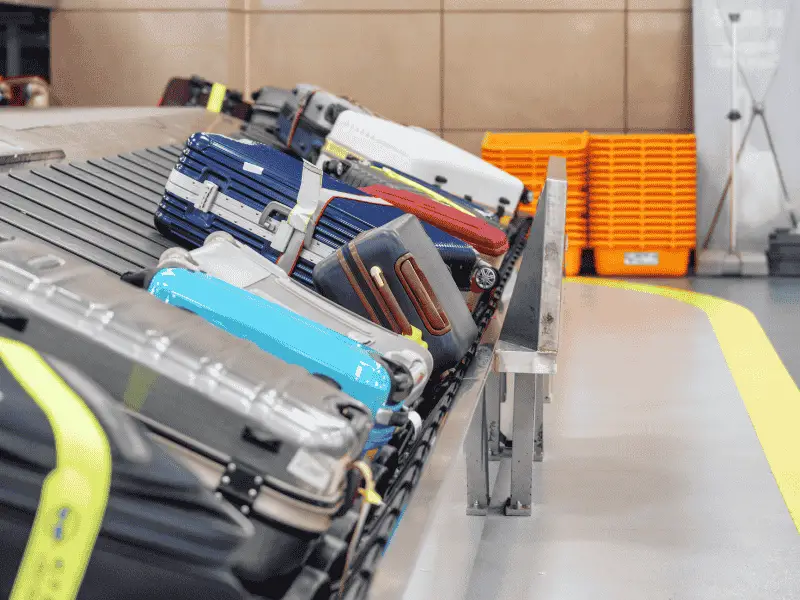
It is no surprise, then, that travelers have spent years coming up with ways to make their luggage easier to spot. One of the most popular is also one of the most widely shared on social media and travel forums: tie a brightly colored ribbon around the handle of your suitcase before you check it in. Visible, cheap, and easy to remove when you no longer need it. On the surface, it seems like exactly the kind of simple, practical solution that travel hacking is supposed to be about.
The problem is that airport workers who deal with baggage systems every day say the ribbon trick is not just unhelpful. In certain situations, it can actively make things worse for you and for every other traveler waiting at the same carousel.
Where Does Your Bag Go After Check-In?
Most travelers hand over their suitcase at the check-in counter and give very little thought to what happens to it between that moment and the carousel at the destination. The reality is that checked luggage travels through a surprisingly complex and largely automated system before it ever makes it onto a plane.
After check-in, bags move through a network of conveyor belts and automated scanning equipment. The barcode on the tag attached to your bag is read by scanners at multiple points along that journey, telling the system where the bag is, where it needs to go, and which flight it needs to make it onto. The whole process moves quickly and handles enormous volumes of luggage simultaneously, which is exactly why it depends so heavily on automation rather than manual handling.
This is where ribbons, strings, and other items attached to the outside of a bag become a problem. Anything dangling from a suitcase handle has the potential to interfere with the automated scanning process. If the ribbon swings in front of the barcode at the wrong moment, or if the bag shifts position on the belt because of the way the extra material affects its balance, the scanner may not be able to read the tag properly. When that happens, the bag gets pulled out of the automated system and routed to manual processing.
Manual processing is slower. Depending on how backed up that queue is and how close the bag’s flight is to departing, manual processing can mean the difference between your luggage making it onto your flight and your luggage not making it onto your flight. You land at your destination, wait at the carousel, and your bag simply does not appear because it missed the flight and is still sitting at the origin airport.
The Scanning Issue Affecting Your Bag
The scanning issue is not the only risk that comes with attaching ribbons or other loose items to your luggage. There is a second problem that is in some ways more serious because it does not just affect your bag. It affects everyone else waiting at the carousel with you.
Baggage carousel systems, like any mechanical system that moves large objects at speed, can be damaged by items that get caught in the moving parts. A ribbon or piece of string that hangs loose from a suitcase handle is exactly the kind of thing that can snag on the machinery as the bag moves through the system or arrives at the carousel. When that happens, the carousel’s safety mechanisms kick in and the entire belt stops automatically.
A carousel stoppage means every bag waiting to be delivered is held up until the obstruction is cleared and the system is restarted. That is not a two-minute fix. Depending on where in the system the problem occurs and how accessible the affected machinery is, it can take considerably longer to resolve. The result is a room full of frustrated travelers waiting for bags that are sitting in a belt that has been taken offline because of a piece of ribbon.
Airport workers who deal with these systems on a daily basis consistently point to loose attachments as one of the more common causes of conveyor disruptions. The ribbon trick that seems like a clever shortcut at the check-in counter can become a significant headache for an entire planeload of passengers at the destination.
Old Tags and Stickers Are Also Causing Problems
While the ribbon issue is getting increased attention, airport workers point out that many American travelers are unknowingly creating a related problem by leaving old airline stickers and baggage tags from previous flights on their suitcases. This is an extremely common habit. A tag from a trip to Miami two months ago is still stuck to the handle. A sticker from a resort in Cancun is still on the side of the bag. They feel like travel mementos, harmless reminders of previous trips.
The automated scanning systems at airports do not experience them that way. When a scanner reads a bag and encounters multiple barcodes, it cannot automatically determine which one is current and which ones are from previous journeys. In the best case scenario, this causes a processing delay as the system tries to resolve the conflict. In a worse scenario, the wrong barcode gets read and the bag is routed toward the destination from a previous trip rather than the one you are currently headed to.
Bags misrouted because of old tags do turn up eventually, but the process of tracking them down, getting them rerouted, and arranging delivery can take anywhere from a day to several days depending on where the bag ends up and how busy the airline’s baggage resolution team is. Before every trip, the habit worth developing is pulling off every old tag and peeling off every sticker from previous flights. It takes thirty seconds and eliminates a genuine, documented risk.
What You Should Use Instead
None of this means travelers have to give up on making their luggage identifiable at the carousel. The goal of being able to spot your bag quickly in a crowd of identical suitcases is completely valid, and there are several approaches that accomplish it without any of the risks associated with ribbons, strings, or dangling attachments.
A luggage strap is one of the most effective alternatives. These are wide, usually brightly colored straps that wrap around the entire suitcase and buckle securely, sitting flush against the bag rather than hanging loose. They are highly visible at the carousel, they do not interfere with scanning equipment, and they do not have any loose ends that can snag on machinery. Many luggage straps also add a layer of security by making it harder for someone to open a bag without it being obvious, which is a bonus that ribbons do not offer.
Colored tape applied around a handle achieves a similar visual result at even lower cost. A few wraps of bright electrical tape or gaffer tape around one of the handles creates a distinctive marker that is completely flush with the bag, poses no interference risk, and can be replaced easily if it starts to look worn.
Distinctive stickers applied directly to the hard surface of the suitcase are another option, particularly for travelers with hard-shell luggage. A large, bold sticker placed somewhere prominent gives the bag a unique visual signature that makes it immediately recognizable on the carousel. Unlike a ribbon, it is not going anywhere once it is applied, and it creates no mechanical risk whatsoever.
Luggage covers represent a more comprehensive solution that has gained popularity in recent years. These slip-on covers fit over the entire suitcase and are available in an enormous range of colors, patterns, and designs, including custom and personalized options. Beyond making the bag visually distinctive, a good luggage cover provides a layer of protection for the exterior of the suitcase against the scuffs, scratches, and general rough handling that checked luggage routinely receives during transit. Waterproof versions add further protection against rain exposure, which is relevant for bags that spend time on outdoor baggage trolleys or in areas where water exposure is possible.
The Black Suitcase Problem Every Traveler Should Know About
The ribbon conversation connects to a broader point that airport workers and baggage handling professionals raise regularly: the color of the suitcase itself matters more than most travelers realize.
Black is by far the most popular suitcase color among American travelers. Walk through any baggage claim area in any major U.S. airport and the carousel will be dominated by black luggage of various sizes, all of it looking broadly similar. The appeal of black is understandable. It is versatile, it does not show dirt, and it matches everything. But from the perspective of identifying your bag quickly and accurately at the carousel, black is the worst possible choice.
The practical consequences extend well beyond a slightly longer wait at baggage claim. Lost property offices at airports around the country hold large volumes of unclaimed luggage, and the overwhelming majority of it is black. When a black suitcase ends up separated from its owner, reuniting them is genuinely difficult because the bag looks identical to dozens of others in the same facility. Without strong identifying features, the process of confirming which black suitcase belongs to which passenger becomes slow and uncertain.
Black bags are also, statistically, more vulnerable to mistaken pickup and opportunistic theft at the carousel than bags in distinctive colors. When every bag looks the same, the conditions for confusion or deliberate misdirection are more easily created. A traveler in a hurry grabbing what they believe is their own black rolling suitcase, a mistake that genuinely happens in busy airports, is far less likely to happen when a bag is an unusual color or has a distinctive visual feature.
Choosing a suitcase in a color that stands out is one of the most effective and permanent solutions to the carousel identification problem. Bright red, cobalt blue, olive green, burnt orange: any color that is genuinely uncommon in the average baggage claim crowd serves the purpose. Combined with a luggage strap or a distinctive sticker, a non-black suitcase becomes something that can be spotted from halfway across the room the moment it comes around the bend.
Small Habits That Make a Real Difference
The ribbon is a small thing, and the problems it can cause feel abstract until they happen to you. A bag that misses a flight because it got pulled into manual processing means a trip to the baggage claim office, a delayed delivery, and a vacation or business trip that starts without your belongings. A carousel that stops because of a snagged attachment means standing in a stationary crowd waiting for a fix that could take twenty minutes or more.
The alternatives are not difficult or expensive. Strip old tags off your bag before every trip. Choose a suitcase in a color that does not blend into the crowd. Use a luggage strap, colored tape, or a bold sticker to mark your bag in a way that is visible but flush and secure. These are minor adjustments that cost almost nothing and eliminate genuine risks that airport workers see play out on a regular basis.
The baggage carousel is already one of the more stressful parts of flying. There is no good reason to make it harder through a habit that the people running those systems consistently advise against.