
Barcelona has been on the American travel radar for decades. The architecture, the beaches, the food markets, the nightlife, the neighborhoods that each feel like a small city within the larger one. It consistently ranks among the top European destinations for U.S. travelers, and for a significant portion of those visitors, the accommodation of choice has been an Airbnb or short-term rental apartment rather than a traditional hotel. That option is going away.
The city of Barcelona has announced that it will eliminate all short-term tourist apartment rentals by November 2028. Every license currently held by a short-term rental property in the city will expire and will not be renewed. When that deadline arrives, platforms like Airbnb will effectively have no legal inventory to offer in Barcelona. The apartments that have become a standard part of how Americans experience the city will no longer be available in the way they are today.
The decision came from Barcelona’s mayor and represents one of the most sweeping actions any major European city has taken against the short-term rental industry. It is not a cap on new licenses or a tightening of regulations. It is a full phase-out, and the timeline is firm. For American travelers who have relied on apartment rentals as their default way of visiting Barcelona, this changes the planning calculus for any trip to the city in the next few years and beyond.
Why Barcelona Is Doing This
To understand why Barcelona is taking such a dramatic step, it helps to look at what has happened to housing costs in the city over the past decade. Rental prices have increased by 68 percent. Home purchase prices have climbed 38 percent. Those are not abstract statistics. They represent the lived experience of Barcelona residents who have watched their neighborhoods transform around them and found themselves increasingly unable to afford to stay in the city where they were born and raised.
The connection between short-term tourist rentals and rising housing costs is a debate that plays out in cities around the world, but Barcelona’s city government has come down firmly on one side of it. When apartments that could house long-term residents are instead rented to tourists by the night, the supply of housing available to locals shrinks. When supply shrinks and demand from a growing population remains constant or increases, prices go up. Young residents have been hit particularly hard, with the affordability gap widening to a point that the city’s mayor has described the housing situation as Barcelona’s single largest problem.
The short-term rental industry did not create Barcelona’s housing crisis on its own. It is one factor among several, including population growth, construction limitations, and broader economic pressures. But the city government has concluded that eliminating tourist apartments from the residential housing stock is an essential part of any serious response to the problem. The 2028 deadline is the mechanism for doing that.
This Has Been Building for Years
The full ban is not something that came out of nowhere. Barcelona has been moving in this direction for a long time, and the 2028 announcement is the culmination of a sustained policy effort rather than a sudden reversal.
The city stopped approving new tourist apartment licenses some time ago. Since 2016, authorities have shut down nearly 9,700 illegal short-term rentals operating without proper permits. Those enforcement actions have already returned around 3,500 apartments to the long-term residential housing market. The infrastructure for aggressive inspection and enforcement is already in place, and city officials have made clear that it will remain active and well-resourced through the 2028 transition and beyond. The expectation is that as the deadline approaches, some property owners will attempt to continue operating illegally, and the city is signaling that it intends to pursue those cases seriously.
For American travelers who have used Airbnb or similar platforms to book in Barcelona, the practical reality is that the inventory has already been shrinking for years. The full ban formalizes and accelerates a trend that has been underway since the mid-2010s. What changes in 2028 is that the last remaining licensed properties disappear from the market entirely rather than just becoming scarcer.
What This Means for Tourists Booking a Barcelona Trip
The most immediate and practical impact for American travelers is straightforward. If you are planning a trip to Barcelona and your default approach has been to search Airbnb or Vrbo for an apartment, that approach is going to become increasingly difficult between now and 2028 and then essentially impossible after the deadline passes.
The licensed inventory on short-term rental platforms in Barcelona will decline as the 2028 expiration date gets closer and property owners stop investing in properties they know will lose their permits. Some will exit the market early. Others will hold on until the deadline. Either way, the selection available to American travelers booking apartment-style accommodations in Barcelona will shrink progressively over the next few years, and prices for whatever remains may well increase as supply contracts ahead of demand.
The hotel market is the obvious alternative, and there are reasons to think it will expand to absorb at least some of the accommodation demand that currently flows through short-term rentals. The previous city administration had banned the opening of new hotels in many of Barcelona’s most popular neighborhoods, a restriction that limited the growth of traditional hotel inventory. The current mayor has suggested that those restrictions may be relaxed, which could allow new hotel development in areas where American tourists most want to stay. Whether that additional supply comes online fast enough to meet demand as apartment rentals disappear is an open question, but the policy direction points toward a broader range of hotel options over the coming years.
For travelers who specifically value the apartment rental experience, there are still a few years during which licensed properties will legally operate in Barcelona. Anyone determined to experience the city that way has a window, but it is closing.
Barcelona Is Not Alone in Europe
American travelers who visit Europe regularly will increasingly encounter versions of this story in cities beyond Barcelona. The tension between short-term tourist rentals and residential housing affordability is playing out across the continent, and Barcelona’s full ban is one of the most aggressive responses to date but far from the only one.
Amsterdam has imposed strict caps on the number of nights a property can be rented to tourists annually and has eliminated short-term rentals from certain neighborhoods entirely. Lisbon, Florence, and Athens have all implemented various forms of restriction on tourist apartment licenses. Paris has tightened enforcement against unlicensed rentals significantly. The direction of travel across European cities is broadly consistent: short-term rental platforms are facing more regulation, more enforcement, and in some cases outright elimination from residential neighborhoods.
For Americans planning European travel more broadly, this trend means that the apartment rental model that became standard practice for many travelers over the past fifteen years is becoming less reliable as a planning assumption. In some cities it remains widely available. In others, including Barcelona after 2028, it will not be a legal option at all. Building flexibility into accommodation planning and being familiar with the hotel market in each destination is becoming more important as the regulatory landscape shifts.
The Housing Crisis Behind the Ban
The story of what short-term rentals have done to Barcelona’s housing market is one that travelers are more likely to understand than they might expect, because versions of the same dynamic have played out in American cities as well. In New York, San Francisco, New Orleans, and other high-demand U.S. cities, the debate over Airbnb and its effect on housing availability and affordability has been intense and politically contentious for years. New York City implemented its own stringent short-term rental regulations in 2023, dramatically reducing the number of legally operating Airbnb listings in the city.
In Barcelona, the numbers are stark. A 68 percent increase in rental prices over a decade is the kind of change that displaces communities and fundamentally alters the character of neighborhoods. When residents who have lived in a neighborhood for generations are priced out by a combination of market forces that include tourist demand for short-term rental apartments, the social cost is real even if it is less visible to the visitors who are contributing to the pressure.
The city government’s argument is that Barcelona cannot sustain the level of tourist apartment density it has accumulated over the past fifteen years while also maintaining functioning residential neighborhoods where local people can afford to live. The 2028 ban is the answer it has arrived at after years of partial measures that did not resolve the underlying problem.
Tourism Is Not Going Away
None of what Barcelona is doing should be read as the city turning its back on international tourism. Spain is one of the three most visited countries in the world. Tourism is a central pillar of the national economy and an enormous source of jobs, revenue, and investment in Barcelona specifically. The city is not trying to become less visited. It is trying to manage how visitors are accommodated in a way that does not continue to come at the direct expense of the people who live there year-round.
The policy bet Barcelona is making is that tourists will still come in large numbers when they stay in hotels rather than apartments, that the hotel industry will expand to provide adequate supply, and that the residential neighborhoods currently dotted with short-term rental apartments will gradually return to functioning primarily as places where people live rather than places where visitors stay by the week.
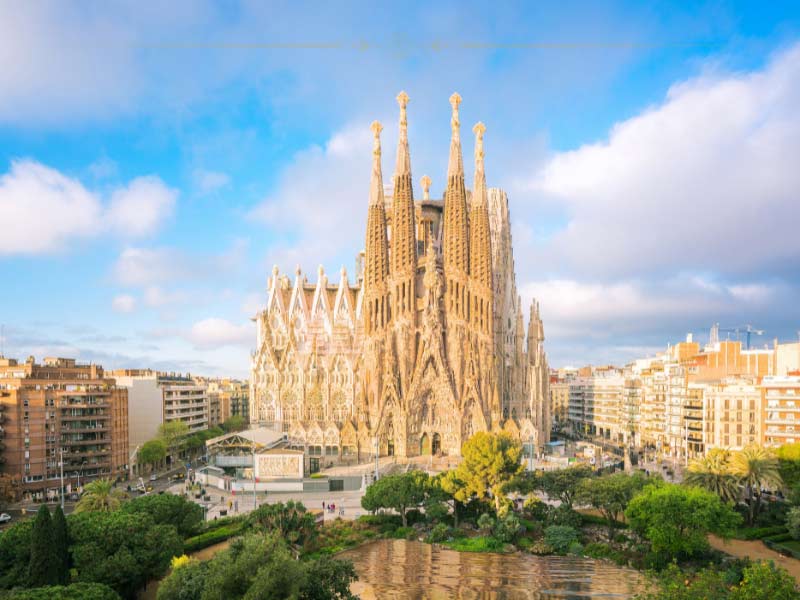
For American travelers, Barcelona will look different after 2028 in terms of how you book and where you sleep. The city itself, the things that make it worth visiting, will still be there. The food at the Boqueria, the Sagrada Familia, the Gothic Quarter, the beaches, the bars, and the energy of a city that genuinely knows how to use its streets, none of that disappears because apartment rentals are no longer part of the picture.
What changes is the experience of staying there, and for travelers who have specifically valued the apartment rental model, that is a real change worth factoring into how you plan. The window to experience Barcelona that way, legally and with a full range of options, is open for a few more years. After November 2028, the hotel is where you will be staying.