
For months, the story of Europe’s jet fuel crisis has been told in the language of projections, warnings, and contingency plans. Analysts forecasting supply windows. Airlines issuing profit warnings. Industry bodies calling for regulatory relief. Government agencies releasing emergency coordination frameworks. The language of imminent disruption without the disruption itself.
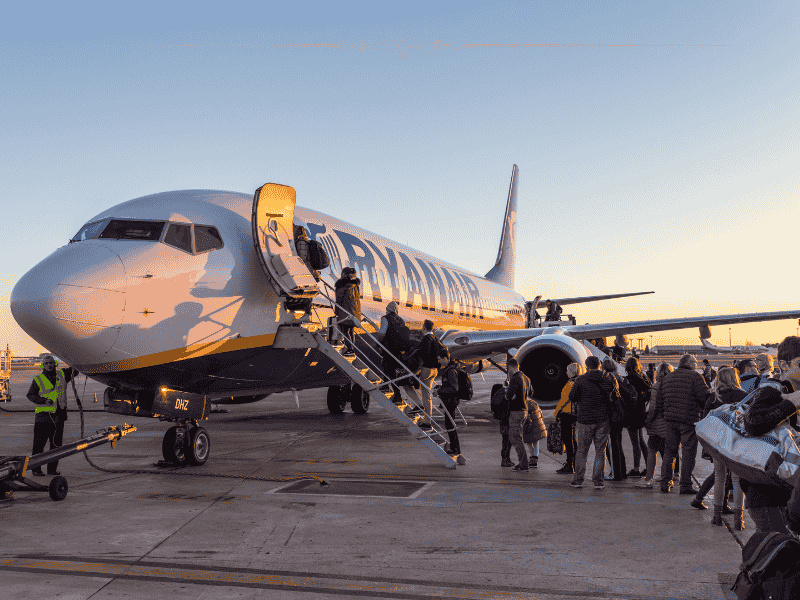
That phase is over. The cancellations are happening now, they are being announced by some of the most prominent carriers serving American travelers, and the scale of what has already been committed to in terms of schedule reductions is large enough that anyone with European travel booked this summer needs to know which airlines are cutting, which routes are being dropped, and what the realistic risk is that a specific itinerary will be affected.
The underlying cause is the closure of the Strait of Hormuz following the conflict involving the United States, Israel, and Iran. Approximately 20 percent of the world’s oil and gas supply normally passes through that narrow shipping lane, and Europe is particularly exposed because it sources roughly 75 percent of its jet fuel from the Middle East. The disruption did not hit immediately, because oil already in transit at the time the conflict began continued to arrive for several weeks after the closure. That buffer is now largely exhausted, and the doubled jet fuel prices that have followed are forcing airlines to make hard operational decisions that are landing directly in the schedules American travelers are counting on.
The Scale of What Has Already Been Announced
The volume of canceled and suspended flights already confirmed by European carriers is substantial enough to warrant specific attention rather than general concern. These are not theoretical risks about future cuts. They are commitments already made and in some cases already affecting travelers trying to rebook.
Lufthansa has announced the cancellation of 20,000 flights over a six-month period, a figure that represents one of the largest single schedule reductions in European aviation history outside of the pandemic. The German flag carrier, which operates one of the most extensive networks in Europe and connects dozens of American cities to European destinations through its Frankfurt and Munich hubs, has been specific about some of the routes being cut permanently rather than temporarily. Frankfurt to Bydgoszcz and Rzeszów in Poland, and Frankfurt to Stavanger in Norway, have been removed from the schedule entirely rather than simply suspended pending a fuel cost improvement. When a major carrier permanently removes routes rather than temporarily suspending them, it signals that the cost calculus has changed in a way that temporary supply relief will not fix.
SAS, the Scandinavian carrier that serves routes between the Nordic countries and the United States and connects extensively through Copenhagen to European destinations, had already canceled hundreds of flights before announcing an additional 1,000 cancellations in April alone. For American travelers with itineraries involving Scandinavian connections or destinations, SAS’s schedule reductions are a direct and specific concern.
KLM, the Dutch carrier that operates as part of the Air France-KLM group and serves as one of the primary conduits between North America and Europe through Amsterdam’s Schiphol Airport, announced on April 16 that it would cancel 160 flights in Europe over the following month. Transavia, which is also part of the Air France-KLM group and operates short-haul routes across Europe, cited the geopolitical situation in the Middle East and its impact on aviation fuel costs when announcing additional cancellations planned for May and June.
Norse Atlantic, the Norwegian low-cost carrier that had been operating transatlantic routes as a budget alternative to the major carriers, has canceled its London Gatwick to Los Angeles route entirely in response to rising fuel costs. For American travelers who had been using Norse Atlantic as an affordable way to cross the Atlantic, that route no longer exists.
Why Europe Is More Exposed Than American Travelers Might Expect
American airlines and European airlines are not equally exposed to the Strait of Hormuz closure, and understanding the difference helps explain why the cancellation announcements are concentrated in European carriers rather than American ones at this stage.
The geographic reality of jet fuel supply is the primary factor. European aviation has built its supply chain around Middle Eastern sources to a degree that American aviation has not. When approximately 75 percent of your jet fuel supply comes from a region that has suddenly become inaccessible through normal shipping routes, the cost and supply disruption is immediate and severe. American carriers source fuel from a more geographically diverse set of suppliers, including domestic American refining capacity, which provides some insulation from a specifically Middle Eastern supply disruption.
The hedging factor also plays out differently across carriers. Airlines that entered the crisis with significant hedging coverage at pre-disruption prices have been able to absorb more of the impact during the period their contracts last. The carriers making the largest and most immediate cuts tend to be those with less hedging coverage or those whose hedging contracts have already expired, forcing them to purchase fuel at current market prices that have roughly doubled.
The European Commission’s emergency response, a plan called AccelerateEU, was specifically designed to coordinate jet fuel distribution across EU member states to prevent any single country or airport from running critically short while others still have reserves. The existence of this emergency coordination program is itself an indication of how seriously European authorities are treating the supply situation. AccelerateEU represents the EU acknowledging that left to market mechanisms alone, the distribution of available fuel would be uneven enough to create acute crises at specific airports while others managed better.
The Carriers Most Relevant to American Travelers
For Americans planning European travel or currently holding European flight bookings, the specific carriers to monitor are those with the most direct exposure to American travel patterns and the most documented vulnerability to the current fuel cost environment.
Lufthansa’s 20,000-flight cut is the single most significant development for American travelers, given the scale of the carrier’s transatlantic network and the centrality of Frankfurt and Munich as connecting hubs for Americans flying into and around Europe. Americans connecting through Frankfurt to southern European destinations, Eastern European cities, or onward to Asia should specifically check whether their routes are among those being reduced or permanently dropped. The Frankfurt hub handles enormous volumes of American traffic, and schedule reductions there create connection problems that ripple across itineraries that never directly involve a Lufthansa-operated flight.
KLM’s Amsterdam hub is similarly central to American travel in Europe. Schiphol is one of the busiest transatlantic entry points, and American travelers connecting there to Dutch, Belgian, French, and other European destinations will be affected by the 160 European flight cancellations KLM has committed to. The Air France side of the Air France-KLM group has been adding fuel surcharges to long-haul tickets and has issued warnings about further fare increases, which affects Americans flying the Paris Charles de Gaulle hub as well.
SAS and its role in connecting American travelers to the Nordic countries and through Scandinavia to other European destinations makes its ongoing schedule reductions particularly relevant for anyone with Scandinavian travel planned. Copenhagen’s Kastrup Airport is a significant hub for transatlantic connections, and SAS’s cancellations are already affecting the availability of seats on routes that Americans have historically been able to book with reasonable confidence.
Delta Airlines appears on the list of carriers that have indicated they plan to run fewer flights in the current environment, which is directly relevant for American travelers given Delta’s status as one of the largest U.S. carriers with extensive European operations. Air Canada, which serves as a connection point for American travelers routing through Canada to European destinations, has also signaled planned reductions.
What the EU Is Doing and Whether It Will Be Enough
The European Commission’s AccelerateEU plan represents the most coordinated governmental response to the aviation fuel crisis so far, and its details give some indication of both the seriousness of the situation and the limits of what policy tools can achieve.
The plan involves EU member states coordinating the distribution of available jet fuel supplies across the bloc rather than allowing each national market to manage independently. The goal is to prevent situations where a major hub airport in one country runs short while airports elsewhere maintain adequate supply, using centralized coordination to smooth out the distribution and extend the overall supply runway for European aviation.
The International Energy Agency’s assessment, issued in mid-April, was that Europe had approximately six weeks of jet fuel reserves at that point. That warning established a specific and alarming timeline that made AccelerateEU a genuinely urgent response rather than a precautionary measure. Whether coordinated distribution can extend that timeline meaningfully depends on how quickly alternative supplies can be brought in from non-Middle Eastern sources and how effectively the reduction in total consumption through flight cancellations reduces demand on the existing reserve.
The UK, which is not part of the EU but faces the same fundamental supply chain exposure, has been taking parallel steps. UK authorities have increased domestic jet fuel production and authorized the import of Jet A fuel, the American standard, which has slightly different chemical specifications from the European standard but can be certified for short-haul operations. That alternative supply stream represents a partial mitigation of the supply gap rather than a complete solution, but it does give UK aviation some additional buffer that pure European operations lack.
The Routes Most at Risk and How to Identify Them
The pattern of cancellations that has emerged across European carriers points to specific categories of routes that face the highest risk of further reduction or permanent discontinuation.
Routes with relatively low demand that were already operating at thin load factors before the fuel cost increase are the most vulnerable. An airline that was filling 65 or 70 percent of seats on a particular route before fuel costs doubled now faces the prospect of operating that same route at a significant loss with doubled fuel costs. The economic logic of eliminating that route becomes very strong very quickly when the alternative is continuing to fly it at a loss while supply is constrained.
Regional European routes connecting secondary cities to major hubs are disproportionately represented in the cancellations already announced. These routes typically involve smaller aircraft, shorter flights, and thinner margins than the major trunk routes connecting primary cities. Lufthansa’s permanent cancellation of Frankfurt routes to smaller Polish cities and Norwegian Stavanger is representative of this pattern. The major hub-to-hub routes between primary European cities and the busiest transatlantic gateways are more likely to survive the cuts than the secondary and regional connections that feed into them.
Long-haul leisure routes operated by smaller or financially weaker carriers face a different but equally serious risk. Norse Atlantic’s permanent cancellation of the London to Los Angeles route illustrates how a route that appears viable under normal fuel cost conditions becomes unsustainable when costs double. The budget long-haul carrier model, which depends on volume and thin margins, cannot absorb the same fuel cost shock as a full-service carrier with more pricing power and more diverse revenue streams.
What Travelers Should Do Right Now
The most important step for any American traveler with European flights booked is to verify the current operational status of those specific flights and carriers, not through third-party booking platforms or general news coverage, but directly through the airline’s own booking management system.
Airlines that are making schedule changes are required to notify affected passengers, but the notification process takes time and the booking platform through which a ticket was originally purchased may not immediately reflect changes that have been communicated directly by the operating carrier. Checking the airline’s own website with your booking reference and confirming that the specific flight is still showing as scheduled is the most reliable way to identify whether a change has been made or is being processed.
If your carrier is on the list of airlines making significant schedule reductions, proactively reviewing the cancellation and rebooking terms of your fare is more valuable now than waiting to be notified of a specific change. Understanding whether your ticket is refundable, what rebooking fees apply, and what alternative routing options exist on your carrier gives you more options if a schedule change is announced at a point when demand for alternatives has already increased.
Travel insurance with specific coverage for airline-initiated cancellations and schedule changes is relevant to the current situation in ways that standard policies may not fully address. Reviewing the specific trigger language in any policy you hold, and understanding whether a carrier-initiated schedule consolidation rather than an outright cancellation is covered, is a practical step that is better done before a change affects your booking than after.
The European summer is not closed. The most popular destinations, Spain, Italy, France, Greece, Portugal, are still operating normally on their ground side, and the vast majority of flights currently scheduled will operate as planned. But the number of flights being cut, the carriers doing the cutting, and the routes most affected are specific enough that American travelers can now make informed assessments of their individual risk rather than simply hoping the disruption stays abstract.


