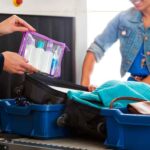
Most travelers assume that once a suitcase disappears down the conveyor belt at check-in, nobody will touch it until it reaches the carousel at the other end. Starting this Friday, that assumption no longer holds true at any airport in Thailand. A new regulation allows aviation officials to open checked bags that raise suspicion during screening, and they can do it without the owner standing there. For the many Americans who fly to Bangkok, Phuket, Chiang Mai and other Thai destinations every year, the change is worth knowing about before packing begins.
What Changes on Friday
The Civil Aviation Authority of Thailand, known as CAAT, issued the guideline, and Airports of Thailand Plc, the company that runs the country’s major airports, has been reminding passengers that it applies at every airport in the kingdom from Friday onward. Until now, a traveler whose bag looked questionable on an X-ray image could generally expect to be paged or located before anyone looked inside. The new rule removes the requirement that the owner be on hand.
Under the guideline, officials may open any piece of checked baggage they suspect contains a prohibited item while it is being screened, whether or not the passenger is nearby, has already boarded or is waiting at the gate. The purpose, according to the regulator, is to strengthen aviation safety.
That is a notable shift. Waiting for a passenger to show up can hold up a bag, delay a flight or force a traveler to be pulled out of a line. Letting inspectors act on their own is meant to speed up the handling of suspicious items while keeping dangerous goods away from aircraft.
How the Inspections Will Be Documented
The regulator has attached some conditions to the new authority. Each inspection must be recorded on video, so there is a visual record of what officials did with the bag from the moment it was opened. Officers also have to place a notice inside the suitcase after they finish, which tells the owner that the bag was searched.
The paper notice is the main way a passenger will learn about the inspection. Because the owner is not present, there may be no other warning. Travelers who open a bag at their destination and find a slip of paper inside will know that it was checked at the airport, and the video recording provides a way to verify how it was handled if questions come up later.
Items the Regulator Wants Kept Out of Checked Bags
Alongside the new rule, CAAT has offered guidance on what travelers should leave out of their hold luggage. Three categories were singled out: valuables, important documents and prohibited items.
The prohibited list for checked bags includes explosives, firearms and power banks. The mention of power banks will catch some travelers off guard, because many people assume that a bag in the cargo hold is the safest place for a bulky charger. In fact, aviation authorities around the world generally want lithium batteries in the cabin, where a crew member can respond quickly if one overheats or catches fire. A battery that fails in the hold is far harder to reach.
For valuables and documents, the reasoning is simpler. If inspectors are allowed to open a bag when nobody is around, travelers have a practical reason to keep jewelry, cash, electronics, passports and other irreplaceable items with them. A carry-on stays under the owner’s eye, while a checked bag may now be opened by someone else.
Why Thailand Is Making the Move
Thailand is one of the busiest tourism destinations in Asia, with millions of foreign visitors passing through its airports in a typical year. Bangkok’s Suvarnabhumi and Don Mueang airports, along with Phuket, Chiang Mai and Krabi, handle large volumes of passengers and bags every day. Screening that much luggage quickly is a constant challenge.
Aviation security programs around the world rely on layers of screening, and checked bags usually pass through automated X-ray or scanning equipment before they are loaded. When a machine flags something unusual, an officer reviews the image and decides whether a physical search is needed. Traditionally, many countries try to locate the passenger first. That step can take time, particularly when the traveler has already moved through security and is somewhere in the terminal.
By permitting officers to open a flagged bag directly, Thai authorities are choosing speed. The video requirement and the inspection notice are intended to offset the privacy concerns that naturally come with an unaccompanied search.
How This Compares With Rules in the United States
American travelers are already familiar with the idea of an unattended bag search. The Transportation Security Administration screens checked luggage at US airports, and officers are permitted to open bags that cannot be cleared by machine. When that happens, the agency places a notice inside the suitcase, which states that it was inspected. Many American passengers have found that card tucked among their clothes at the end of a trip.
TSA also advises travelers to avoid locking their checked bags with ordinary padlocks, since officers may have to cut them if a search is required. Travelers who want to lock a bag can use locks approved by the agency, which have a mechanism that allows officers to open them with a master key.
The Thai approach resembles that system in several ways, though the details differ. The Thai guideline stresses the video recording, and it applies a uniform standard at every airport in the country. Travelers who regularly fly on both sides of the Pacific may notice that the underlying principle is shared by many aviation authorities, namely that officials reserve the right to look inside a checked bag when security demands it.
What Americans Should Pack Differently
Because the Thai rule takes effect Friday, anyone with a flight departing from a Thai airport in the coming days should think carefully about what is inside their bags. The guidance from CAAT leads to a handful of practical adjustments.
Power banks and spare lithium batteries belong in the carry-on. The same goes for cameras, laptops, tablets and other electronics, which are both valuable and often contain batteries. Passports, travel documents, medication, cash, jewelry and anything that would be difficult to replace should travel in a bag that stays with the passenger.
Travelers should also review the full list of prohibited items before packing. Explosives and firearms are obviously off-limits, but many everyday objects can trigger a flag, including certain aerosols, fireworks, flammable liquids and sharp tools. Souvenirs deserve a second look as well. Items bought at local markets sometimes have restrictions, and some countries limit exports of certain antiques, religious objects and wildlife products.
For people returning to the United States, the usual customs rules apply, and agricultural items such as fresh fruit, seeds and some food products may be subject to restrictions at American ports of entry.
What Passengers Can Expect at the Airport
Most travelers will notice no difference at all. The vast majority of bags pass through screening without any need for a manual search, and the new regulation only affects those that raise a concern. A suitcase packed with clothing, toiletries and gifts is unlikely to attract attention.
For a bag that does get flagged, the process will play out behind the scenes. Officers will open it, record the inspection, remove or deal with any prohibited item and leave a notice inside. The passenger might not be told in advance and may not find out until arriving at the destination. In cases where a prohibited item is found, officials may take further steps, which could include contacting the traveler or notifying the airline. The details of how those cases are handled have not been spelled out in the information released so far.
Airports of Thailand has asked flyers to take the reminder seriously and to prepare ahead of time. Staff at airline check-in desks can also answer questions about specific items, and travelers can contact their carrier before leaving home if they are unsure whether something is permitted.
Protecting Belongings in Checked Luggage
Beyond following the official guidance, many frequent flyers take a few habits with them on every trip. Photographing the contents of a bag before closing it creates a record that can be useful if something goes missing. Placing a contact card inside the bag, in addition to a tag on the outside, helps the airline return a suitcase that gets separated from its owner. Using luggage straps or a bag that closes securely keeps items from spilling out if a bag is opened.
Travelers should also check their travel insurance and the airline’s liability limits. Carriers generally cap what they will pay for lost or damaged checked baggage, and valuables are often excluded or limited. International flights fall under rules that set a maximum amount per passenger, which is why airlines and insurers usually recommend carrying expensive items in the cabin.
Keeping receipts, serial numbers and photographs of high-value items makes it easier to file a claim if there is a problem. If a traveler believes something was taken or damaged during a search, the video record and the inspection notice are the first pieces of evidence to bring to the airline or airport authority.
A Rule That Applies to Everyone
The Thai regulation covers all travelers on departing flights, regardless of nationality. There are no special exemptions for tourists, business visitors or residents, and the guideline applies to domestic flights as well as international ones. Airports of Thailand operates several of the country’s largest airports, and the standard applies at every airport in the kingdom, not just the ones under its management.
For Americans planning a trip to Thailand, the takeaway is simple. A checked bag may now be opened without its owner present, officials will film the process and leave a notice, and the regulator wants valuables, documents and prohibited items, including power banks, carried by hand or left at home. The rule starts Friday, and travelers who adjust how they pack will have little to worry about when they step up to the check-in counter.