A video of a woman making homemade pasta from scratch on a crowded airplane has set off a firestorm online, with millions of Americans weighing in on whether she crossed a line or was simply minding her own business. The clip shows the passenger pulling out flour, water, and kitchen tools before kneading dough and shaping pasta pieces right there on her tray table while flying thousands of feet in the air.
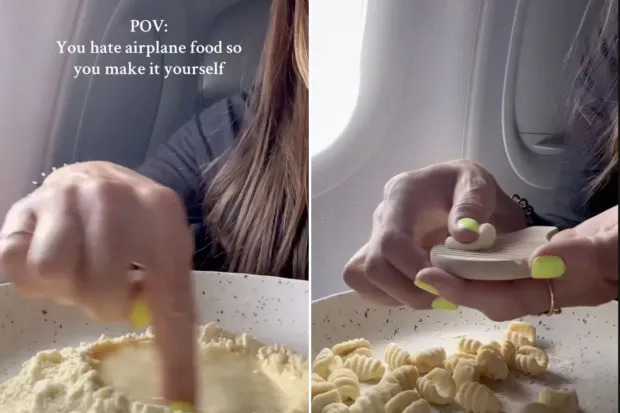
The video has been viewed more than four million times, and the comments section turned into an all-out war between people who think the behavior is disgusting and those who say she was not bothering anyone. The debate has opened up a much bigger conversation about what is okay to do on a plane and what crosses the line into rude or gross territory.
What Actually Happened on That Flight
The woman behind the viral video runs a social media account dedicated to making pasta. Her videos usually show her working in a kitchen, teaching people traditional Italian cooking methods. But this time, she decided to film herself making pasta in one of the least likely places imaginable: a cramped airplane seat.
The footage shows her carefully setting up her workspace on the tray table. She mixes flour and water in a container, then starts kneading the dough with her hands. After working the mixture into the right consistency, she rolls it out and begins cutting and shaping individual pasta pieces. Throughout the entire process, she appears completely calm and focused, as if making pasta on a plane is the most normal thing in the world.
Other passengers in the background have mixed reactions. Some people seem interested and watch what she is doing. Others look uncomfortable or try to ignore what is happening right next to them. A few passengers appear to be recording the scene on their own phones, probably as confused as everyone else about what they are witnessing.
The whole thing takes several minutes, and during that time, flour dust can be seen on the tray table and presumably floating around in the cabin air. She works methodically through each step of the pasta-making process, treating her airplane seat like a miniature kitchen workspace.
Why People Are So Mad About It
The reaction online has been intense. Thousands of people have commented on the video, and most of them are not happy about what they saw. The main complaint centers on hygiene. Airplane tray tables are famously dirty, and the idea of preparing food on them makes a lot of people queasy.
One person commented asking how this was even allowed to happen. Another said they could not figure out if they were impressed or horrified. Many people used words like crazy, bizarre, and unhygienic to describe what they saw. The question that kept coming up was why someone could not just bring a normal snack like everyone else.
People pointed out that airplanes are already pretty gross places. The air gets recycled, the bathrooms are tiny and heavily used, and cleaning between flights is minimal. Adding flour dust into that mix seemed like a terrible idea to a lot of viewers. Some worried about people with flour allergies breathing in particles. Others just thought the whole thing was inconsiderate to the passengers sitting nearby.
The criticism was not just about germs either. Many commenters felt the woman was taking up too much space and time with an activity that belonged at home, not on a public flight. In economy class where seats are jammed together and everyone is trying to get comfortable in limited space, dedicating your area to a full cooking project struck people as selfish.
Some People Actually Defended Her
Not everyone thought the pasta making was a problem. A smaller but vocal group of commenters jumped to her defense, saying she was just doing her hobby and not hurting anyone. These supporters argued that she was quiet, staying in her own space, and not bothering the people around her.
Some people said the negative reactions were overblown and that Americans need to loosen up about what others do in public. If someone wants to knit, work on a laptop, or apparently make pasta during a flight, why should that be a problem as long as they are not being loud or getting in anyone’s way?
A few commenters noted that airplane food is terrible, so making your own meal is actually smart. Others appreciated her dedication to her craft and thought the criticism was unfair. The debate got heated, with both sides accusing the other of being either uptight or inconsiderate.
The divide seems to come down to different ideas about what counts as acceptable behavior in shared spaces. Some people think you should be able to do whatever you want as long as you are not directly interfering with others. Other people think shared spaces require everyone to follow unwritten rules about what activities are appropriate, even if those activities are not technically against any written rules.
Flight Attendants Have Seen It All
While making pasta on a plane might seem like a one-of-a-kind situation, flight attendants say unusual passenger behavior is actually pretty common. Crew members have reported seeing passengers do everything from giving themselves pedicures to setting up elaborate work stations with multiple computer monitors.
One flight attendant said the pasta incident is weird but not the worst thing they have dealt with. The real problems, according to many crew members, come from drunk passengers. Airport bars do huge business, especially before flights to vacation spots or during holiday travel. Groups of friends, bachelor parties, and young people traveling without their parents often pile into these bars and drink heavily before boarding.
Flight attendants say they can usually spot trouble before passengers even get on the plane. Loud groups stumbling around the gate area, people who reek of alcohol, and passengers who can barely walk straight are red flags. Once these drunk travelers get on the plane, they become the crew’s biggest headache.
The problem with drunk passengers is that they are unpredictable. They might get into arguments with other travelers, ignore safety instructions, or become aggressive with crew members. In a confined space like an airplane where people cannot just leave, one drunk person can make the entire flight miserable for everyone else.
Flight attendants have to spend time babysitting intoxicated passengers instead of attending to other responsibilities. They might need to cut someone off from alcohol service, separate arguing passengers, or in extreme cases, arrange for someone to be removed from the flight. All of this takes attention away from keeping the cabin comfortable for everyone else.
The crew members stress that they do not mind people having a drink or two. The problem starts when passengers treat the airport bar like a nightclub and board the plane already wasted. When you combine too much alcohol with the effects of flying at high altitude, bad behavior gets even worse.
Why Airplane Hygiene Is Already a Concern
Even without people making pasta, airplanes are not exactly clean environments. Studies have found that tray tables are among the dirtiest surfaces on planes, sometimes carrying more bacteria than the bathroom flush button. These tables get used for everything imaginable, and the quick turnaround between flights means cleaning is often rushed and superficial.
The air inside planes gets recycled through filters, which does remove many particles and germs. But the system is not perfect, and when you have hundreds of people crammed into a small tube for hours, things get gross. People cough, sneeze, touch surfaces, and generally spread germs around whether they mean to or not.
Introducing loose flour into this environment worried a lot of people who saw the pasta video. Flour is a fine powder that easily becomes airborne. Once it is floating around in the recycled air system, it could potentially bother people with respiratory issues or flour allergies. Even people without allergies might find breathing in flour dust unpleasant.
The fact that the woman was working with raw ingredients on a surface that probably had not been properly cleaned made the situation even worse in many people’s eyes. Food safety experts generally recommend thorough cleaning and sanitizing of surfaces before food preparation, something that obviously was not happening on that airplane tray table.
Beyond the immediate health concerns, the incident highlighted how vulnerable passengers are to whatever their seatmates decide to do. You cannot control who sits next to you on a plane, and if that person decides to do something weird or gross, you are basically stuck dealing with it for the duration of the flight.
The Social Media Factor Changes Everything
Twenty years ago, if someone made pasta on a plane, maybe a few dozen people would see it and tell their friends about the weird thing that happened on their flight. Now, that same incident gets filmed, posted online, and seen by millions of people within hours.
Social media has turned airplanes into stages where any unusual behavior can become a viral sensation. Passengers know that anything they do might end up online, but that knowledge does not seem to stop people from acting out. In fact, some people do unusual things specifically because they want the attention and views that come with viral videos.
Content creators in particular have made airplane behavior into entertainment. They film their trips, document interesting or annoying seatmates, and share their experiences with thousands or millions of followers. This has created a weird dynamic where the private space of a flight becomes public content.
The pasta maker in this case already had an established online presence focused on cooking content. Filming herself making pasta on a plane was probably an attempt to create interesting content for her followers by putting her usual activity in an unusual setting. Whether she expected or wanted the massive backlash that followed is unclear.
Airlines are still figuring out how to handle this new reality. Their rules were written before everyone carried a high-quality video camera in their pocket. Crew members have to make judgment calls about when filming or unusual behavior crosses the line into being disruptive, and those decisions can be difficult.
Where Personal Freedom Meets Shared Responsibility
The pasta incident touches on a fundamental tension in modern American life. How much personal freedom should people have in shared public spaces? When does pursuing your own interests or expressing yourself become inconsiderate to the people around you?
On one side are people who believe you should be able to do whatever you want as long as you are not directly harming or interfering with others. From this perspective, making pasta quietly at your seat is no different from doing a crossword puzzle or reading a book. Your ticket bought you that space, and what you do with it is your business.
On the other side are people who think shared spaces require everyone to follow certain standards of behavior, even if those standards are not written down anywhere. From this view, there are simply some things you do not do on a plane, regardless of whether a rule specifically prohibits them. Making pasta falls into that category of technically not against the rules but still inappropriate.
The confined nature of airplane cabins makes this debate even more intense. In a park or on a sidewalk, if someone is doing something that bothers you, you can move away. On a plane, you are stuck in your assigned seat with no escape. This lack of mobility means that what your seatmate does has a much bigger impact on your comfort than it might in other public spaces.
Modern economy class seating has made these conflicts worse. As airlines have crammed more seats into planes and reduced legroom, personal space has become precious and contested. Every inch matters, and when someone uses their space in ways that spill over into the shared environment, it feels like a bigger intrusion than it might have decades ago when seats were more spacious.
Other Bizarre Airplane Behaviors People Hate
Making pasta is definitely unusual, but it is far from the only strange behavior people have witnessed on flights. Social media is full of stories and videos documenting the weird things passengers do at 30,000 feet.
Personal grooming seems to be a major category of airplane offenses. People have been caught clipping their toenails, shaving, applying nail polish, and doing extensive skincare routines in their seats. All of these activities involve smells, sounds, or the potential for debris to affect nearby passengers, yet people continue to do them on planes.
Food-related issues go beyond pasta making. Passengers have brought incredibly smelly foods on board, from durian fruit to certain types of fish. Some people heat up food in airplane bathrooms, creating odors that spread through the cabin. Others eat messily, leaving crumbs and wrappers that invade their neighbor’s space.
Technology misuse drives people crazy too. Watching videos without headphones, having speakerphone conversations, and letting kids play loud games on tablets without volume control are all common complaints. These behaviors create noise pollution that affects everyone nearby but seem to be increasingly common as people get used to using devices everywhere.
Bare feet on planes deserve their own category of gross. People take off their shoes and socks and put their bare feet on armrests, tray tables, or even stick them between seats into other passengers’ space. The lack of awareness or consideration involved in putting your dirty feet near strangers’ heads or food is mind-boggling to most people.
Some passengers treat their seat area like a bedroom, sprawling out into the aisle or neighboring seats, draping blankets over multiple areas, and generally acting like they are alone in their house rather than in a shared space with dozens of other people.
How Cultural Differences Play a Role
Americans traveling internationally or flying on international airlines encounter different expectations about what is acceptable behavior on planes. Cultural norms around personal space, acceptable noise levels, and appropriate activities vary widely around the world.
What seems rude or inappropriate in American culture might be perfectly normal elsewhere, and vice versa. Food practices in particular vary dramatically between cultures. Some cultures have strong traditions around food preparation and sharing that might lead someone to think making pasta on a plane is a nice gesture rather than a weird imposition.
The challenge is that airplanes bring together people from different backgrounds who might have completely different ideas about proper behavior. Someone from a culture with different personal space norms might not realize they are bothering their American seatmate, while Americans abroad might inadvertently offend others with behavior that seems fine at home.
International airlines try to navigate these differences, but there is no perfect solution. Setting rules that feel fair and reasonable to passengers from diverse cultural backgrounds is difficult. What some passengers see as necessary standards, others might view as unnecessary restrictions on personal freedom.
What Airlines Can Actually Do About It
Airlines face a tricky situation when it comes to unusual passenger behavior. They need to keep everyone safe and comfortable, but they also want to avoid being seen as overbearing or restrictive. Drawing the line between what is allowed and what is prohibited is not always straightforward.
Current airline rules focus mainly on safety issues. Things that could endanger the plane or other passengers are clearly prohibited. But activities that are just weird or annoying without being dangerous fall into a gray area. Flight attendants have some discretion to address disruptive behavior, but they have to be careful about when and how they intervene.
Removing someone from a flight or banning them from future travel is a serious action that airlines typically save for major violations. For borderline cases like making pasta, crew members might not feel they have grounds to intervene even if other passengers are complaining.
Some people think airlines should create more specific rules about what passengers can and cannot do. Others worry that too many rules would make flying even more unpleasant and that people should be trusted to use common sense. The problem is that common sense seems to be less common than it used to be, or at least differently interpreted by different people.
Training flight attendants to handle these situations is part of the solution, but it is not complete. Crew members need clear guidelines about when they should step in and what authority they have to restrict passenger activities that are not explicitly prohibited.
Why This Matters for Everyday Travelers
The pasta-making incident might seem like a silly viral moment, but it actually matters for anyone who flies regularly. The debate reflects bigger questions about how we share space and whether standards of behavior are declining or just changing.
For nervous fliers, the idea that your seatmate might decide to do something completely unexpected adds another layer of anxiety to an already stressful experience. Not knowing what to expect from the strangers around you makes flying less comfortable.
The incident also highlights how powerless passengers can feel on planes. If someone next to you does something you find gross or inappropriate, what can you do? Asking them to stop might lead to confrontation. Calling over a flight attendant might not help if the behavior is not technically against the rules. Moving to another seat is often impossible on full flights.
As air travel continues to become more accessible and routine for more Americans, these conflicts are likely to increase rather than decrease. More people flying means more diverse expectations and behaviors. Cheaper tickets and cramped conditions mean people feel less inclined to treat flying as a special occasion requiring special behavior.
The pasta incident serves as a reminder that we are all stuck together when we fly. What one person does affects everyone around them, whether that person realizes it or not. Finding a balance between personal freedom and consideration for others is not just an abstract debate but a practical concern every time someone boards a plane.
At the end of the day, the woman who made pasta on a plane probably thought she was creating entertaining content for her followers. Instead, she sparked a national conversation about airplane etiquette, personal space, and what we owe to the strangers we share confined spaces with. Whether that conversation leads to any real changes in how people behave on planes remains to be seen, but it has certainly gotten millions of Americans thinking about what is acceptable at 30,000 feet.