Flying isn’t fun anymore. Seats keep shrinking, fees keep rising, and delays seem to happen more often than on-time departures. But cramped conditions and canceled flights don’t excuse bad behavior. In fact, when everyone’s stuck in a metal tube together for hours, basic manners matter more than ever.
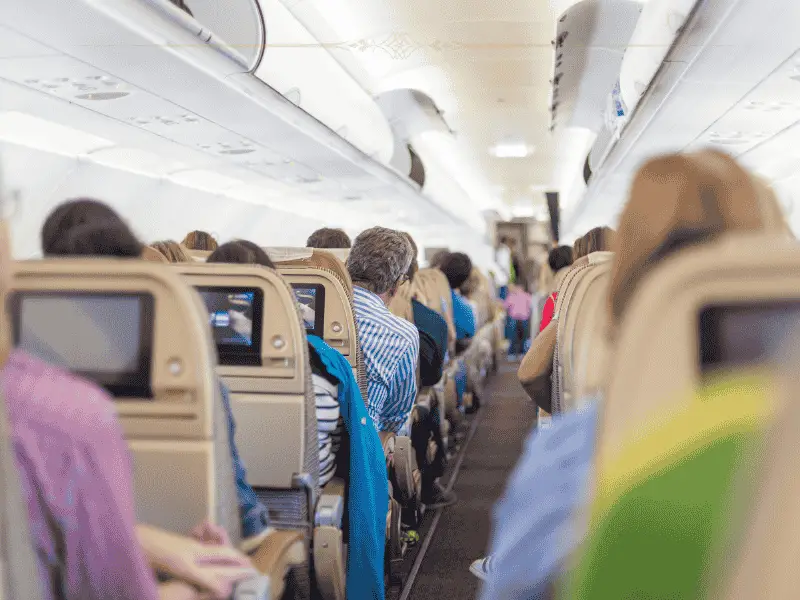
Flight attendants and etiquette professionals see the same problems on nearly every flight. Some passengers seem oblivious to how their actions affect the hundred-plus people sharing the cabin. Others simply don’t care. Either way, certain behaviors consistently rank as the most annoying, disruptive, and downright rude things you can do at thirty-five thousand feet.
We talked to industry insiders about the biggest airplane etiquette violations. Their answers reveal behaviors that range from mildly inconsiderate to genuinely problematic. Some might surprise you. Others will make you nod in recognition because you’ve been the victim of these offenses yourself.
Don’t Rush to the Bathroom Right After Boarding
Picture this: You just boarded the plane. People are still finding their seats. Flight attendants are helping passengers with bags and checking seatbelts. And someone decides they absolutely must use the bathroom right now.
This drives flight crews crazy for good reason. Those first few minutes after everyone boards are critical for the crew. They’re doing safety checks. They’re counting passengers. They’re talking to the pilots and ground staff. They’re figuring out who could help in an emergency.
When you pop up to use the bathroom during this time, you interrupt all of that. The crew has to stop what they’re doing. Other passengers can’t get to their seats. The plane can’t leave the gate. Your bathroom break just delayed takeoff for everyone.
Here’s the thing that makes this especially frustrating: You were just in the airport. Airports have real bathrooms with space, light, running water, and soap. Airplane bathrooms are tiny, dark, and already messy by the time you get there. Unless you have a medical emergency, why not use the airport restroom before boarding?
Flight attendants understand that sometimes you really do need to go. But nine times out of ten, the person using the bathroom right after boarding could have gone five minutes earlier in the terminal. That’s what makes it annoying rather than understandable.
Keep Your Hands to Yourself
You wouldn’t grab a stranger at the grocery store to get their attention. Don’t do it on an airplane either.
Flight attendants move up and down the aisle constantly. They’re serving drinks, picking up trash, checking on passengers, and watching for safety issues. Some travelers think the best way to get their attention is to reach out and tap, tug, or grab them as they pass by.
This is never okay. Flight attendants aren’t furniture. They’re working professionals doing an important job. Touching them to get their attention crosses a line that should be obvious.
You have better options. There’s a call button above your seat. You can say excuse me in a normal voice when they walk past. You can make eye contact and raise your hand slightly. All of these work fine without requiring you to put your hands on another person.
The same goes for other passengers. Don’t grab the seat in front of you and shake it when you’re standing up. Don’t elbow your neighbor when reaching for something. Keep your hands, feet, and other body parts in your own space. Planes are crowded, but that doesn’t mean basic physical boundaries disappear.
Your Feet Don’t Belong on Someone Else’s Armrest
This one makes people genuinely angry, and for good reason. Nothing ruins a flight faster than looking down and seeing a stranger’s toes creeping through the gap next to your armrest.
People who do this seem to think nobody will notice or care. They’re wrong on both counts. The passenger in front absolutely notices your feet invading their space. And they definitely care. They just usually don’t want to confront you about it.
Let’s be clear about why this is so bad. First, it’s disgusting. Airplane floors are filthy. Studies have found all kinds of bacteria living in airplane carpets. When you put your bare feet on those floors and then stick them near someone’s face, you’re exposing them to whatever you just walked through.
Second, it’s a massive invasion of personal space. Nobody agreed to have your feet anywhere near them. You wouldn’t put your feet on someone at a restaurant or movie theater. An airplane is no different just because you can’t see the person in front of you very well.
Etiquette experts say keeping your shoes and socks on throughout the flight solves multiple problems at once. Your feet stay clean. Other passengers don’t have to see or smell them. And you maintain the basic standards of public behavior that make shared spaces tolerable.
Think Before You Recline
The seat recline debate may never end. Some people think reclining is your right since the seat has that feature. Others think it’s rude because it crushes the knees of the person behind you. The truth probably falls somewhere in the middle.
What everyone agrees on is that how you recline matters as much as whether you recline. The sudden slam backward without warning is universally considered bad form. It spills drinks. It smashes laptops. It can actually hurt someone if they were leaning forward when you reclined.
The considerate approach is simple. Look behind you first. Does the person have a drink on their tray table? Are they working on a computer? If so, give them a heads up that you’re about to recline. Then do it slowly rather than slamming the seat back in one quick motion.
Timing matters too. During meal service, everyone needs their tray table down to eat. That’s not the time to recline. On a short one-hour flight, you’ll be landing soon anyway, so maybe skip it. On an overnight international flight where everyone’s trying to sleep, reclining makes more sense.
The key is awareness. Airlines designed these seats poorly, packing people too close together. That’s not your fault. But you can control how you use the recline function in a way that doesn’t make the situation worse for the person behind you.
Keep Your Limbs Out of the Aisle
Airplane seats are uncomfortable. Nobody’s arguing that point. Your legs cramp up. Your back hurts. You need to stretch. All of that is completely understandable.
What isn’t understandable is stretching your legs or feet into the aisle where they become an obstacle course for everyone else. Flight attendants trying to push drink carts have to navigate around your outstretched legs. Other passengers walking to the bathroom have to step over your feet. And if there’s sudden turbulence, someone could trip and get hurt.
When flight attendants ask you to move your feet back under your seat, they’re not being picky. They’re trying to do their job without running into people or stepping on them. They’re also thinking about safety. In an emergency evacuation, bodies sprawled into the aisle could block the exit and cost lives.
The solution is easy. Stand up and walk around every hour or so. Stretch in the galley area where you’re not blocking anyone. Do some seated stretches that keep your limbs in your own space. These options give you relief without creating problems for everyone else.
Flight crews understand that being cramped is miserable. What they don’t understand is why some passengers think the solution is to make themselves comfortable by making everyone else’s life harder.
Don’t Sprint to the Front After Landing
The plane lands. It taxis to the gate. The seatbelt sign goes off. And immediately, dozens of people jump up and rush toward the front like their lives depend on being first off the aircraft.
This accomplishes nothing except annoying everyone around you. Planes empty from front to back for good reason. That’s how you get a hundred-plus people off efficiently. When you rush forward from row thirty, you don’t actually get off any faster. You just stand jammed in the aisle for longer, blocking people who should have already left.
Think about it logically. The door is at the front. It only opens once. People can only exit one at a time. Whether you’re standing in the aisle or sitting in your seat, you’re waiting the same amount of time. The difference is that sitting in your seat doesn’t prevent other people from getting their bags and leaving in the correct order.
The exceptions are obvious. If you have a tight connection and might miss your next flight, most passengers will let you move forward when you politely explain the situation. Flight attendants often make announcements asking passengers with connections to identify themselves. That system works fine.
What doesn’t work is everyone assuming their time is more valuable than everyone else’s and pushing forward regardless. You’re going to baggage claim. They’re going to baggage claim. You’ll all get there within five minutes of each other. The rush helps nobody and irritates everyone.
Don’t Question the Flight Crew
Flight attendants go through weeks of intensive training before they ever work a real flight. They learn how to fight fires. They learn how to deliver babies. They learn CPR and how to use defibrillators. They practice evacuating planes in complete darkness. They study different types of aircraft emergencies and how to handle each one.
This training exists because flight attendants are aviation’s first responders. When something goes wrong at thirty-five thousand feet, they’re the only help available until the plane lands. Their quick thinking and proper training save lives regularly, though most passengers never see these dramatic moments.
Despite this extensive preparation, some travelers apparently think they know better. When a flight attendant asks you to do something, it’s not a suggestion open for debate. When they tell you to sit down, you sit down. When they ask you to stop a behavior, you stop immediately.
This isn’t about power trips or hurt feelings. It’s about safety. Passengers who won’t follow simple instructions during normal operations definitely won’t follow critical commands during emergencies. And in emergencies, following instructions exactly can determine whether you survive.
Flight attendants have authority in the cabin for the same reason police officers have authority in public. They’re trained professionals responsible for everyone’s safety. Treating them with respect isn’t about being nice. It’s about recognizing their role and training.
If a flight attendant tells you something, there’s a reason. They’re not making up rules to bother you. They’re applying their training to keep everyone safe. The appropriate response is immediate compliance, not arguing about whether you think they’re right.
Keep Your Shoes and Socks On
This should be obvious, but apparently it needs to be said: Keep your feet covered on airplanes. That means shoes and socks stay on for the entire flight unless you have a genuine medical reason to remove them.
Some travelers seem to think airplanes are their living room. They kick off their shoes the moment they sit down. Some even remove their socks, subjecting everyone nearby to the sight and smell of their bare feet. This is completely unacceptable in a public space.
The hygiene issues alone should discourage this behavior. Airplane floors are disgusting. They’re covered in whatever thousands of previous passengers tracked on board. When you put your bare feet on that carpet, you’re picking up bacteria you really don’t want. When you then put those feet near other people, you’re sharing that bacteria with unwilling participants.
The smell is another problem. Feet confined in shoes for hours develop odor. The closed environment of an airplane cabin means those smells don’t go anywhere. They just hang in the air, making everyone around you miserable. And there’s no escape. It’s not like people can open a window or move to another room.
Then there’s the visual offense. Feet rank low on the list of body parts people want to see from strangers. When your bare feet touch armrests, seat backs, or other surfaces, you’re contaminating things that other passengers will use later. Future travelers have no idea what they’re touching.
Etiquette experts draw a line between removing shoes while keeping socks on, which they consider marginally acceptable on long flights, and removing socks entirely, which crosses into completely inappropriate territory. Even with socks, your feet should stay in your own space, not propped on walls or stuck through gaps between seats.
The bigger question is why anyone thinks this is okay. Would you walk barefoot through a shopping mall? A restaurant? An office building? Probably not, because we maintain certain standards in public spaces. Airplanes deserve the same basic standards even though you’re sitting down for several hours.
Why This All Matters More Than You Think
These eight behaviors might seem like minor complaints from picky people. They’re not. They represent a broader breakdown in how we treat each other in shared spaces where we have no choice but to coexist.
Airplanes create a unique social situation. You’re stuck with over a hundred strangers in a confined space for hours. You can’t leave. You can’t create distance. You have to find a way to tolerate each other despite the discomfort, delays, and general unpleasantness of modern air travel.
That situation requires more courtesy than normal life, not less. When everyone’s uncomfortable, small acts of consideration matter enormously. When everyone’s irritated, avoiding behaviors that increase irritation becomes crucial. When everyone’s stuck together, basic respect for boundaries and shared space makes the difference between tolerable travel and miserable experiences.
Airlines share blame for creating conditions that breed conflict. They’ve shrunk seats to absurd dimensions. They’ve eliminated amenities that used to make flying pleasant. They’ve nickel-and-dimed passengers with fees for everything from bags to seat selection. Economy class has become genuinely uncomfortable in ways that test anyone’s patience.
But external conditions don’t eliminate personal responsibility. You can’t control how small your seat is. You can control whether you grab flight attendants for attention. You can’t control airline delays. You can control whether you storm to the front of the plane after landing. The first set of problems comes from airlines. The second set comes from passengers who’ve stopped considering how their actions affect others.
Social media has shined a light on airplane etiquette violations in recent years. Photos and videos of bare feet on armrests, passengers sprawled into aisles, and other offenses go viral regularly. These posts serve two purposes. They provide entertainment and validation for people who’ve experienced similar situations. And they serve as cautionary tales about behaviors to avoid.
The solutions aren’t complicated. Basic awareness of your surroundings helps. Thinking about how your actions affect the people around you makes a difference. Following instructions from crew members keeps everyone safe. Maintaining minimal standards of public behavior preserves shared space as something tolerable rather than miserable.
Flight attendants and etiquette experts emphasize that flying is a temporary community. You’re stuck with these people for a few hours, not forever. Making small efforts to be considerate during that time benefits everyone, including you. Flights with less conflict and tension are simply more pleasant than flights where everyone’s fighting over boundaries and behaviors.
The eight behaviors outlined here represent the most common and most annoying violations of airplane etiquette. Dozens of other smaller offenses happen on every flight. Excessive noise. Hogging overhead bin space. Letting children kick seats. Treating crew members rudely. The list goes on. But these eight are the foundation. Get these right, and you’re already ahead of a significant percentage of air travelers.
As flying becomes more common and planes become more crowded, the importance of basic courtesy will only grow. The alternative is a continuing slide toward worse experiences where every flight becomes a battle. Nobody wants that outcome. Everyone benefits when passengers treat each other with basic decency and respect the crew members responsible for their safety.
The next time you fly, remember these guidelines. Don’t touch people. Keep your feet in your own space and covered. Think about others before you recline. Stay out of the aisle. Wait your turn to exit. Listen to the crew. Use the airport bathroom before boarding. And please, for everyone’s sake, keep your socks on.
These aren’t complicated rules. They’re basic courtesy applied to the specific context of air travel. Following them won’t make flying comfortable or fun. Airlines have made sure of that with their relentless cost-cutting and space-shrinking. But following these rules will make flying less miserable for everyone sharing the plane with you. And that’s about the best we can hope for in modern air travel.