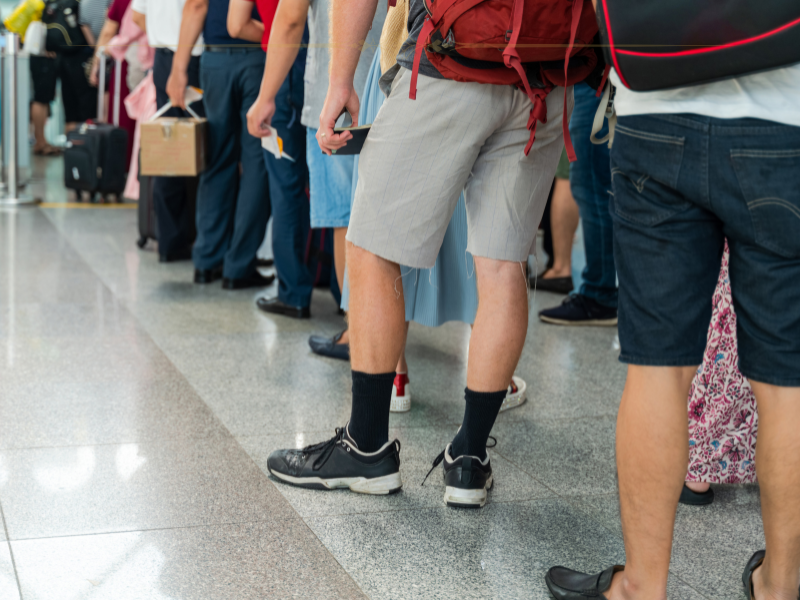
Anyone who has flown commercially in recent years knows the scene all too well. As soon as airline staff announce the beginning of boarding, a mass of passengers surges toward the gate area, regardless of which group has actually been called. They hover, they inch forward, they clutch their boarding passes with determination. This behavior has earned an unflattering nickname among frequent travelers and airline employees: gate lice.
The term might sound harsh, but it captures the frustration felt by those who watch fellow passengers abandon all sense of order the moment boarding begins. These are the travelers who crowd the gate area long before their group is called, blocking access for those who actually have priority boarding. They’re the ones who create bottlenecks, generate confusion, and slow down what should be a straightforward process.
Now, after years of dealing with this persistent problem through announcements and polite requests that often went ignored, major airlines are taking a different approach. They’re fighting back with technology.
Understanding the Gate Lice Phenomenon
The behavior itself isn’t new. Since airlines introduced tiered boarding groups decades ago, some passengers have simply refused to wait their turn. But why does this happen? What drives otherwise reasonable people to crowd around a gate like their lives depend on being first in line?
The anxiety stems largely from overhead bin space. Modern air travel has become a study in cost-cutting, with airlines charging fees for checked baggage. This has pushed more travelers to rely on carry-on luggage, creating fierce competition for limited storage space above the seats. Passengers worry that if they don’t board quickly, they’ll be forced to gate-check their bags, potentially delaying their arrival at the final destination or risking lost luggage.
This fear isn’t entirely unfounded. On full flights, overhead bins do fill up, and late-boarding passengers often face the inconvenience of having their carry-on items stored far from their seats or checked at the aircraft door. The problem feeds on itself. As more people rush to board early, it reinforces the behavior in others who witness the chaos and conclude they need to do the same.
The practice creates tangible problems beyond mere annoyance. When dozens of passengers crowd the gate area, those with legitimate priority boarding face obstacles reaching the boarding door. Families with small children, elderly passengers who need extra time, and travelers with disabilities find themselves navigating through a sea of people who aren’t supposed to be boarding yet. Gate agents struggle to verify boarding passes and maintain any semblance of order while managing these crowds.
The boarding process takes longer when passengers don’t board in their assigned sequence. Airlines design boarding groups strategically to fill the aircraft efficiently from back to front or by zones. When everyone tries to board simultaneously, it creates congestion in the jetway and aircraft aisles as passengers jostle for position and compete for bin space. This directly impacts departure times, which in turn affects the entire daily flight schedule.
The Technology Solution
One major American carrier has decided enough is enough. After years of trying to manage gate lice through verbal announcements and occasional enforcement, the airline is rolling out an automated system designed to bring order back to the boarding process. The technology is now operational at more than one hundred airports across the country.
The system works through enhanced gate scanning equipment that does more than simply read boarding passes. When passengers scan their tickets, the technology instantly analyzes their assigned boarding group and compares it to which group is currently being called. If there’s a mismatch, the system triggers both visual and audio alerts.
The alerts are impossible to ignore. A distinct sound plays when someone attempts to board out of sequence, and gate agents immediately see a notification on their screens. This creates an unmistakable moment where the premature boarding attempt becomes public knowledge. The passenger must step aside and wait for their actual group to be called.
This public element serves an important psychological function. Unlike a quiet rejection that might go unnoticed by others in line, the audio alert makes it clear that someone has tried to jump the queue. This social pressure reinforces the rules in a way that polite announcements never could.
The sophistication of the system extends beyond simple rejection. Gate agents maintain override capabilities for legitimate exceptions. A family traveling together might have different boarding groups due to how tickets were purchased. A passenger might need special assistance that wasn’t noted in their reservation. The technology allows agents to use their judgment while maintaining the overall structure.
How Airlines Tested the Waters
Before deploying this technology across their network, the airline conducted extensive trials at select airports. These test locations were chosen to represent different operational environments, from massive hub airports handling hundreds of flights daily to smaller stations with just a few daily departures.
The results from these trials convinced airline executives that the investment would pay off. Boarding times decreased measurably at test locations. The structured process meant fewer delays, which has a cascading positive effect throughout the day as aircraft stay closer to their scheduled timelines. When planes depart on time, they’re more likely to arrive on time, improving connections for passengers and crew positioning for subsequent flights.
Passenger reactions during the testing phase revealed interesting patterns. Initial skepticism gave way to acceptance relatively quickly. Frequent travelers, who had endured years of boarding chaos, expressed strong support for the new approach. These seasoned flyers understood the benefits of an orderly process and appreciated that the system enforced fairness.
Even among passengers who had previously engaged in premature boarding attempts, resistance proved minimal. Many admitted they had only crowded the gate because everyone else was doing it. The technology gave them permission to relax and wait their turn, knowing that others couldn’t cut ahead either. This leveled the playing field in a way that voluntary compliance never could.
Gate agents reported less stress and fewer confrontations. Previously, these employees had to make judgment calls about when and how to enforce boarding group rules. Some passengers responded to correction with arguments or complaints. The automated system removes much of this personal conflict. Agents now simply explain that the system enforces the rules automatically, shifting responsibility away from individual staff members.
The Training and Implementation Process
Introducing new technology across an airline’s network requires significant coordination and preparation. Gate agents needed training not just on operating the equipment but on managing passenger interactions in this new environment. The airline developed comprehensive training programs to prepare staff for the rollout.
Agents learned to explain the system to confused or frustrated passengers. They practiced handling the override functions for legitimate exceptions. They developed responses to common questions and concerns. The training emphasized maintaining professionalism while firmly enforcing the new procedures.
Airport operations teams coordinated the installation of equipment at more than one hundred locations. This meant scheduling downtime at gates, testing connectivity, and ensuring backup systems could handle any technical issues. The logistics of such a widespread deployment required months of planning and execution.
Communication with passengers began well before the system went live at each location. Airlines updated their websites and mobile apps to explain the new boarding procedures. They sent emails to frequent flyers. They created signage for gate areas explaining how the system works and what passengers should expect.
The timing of the full-scale rollout reflects strategic planning. By implementing the system before the holiday travel season, the airline gives both staff and passengers time to adjust before facing the year’s busiest travel period. Holiday travel brings unique challenges, with occasional flyers who may be less familiar with boarding procedures joining the usual mix of business and leisure travelers.
Impact on Different Types of Travelers
The new system affects various categories of passengers differently. Frequent business travelers, who often enjoy elite status granting early boarding privileges, have embraced the technology enthusiastically. These passengers paid for or earned their priority boarding through loyalty to the airline. They resent when other travelers ignore the rules and crowd the gate, diminishing the value of status they worked to achieve.
For these frequent flyers, the technology validates their investment in airline loyalty programs. They can now board without fighting through crowds of people who haven’t earned early boarding privileges. The system ensures they get the overhead bin space and smooth boarding experience their status should provide.
Families traveling together face mixed implications. Modern airline pricing often results in family members booking separately or at different times, leading to assignment in different boarding groups. Parents worry about being separated from children during boarding. However, gate agents can use override functions to board families together when appropriate, maintaining the spirit of the rules while accommodating practical realities.
Budget-conscious travelers who deliberately purchase basic economy tickets accepting late boarding as a tradeoff for lower fares now find that tradeoff enforced more strictly. Previously, these passengers could sometimes sneak into earlier boarding groups without consequence. The technology eliminates that possibility, ensuring they board when their ticket class dictates.
Occasional travelers, who might not understand the nuances of airline boarding procedures, face a learning curve. These passengers may genuinely not realize they’re boarding too early rather than deliberately trying to skip ahead. The audio alert serves as immediate education, teaching them to pay attention to boarding group numbers and wait their turn.
The Operational Benefits
Airlines measure success in multiple ways, and this technology delivers improvements across several key metrics. On-time departure performance shows the most immediate impact. Every minute saved during boarding contributes to better punctuality, which matters enormously in airline operations.
Consider the mathematics of airline scheduling. A single aircraft might operate six or eight flights in a day. If each flight departs five minutes late due to inefficient boarding, that aircraft falls thirty to forty minutes behind schedule by day’s end. This forces delays in crew schedules, gate assignments, and connections. Improving boarding efficiency by even a few minutes per flight generates substantial operational benefits.
Overhead bin management becomes more predictable and efficient. When passengers board in their assigned sequence, the airline can better manage cabin space. Early boarding groups fill bins near their seats, while later groups use remaining space. This reduces the need for gate-checking bags, which requires staff time and creates potential for lost or delayed luggage.
Customer service metrics improve as well. Fewer passenger complaints about boarding chaos mean gate agents can focus on other aspects of customer service. The reduction in conflicts between passengers and staff creates a more pleasant work environment and better passenger experience.
The system generates valuable data about boarding patterns and passenger behavior. Airlines can analyze which flights have the most boarding issues, which boarding group structures work best, and how passenger flow through the jetway affects timing. This data informs future decisions about aircraft boarding procedures and gate operations.
The Broader Implications for Air Travel
This technological approach to managing gate lice represents part of a larger trend in aviation. Airlines increasingly turn to automated systems to handle tasks previously managed through human judgment and enforcement. This shift reflects both the capabilities of modern technology and the challenges of maintaining service standards while managing millions of passengers.
The aviation industry has already automated much of the travel experience. Self-service kiosks replaced many ticket counter transactions. Mobile boarding passes eliminated the need to print documents. Automated baggage systems track luggage through complex networks. Now boarding itself joins the list of processes enhanced through technology.
Other airlines are watching this implementation closely. If the system continues to deliver operational improvements and positive passenger feedback, competitors will likely adopt similar technology. The airline industry has a history of rapid technology adoption when innovations prove successful. Advantages gained by early adopters typically become industry standards within a few years.
The technology could evolve beyond simple boarding group enforcement. Future versions might integrate with other systems to provide gate agents with more comprehensive passenger information. The same scanning technology could verify vaccination records, visa requirements, or other travel documentation. It could flag passengers who need special assistance or alert agents to connection concerns.
International airports and foreign carriers have expressed interest in similar systems. While gate crowding is particularly pronounced in American air travel, the phenomenon exists worldwide. Technology that successfully manages boarding in the United States could find applications in aviation markets around the globe.
Addressing Concerns and Criticisms
Not everyone celebrates the new boarding technology. Some passengers object to what they see as excessive automation of human interactions. They argue that air travel already feels impersonal and that adding more technology removes the human element from travel.
Privacy advocates have raised questions about the data collected and stored by these boarding systems. While airlines maintain that the technology only verifies boarding group eligibility without storing personal information, skepticism remains about data practices in an era of increasing surveillance.
Others worry about technical failures. What happens when the system malfunctions? If scanning equipment breaks down, will airlines revert to manual boarding, or will flights face delays while equipment is repaired? The airline maintains that backup procedures exist and that gate agents retain full authority to manage boarding when technology fails.
Some passengers miss the old system precisely because it allowed flexibility. A savvy traveler could often board early by positioning themselves strategically or timing their approach to the gate carefully. These passengers benefited from the chaos and resist a system that eliminates their advantage, even if that advantage came from exploiting weak enforcement.
Disability rights groups have sought assurances that the system accommodates passengers with invisible disabilities who may need early boarding but might not appear to require assistance. Airlines have emphasized that pre-boarding for passengers needing extra time remains unchanged and that gate agents can override the system when appropriate.
What Passengers Need to Know
For travelers adapting to this new reality, understanding how to work within the system makes the experience smoother. The fundamental rule is simple: wait for your boarding group to be called before approaching the gate. This seems obvious, but decades of behavior patterns need to change.
Checking your boarding group before arriving at the gate helps avoid confusion. Boarding passes clearly indicate group numbers, but passengers often overlook this information. Taking a moment to note your boarding group and understanding the sequence prevents awkward moments at the scanner.
Arriving at the gate area with sufficient time before boarding begins remains important, but camping at the gate entrance serves no purpose anymore. Passengers can wait comfortably in nearby seating, confident that the system will prevent others from taking their rightful place in line.
For those with elite status or premium tickets granting early boarding, the system enhances the value of those privileges. Priority boarding now means priority boarding, without having to fight through crowds of people who lack such privileges.
Passengers needing special assistance should identify themselves to gate agents before boarding begins. Whether due to disability, traveling with small children, or other circumstances, early communication ensures the appropriate accommodations without triggering system alerts.
Understanding that gate agents will enforce the system strictly helps set expectations. Unlike the old approach where enforcement varied by airline staff, airport, and even time of day, the automated system applies rules consistently. Attempts to charm or persuade agents to allow early boarding will fail because the technology makes such exceptions visible and trackable.
The Psychology of Queue Jumping
The gate lice phenomenon raises interesting questions about human behavior in crowded spaces. Why do otherwise courteous people abandon social norms when boarding an airplane? Psychologists who study queue behavior identify several factors that contribute to this conduct.
Scarcity mindset plays a major role. When people perceive limited resources, in this case overhead bin space, competitive instincts override cooperative behavior. The fear of being left without space triggers anxiety that manifests as aggressive positioning near the gate.
Anonymity in crowds reduces social accountability. In a sea of strangers, people feel less constrained by normal social rules. The temporary nature of air travel creates an environment where social consequences for poor behavior seem minimal. Passengers know they’re unlikely to ever see these fellow travelers again, reducing incentive for cooperative conduct.
Perceived unfairness also drives gate crowding. Some passengers believe the boarding system itself is unfair, with status and money determining priority rather than arrival time at the gate. This perception, whether justified or not, leads people to subvert rules they consider illegitimate.
The new technology addresses these psychological factors by eliminating the perception that rule-breaking goes unpunished. When the system audibly alerts everyone to boarding violations, the anonymity disappears. Social accountability returns even among strangers because the violation becomes public.
Economic Considerations
The investment in boarding technology represents significant capital expenditure for airlines. Equipment at more than one hundred airports, along with training, implementation, and ongoing maintenance, costs millions of dollars. Airlines make such investments only when they expect positive return through operational improvements or competitive advantages.
The business case rests on multiple factors. Improved on-time performance has direct economic value. Every minute an aircraft sits at the gate represents opportunity cost. Faster boarding means more efficient aircraft utilization and potentially the ability to add flights to schedules.
Reduced customer service issues translate to cost savings. Every passenger complaint requires staff time to resolve. Conflicts at the gate create situations that may require supervisor intervention or travel vouchers to appease frustrated travelers. Preventing these situations through automated enforcement reduces these costs.
The competitive advantage also matters in an industry where customer experience distinctions between carriers have narrowed. If passengers prefer flying an airline with orderly boarding, that preference can influence booking decisions. Loyalty program members might maintain status with an airline that better protects elite boarding privileges.
The technology may also reduce staffing needs over time. If automated systems handle boarding enforcement, airlines might operate with fewer gate agents or redeploy staff to other customer service functions. This potential cost savings likely factored into the business justification for the investment.
Future of Boarding Procedures
Looking at the trajectory of boarding technology suggests several possible developments on the horizon. Biometric identification could eventually replace physical boarding passes entirely. Passengers might board simply by having their faces scanned, with the system automatically verifying their boarding group eligibility.
Artificial intelligence could optimize boarding group assignments in real-time based on factors like connection times, baggage, and seating locations. Rather than static boarding groups assigned when tickets are purchased, dynamic systems might adjust boarding priority based on current conditions.
Integration with airport navigation systems could alert passengers when their boarding group is called regardless of their location in the terminal. Imagine receiving a notification on your phone telling you to proceed to the gate because your group is boarding, rather than anxiously monitoring gate area displays.
The concept could extend to other aspects of airport operations. Similar systems might manage security line access, preventing crowding at TSA checkpoints. Restaurants and shops might use comparable technology to manage capacity and flow during peak times.
As airlines gather data from these boarding systems, they may discover insights that lead to entirely new boarding procedures. Perhaps the traditional boarding group structure itself will evolve based on what the data reveals about passenger behavior and optimal aircraft loading patterns.
The Cultural Shift
Beyond the technology itself, this change represents a cultural evolution in air travel behavior. For decades, gate crowding has been tolerated as an inevitable annoyance of flying. The acceptance that this behavior can and should be eliminated marks a shift in expectations for airport conduct.
Younger travelers, who have grown up with extensive technological mediation of social interactions, may adapt more quickly to automated boarding enforcement than older passengers accustomed to more flexible systems. This generational difference in comfort with technology-enforced rules reflects broader social changes in how we interact with systems and institutions.
The success of boarding technology may embolden airlines to apply similar approaches to other problem behaviors. Passengers reclining seats at inappropriate times, monopolizing overhead bins, or causing disturbances might face technological interventions in the future. The line between maintaining order and creating an oppressively regulated environment will require careful consideration.
As the system becomes standard across the industry, the term gate lice itself may fade from use. When the behavior effectively disappears, the colorful nickname for it becomes obsolete. Future travelers might find it difficult to imagine a time when crowds of people routinely ignored boarding groups and created chaos at departure gates.
The orderly boarding process may contribute to a broader improvement in air travel civility. When systems enforce basic rules consistently, it sets expectations for passenger conduct. People adjust their behavior to align with clearly communicated and reliably enforced standards. This could create a positive cycle where improved order leads to better passenger attitudes, which in turn reduces stress for everyone in the airport environment.
This transformation of the boarding process demonstrates that long-standing problems in air travel can be solved through creative application of technology and commitment to enforcement. Gate lice may soon become a relic of aviation’s past, remembered only in the stories of frustrated travelers who endured the chaos before airlines decided to fight back with scanners, alerts, and automated systems that simply refuse to let rule-breakers pass.