
The American passport, once the most powerful travel document in the world, has dropped significantly in international rankings and is no longer among the top ten. According to the latest Global Passport Index released for 2026, the United States has fallen to twelfth place, marking the most dramatic decline of any major developed economy in the index’s five-year history. For American travelers, the decline has real implications for how easy it is to visit certain countries and what visa requirements they will face.
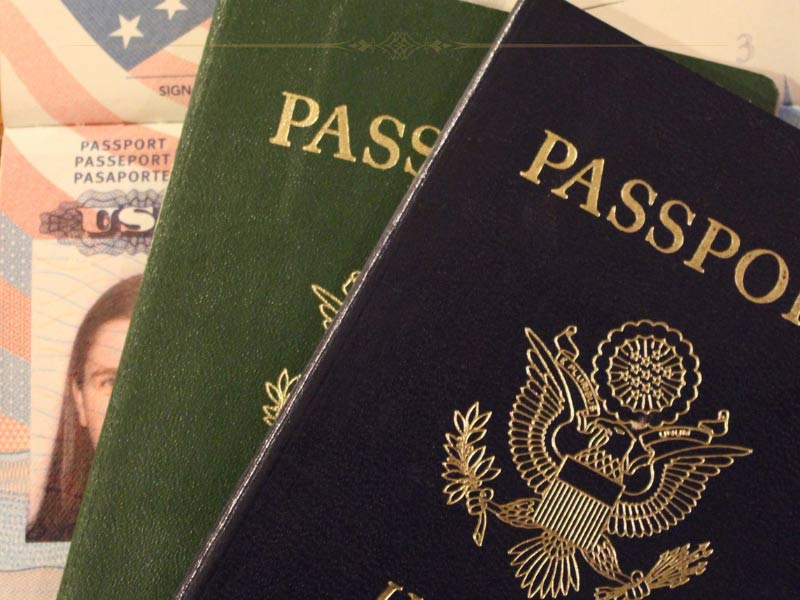
The United States held the number one position in 2021 when the Global Passport Index first began tracking passport strength. At that time, the American passport scored 96.45 out of 100, the highest score ever recorded in the index. That position and that score represented genuine global dominance in terms of travel access and the ease with which American citizens could move between countries. Five years later, that position has eroded substantially. The current American passport score has fallen to 92.37, a decline that reflects changing global circumstances and shifting patterns in how countries grant access to foreign visitors.
What makes the American decline particularly notable is not just that the ranking has fallen, but how quickly it has fallen and how dramatically it differs from the experience of other major developed nations. European countries have maintained strong positions throughout the period. The United Kingdom remains in the top ten. Several Northern European nations rank consistently in the top five. The gap between how American and European passports are treated by the rest of the world has widened significantly since 2021.
How Passport Power Is Actually Measured
The Global Passport Index evaluates travel documents using three distinct criteria, and understanding these categories helps explain why the American passport has declined while others have remained relatively strong. The three factors are enhanced mobility, which measures how many countries a passport holder can access without advance visas or with minimal visa requirements; investment potential, which examines economic opportunities available to passport holders; and quality of living, which assesses what standard of life a passport provides access to.
The American passport’s decline has been driven primarily by a collapse in the mobility category. The United States fell from tenth place in mobility ranking to forty-first place, a dramatic drop that occurred over the five-year period. This means that while American passport holders previously had relatively easy access to a large number of countries without pre-arranged visas, that access has become more restricted. Some countries have changed their visa policies toward Americans. Others have introduced new requirements. The cumulative effect is that the American passport is no longer the globally accepted travel document it once was.
The other two categories, investment potential and quality of living, remained relatively strong for Americans. This is why the American passport did not fall even further in the overall rankings despite the mobility collapse. But the steep decline in mobility, which is the factor that most directly affects the average traveler planning a trip, has been enough to push the overall ranking down significantly.
Sweden Now Holds the Top Spot, With a Significant Lead
Sweden has claimed the number one position in the Global Passport Index with a score of 96.05 out of 100. The gap between Sweden’s position and the countries ranked lowest has widened substantially since the index began tracking passport strength. Afghanistan, which ranks last, scores significantly lower than it did five years ago, and the divergence between the world’s strongest and weakest passports is not a temporary condition but appears to be a deepening structural reality of international travel.
Sweden’s position at the top reflects a combination of factors. Swedish citizens have access to a large number of countries with minimal visa requirements or through visa-on-arrival arrangements. Sweden’s economic strength and the quality of living available to its citizens contribute to the overall ranking. The country’s geopolitical position and its relationships with other nations have allowed it to maintain a passport that is widely accepted and broadly respected.
Switzerland, which was ranked eleventh when the index first began in 2021, has climbed to second place with a score of 95.2. The Swiss passport has gained significant strength over the five-year period, moving up steadily through the rankings year by year. The trajectory of the Swiss passport demonstrates how countries can improve their position through consistent economic strength, stable governance, and diplomatic relationships that facilitate travel access.
Finland ranks third with a score of 94.4 and has held this position since 2024. Germany and the Netherlands occupy fourth and fifth place respectively. Denmark is tied for fifth place. The Northern European countries, in particular, dominate the top rankings, reflecting the region’s strong economic fundamentals and the ease with which citizens of these countries can travel globally.
Where the United Kingdom Stands After Brexit
The United Kingdom holds the eighth position in the Global Passport Index, maintaining the same ranking as the previous year. However, the report notes that the British passport is notably weaker in mobility than it was before Brexit, as the departure from the European Union has affected travel access to European countries and changed some visa arrangements. Despite this decline in the mobility component, the UK passport remains in the top ten because of its strong performance in the other two categories: investment potential and quality of living.
This situation illustrates an important principle about passport rankings: they are not purely based on how many countries you can visit visa-free. The overall strength of a passport reflects multiple dimensions of what it means to hold travel credentials from a particular country. The British passport’s position reflects that while Brexit has complicated travel to Europe, the United Kingdom’s economic strength and the quality of life it represents still give its passport significant global value.
The UK’s position in the top ten is notable partly because it is the only non-Nordic, non-continental European country in that tier. Most other countries in the top ten are Nordic or continental European nations with strong diplomatic networks and high-functioning government systems that facilitate international travel and cooperation.
The Broader Top Ten and What It Reveals
Ireland ranks seventh in the Global Passport Index, benefiting from its position as an English-speaking European nation with strong economic fundamentals and EU membership. Norway ranks ninth, another Scandinavian country whose passport provides strong international access. Singapore rounds out the top ten in tenth place, representing Asia’s highest-ranking passport in this particular index.
The dominance of Northern and continental European countries in the top ten reflects several structural factors. These countries have stable governments, strong economies, and extensive diplomatic relationships that make their passports widely accepted. They are members of regional organizations like the European Union that facilitate travel and movement across borders. Their citizens have access to education, employment, and investment opportunities globally, which are all factors that contribute to the overall strength of the passport in the index’s calculation.
The fact that Asia’s strongest representative in the Global Passport Index is Singapore, ranked tenth, reveals that even the most developed and strongest Asian economies do not achieve the same level of passport strength as their European counterparts in this particular ranking system.
How the American Decline Happened
The American passport’s fall from first place to twelfth place occurred gradually over five years, but the trajectory is clear in the year-by-year data. The 2021 score of 96.45 represented a peak that has not been approached again. Each subsequent year saw modest declines as the mobility component deteriorated more significantly than other factors improved.
The deterioration of American mobility ranking, from tenth place to forty-first place, is the primary driver of the overall decline. This reflects changing global patterns in visa policy toward Americans. Some countries have implemented new visa requirements for American citizens. Others have restricted the duration of visa-free stays. Still others have introduced new fees or documentation requirements that complicate travel.
The factors driving these changes are complex and include post-pandemic policy shifts, changing geopolitical circumstances, and adjustments by individual countries to their travel policies. Some of the decline reflects deliberate policy decisions by other nations to restrict American access as part of broader diplomatic or economic relationships. Other parts reflect administrative changes and updates to visa policies that affect all foreign visitors, not just Americans.
The American decline is the most dramatic experienced by any G7 country during this period. Other major developed economies either maintained their positions or, in some cases, improved them slightly. That the United States has experienced the steepest decline is notable because it suggests that the changes affecting American passport strength are specific to the United States rather than part of a broader global pattern.
Alternative Passport Strength Measurements
The Global Passport Index is not the only system that measures passport strength and travel access. The Henley Passport Index, which is produced by a different organization and uses data from the International Air Transport Association, ranks passports differently. In the Henley Index, Singapore holds the top position, having maintained that ranking for three consecutive years. Singapore’s passport provides visa-free access to 192 of 227 countries included in that index.
Japan and South Korea jointly hold the second-place ranking in the Henley Index, with passports that provide visa-free access to 188 countries. Denmark, Luxembourg, Spain, Sweden, and Switzerland all tie for third place with visa-free access to 186 destinations.
The differences between the Global Passport Index and the Henley Passport Index reflect their different methodologies and different factors being measured. The Henley Index focuses primarily on visa-free access to specific countries, while the Global Passport Index incorporates economic and living standard factors alongside mobility. These different approaches can produce different rankings, though the same countries tend to appear in the top positions across multiple ranking systems.
The Weakest Passports and What That Reveals
At the opposite end of the Global Passport Index, the weakest passports belong primarily to countries experiencing armed conflict or significant political instability. Sudan ranks 188th, followed by Congo (Brazzaville) in 189th place. The Central African Republic, Congo (Kinshasa), and Eritrea occupy the next positions. Syria ranks 193rd, Yemen 194th, and South Sudan 195th. Somalia ranks 196th, with Afghanistan holding the final position at 197th.
The pattern of which countries occupy the lowest positions in the index reveals the strong correlation between passport strength and political stability, conflict conditions, and economic functioning. The countries at the bottom of the rankings are predominantly those affected by ongoing armed conflict, severe political instability, or extreme economic dysfunction. Citizens of these countries face the most restrictive visa requirements globally and have the fewest options for international travel access.
The widening gap between the strongest and weakest passports, which the index tracks explicitly, reflects a global trend toward greater divergence in travel access and mobility based on nationality and country of origin. This growing gap suggests that for citizens of countries at the bottom of the rankings, international travel is becoming increasingly difficult and restricted, while for citizens of countries at the top, travel access continues to expand or remain stable.
What This Means for American Travelers
For Americans planning international travel, the decline in the American passport’s ranking carries practical implications. While the United States is still not in the lowest tier of countries, and American citizens still have access to a large number of countries, the declining position suggests that some travel requirements may become more complicated or more expensive going forward.
American travelers should be aware that an increasing number of destinations are implementing visa requirements for Americans, when previously those countries offered visa-free entry. The complexity of visa applications and the cost of obtaining visas is increasing for some destinations. The trend suggests that American travelers cannot assume the same level of ease of access that previous generations experienced.
The decline also has symbolic implications beyond the practical travel requirements. The American passport’s loss of global dominance reflects broader shifts in American geopolitical position and how other countries perceive and relate to the United States. A passport is not just a travel document. It is a representation of a country’s global standing and its citizens’ place in the international system. The decline of the American passport’s strength in these global rankings reflects the changing position of the United States in the world.
For Americans considering whether to invest in obtaining dual citizenship or the passports of other countries, the declining strength of the American passport might be a factor in that calculation. The European countries represented heavily in the top rankings of these indices offer passports that currently provide easier travel access to more countries than the American passport provides.