Engine Debris Struck a Cabin Window Mid-Flight, Creating a Life-Threatening Emergency That Forced an Immediate Return to the Ground.
A routine morning flight from Greece to Germany turned into a survival situation when engine debris struck the aircraft’s fuselage and shattered a cabin window, creating a sudden decompression emergency that threatened to pull a passenger out of the aircraft. The Ryanair flight, carrying passengers from Thessaloniki to Memmingen in Germany, was forced to return to the airport it had just departed from only minutes after takeoff. What happened in those minutes on the morning of July 10 illustrates both the dangers of in-flight mechanical failure and the critical role that fellow passengers sometimes play in preventing tragedy.
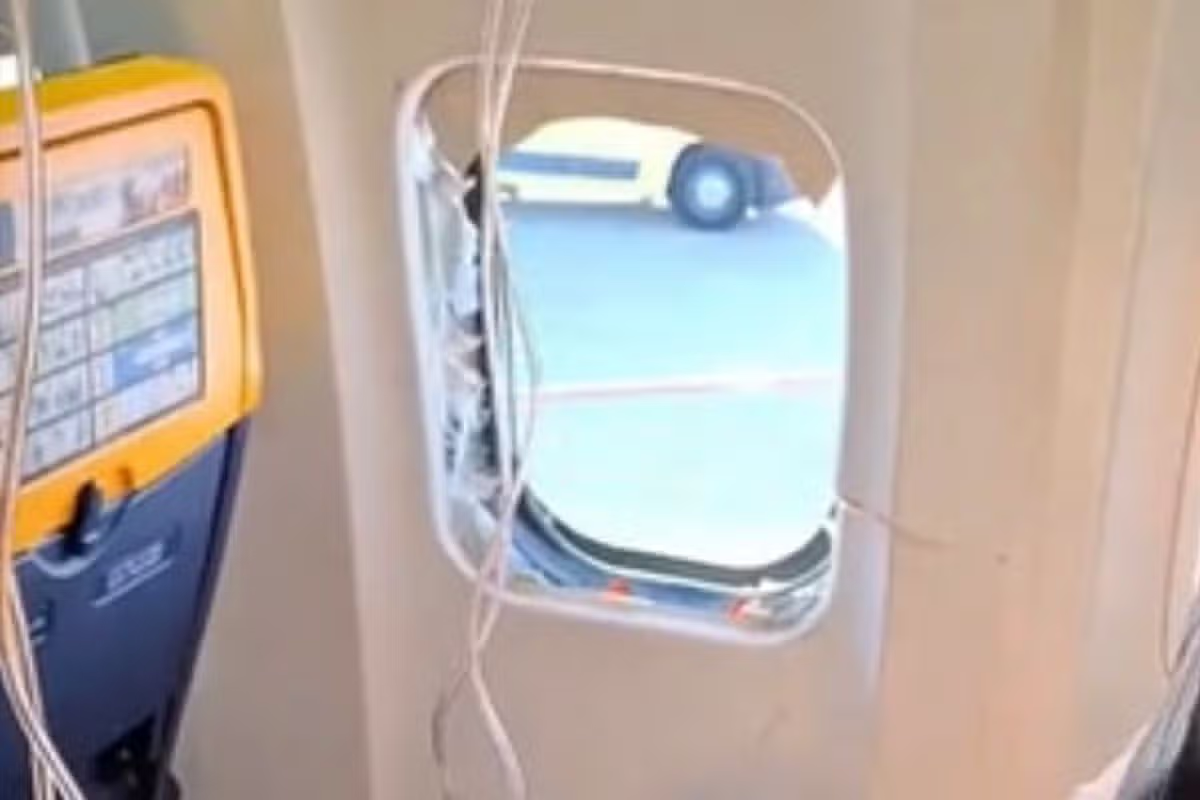
The flight operated by Malta Air, a subsidiary of Ryanair, had been airborne for only a brief period when the crew detected an engine problem. During the initial ascent, pilots identified issues with one of the aircraft’s engines and made the decision to return to Thessaloniki immediately. The return descent itself triggered a catastrophic event. As the aircraft was descending and maneuvering to return to the airport, a piece of debris from the damaged engine separated and struck one of the cabin windows, shattering it and creating a pressurization emergency at altitude.
For a 61-year-old passenger from Serbia who had been seated next to the window, the moment the glass shattered created a life-threatening situation. The sudden pressure differential between the inside and outside of the aircraft created a powerful force that began pulling him toward the opening. His body was drawn toward the broken window, and only the quick action of fellow passengers, including his wife, prevented him from being pulled completely out of the aircraft.
The Sequence of Events That Led to the Emergency
The Boeing 737-800 aircraft had departed Thessaloniki early in the morning, around 5:55 local time. The flight was scheduled to be a routine short-haul operation across Europe to a destination in Bavaria. Shortly after takeoff, as the aircraft was climbing to cruising altitude, the flight crew detected an anomaly in one of the engines. The exact nature of the problem was not immediately clear from the cockpit, but it was serious enough that pilots decided the safest course of action was to return to the airport they had just left rather than continue the flight.
Pilots initiated a turn back toward Thessaloniki and began descending the aircraft. They notified air traffic control of the emergency situation and received approval for the return. In the cabin, passengers were likely unaware of any serious problem at this point, or were only vaguely aware that something was not proceeding normally. Some airlines inform passengers of technical issues during descent, while others keep communication minimal to avoid alarming passengers unnecessarily.
What happened next is where the situation escalated dramatically. During the descent, as the aircraft was maneuvering to approach the airport, a piece of the damaged engine separated from the powerplant. This debris traveled through the air at high speed and struck the fuselage of the aircraft. The impact was directly on one of the cabin windows, striking it with enough force to shatter the window completely and create a hole in the aircraft’s pressure vessel.
What Happens When a Window Breaks at Altitude
The shattering of a cabin window at altitude creates an immediate and severe emergency because of the pressure differential between the inside and outside of the aircraft. At cruise altitude, aircraft cabins are pressurized to simulate conditions at lower elevations, typically around 8,000 feet. The atmosphere outside the aircraft at actual cruising altitudes is so thin and cold that human survival is impossible without pressurization. When a hole is created in the fuselage, air rushes out of the aircraft rapidly, and the pressure differential creates powerful forces that pull anything not secured inward toward the opening.
This is distinct from popular portrayals of decompression in movies and television, which often show a catastrophic and explosive event. In reality, rapid decompression through a broken window is dangerous and serious, but the dynamics are somewhat different from what many people imagine. Objects and people are drawn toward the opening, but they are not universally torn violently from their seats. However, the force involved is substantial enough to pull a person toward the window if they are close to it and not held in place.
In this case, the passenger seated next to the broken window was immediately affected. The pressure differential pulled him toward the opening with enough force that he began to be drawn out of his seat. His upper body was drawn toward the window, with his head and shoulders moving toward the opening.
Oxygen Masks and Cabin Crew Response
As soon as the window broke and decompression began, the aircraft’s automated oxygen mask system activated. Throughout the cabin, oxygen masks dropped from the ceiling compartments above each row of seats. This is a critical safety system designed to provide breathable air to passengers and crew during decompression events or other situations where the cabin air becomes unsafe to breathe.
The flight crew declared an emergency with air traffic control and initiated emergency procedures. The captain repeatedly announced the emergency situation, using the word that signals to air traffic control and to the cabin crew that this is a serious, life-threatening situation requiring immediate response and priority handling.
Cabin crew members moved quickly through the aircraft to assess the situation and to assist passengers. The window that had broken was located in an area of the cabin where crew could respond relatively quickly. The first priority was preventing the passenger from being pulled completely out of the aircraft through the broken window.
Fellow Passengers Become Lifesavers
What happened next illustrates the instinctive human response to assist someone in immediate danger. Fellow passengers, witnessing a man being drawn toward an open window at altitude, reacted without hesitation. The passenger’s wife and other nearby passengers moved to hold him in place, using their physical strength to counter the pull of the decompression force drawing him toward the window.
One eyewitness account, relayed through a German news agency, described the scene: the passenger’s head and shoulders were sticking out of the broken window. Other accounts mentioned that his body was extended outside the aircraft up to his shoulders. Fellow passengers, recognizing that their intervention was the only thing preventing a catastrophic outcome, held the man firmly in place using whatever leverage they could secure.
The pressure differential that was pulling him toward the window created significant resistance to the passengers’ efforts to hold him. But multiple people working together were able to prevent him from being pulled completely through the opening. One passenger, a woman named Christina who was interviewed by radio, described holding the man by his feet while his wife and others assisted in keeping him in the aircraft and away from the window.
This intervention lasted only minutes until the aircraft descended to a lower altitude where the pressure differential was reduced enough that the danger was significantly diminished. As the aircraft descended, the atmospheric pressure outside increased, reducing the pressure differential between inside and outside the fuselage. The force pulling the passenger toward the window decreased substantially, making it easier for the people holding him to maintain their grip.
The Emergency Descent and Landing
The aircraft continued its emergency descent toward Thessaloniki. The return flight from the point of the window breach to landing took approximately twenty minutes. During this time, the aircraft was depressurized or operating at a higher cabin altitude than normal, which can cause some passenger discomfort including ear pain and difficulty breathing, but which is manageable during a short descent period.
Pilots coordinated with air traffic control to arrange emergency services at the airport. Ground crews were notified that there would be medical personnel needed when the aircraft landed. Fire trucks and emergency medical services were positioned at the airport in case they were needed during landing or evacuation.
The aircraft landed safely at Thessaloniki Airport. Despite the severe nature of the in-flight emergency, the pilots were able to land the aircraft normally without requiring any extraordinary landing procedures. The aircraft touched down at the airport it had departed from just minutes earlier, but now with a serious emergency situation that had unfolded during that brief flight.
Medical Response and the Passenger’s Condition
As soon as the aircraft came to a stop, emergency services personnel boarded the aircraft to attend to the injured passenger. The 61-year-old Serbian man was examined immediately by medical professionals. He had sustained injuries consistent with being pulled forcefully toward the window. He had a wound on his neck from the impact with the broken window or the window frame. He had bruising and friction burns on his body from being pulled across the seats and surfaces as he was drawn toward the window.
He was conscious and responsive but was in shock from the trauma of the experience. Medical personnel transported him to AHEPA University General Hospital in Thessaloniki, where he was admitted for further evaluation and treatment. His injuries, while serious, were not reported to be life-threatening. The intervention of the fellow passengers and the fact that he was not completely pulled out of the aircraft likely prevented a fatal outcome.
The other passengers and crew on the aircraft were evacuated after landing. The aircraft remained at the airport for investigation and assessment of damage. While one passenger had requested and received medical assistance, no other serious injuries were reported among the 185 people on board the flight.
Ryanair’s Response and Investigation
Ryanair issued a statement confirming that the aircraft had returned to Thessaloniki after a passenger window had dislodged in-flight. The airline stated that the aircraft landed normally and that passengers were returned to the terminal. The airline described the incident in relatively clinical terms, noting that one passenger had received medical assistance and that a replacement aircraft was arranged to transport the passengers to their intended destination.
The replacement aircraft departed Thessaloniki approximately four hours after the emergency return, carrying passengers to Memmingen. Most passengers were able to continue their journey on the same day, though the flight had been delayed significantly by the emergency and the transition to a different aircraft.
The cause of the initial engine problem that prompted the return to Thessaloniki remains under investigation by Greek aviation authorities. The investigation will examine what caused the engine issue that led to the decision to return, and how that issue resulted in engine debris separating and striking the cabin window.