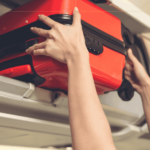
Every few years, a familiar claim ricochets around the internet: some famous European city is about to outlaw wheeled luggage. The posts come with photos of tourists wrestling carry-ons over ancient stone and captions warning that fines are coming. Travelers who have already booked flights to Rome, Dubrovnik or Venice start to wonder whether their suitcase will become a liability at the hotel door. The reality is simpler and far less dramatic. No European city has an active plan to ban wheeled bags. Still, the story keeps resurfacing for reasons that say a lot about how travelers, residents and rumors interact.
The Short Answer for American Travelers

If you are heading to Europe with a rolling carry-on or a full-size checked bag, you are not going to be turned away or fined for the wheels on it. No national or city authority has adopted a blanket prohibition, and tourism officials in the places most often named in the rumors have publicly said as much.
That does not mean the issue is imaginary. Residents of historic districts have complained about luggage noise for years, and local governments have responded with campaigns, etiquette guides and informal requests. Those efforts are easy to misread when they spread online in a few words and without context, and that is how a polite request turns into a headline about a ban.
Where the Rumor Began
The oldest version of the story dates back more than ten years and centers on Venice. In 2014, reports circulated that the Italian city would fine visitors a few hundred dollars for pulling suitcases across its bridges and squares, supposedly because of noise and wear on the paving. The figure most often repeated was around 620 dollars, which gave the claim a punch that helped it travel.
City officials moved quickly to correct the record. According to the commissioner’s office, the whole thing was a misunderstanding. The rule being discussed applied to commercial carts used to haul goods, not to the bags that visitors bring on vacation. Tourists with ordinary luggage were never the target.
Venice did go on to make news in another way. The city introduced an entry fee for day visitors, set at roughly 5.75 dollars at the time it began, as part of an effort to manage the crowds that pour into the lagoon city on peak days. That policy is about overtourism and visitor numbers, not suitcases, but the two topics sometimes get blended together when the story is retold.
Dubrovnik and the Rumor That Returned
The claim came back with fresh force in 2023, this time attached to Dubrovnik, the walled Croatian port city on the Adriatic. Its Old Town is a UNESCO World Heritage Site, with polished limestone streets that amplify every sound, which makes it an easy place to imagine a luggage rule.
Online accounts said a ban was on the way, pointing to two causes: constant noise complaints from people who live inside the walls, and concern that rolling cases were wearing down the old paving. The story spread across travel sites and social feeds within days.
Croatia’s national tourism board answered with a statement saying the city had no intention of introducing such a restriction, now or in the future. The ban, in other words, was never real.
What Dubrovnik did do was release a short animated video that same year. It runs about two minutes and offers advice on how to behave in the Old Town. The topics include putting trash in bins, dressing appropriately in the historic center and not urinating in public. On luggage, the video suggests the most direct fix available: pick the bag up and carry it by the handle instead of dragging it across the stone. It is a request for courtesy rather than a regulation, and the distinction is the crux of the whole confusion.
Why Wheels and Old Stone Do Not Get Along
Even without a ban, there are practical reasons to think twice. Cobblestones, uneven slabs and worn steps were built for foot traffic and carts, not for plastic wheels spinning at walking pace. Rolling a hard-shell case over them produces a loud, rattling noise that bounces off narrow walls. In dense neighborhoods where people live above the street, that sound can start early in the morning and continue late at night as visitors arrive and depart.
The bag suffers too. Repeated vibration and jolting can wear down wheels, loosen housings and stress the axles, which can shorten the life of a suitcase. A cracked wheel in the middle of a trip is a real inconvenience, especially in a place where repair shops may be a long walk away.
Then there is the plain physical effort. Pulling a loaded suitcase over bumpy ground is slower and more tiring than most people expect, and it tends to make a traveler stand out among locals moving easily down the same street. Stairs, bridges and steep lanes add to the challenge, particularly in places such as Venice, where there are hundreds of footbridges and few ways around them.
Etiquette comes into play as well. Travel advice aimed at visitors to historic centers generally suggests avoiding luggage-rolling in the very late evening or very early morning, when residents are asleep. It also recommends being careful around monuments, buildings and pathways with historical significance. One widely shared video showed a tourist sending a suitcase tumbling down a flight of stairs in Croatia, an example frequently cited as what not to do.
Airlines Add Another Reason to Think About Soft Bags
Cobblestones are not the only consideration. Travel specialists at the group travel company Flash Pack have pointed out that hard-sided rolling cases can create headaches before a traveler ever reaches Europe. Budget carriers often ask passengers to place wheeled bags in the hold when the cabin fills up, and that can mean fees, delays and a longer wait at baggage claim. A soft duffel, by contrast, tends to squeeze into tighter spaces and is more likely to remain with its owner for the whole flight.
That can matter a great deal on a tight connection. A passenger who has to run for a train or a second flight does not want to stand at a carousel waiting for a bag that was gate-checked at the last minute. A duffel that fits under the seat in front of you avoids the gamble with overhead bin space altogether.
For Americans, this is worth keeping in mind with European low-cost airlines, which tend to enforce carry-on dimensions more strictly than major US carriers. Size and weight limits vary widely, so checking the specific airline’s rules before packing is part of the process.
What to Bring Instead
Travel writers and gear specialists most often suggest two alternatives to a traditional wheeled case: a travel backpack or a duffel bag.
Backpacks designed for travel are made to carry clothing, toiletries and electronics in a compact form that can be worn rather than dragged. The better ones open like a suitcase, include padded straps and a hip belt, and are sized to meet airline carry-on rules. The tradeoff is that they usually hold somewhat less than a rolling carry-on, so they work best for people who pack light.
Duffel bags offer flexibility. Canvas and nylon models can be squeezed into small spaces, folded flat for the return trip and carried by a handle or shoulder strap. Some are weatherproof, which helps in rainy cities, and some convert into a backpack for longer walks. Packing a duffel too full makes it heavy and awkward, though, so keeping the load manageable is part of making it work.
There are also hybrid designs, including three-in-one carry-on backpacks that can be worn, carried or used with a handle, and organizing weekender bags with internal compartments. Prices vary widely, and basic foldaway duffels can cost as little as about 20 dollars, while premium models cost much more.
Travelers who already own a good wheeled suitcase and do not want to replace it are not out of options. Carrying it by the top handle through the oldest part of a city, rolling it only on smooth pavement and choosing a bag with large, quiet wheels can reduce the noise and strain.
Packing Tips for a Carry-On Trip
Whichever bag you choose, the contents matter. Flash Pack’s team offers a handful of suggestions for making the most of limited space, and they apply equally to backpacks, duffels and rolling cases.
Start by editing. Leaving behind extra clothing, expensive jewelry and items you do not need shrinks the load and lowers the stress of carrying it. For the flight itself, many frequent travelers bring snacks with some staying power, such as dried fruit or cereal bars, along with chewing gum to help with ear pressure during takeoff and landing.
For longer flights, sleep gear can make a difference. A travel pillow, ear plugs, an eye mask and a small handheld fan are common choices. Toiletries should be sorted into clear bags ahead of time so they come out quickly at security. A simple system for passports, boarding passes and other documents, one that works for everyone in the travel party, saves time at every checkpoint.
A few small comforts round out the list. A pen and paper are handy for notes when electronics are off. A hoodie or thick socks help when cabin air conditioning runs cold. Headphones and a portable charger are near-essential. Many travelers also pack a reusable water bottle, reusable straws and eco-friendly face wipes, such as bamboo cleansing cloths, for a quick refresh before landing.
Why the Rumor Keeps Coming Back
The persistence of the wheeled-suitcase ban story says more about the internet than about European law. A real complaint exists: locals dislike the noise, and city officials have said so. A real trend exists too: crowded historic centers have started adopting new rules about visitor behavior, from entry fees to limits on group size. Put those facts next to a photograph of a tourist struggling over cobblestones, and a ban feels plausible.
Each time a travel site repeats the claim, it reaches a new set of readers who have not seen the earlier corrections. The denials from Venice and Croatia tend to get less attention than the original rumors, which is common with viral travel stories.
For American travelers, the practical takeaway is straightforward. No rule will stop you from bringing wheels to Europe, but the streets, the stairs and the neighbors may nudge you toward carrying your bag instead of rolling it. Whether that means a backpack, a duffel or simply lifting a suitcase over the oldest stretch of pavement is a decision each traveler makes at the front door of the hotel.