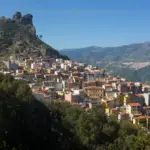
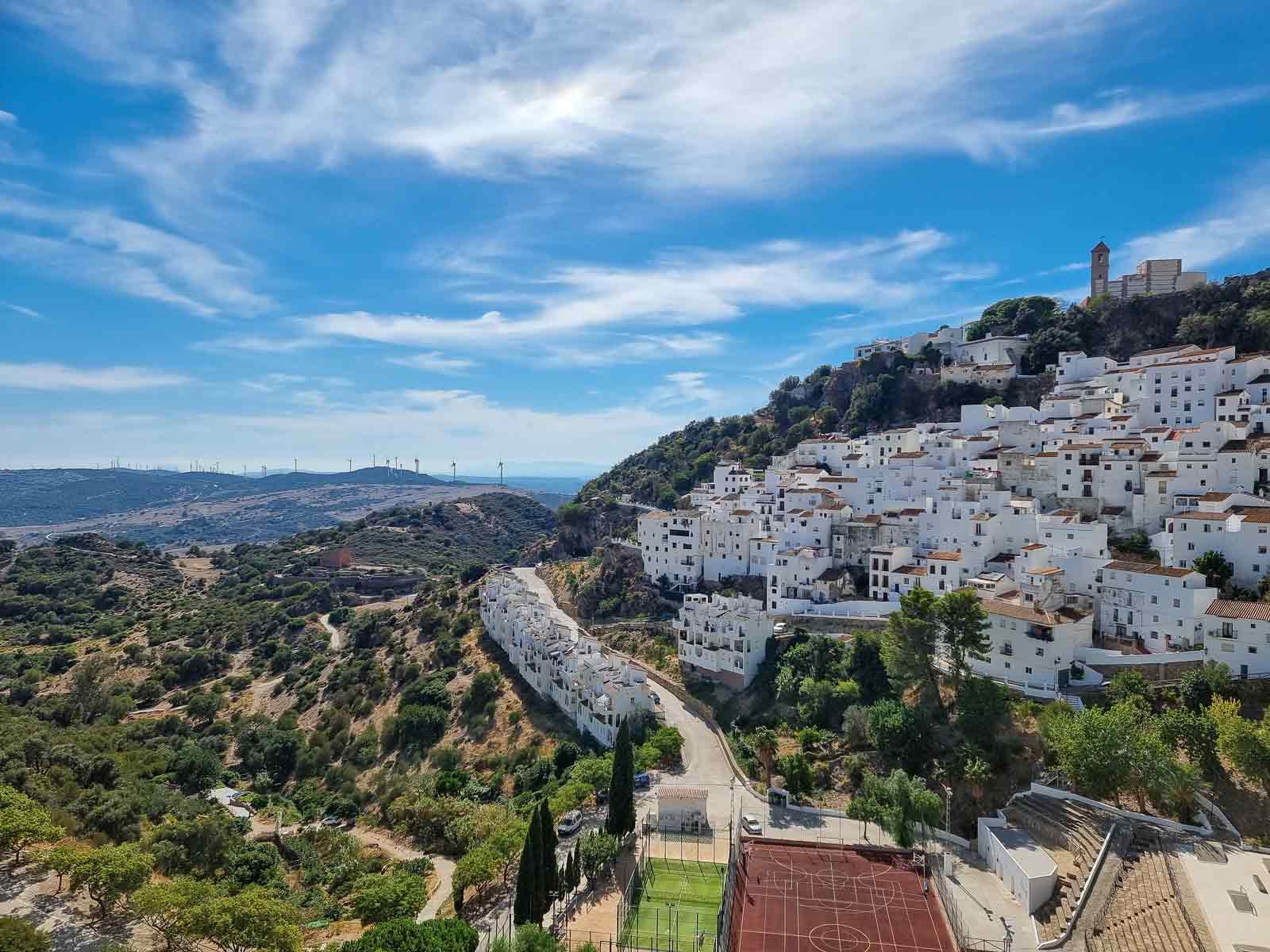
Picture a stone-walled village in the mountains of southern Spain, with whitewashed houses, a church bell on the hour and a bakery that opens before sunrise. Now picture that same village with hundreds of its homes sitting locked and unused. That is the reality in a growing number of towns across Andalucía, and the regional government has just launched an online tool meant to connect those properties with people who might want them. For Americans who have dreamed about a quieter life in Europe, whether as remote workers, early retirees or people who simply want a second base abroad, the new site offers a way to see what is available, and where.
A Search Tool Built Around Real-Life Needs
The platform, called Vive Más Andalucía and hosted at vivemasandalucia.es, works less like a traditional real estate portal and more like a matchmaking service between people and places. Instead of starting with a house, visitors start with the kind of life they want, and the site narrows the map from there.
The first filter is village size. Users can restrict results to communities with fewer than 500 residents, or move up the scale to towns of as many as 5,000. That single setting changes the experience dramatically. A hamlet of a few hundred people is a very different place from a market town with a weekly street fair, a handful of cafes and a secondary school.
The second filter is distance from the provincial capital. Searchers can choose anything from about ten kilometers to about one hundred, which is roughly six to sixty-two miles. Someone who wants to be able to reach a city airport, a hospital or a big supermarket within half an hour can keep the radius tight. Someone who prefers real seclusion can stretch it out.
Services form the third layer. The site lets people look for villages that have a health center, a school and similar basics, which matters a great deal for families and older residents. The fourth is internet quality. Visitors can choose among connection types ranging from 5G mobile coverage to fixed wireless service, a crucial detail for anyone who earns a paycheck over video calls.
Each village then gets its own profile page describing the surrounding area, the local setting and, most usefully, how many properties are currently vacant. A remote worker who wants a municipality with 5G service and a health center, for example, would see a list of 14 villages that match. From there, the profile pages let that person compare the options rather than guess.
The Numbers Behind Two Granada Villages
The scale of the vacancy problem becomes clear when looking at specific places. During the announcement, officials pointed to Alpujarra de la Sierra, a village in the province of Granada, which has 158 empty properties. They also cited Ugíjar, in the same province, where the count reaches 489 empty homes.
Those are not abstract statistics. In a town of a few thousand people, nearly five hundred unoccupied houses means entire streets with shuttered windows, and it means owners who may live far away, may have inherited the property, or may not have visited in years. For a visitor, it also means a wide range of choices, from small village houses to larger family homes that have stood empty for a generation.
Why Andalucía Needed Something Like This
The reason for the website comes down to a simple imbalance in the housing market. In large and popular cities such as Málaga, Granada and Madrid, rents have climbed to levels that regional officials describe as exorbitant. Even so, those cities have an active market. Landlords advertise, tenants compete, and properties change hands. The small villages of inland Granada operate under very different conditions. There, a house can sit without a listing, without an agent and without a single inquiry, simply because nobody outside the immediate area knows it is available.
That is the gap the website tries to close. By gathering vacant homes in one place and attaching them to practical information about each town, the regional government hopes to make rural housing visible to a much larger audience, including people who do not currently live anywhere near Andalucía.
The tool was designed with two groups in mind. One is people looking to settle permanently in a village. The other is digital nomads, the remote workers who can do their jobs from any location with a reliable connection. Spain has courted that second group in recent years through a dedicated visa, and the new site gives it a place to start looking.
The Minister Who Presented It
The announcement came from José Antonio Nieto, the regional minister responsible for artificial intelligence, digital development and public administration in Andalucía. He traveled to the city of Granada on a Monday to explain where the region stands on depopulation and to introduce the platform as part of the response.
The fact that the project sits under a digital portfolio rather than a housing one says something about how the region views the problem. Connectivity is treated as a central piece of rural revival. A village with fast internet can attract a worker who would never have considered it a decade ago, while a village without it struggles to appeal to anyone under retirement age.
A Region Dealing With Emptying Villages
Depopulation is a long-running concern across much of inland Spain, and Andalucía is no exception. Young people leave small towns for universities and jobs in coastal cities or in the capital, and many do not return. Schools lose students, clinics lose patients, shops close, and the remaining residents grow older. As that cycle continues, houses are left behind. Some are inherited by relatives who live elsewhere and never find the time or money to sell or renovate them. Others deteriorate slowly in the Andalusian sun.
Spanish authorities at several levels have tried various approaches to slow this trend, and the issue is by no means limited to the south. Italy has drawn international headlines for its programs offering village houses at symbolic prices, and parts of France, Portugal and Greece have launched their own initiatives. The Andalusian approach is different in one important way. It does not offer a discount or a giveaway. It offers information, a map and a filter system, and leaves the transaction itself to the buyer and the owner.
What a Move Could Involve for an American
For an American reading about the site, the first question is usually practical. Can a US citizen actually buy or rent a home in rural Spain? In general, foreigners are allowed to purchase property in the country without a special permit, and many do. Buyers typically need a Spanish tax identification number for foreigners, known as an NIE, and they pay purchase taxes and fees on top of the price. In Andalucía, the transfer tax on resale homes and the notary and registry costs add a meaningful percentage to the total, so anyone running the numbers is advised to check current rates with a local lawyer or gestor, since these figures can change.
Owning a house does not by itself grant the right to live in Spain full time. American citizens can stay in Spain and the rest of the Schengen Area for up to 90 days within any 180-day period without a visa. Anyone planning a longer stay needs a residence permit of some kind. One route that has drawn attention from remote workers is Spain’s visa for digital nomads, introduced in recent years, which allows people employed by companies outside Spain, or working with foreign clients, to live in the country while continuing their jobs. Applicants generally have to show a minimum level of income, roughly double the national minimum wage, along with health insurance coverage and proof that their work can be done remotely. The details and requirements are set by Spanish immigration authorities and are updated from time to time, so official consulate and government pages are the reliable place to confirm them.
Renting is another path. Because many small-town properties are not listed on mainstream portals, the new website may be most useful as a first step in identifying villages worth visiting. A traveler can spend a few weeks renting in one location, test the internet speed, walk the streets and meet neighbors before committing to anything longer.
Daily Life in the Villages of Granada
The province of Granada is best known to American travelers for the Alhambra, the hilltop palace complex that draws visitors from around the world, and for the Sierra Nevada, which offers skiing within a couple of hours of beaches. South of the Sierra Nevada lies the Alpujarra, a region of terraced hillsides and clusters of white villages that has attracted foreign residents, artists and writers for generations. The two villages mentioned in the announcement, Alpujarra de la Sierra and Ugíjar, belong to that landscape.
Life there runs at a different pace from the coastal resort towns many Americans associate with Spain. Weekly markets, local festivals, family-run restaurants and long lunches define the rhythm. Winters at higher elevations can be cold, and summers get hot, so the climate varies from village to village. Public transportation tends to be limited outside the larger towns, which means that having a car is often part of the picture, and that is one reason the distance filter on the website carries so much weight.
Language is another factor. In small villages, English is far less common than in tourist-heavy areas, so residents who move there often find that learning Spanish becomes part of daily life, whether through classes, neighbors or necessity. Healthcare access depends on residency status and insurance arrangements, which is why the site’s focus on whether a village has a health center speaks to an issue that matters to older newcomers in particular.
What the Website Does and Does Not Do
The platform is a discovery tool. It shows where vacant properties are concentrated, describes the character and facilities of each town, and helps users compare options. It does not, based on the information presented at the launch, process sales, set prices or guarantee that any particular home is ready to move into. Many empty houses in small villages need work, and buyers or renters are likely to find that condition varies widely from one property to the next.
Because the project is run by the regional government, it also reflects public policy priorities. Officials want to see local populations grow, services stay open and village life continue. That goal is shared by many residents of small towns, who often say that a new neighbor, whether Spanish or foreign, helps keep a school classroom or a bar open.
A Different Kind of Spanish Property Search
Americans who have looked at Spanish real estate before may be used to the usual hotspots, such as the Costa del Sol, Barcelona, Madrid or the islands. Those markets are crowded and, in many cases, expensive. The Andalusian village initiative points toward a different map, one built around population counts, kilometers from a provincial capital and the strength of a mobile signal rather than proximity to a beach.
The site is available online to anyone, regardless of nationality, and it can be explored without registering a purchase or making a commitment. For travelers who have always wondered what it would be like to live in a mountain village in southern Spain, the new platform offers a way to start narrowing down which village that might be, one filter at a time.