
Anyone who has landed at a busy British airport after a long transatlantic flight knows the routine. Stand in a snaking line, shuffle forward, and finally lay a passport flat on a glass reader while a gate decides whether to let you through. That last step is about to disappear for many travelers. The UK government has confirmed that automated border gates will soon scan faces on approach, with no passport placed on a reader. The first airport has already switched the system on, and every airport with the gates is expected to follow by early 2027. For Americans who fly to London, Manchester, Edinburgh and beyond, the change is worth understanding before the next trip.
A Gate That Recognizes You Before You Touch Anything
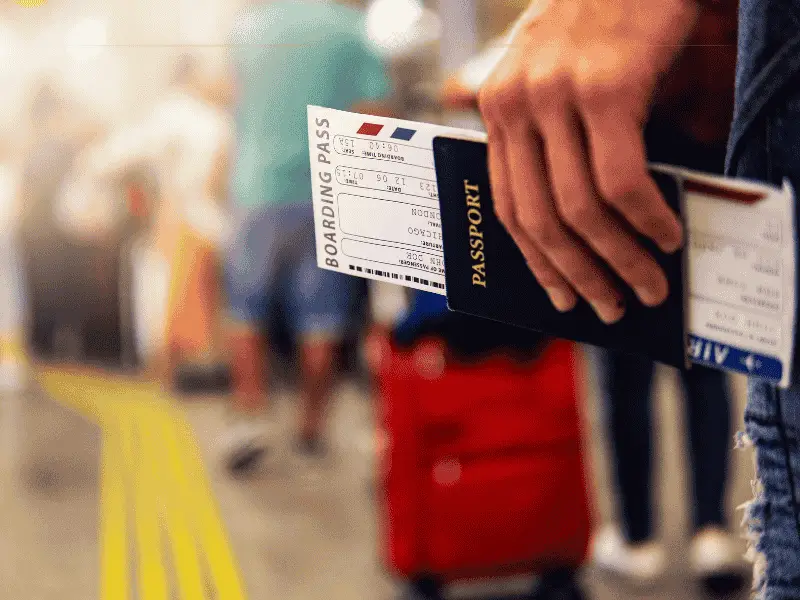
The new technology is built on the same eGates travelers have used for years. What differs is the order of events. Under the old process, a passenger first scanned the photo page of a passport, then looked at a camera so the gate could compare the live face to the printed image. Under the contactless version, the passenger simply walks up and has a photo taken. The system compares that live image with verified immigration, travel and passport records it already holds, and the gate opens on its own when the checks are complete.
The Home Office describes the technology as state-of-the-art facial verification that confirms identity before the full set of border security checks takes place. In practical terms, a traveler who is cleared walks straight through, and the passport never has to leave a pocket or bag.
Don’t Toss the Passport Just Yet
The headline can be misleading, so one point deserves emphasis: passports are not being abolished at the UK border. Officials have stressed that passengers must still carry their passports and keep them within reach at all times. The change only removes the step of placing the document on the gate’s reader when everything goes smoothly.
Several things can still send a traveler back to the traditional method. If the system wants additional verification, the passenger will be asked to put the passport on the reader. In some cases, the person may be directed to a Border Force officer, exactly as happens at the gates today. Officers will keep watching the gates and stepping in where help is needed, so the booths and staff are not going away.
Where It Started and How It Will Spread
East Midlands Airport, in Leicestershire, became the first airport to offer the contactless gates, switching them on this week. The Home Office says the technology will then roll out across all UK airports that have eGates by early 2027. Birmingham Airport has said it is among the first to bring in the system, and its terminal and capacity planning team noted that it worked closely with industry partners and government agencies to support the launch.
The rollout is happening in phases. At the start, the contactless option is open to British citizens. Over the coming months it is set to widen to more airports and to other nationalities that are already allowed to use eGates. The timing for any single airport or any single nationality has not been laid out in detail, so Americans should not assume every gate will offer the feature on day one.
What It Means for Americans Specifically
United States citizens have been able to use UK eGates for several years, since the country was added to the list of eligible nationalities alongside places such as Australia, Canada, Japan, New Zealand, Singapore and South Korea. That eligibility is the reason Americans fall into the group the government says will be brought into the contactless system after the initial British-only launch.
For a traveler from, say, Chicago or Atlanta, the likely experience is a gradual one. In the early months, an American may still be asked to use the standard eGate process or a manned desk, depending on the airport and the date. As the program expands, contactless gates should begin to appear for eligible foreign visitors as well. Anyone who is not eligible for eGates today, such as someone who does not meet the age or passport requirements, will not become eligible just because the technology has changed.
Americans should also keep in mind that border entry is still subject to the rules that apply to visitors, and a gate is only one part of the process. Since early 2025, US citizens visiting the UK for tourism or short business trips have needed an Electronic Travel Authorisation before flying. The ETA is linked digitally to the passport used to book travel, which is part of the reason officials say the system can check a face against verified travel and immigration information. Fees, validity periods and requirements can change, so the UK government’s official website is the place to confirm current details before booking.
A Faster Line, According to Testing
The government says early testing shows the contactless method is up to 25 percent faster than the existing passport-on-reader approach. Passport scanning is one of the slower moments at an eGate, since people fumble with documents, open the wrong page, or hold the booklet at an awkward angle. Removing that step could trim seconds from each passenger, and those seconds add up when hundreds of people arrive from several flights at once.
Time savings matter most at peak hours, when arrival halls fill with passengers from long-haul flights. Border queues have been a recurring complaint among travelers for years, and officials have positioned the new system as part of a broader effort to speed up arrivals without loosening security.
Families and Younger Travelers
The contactless rollout follows another recent adjustment affecting households. Earlier this year, the UK expanded eGate access to younger children. Previously, only travelers aged 10 and above could use the gates, which meant families with younger kids often had to queue at a staffed passport booth while the older family members breezed through. The age floor has since dropped, and children aged eight and nine who are returning to the UK are now allowed through the gates.
There are conditions attached. A child must be at least 120 centimeters tall, which is just under four feet, so that the biometric cameras can see their face properly. They also must be accompanied by an adult. The same age change applies at the juxtaposed border checks in Brussels and Paris, where passengers heading to Britain go through UK controls before boarding trains. The government says 13 UK airports currently operate eGates.
Parents traveling from the United States should check the official eligibility rules for their own children’s nationality and age, since the child-related announcement was framed around returning travelers and the rules for foreign visitors can differ. The height requirement is a practical detail worth remembering for kids on the younger end of the range.
What Happens When the Gate Says No
Not every passenger will glide through. A gate may refuse someone for many reasons, from a poor-quality photo to a mismatch with records to a passport that is damaged or hard to read. Glasses, hats, heavy scarves and bright backlighting can all affect how well a camera captures a face. Travelers are generally asked to look straight ahead, remove anything that covers part of the face, and stand still for a moment.
If the gate rejects a passenger, the next steps are the same as they are now. The traveler may be asked to put the passport on the reader, or an officer may take over and speak to the person directly. Being turned away from an eGate is not an accusation of wrongdoing, and plenty of travelers who are fully eligible end up at the staffed desk simply because a machine could not read a photo or a document.
What Officials and Industry Leaders Said
The Director General of Border Force, Phil Douglas, described the change as a benefit for travelers coming into the country, saying that modern technology is making journeys smoother and faster while the UK keeps its border security fully intact. He tied the contactless system to the earlier move that opened the gates to younger children, calling the two changes part of a wider digital overhaul that makes life easier for families.
Karen Dee, chief executive of AirportsUK, the trade body for the country’s airports, welcomed the announcement on behalf of the industry. She said it shows that British airports are at the forefront of new technology designed to protect borders while improving the passenger experience, and she stressed that arrivals now expect fast and efficient crossings. Her organization plans to work with its members and government officials to keep the rollout running smoothly.
The Policy Behind the Technology
The Home Office presents the contactless gates as the latest step in modernizing the UK border and as a delivery of commitments made in the government’s Immigration White Paper. Millions of people already use eGates each year, and officials describe them as the quickest route into the country for legitimate travelers. The new system builds on that existing infrastructure rather than replacing it, which is why the government can promise a rollout across all current eGate airports within a few months instead of years.
Facial recognition at borders is not unique to Britain. Airports in the United States, Europe and Asia have introduced various forms of face-based verification for arrivals, departures or boarding. What stands out in the UK approach is the removal of the passport scan at the gate itself, which shifts more of the identity check to databases and cameras working in the background.
Practical Steps for American Travelers
Because the changeover will happen in stages, a flight to the UK in late 2026 or early 2027 could bring a mix of experiences. Some airports will offer the contactless gates and others will not. Some travelers will be invited to use them and others will be steered to the older version or a staffed desk. Signs in the arrival hall and instructions from border staff will show which option applies.
Americans can prepare in a few simple ways. Keep the passport easily accessible, even if the gate does not require it. Make sure the passport is valid for the length of the stay and in good condition, since a worn or damaged document can trigger extra checks. Confirm that an ETA is approved before departure. Have a clear idea of where the form of identification used at booking is stored, in case a question comes up at the desk.
For most visitors, the arrival process will look familiar for a while longer. The difference may come as an unexpected opening gate and a brief walk through, and then a short stroll to baggage claim with the passport still in hand.