
A plate of comforting, steaming, beef bourguignon. Creamy mash to mop the sauce with, and steamed greens on the side. A chat started from a comment about intriguing Sri Lankan food as a staple on a French ship crossing between England and France, and now, we are in the deepest conversation about comfort meals, fusion dishes, culinary influences and the ceremonial-like power a plate of food has to bring people together around a table. I’m at The Griffin, where I am staying in Bath, talking to Raycroft, the landlord, at the end of the night. Most of the patrons have gone – there’s just a couple left in a corner, enjoying each other’s hands over the table, sipping their last drops of wine. The pub is almost empty, but the conversation is still going. Food brings people together, no matter if it’s a sloppy looking stew in a bowl at home, or a fine dining experience in a Michelin star restaurant.
You can visit Bath on a quick day trip from elsewhere in the UK, but with a bit of planning, you can easily spend a couple of relaxed days here, exploring at a slower pace and taking in all the little quirks that make it one of the most beautiful cities in England. Yes, Bath is beautiful, and yes, it’s small, but if you rush through it, you will miss its essence.
I had visited Bath many times before, but I had never really taken the time to SEE the city. I would tick off the most famous attractions, hop back on the train and leave for another destination. Recently, I returned to Bath, this time without rushing, allowing myself to rediscover the city, its famous and not so famous landmarks, and appreciate everything that makes it special.
Getting to Bath from London

Getting to Bath from London is very easy. I boarded a Great Western Railway train at Paddington and in less than one and a half hours I was in Bath. The journey was very comfortable, with a table where I could sit my laptop and free WiFi which allowed me to catch up with my latest writing. The train had a snacks and drink service as well.
Where to Stay in Bath

I stayed at The Griffin in Bath and couldn’t have a better stay. The building has been an inn for travellers since 1730 and it is an original Georgian building. Having welcomed guests for almost 300 years, it has changed with the times, and today it offers four-star accommodation whilst retaining much of its character.
My room at The Griffin was incredibly cosy, with the most comfortable bed to sink into after a long day of exploring Bath. My room was on a corner, with windows on both sides. It was nice falling asleep watching the city go to bed at the same time, with the traffic slowing down, and the lights turning off one by one.
Raycroft makes the place even more welcoming. From the moment I stepped into the pub to check in, I felt looked after.
The Griffin is also a great pub, with awards and an #1 place for the best pub in Bath in 2023. Dining here, I highly agree. The food was excellent, the atmosphere lively, and the service second to none.
The Best Things to Do in Bath
Start Your Day at the Spa

There are two main things that comes first into anyone’s mind when you think about Bath. And these are the Roman Baths and the Spa in Bath. Thermae Bath Spa is celebrating this year 20 years of welcoming guests from all over the world to unwind and enjoy the naturally warm, mineral-rich waters, unique in Britain.
I highly recommend booking a morning session at the spa for a more intimate experience, especially if you are like myself, and don’t like crowds. I arrived at 9am, at the opening time. By 10 past I was in the rooftop pool, by myself, enjoying the first rays of the sun of the day. Whilst the temperature was still quite low, the warm water in the pool was just perfect.
I then followed up with a circuit in the saunas, steam room and the hot and cold shower, followed by relaxing in the mineral-waters in the Minerva Bath. I finished with another half an hour in the rooftop pool. By this time, it was already starting to get busy.

Thermae Bath Spa stretches over 3 floors and the rooftop. At the ground floor you will find the thermal waters pool, with a jacuzzi and plenty of relaxation chairs. At the first floor there are the changing rooms. The second floor is dedicated to the saunas and wet rooms, whilst the third floor is for the treatment rooms. The rooftop has the famous pool with views not just over the city of Bath but the hills around it as well. Did you know that Bath is surrounded by seven hills?
What I really loved about Thermae Bath Spa is that you have to put your phone away during the two hours session, which makes the visit here properly relaxing. At reception you will be given a pouch which locks to put your phone in. You can unlock the pouch only once you are back at the reception desk. Now, if you are wondering how I got the photos in this article – I did have a private visit before opening hours, in order to show you how the spa looks like and what to expect when you book a relaxing session here.
Whilst I didn’t, you can also book a series of treatments to enjoy alongside your spa session, such as signature massages, facials, or body scrubs.
Visit the Roman Baths

The Roman Baths are probably the most famous attraction in the city, and for good reason. I spent hours inside the museum, once I realised that the complex is so much more than the Great Bath, which we’ve all seen in photos. I highly recommend getting the audio guide, to have context and understand what you are looking at.
The Romans arrived in Britain in AD 43 and soon recognised the potential of Bath’s natural hot springs. They developed a settlement called Aquae Sulis, which translates roughly as the waters of Sulis. The name refers to Sulis, a local Celtic goddess associated with healing, whom the Romans identified with their own goddess Minerva. Rather than simply building a place to wash, they created an impressive religious and bathing complex, with a temple dedicated to Sulis Minerva at its heart.

The Sacred Spring is one of the most fascinating parts of the site. The water rises naturally from deep underground at around 46°C, and this has been happening for thousands of years. The Romans believed the hot spring had healing powers and treated it as sacred. People would come here to worship the goddess and leave offerings in the water, including thousands of coins. Archaeologists have also discovered what are known as curse tablets, small sheets of lead or pewter on which people wrote prayers asking the goddess to help them seek justice, often against someone who had stolen from them. Some of these are surprisingly personal, giving us a glimpse into the everyday problems and frustrations of people living almost 2,000 years ago.
The Great Bath is the centrepiece of the complex. It is surrounded by Roman columns and walkways, and it is quite something to think that people were bathing in these very waters nearly two millennia ago. The original bath house had changing rooms, heated rooms, saunas and smaller plunge pools. Bathing was an important part of Roman social life, a place where people met friends, exercised, relaxed and discussed everyday matters.
Same as when I visited Roman ruins in Rome, in Bath I was also impressed on how much of the Roman engineering has survived thousands of years after they have been built. The Romans built an elaborate system of lead pipes and drains to manage the spring water, and parts of this drainage system are still in place today.
Check Out the Abbey and Its New Museum
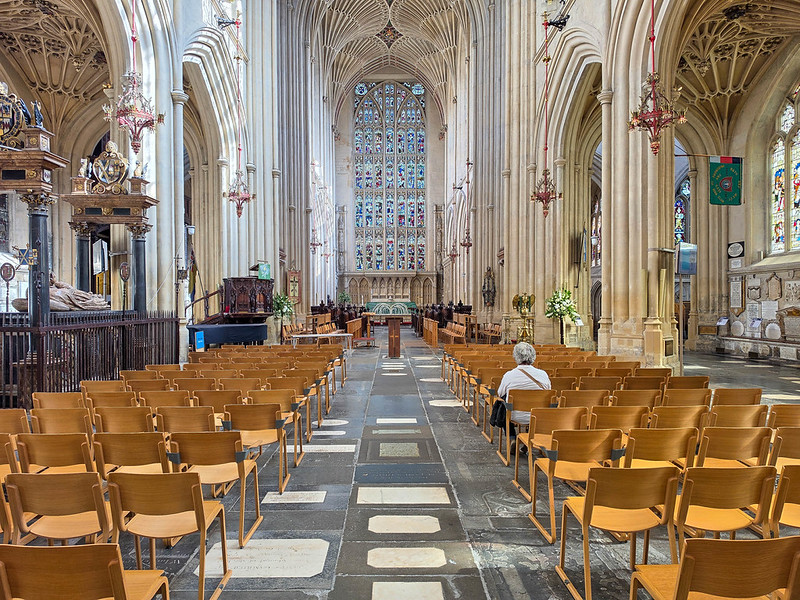
You cannot visit Bath without stepping inside its magnificent Abbey. Located right in the heart of the city, next to the Roman Baths, this is one of the most impressive examples of Gothic architecture in England.
The history of Bath Abbey goes back more than 1,000 years. In fact, this site has been an important place of worship since the Anglo-Saxon period. It was here, in 973, that King Edgar was crowned the first king of all England. The coronation took place at an earlier church on the same site, long before the building we see today existed.

The present Abbey was built in the late 15th and early 16th centuries, after Bishop Oliver King had a vision that inspired him to rebuild the ruined Norman cathedral. One of the most distinctive features is the fan-vaulted ceiling, with its intricate stonework spreading across the roof like an elaborate pattern. Make sure you look up when you enter. Bath Abbey is sometimes called the Lantern of the West because of the extraordinary amount of glass covering its walls.
Since my last visit to Bath, the Abbey has a new museum, located in the ancient vaults. It’s a small museum but very interactive, with Anglo-Saxons artifacts, historical objects and interactive displays and games.
Visit Nr 1 Royal Crescent
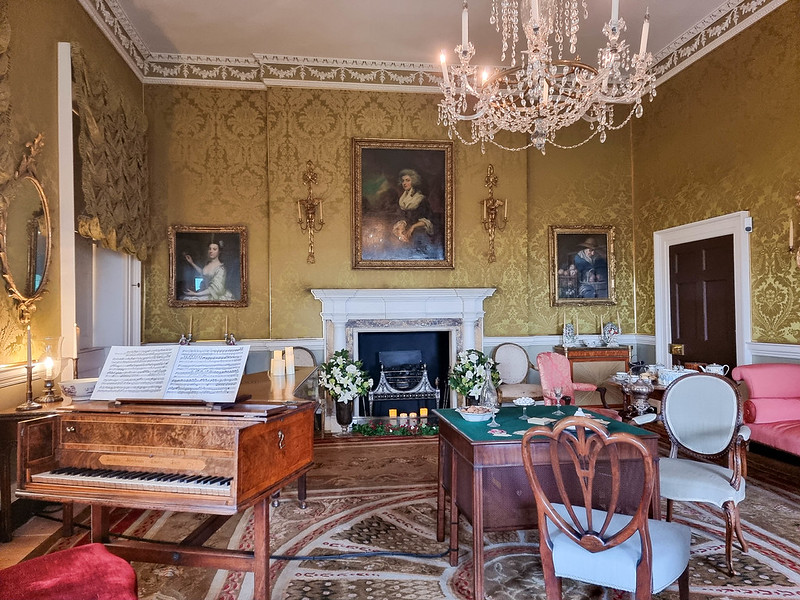
We’ve all seen Bridgeton. We’ve all, even if for a few seconds, imagined how would it be to step into that flamboyant imaginary world. Well, it’s not so impossible to bring imagination to reality, if you visit Nr 1 Royal Crescent.
The Royal Crescent itself was designed by John Wood the Younger and built between 1767 and 1775. It consists of 30 townhouses arranged in a sweeping curve, with an impressive Palladian façade made from Bath stone. During the Georgian period, Bath was one of the most fashionable places in England, attracting aristocrats and wealthy families who came to take the waters, socialise and enjoy the season. Having a house at the Royal Crescent was a statement of status, and the architecture was designed to give residents the feeling of living in a grand country estate, despite being right in the city.
No.1 Royal Crescent is the first house in the row and it recreates a glimpse of how Georgian life used to be. And it’s not just a museum because it also takes you “behind the scenes”, showing the difference between the lives of the wealthy and the poor.
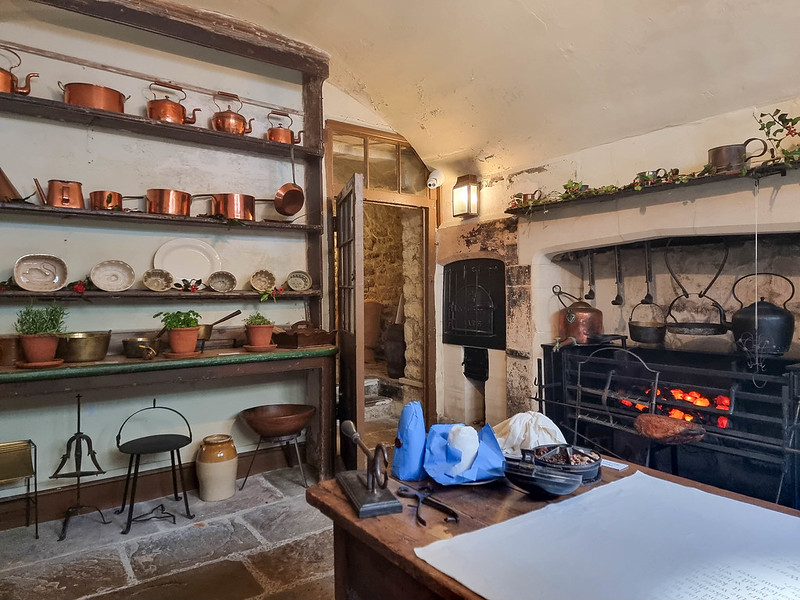
The house is furnished as it might have looked between 1776 and 1796, during the time when Henry Sandford, a wealthy Irish landowner, rented it. You can walk through the dining room, the parlour and the gentleman’s retreat, before heading downstairs to discover the original kitchen, scullery and servants’ quarters. The museum also explores the links between the wealth of Georgian Bath and the transatlantic slave trade. It’s an important part of the city’s history, and one that adds a more complex perspective to the elegance and prosperity you see in the Royal Crescent.
Visit the Sally Lunn’s Museum

Every time I visited Bath there was a queue in front of Sally Lunn’s. Little did I know is that you don’t have the queue to visit the museum, nor buy the famous buns. The queue is for the restaurant.
Located in North Parade Passage, Sally Lunn’s is one of the oldest houses in Bath, with a history dating back to around 1482. The building itself is fascinating, but what makes it even more interesting is the story of the woman who gave her name to one of Britain’s most famous buns.
According to local history, Sally Lunn was a French Huguenot refugee who arrived in Bath in 1680. Her original name was supposedly Solange Luyon, which was anglicised to Sally Lunn. She brought with her the knowledge of making a rich, light bread similar to French brioche, using eggs, butter and milk. She started baking and selling these generous buns, which quickly became popular in Bath, particularly at the fashionable public breakfasts and afternoon teas of the Georgian period. The recipe became so well known that the house itself eventually took her name.
The museum is located in the cellar, where you can see what is believed to be Sally’s original bakery and the ancient oven associated with her baking. There is also an archaeological section revealing how much older the history of this site really is. Excavations have uncovered evidence of Roman, Saxon and medieval buildings, showing that this part of Bath has been occupied for centuries.
Check Out the Guildhall Market
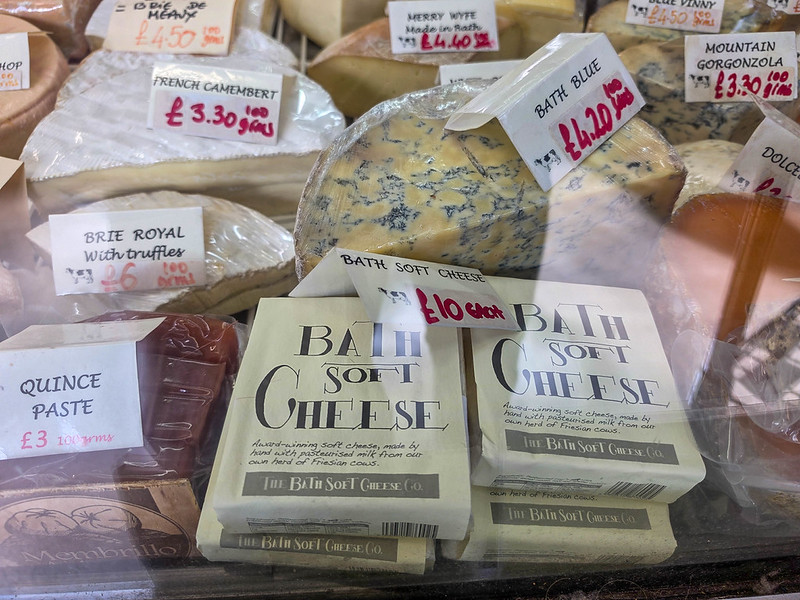
All these times I’ve been to Bath and I never knew there was a local market, just across the street from Pulteney Bridge. And not just any market but a very historic one, dating from at least 1371. The current market building was constructed in 1861, with an innovative for the time cast iron and glass structure, housing round 30 stalls. Back in the day the market had some very strict and peculiar rules, such as cursing was forbidden in the market, as well as the throwing of vegetables, rubbish or… missiles.
In the middle of the market you can still see the market nail, which is believed to have stood in the market since 1770s, and then moved into the new market when it was constructed. The nail was the place where traders would make bargain deals with the customers who would pay on the spot (on the nail).
Today, the market is home to a few different types of vendors, from a butcher and cheesemonger to bakers, a bookshop, cafes and leather goods.
Make sure to step behind the market as well, to see the old medieval gate and walkaway to the river, straight from the city centre. The road is closed at the moment, but you can see the pillars and the stones from the top.
Shop for Quirky Souvenirs

Bath has some amazing shops that sell pretty unique things. When I am talking about “souvenirs” I am using the term very loosely, as for me, this means something that will remind me of the trip but it’s not a tacky mug or tshirt. It is instead a piece of art, or a pack of local seeds, or a book, or even a piece of cake.
And there are plenty of these things in the shops in Bath. I actually thought about coming back for a Christmas shopping trip to Bath, to buy some unique presents.
My absolute favourite, though I don’t even know if it was for sale as it didn’t have a price tag, and I also also have no idea where I would put it in my house, was the zebra wall decoration from an interior decoration shop on Pulteney Bridge.
Indulge in a Bath Bun

Everyone travel guide tells you to grab a Sally Lunn bun. But nobody tells you the queues you have to fight for that, or that you can buy them in the museum. Also, nobody tells you about the Bath Buns, another speciality of the city. And if you are asking the right questions, you will probably have a more insightful and personal experience here.
Don’t confuse a Sally Lunn bun with a traditional Bath Bun though. They are two different local specialities. The Sally Lunn is a large, light, brioche-style bread, while the Bath Bun is a sweeter, smaller bun traditionally topped with sugar and currants. Both have their own stories, and both are worth trying while you are in the city.
The Bath Bun was invented by Dr Oliver in 1761, and the recipe remains unchanged. He was a doctor at the Royal Hospital and developed this recipe for his patients, to treat them. Back then, the water used for baking was heavily mineralised and, to disguise this taste, he places a cube of sugar in the middle of the dough, before baking. The trick is that the sugar cube never melts, so the bun remains sweet. This is the story told by the current owner of Bath Bun, who is more than happy to chat to you and answer questions. She even gave me a card with the original recipe of the Bath Bun.
The buns are served either plain, or with different fillings such as strawberries and cream, or smoked salmon and cream cheese. I went for a coffee and a plain bun, which is not plain at all but filled with currants and lemon peel.
Have Lunch at Garrick’s Head
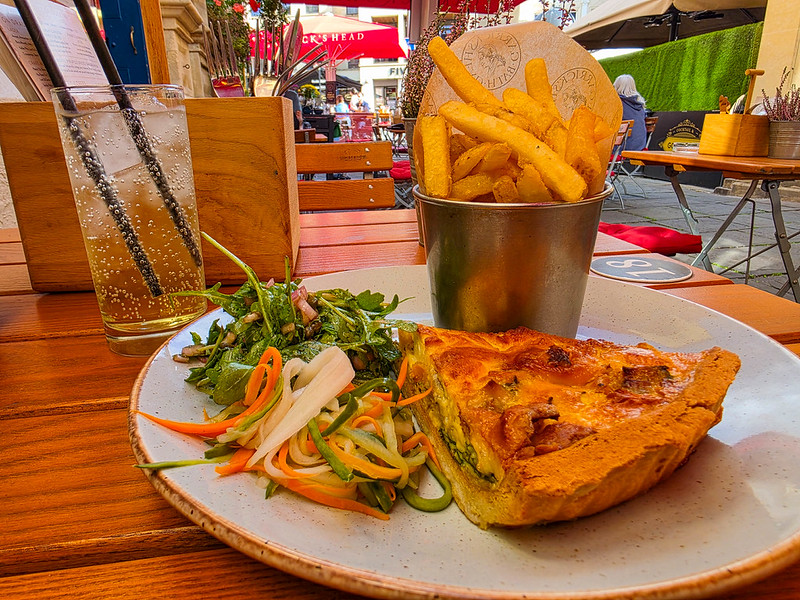
I arrived in Bath at lunchtime and by the time I left my bag at The Griffin, it was already almost 3pm. I went for lunch at Garrick’s Head because I read that it had on its menu one of the disappearing traditional Bath specialities, the Bath chaps. These are pork cheeks that have been brined and cooked, served wither hot or cold. Unfortunately, just a few months ago, Garrick’s Head changed the menu and removed the Bath chaps from it, which I am not going to lie, was a disappointment. When I travel I always like to try the local cuisine and taste the specialities that are typical to that place. I hope they will reconsider and put it back on the menu in the near future.
I ended up choosing the homemade tart of the day, which was butternut squash, spinach and goat’s cheese. Served outside, on the terrace, on a day blessed with warm sunlight, was the perfect way to start my slow trip to Bath.
Explore Mary Shelley’s House of Frankenstein

One of the highlights of this trip to Bath was the visit to Mary Shelley’s House of Frankenstein. Whilst everyone knows about Frankenstein, how many of us really know the story of the author? The immersive museum spreads on a few floors as well as a pretty scary basement, where you do get a warning before you step down the stairs.
Mary Shelley’s life is portrayed in themed rooms. I had no idea how much she’s been through before she was even 25 years old. Born in 1797, Mary was the daughter of two well-known intellectuals, philosopher William Godwin and feminist writer Mary Wollstonecraft, who sadly died just eleven days after giving birth to her. Mary grew up surrounded by books and ideas, something that would later influence her own writing.
The story of Frankenstein began in the summer of 1816, when Mary was staying near Lake Geneva in Switzerland with her future husband, poet Percy Bysshe Shelley, and a group of friends that included Lord Byron. During a particularly gloomy summer, Byron suggested that everyone should write a ghost story. Mary struggled initially to find inspiration, until one night she had a frightening vision of a scientist bringing a creature to life. That idea became Frankenstein, or The Modern Prometheus.
What many people don’t realise is that Mary continued writing the novel after arriving in Bath in September 1816, aged just 19. She lived at 5 Abbey Churchyard, close to what is now the Roman Baths, and spent several months developing her manuscript. The book was eventually published anonymously in 1818, with many readers initially assuming that Percy Shelley was its author. It was only in a later edition that Mary was credited as the writer.
The museum brings together the story of Mary’s life, the origins of her novel and how Frankenstein’s creature became one of the most recognisable characters in popular culture. There are unusual artefacts, interactive rooms, sound effects and even an eight-foot animated creature. I particularly liked discovering how much of the story behind Frankenstein goes beyond the monster itself.
I have to mention the pinball machine in the attic which brought me back to my childhood days. I spent a good half an hour playing and getting really excited about the high score and all those free rounds I kept winning.
Check Out the Georgian Garden

I found this little gem whilst I was descending from the Royal Crescent on an alley I’ve never been before. I spotted the sign to the Georgian garden and initially I did struggle to find it. Tucked away behind The Circus, it should have already been closed at the time I passed by, but the door was still open so I stepped inside.
The garden is a faithful recreation of an original Georgian town garden dating back to around 1770. Its layout was reconstructed using archaeological evidence. In 1985, Bath Archaeological Trust began excavating the garden and uncovered the original position of its flower beds, gravel paths and trellis. The restoration project used these findings to bring the garden back to something very close to its original appearance.
During the Georgian period, gardens were an important part of the grand townhouses in Bath. Whilst the impressive façades of The Circus were designed to make a statement from the street, the gardens at the back offered residents a private outdoor space where they could relax, enjoy flowers and spend time away from the busy social life of the city. Unlike the vast landscaped gardens of country estates, these were much smaller spaces, carefully arranged to make the most of the available ground.
Watch the Sunset Over Pulteney Bridge

Lastly, to end your slow paced magical time in Bath, I highly recommend timing yourself to catch the sunset over Pulteney Bridge, seen from the Parade Gardens.
Built in 1774, Pulteney Bridge is one of the few bridges in the world with shops built along both sides of it. It was commissioned by William Johnstone Pulteney, who wanted to connect the city of Bath with the land he owned on the other side of the river, in what is now the suburb of Bathwick. The design was created by architect Robert Adam, who took inspiration from the famous Ponte Vecchio in Florence and the Ponte di Rialto in Venice.
From Parade Gardens, you also get a lovely view of Pulteney Weir, the curved, horseshoe-shaped structure just below the bridge. It was built much later, as part of efforts to manage the river, and adds another distinctive feature to the view. Find a spot by the gardens, take a moment to slow down and enjoy the scenery.
Good night, Bath!
Like it? Pin it!

Disclaimer: Some of the links on this website are “affiliate links.” This means that if you click on the link and do a purchase, I will receive an affiliate commission at no extra cost for you. This helps me keep my website running and continue to share my travelling knowledge with you. I thank you for booking your flights or hotels using the links on my website. Regardless, I only recommend products or services I use personally and believe will add value to my readers.
Please note that was invited to Bath by the tourism board, and some of the experiences have been complimentary. All the opinions and thoughts in this article are genuine and have no external influence.


