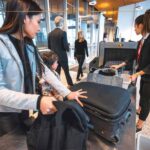
Parents already know the drill. You pack the snacks, download the cartoons, charge the tablet, and stuff a backpack with whatever small objects might keep a restless kid occupied at 35,000 feet. What most families don’t expect is that one of those objects can be pulled out at the security checkpoint, inspected, and thrown away before the flight even begins.

That is exactly what has been happening to a squishy sensory toy called NeeDoh. The palm-sized blobs have become one of the most sought-after kids’ products in the country, and they have also quietly become a recurring headache at Transportation Security Administration checkpoints. Some families sail through without a second glance. Others watch an officer drop the toy into a bin of discarded shampoo bottles. A few have seen theirs sliced open on the spot.
Here is what is actually going on, why the outcome varies so much from airport to airport, and how to get the toy to your destination in one piece.
Why a Toy Ends Up Filed Under “Liquids”
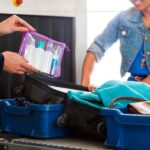
The rule at the center of this has been around for nearly two decades and most travelers can recite the short version of it. Liquids, aerosols, gels, creams, and pastes in carry-on bags have to be in containers of 3.4 ounces or less, and all of those containers have to fit inside a single quart-sized resealable bag. One bag per passenger.
The part people forget is how broadly that definition stretches. It is not just about bottles and tubes. The screening standard covers anything that behaves like a liquid or a gel, which is why peanut butter, yogurt, canned soup, mascara, and snow globes all get flagged with some regularity. If a substance takes the shape of whatever contains it, security treats it as a liquid, regardless of what the package looks like or what aisle of the store it came from.
NeeDoh walks straight into that definition. The toys are stretchy outer shells filled with a thick gel that gives them their signature slow, satisfying squish. That filling is the entire point of the product, and most versions of the toy contain well over 3.4 ounces of it. A standard NeeDoh ball is roughly the size of a tangerine and heavy for its size, which is a good clue that the gel inside exceeds the limit by a comfortable margin.
Because the gel is sealed inside a molded shell rather than a bottle with a label, there is no printed volume for an officer to read. That is a meaningful detail. With a tube of sunscreen, the container states its capacity, the screener checks the number, and the decision takes two seconds. With a squishy blob, the screener has to estimate. Estimating produces uneven results, and uneven results are precisely what families have been running into.
The Toy Kids Are Asking For by Name
For anyone who has not encountered one, a little context helps explain why this keeps happening often enough to become a pattern.
NeeDoh is made by Schylling, a Massachusetts toy company with a long history in the business, including work on Littlest Pet Shop and reissues of My Little Pony. The squishy line launched back in 2017 and built a steady following among occupational therapists, teachers, and parents looking for something fidget-friendly. Then social media found it.
Short-form video turned a modest fidget toy into a phenomenon. Collection videos, ranking videos, unboxing videos, and side-by-side squish comparisons racked up enormous view counts, and demand followed almost immediately. The product line expanded into a small zoo of shapes and colors, including cats, gummy bears, dinosaurs, and food-inspired designs, each with its own texture and fill. Kids do not just want a NeeDoh. They want a specific NeeDoh, and they want the one their friends have.
The scarcity has been genuine. Reporting earlier this year described a Florida store selling through an entire restock within an hour of the shipment hitting the shelves. Major online retailers cycle in and out of stock constantly, and at various points Schylling’s own storefront has listed the toys as unavailable with no restock date announced. When a product is that hard to replace, losing one at an airport stops being a minor inconvenience and turns into a genuinely rough moment for a child who may have waited weeks to get it.
There is another layer worth understanding. A large share of NeeDoh users are not playing with them in the traditional sense. The toys are widely used as a self-regulation tool by children and adults dealing with anxiety, sensory processing differences, attention challenges, and general stress. For those users, the toy is not entertainment. It is a coping strategy that happens to be shaped like a gummy bear. Air travel, with its crowds, noise, waiting, and confinement, is exactly the environment where that tool gets used most.
That combination, a scarce product that doubles as an anxiety aid, is why checkpoint confiscations land so hard.
Same Rule, Different Outcomes
Travelers who have run into this describe wildly inconsistent experiences, and that inconsistency is the most frustrating part of the whole situation.
In online parenting and travel forums, accounts tend to fall into a few recognizable categories. One parent described watching an officer take their daughter’s toy and drop it into a checkpoint trash can within the child’s line of sight, leaving her in tears before the family even reached the gate. Another family reported the opposite: they volunteered that the kids had squishy toys in a backpack, the officer picked one up, gave it a few squeezes, decided it was not a concern, and waved them through. That same traveler noted that the family behind them said nothing, had their squishies discovered during bag screening, and watched officers cut into them to check what was inside.
None of those outcomes contradict the rules. They reflect how checkpoint screening actually works. The published liquid limit is a standard, but the final call on any individual item belongs to the officer at the lane. That discretion exists for practical reasons, since no rulebook can list every object a traveler might bring. In practice it means a toy that draws no attention in Denver might be pulled in Orlando, and the officer who clears it on the outbound flight is not the one screening the return trip.
Several factors influence which way it goes. The size of the toy matters, since smaller versions genuinely may fall under the threshold while larger ones clearly do not. Whether the item shows up as an anomaly on the X-ray image matters, because a dense gel mass in a backpack full of clothes and electronics can look unusual enough to warrant a bag check. Whether the toy is visible at the top of a bag or buried under everything else matters too. And the volume of traffic at that particular checkpoint on that particular morning plays a role in how much time anyone has to deliberate.
The cutting incidents deserve their own explanation, because they sound harsher than they are intended to be. When screening equipment flags a sealed item and the officer cannot determine what is inside, opening it is a standard resolution step. It is not a judgment about the family or the toy. It is a procedure for eliminating an unknown. The result is still a destroyed toy and an upset kid, which is why avoiding the situation entirely is the better plan.
What Parents Can Actually Do
The most reliable fix is also the least satisfying one. Put the toy in a checked bag. The liquid restrictions apply to the cabin, not the cargo hold, and a NeeDoh in a suitcase raises no issues at all. The obvious problem is that a toy in the belly of the plane does nothing for a child who needs it during the flight, which is the whole reason it was packed in the first place.
For families who want to keep something squishy within reach during the flight, there are workarounds. Smaller sensory toys exist that stay comfortably under the ounce limit, and some product lines make travel-sized versions specifically because this issue keeps coming up. A mini squishy that fits in the quart bag alongside the toothpaste is far less likely to create a scene. Fidget items that contain no gel at all, such as click cubes, textured rings, stretchy rubber strands, pop bubble toys, and weighted plush, avoid the liquid question altogether and serve a similar purpose for many kids.
Declaring the item upfront is another approach that has worked for families. Telling an officer before screening begins that there are squishy toys in the bag changes the dynamic. It removes the element of surprise, gives the officer a chance to inspect the item deliberately rather than as a flagged anomaly, and signals cooperation. It does not guarantee the toy gets through, but it makes a calm conversation more likely than a sudden discovery during a bag search.
Travelers who need a sensory item for a documented medical or developmental reason have an additional avenue. The TSA operates a helpline, TSA Cares, that passengers can contact ahead of a trip to discuss accommodations and to request assistance at the checkpoint. Calling several days in advance allows time to ask specific questions about a specific item rather than finding out at the lane. Officers can also be asked for a supervisor if a family believes an item has been misjudged, though that conversation works best when there is time to spare before boarding.
Preparing the child is its own piece of the puzzle, and arguably the piece that matters most. A kid who has been told in advance that security might need to look at the toy, and that it might have to ride in the suitcase, has a much easier time than a kid who watches a favorite object disappear with no warning. Some parents handle this by designating a specific travel toy, something acceptable to the child but not irreplaceable, and leaving the prized collection safely at home.
A Broader Category Than Most Travelers Realize
NeeDoh is getting attention right now because of how popular it is, but the underlying issue extends across a long list of family items that do not look like liquids.
Snow globes are a classic example and one of the most commonly surrendered souvenirs in American airports, since a typical globe holds more liquid than the limit allows. Slime, putty, kinetic sand, and modeling compounds all fall into the gel category. Gel-filled teethers and cooling pads for babies are frequently pulled. So are full-size hand sanitizer bottles, bubble solution, snacks like applesauce pouches and pudding cups, and larger tubes of diaper cream. Stuffed animals are usually fine, but ones with gel or liquid inserts have been flagged, and beanbag-filled toys occasionally get extra screening simply because of how they appear on an X-ray image.
Baby formula, breast milk, and toddler drinks operate under a separate and more generous set of rules, and are permitted in reasonable quantities above the standard limit when a child is traveling. Those items do need to be declared at the start of screening and may go through additional testing.
The pattern across all of it is the same. The rule is about what a substance does, not what it is called or who it is for. A toy is still a gel if it is filled with gel.
The Practical Bottom Line Before Your Next Flight
Before a trip, the useful exercise takes about five minutes. Pick up each squishy item headed into the carry-on and consider its size honestly. If it is larger than a golf ball and feels dense, it almost certainly exceeds the 3.4 ounce threshold and stands a real chance of being pulled. Move it to the checked bag, or pack a smaller substitute for the flight and reunite the child with the full collection at the hotel.
Families who bring the big ones through the checkpoint anyway should go in knowing the range of possible outcomes. It might be squeezed and returned. It might be quietly set aside. It might be opened. And an officer is not obligated to hold it for you or mail it home.
The toys have become genuinely hard to find and genuinely meaningful to the kids who rely on them, which makes the checkpoint a bad place to gamble. A few minutes of repacking is a far easier conversation than the one that follows a trash can.